

2013-2022 Mazda CX-5 Control Arm Guide: Clunks, Bushing Failures, and Replacement
This guide covers the common failure symptoms, recalls, TSBs, and replacement costs for front and rear suspension control arms on the 2013-2022 Mazda CX-5.
- The most common failure is the large rear bushing on the front lower control arm, causing a distinct clunking noise over bumps.
- A four-wheel alignment is mandatory immediately after replacing a control arm to prevent unsafe handling and rapid tire wear.
- When installing, all pivot bolts must be final-torqued only when the vehicle's full weight is compressing the suspension to its normal ride height.
- While there is no recall for control arms, Mazda issued a TSB (02-002/18) for creaking noises from the front lower arm bushings on 2013-2016 models.
Known Issues, Recalls, and Technical Service Bulletins (TSBs)

While there are no direct recalls for control arm failure on the CX-5, several technical service bulletins and common owner complaints point to the control arm bushings as a frequent source of suspension noise.
Front Lower Control Arm Bushing Issues
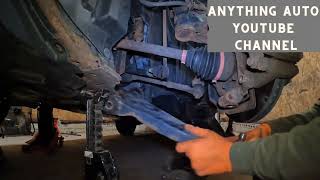
The most widely reported issue is the failure of the large rear bushing on the front lower control arm. Owners report cracking and tearing of this rubber bushing, sometimes at mileages as low as 30,000 to 50,000 miles. This failure is the primary cause of the common "clunking" noise associated with this vehicle. For the first-generation (2013-2016) CX-5, Mazda acknowledged a noise issue with TSB 02-002/18, which involved updated parts including a lower arm bushing with a new dry coating to reduce friction and creaking noises. 🎬 See this step-by-step guide for replacing first-generation front control arms. Owners of second-generation models (2017+) have noted that the control arm was redesigned, but premature bushing cracking can still occur.
Rear Suspension Noises & TSBs
Owners of 2013-2016 models, particularly those with AWD, have reported a knocking or clunking noise from the rear. TSBs have been issued for cracks in the rear differential mount bushing, which can produce a similar sound to a bad control arm. This was due to insufficient durability, and a redesigned cross member with an improved bushing was released to fix the problem.
Recalls
There have been no recalls issued for the suspension control arms themselves. A notable recall (NHTSA Campaign 16V644000) for 2013-2016 CX-5 models concerned corroding rear liftgate supports that could fail and cause the hatch to fall unexpectedly. This is unrelated to the suspension but is a safety item for owners to be aware of.
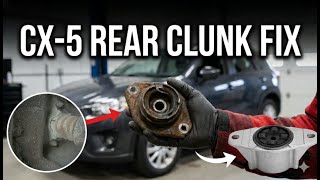
Pro Tip: Before replacing control arms to fix a clunking noise, check other common sources. On the CX-5, these include sway bar end links, sway bar frame bushings, and even loose crossbar bolts under the windshield cowl near the strut towers. Also, failed rear shock mounts can cause a knocking sound.
🎬 Watch: How to diagnose and fix rear shock mount failure.Symptoms of a Failing Control Arm

A bad control arm on a Mazda CX-5 typically announces itself with distinct noises and changes in steering feel. The failure is almost always due to worn-out rubber bushings or, in the case of the front lower arm, a failing integrated ball joint.
1. Clunking or Knocking Noises
This is the most common symptom. A metallic clunking or popping sound is often heard when driving over bumps, speed bumps, or uneven pavement. The noise comes from excessive movement in a worn bushing or ball joint, causing metal-on-metal contact. You may also hear it when braking or making sharp, low-speed turns.
2. Unstable Steering or "Wandering"
A worn control arm can cause the vehicle's alignment to shift dynamically. You might feel the steering wheel pull to one side, or you may need to make constant small corrections to keep the car driving straight. The steering may feel loose or less responsive, especially during turns.
3. Steering Wheel Vibration
As the bushings and ball joints wear, they can no longer effectively dampen road vibrations. This can lead to a shimmy or vibration felt in the steering wheel, especially at higher speeds. The vibration may change in intensity as you accelerate or decelerate.
4. Uneven Tire Wear
A bad control arm allows for unwanted movement of the wheel, which throws off the alignment. This typically results in premature and uneven tire wear, most often on the inner or outer edge of the tire tread. If you see this wear pattern, a bad control arm is a likely culprit.
Buying a Used Suspension Control Arm

A used OEM control arm can be an excellent value, often providing superior material quality and fit compared to new, low-cost aftermarket alternatives. However, a thorough inspection is critical because the condition of the bushings and ball joints is what matters most.
Warning: The Mazda CX-5 has a complex suspension with different arms for the front, rear, left, and right sides. The rear suspension alone has multiple links (upper, lower, forward, etc.). Verify the exact arm you are buying and its specific position on the vehicle.
Physical Inspection Checklist:
- Inspect the Bushings: This is the most common failure point. Look for any cracks, dry rot, tearing, or separation in the rubber. The rubber should be firm and solid. If you can see significant gaps, the rubber is torn, or it looks "blown out," the arm is not a good purchase.
- Check the Ball Joint (Front Lower Arms): The front lower control arms have an integrated ball joint. The rubber boot protecting the joint must be intact with no rips or tears. Try to move the ball joint stud by hand; it should be stiff. Any looseness, wobble, or free play means the joint is worn out and the arm should be rejected.
- Check for Bends or Damage: Inspect the metal arm itself for any signs of bending, heavy corrosion, or impact damage. While the steel or aluminum arm is very strong, an arm from a vehicle in a major collision could be compromised.
- Mileage as an Indicator: Since bushing failure is common between 60,000 and 90,000 miles, try to source a used arm from a lower-mileage vehicle if possible. An arm with 40,000 miles on it has significantly more life left than one with 100,000 miles.
Replacement and Installation
Replacing a control arm is a feasible DIY job for an experienced home mechanic but can be challenging due to high torque bolts and the need to work safely under the vehicle.
Special Procedures & Torque Specs
The single most critical step during installation is to only tighten the pivot bolts for the bushings when the vehicle's full weight is on the suspension (i.e., at normal ride height). This is done by placing the jack under the knuckle to compress the suspension before torquing the bolts. Failure to do this will pre-load the rubber bushings, causing them to tear and fail in a very short amount of time.
Torque specs are critical for safety. While they vary slightly by year and position, common specs for the front lower control arm on first-generation (2013-2016) models are:
| Bolt | Torque Specification (approx.) |
|---|---|
| Front Bushing to Frame (Horizontal Bolt) | 158 - 191 lb-ft |
| Rear Bushing Bracket to Frame (Vertical Bolts) | 101 - 126 lb-ft |
| Ball Joint Pinch Bolt | ~30-35 lb-ft |
Always consult the specific service manual for your exact year and model before performing repairs.
Mandatory Alignment: Replacing any control arm will significantly alter the vehicle's wheel alignment. A professional four-wheel alignment is required immediately after replacement to ensure vehicle safety, proper handling, and to prevent rapid and severe tire wear.
🎬 Watch: A complete walkthrough of the lower control arm replacement.Cost Comparison
Prices can vary significantly based on location, brand, and whether you do the work yourself. The following is an estimated breakdown for a single front lower control arm.
| Item | Estimated Cost | Notes |
|---|---|---|
| New OEM (Dealer) | $350 - $450 | Part only. Highest quality and perfect fit. |
| New Aftermarket | $70 - $150 | Wide range of quality. Brands like Moog are generally reliable. |
| Used OEM | $50 - $120 | Good value, but requires careful inspection of bushings and ball joint. |
| Shop Labor (per side) | $100 - $200 | Typically 1-2 hours of labor per arm. |
| Wheel Alignment | $100 - $180 | Mandatory after replacement. |
Frequently Asked Questions (FAQ)
Do I need to replace control arms in pairs?
It is highly recommended. Bushings and ball joints on both sides of the vehicle experience the same wear and tear. If one side has failed, the other is likely not far behind. Replacing them in pairs ensures even handling and saves you from having to do the same job twice in the near future.
Can I just replace the bad bushing instead of the whole arm?
While individual bushings are available, replacing them requires a hydraulic press and special tools, making it impractical for most DIY mechanics. Given the relatively low cost of a complete new aftermarket or used OEM arm (which includes new bushings and a new ball joint), replacing the entire assembly is almost always the more efficient and cost-effective repair.
What is the part number for the rear upper control arm?
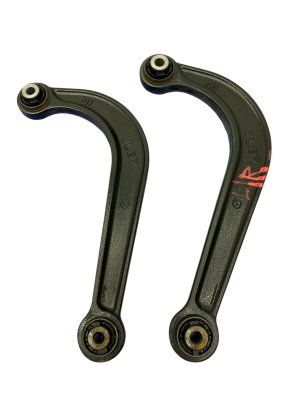
The OEM part number for the rear upper control arm for FWD models is KB7W-28-C10. This part fits both the left and right positions and supersedes the older part number KD35-28-C10. It is listed as fitting 2013-2025 model years.
How long do control arms last on a Mazda CX-5?
The lifespan varies greatly with driving conditions. While the arms themselves can last the life of the vehicle, the bushings are a wear item. Failures are common between 60,000 and 90,000 miles, though some owners report seeing cracked bushings even earlier. Vehicles driven on poorly maintained roads or in areas with heavy road salt usage may experience failures sooner.
Helpful Videos
Technical Specifications
OEM Part Numbers: KB7W-28-C10 (Rear Upper, FWD) KD35-28-C10 (Superseded by KB7W-28-C10)
Front Lower Arm Ball Joint Stud Rotational Torque: 3.2 N·m max. Front Lower Arm Ball Joint Stud Starting Torque: 18 N·m max.
We Have This Part in Stock

The information in this article is provided for general reference and educational purposes only. Vehicle specifications, procedures, and part compatibility can vary by production date, trim level, and region. Always consult your vehicle's factory service manual and verify part numbers before purchasing or performing repairs. Safety-critical components such as airbags, seat belts, and braking systems should be installed by a qualified professional.
- Mazda CX-5:
- 🎬 Helpful Videos
- 🛍️ Shop This Part
- Known Issues, Recalls, and Technical Service Bulletins (TSBs)
- Front Lower Control Arm Bushing Issues
- Rear Suspension Noises & TSBs
- Recalls
- Symptoms of a Failing Control Arm
- 1. Clunking or Knocking Noises
- 2. Unstable Steering or "Wandering"
- 3. Steering Wheel Vibration
- 4. Uneven Tire Wear
- Buying a Used Suspension Control Arm
- Physical Inspection Checklist:
- Replacement and Installation
- Special Procedures & Torque Specs
- Cost Comparison
- Frequently Asked Questions (FAQ)
- 🎟️ Get 5% Off