

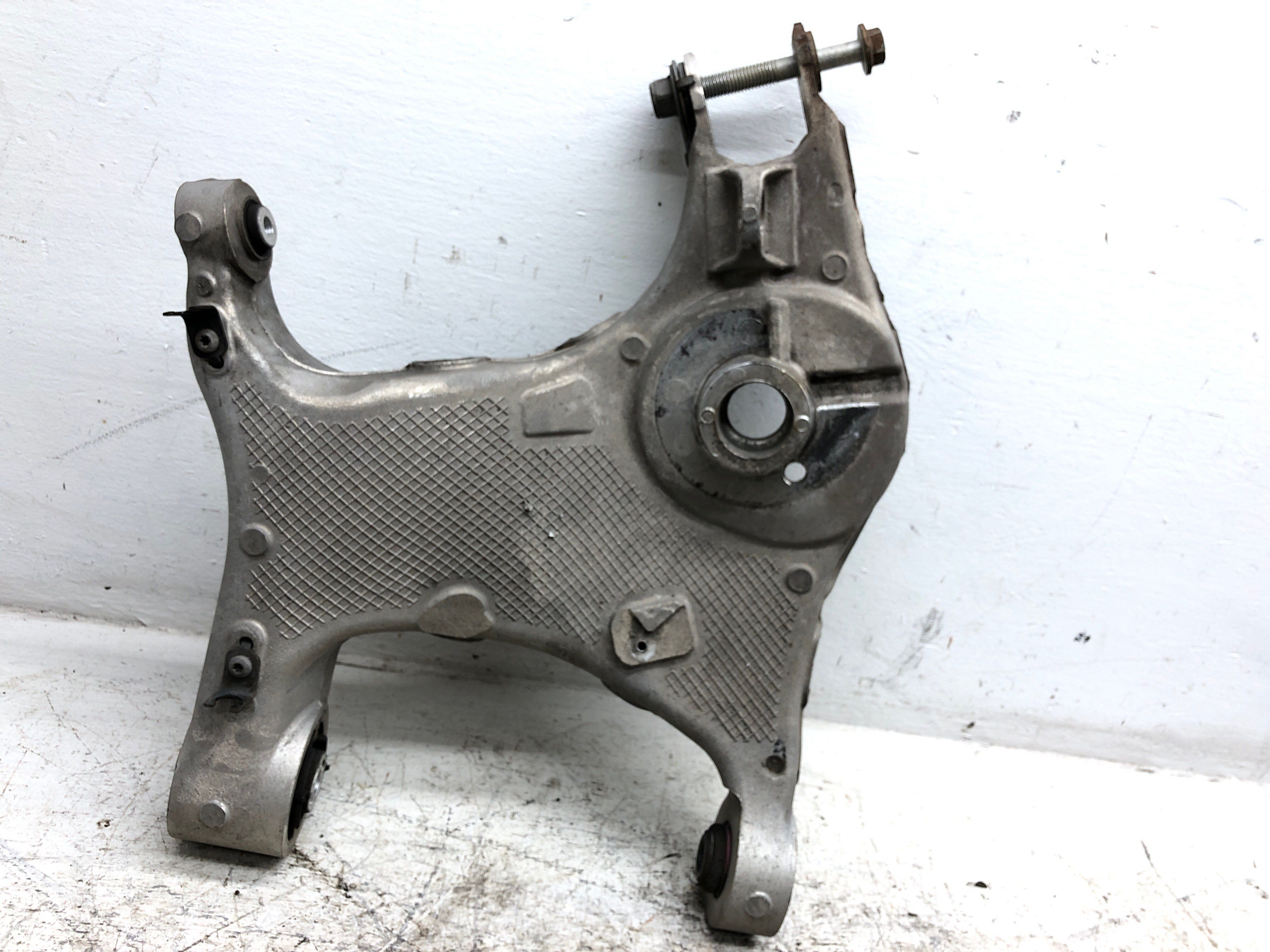
1995-2002 Lincoln Continental Rear Control Arm: Solving the Confusing Multi-Fit Puzzle
This guide decodes the unique and confusing installation of the rear transverse control arm, helping you diagnose clunks, fix handling issues, and buy the correct part.
- This is a 'multi-fit' part: it fits the REAR PASSENGER side FORWARD position OR the REAR DRIVER side REARWARD position only.
- The most common symptom of failure is a clunking noise from the rear over bumps, caused by worn rubber bushings.
- When installing, bolts must be final-torqued with the vehicle's full weight on the suspension (at ride height) to prevent premature bushing failure.
- A four-wheel alignment is essential after replacing this part to prevent handling problems and rapid tire wear.
The 'Multi-Fit' Puzzle: Understanding Part F5OY-5500-F
The single most confusing aspect of this rear control arm is its unique fitment. Unlike most suspension parts that are specific to one side and position, this arm is designed to fit in two different locations. This often leads to confusion for buyers and mechanics.
Compatibility Warning: This is a multi-fit part with a very specific application. It can be installed in two different locations:
- As the forward control arm on the rear passenger side.
- OR as the rearward control arm on the rear driver side.
It will NOT fit the other two positions (driver side forward or passenger side rearward). Always double-check which specific arm you are replacing before ordering.
Symptoms of a Failing Rear Control Arm
The failure of this control arm is almost always due to the deterioration of its rubber bushings. The steel arm itself is very durable, but the rubber cracks, tears, and wears out over time. When this happens, you will notice distinct symptoms.
Clunking or Knocking Noises
This is the most common symptom. You may hear a clunk, pop, or knock coming from the rear of the car. The noise is most noticeable when driving over bumps, potholes, or uneven pavement. It can also occur during acceleration or braking as the arm shifts excessively in its worn-out bushings. Forum users often describe chasing down a rear-end clunk that is ultimately traced to a worn control arm bushing or ball joint.
Poor Handling and Steering Response
A worn control arm bushing allows for unwanted movement in the rear suspension. This can make the car feel unstable, especially at higher speeds or during lane changes. You might feel the rear of the car 'wander' or 'sway' independently of your steering inputs. This happens because the wheel is no longer held firmly in its correct position.
Uneven Tire Wear
When the control arm bushing fails, it can throw the rear wheel out of alignment. This causes the tire to wear unevenly and prematurely. You might notice the inside or outside edge of one of your rear tires is wearing down much faster than the rest of the tread. This is a clear sign that a suspension component, like this control arm, is failing.
Excessive Vibrations
Worn bushings can no longer absorb road vibrations effectively. These vibrations can be transmitted into the vehicle's cabin, and you may feel them through the seat or floor, especially at higher speeds.
Is It Your Control Arm or the Air Suspension?
The 1995-2002 Continental is famous for its air suspension system, which is also a common source of problems. It's important to distinguish between a control arm issue and an air suspension issue.
- Air Suspension Failure: Typically results in the car sagging at one or more corners, a compressor that runs constantly, or a 'Check Air Suspension' warning light.
- Control Arm Failure: Typically results in clunking noises and poor handling, as described above.
While they are separate systems, a failing air spring can put extra stress on other suspension components, including control arm bushings.
Pro Tip: While the car is parked, push down firmly on the rear bumper several times. If you hear a clunking or popping sound, it's more likely to be a worn bushing. If the car just feels bouncy or one side is visibly lower, suspect the air suspension.
Buying a Used 1995-2002 Lincoln Continental Control Arm
Since the new OEM part (F5OY-5500-F) is often listed as discontinued, the used OEM market is a critical source for this part. A high-quality used OEM arm can be a better choice than a cheap, new aftermarket part due to superior materials and construction of the arm itself.
What to Inspect
- Bushings are Key: The condition of the rubber bushings is the most important factor. Look for a part from a low-mileage vehicle. Inspect photos carefully or check the part in person. The rubber should be pliable and free of cracks, tears, or dry rot. If the rubber is crumbling or torn, you are just buying a part that has already failed.
- Check for Bends and Damage: Inspect the steel arm itself for any signs of bending, heavy impact, or cracking. An arm from a vehicle in a major collision should be avoided.
- Surface Rust vs. Structural Rust: Light surface rust is normal for a used suspension part and is usually not a concern. However, avoid any arm with heavy, flaking rust that could indicate a loss of structural integrity.
Rebuilding as an Option
Because the failure point is the bushing, another excellent option is to buy a used OEM arm and press in new bushings. Bushing kits are readily available from brands like Moog and others. This gives you the strength of an OEM arm with brand new wear components, often for less than the cost of a complete new assembly.
Known Issues, TSBs, and Recalls
There are no specific recalls or Technical Service Bulletins (TSBs) from the NHTSA for the rear control arms on the 1995-2002 Lincoln Continental. However, buyers should be aware of other related suspension issues for this model range, including common air suspension failures and reports of broken front coil springs on 1997-2002 models.
Cost Comparison
Prices can vary based on location, condition, and supplier. These are estimates to help you understand the value of different options.
| Part Type | Estimated Cost |
|---|---|
| New OEM (Ford) | $150 - $250 (Largely discontinued, availability is scarce) |
| New Aftermarket | $40 - $80 |
| Used OEM | $30 - $60 |
| Shop Labor to Replace | $100 - $200 per arm |
Replacement Overview and Torque Specs
Replacing the rear transverse control arm is a feasible DIY job for someone with mechanical experience and the right tools. The basic process involves safely lifting and supporting the vehicle, removing the rear wheel, and unbolting the old arm at the subframe and the wheel knuckle.
Important Installation Tip: Do NOT fully tighten the control arm bolts while the suspension is hanging in the air. The bolts should only be torqued to their final specification when the full weight of the vehicle is on the suspension (at normal ride height). You can achieve this by placing the jack under the lower part of the suspension to compress it, or by lowering the car onto ramps or blocks. Tightening the bolts while the suspension is drooping will pre-load and twist the new bushings, causing them to fail very quickly.
Torque Specifications
Finding exact factory specs can be difficult. However, based on forum discussions for similar Ford platforms, a common torque value for rear control arm bolts is in the range of 70-100 ft-lbs. For the most accurate information, it is always best to consult a factory service manual for your specific year.
An alignment is highly recommended after replacing any suspension component that affects wheel position, including this control arm.
Frequently Asked Questions (FAQ)
Does this part fit both the driver and passenger side?
Yes, but in different positions. It fits as the FORWARD arm on the REAR PASSENGER side, and as the REARWARD arm on the REAR DRIVER side. It is not interchangeable with the other two rear transverse arms.
Can I just replace the bushings instead of the whole arm?
Yes. If the steel arm is in good condition, you can use a hydraulic press to remove the old bushings and install new ones. This can be a cost-effective repair if you have the right tools.
Do I need a wheel alignment after replacing this part?
Yes. This control arm is critical for setting the rear wheel alignment. Replacing it will almost certainly change the alignment settings. You should have a professional four-wheel alignment performed to ensure proper handling and prevent tire wear.
Is this the same as the front control arm?
No. This is a specific part for the rear multi-link suspension and is not interchangeable with any of the front control arms.
Technical Specifications
OEM Part Numbers: F50Y5500E F5OY-5500-E F5OY-5500-F
Material: Stamped Steel. Bushing Material: Rubber. This is the transverse arm for the rear suspension.
We Have This Part in Stock


The information in this article is provided for general reference and educational purposes only. Vehicle specifications, procedures, and part compatibility can vary by production date, trim level, and region. Always consult your vehicle's factory service manual and verify part numbers before purchasing or performing repairs. Safety-critical components such as airbags, seat belts, and braking systems should be installed by a qualified professional.
- Lincoln Continental:
- 🛍️ Shop This Part
- The 'Multi-Fit' Puzzle: Understanding Part F5OY-5500-F
- Symptoms of a Failing Rear Control Arm
- Clunking or Knocking Noises
- Poor Handling and Steering Response
- Uneven Tire Wear
- Excessive Vibrations
- Is It Your Control Arm or the Air Suspension?
- Buying a Used 1995-2002 Lincoln Continental Control Arm
- What to Inspect
- Rebuilding as an Option
- Known Issues, TSBs, and Recalls
- Cost Comparison
- Replacement Overview and Torque Specs
- Torque Specifications
- Frequently Asked Questions (FAQ)
- 🎟️ Get 5% Off