

1995-2003 Ford Windstar Control Arms: Failure Symptoms and the Critical Subframe Rust Recall
This guide covers common control arm failures, from clunking noises to the critical subframe corrosion issue that can cause a sudden loss of steering control.
- The most critical issue for 1999-2003 Windstars is the front subframe rust recall (11S16), which can cause the control arm to detach, leading to a loss of steering. Always inspect the subframe before repairs.
- Common failure symptoms include clunking noises over bumps, steering wander, steering wheel vibration, and uneven tire wear.
- Control arms should always be replaced in pairs to ensure balanced handling and safety.
- A wheel alignment is mandatory after replacing one or both control arms to prevent rapid tire wear and ensure proper vehicle handling.
Known Issues, Recalls, and Technical Service Bulletins (TSBs)
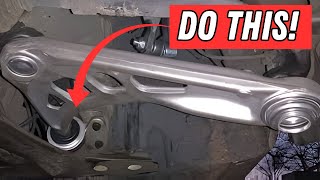
Critical Safety Warning: The most significant issue related to the control arms on 1999-2003 Ford Windstars is not the arm itself, but the front subframe it bolts to. These vehicles were subject to a major safety recall (NHTSA Campaign ID: 12V194000, Ford Recall #11S16) for severe corrosion. Road salt can 🎬 Watch: Real-world example of damaged Windstar control arms cause the subframe to rust to the point where the rear mounting point of the lower control arm breaks away from the subframe. This failure results in a significant loss of steering control, increasing the risk of a crash. While 1995-1998 models use a different subframe and are not part of this specific recall, any vehicle of this age operated in salt-belt states should be inspected for subframe rust.
Before purchasing or replacing a control arm, the vehicle's front subframe MUST be inspected for integrity. A perfect control arm is useless if its mounting points are compromised.
Symptoms of a Failing Control Arm
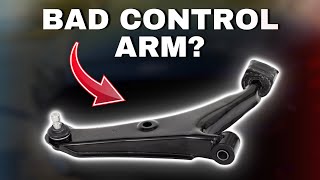
When a control arm or its components wear out, you will notice distinct changes in how your Windstar drives and sounds. The failure is typically in the rubber bushings or the ball joint.
- Clunking or Knocking Noises: This is the most common symptom. You'll hear a clunk or knock from the front end, especially when driving over bumps, potholes, or even during braking and acceleration. This sound is caused by worn bushings allowing metal-to-metal contact or a loose ball joint moving in its socket.
- Steering Wander or Pulling: The vehicle may feel unstable, pull to one side, or require constant steering corrections to drive straight. This is due to excessive play from worn bushings or a bad ball joint, which alters the wheel alignment.
- Steering Wheel Vibration: A continuous vibration felt in the steering wheel, which may change with speed, often points to worn control arm bushings or a failing ball joint.
- Uneven Tire Wear: Inspect your front tires. Accelerated wear on the inner or outer edges is a classic sign that the alignment is off due to worn control arm components.
- Visible Damage: Hitting a curb or large pothole can bend the control arm itself, which will severely affect steering and tire wear.
Buying a Used Suspension Control Arm
A used OEM control arm from a low-mileage, dry-climate vehicle can be an excellent, cost-effective alternative to a new aftermarket part. Here’s what to look for:
- Inspect the Bushings: Check the two large rubber bushings. The rubber should be firm, without any major cracks, tears, or signs of dry rot. The inner metal sleeve should be centered.
- Check the Ball Joint: The rubber boot on the ball joint should be intact with no rips or leaks. Try to move the ball joint stud by hand; there should be no looseness or play. If it moves easily, it is worn out.
- Look for Rust and Damage: Examine the entire arm for heavy rust, especially around the welds. Surface rust is normal, but avoid any parts with deep, flaking rust that compromises the metal's strength. Ensure the arm is straight and not bent from an accident.
- Verify Compatibility: While many parts interchange across the 1995-2003 range, there are differences. The subframe design changed for the 1999 model year, which may affect control arm compatibility. Always match the OEM part number from your old part to the replacement.
Pro Tip: When buying a used control arm, the vehicle's history is more important than its mileage. A 150,000-mile arm from a dry state like Arizona is often in better condition than a 70,000-mile arm from a salt-belt state like Michigan or New York.
Cost Breakdown
Prices can vary based on your location and the specific retailer. On these models, the ball joint and bushings are typically pre-installed, so you replace the entire assembly.
| Part Type | Estimated Cost (Per Arm) | Notes |
|---|---|---|
| New OEM | $350 - $500+ | Highest cost, but exact factory fit. |
| New Aftermarket | $50 - $150 | Wide range of quality. Premium brands are a good option, but avoid the cheapest choices. |
| Used OEM | $40 - $100 | A great value if inspected properly for wear and rust. |
| Shop Labor | $150 - $250 | Typically 1-2 hours of labor per side. |
| Wheel Alignment | $80 - $200 | Mandatory after replacing control arms. |
Replacement and Installation Tips
Replacing a control arm is a feasible DIY job for someone with mechanical experience and the right tools, but it can be challenging due to rusted bolts.
🎬 See this step-by-step control arm installation videoRelated Parts to Consider
- Sway Bar Links: These are often removed for access and are inexpensive to replace at the same time. Worn links can also cause clunking noises.
- Outer Tie Rod Ends: If these are worn, replacing them with the control arm saves you from needing a second alignment later.
- Front Subframe: As mentioned, inspect this thoroughly. If it's severely rusted, the vehicle may not be safe to repair.
Torque Specs & Special Procedures
- Ball Joint Pinch Bolt: 40-55 ft-lbs (54-75 Nm). Always use a new bolt and nut if possible.
- Control Arm to Subframe Bolts: The book calls for 98-113 ft-lbs. A torque of 100 ft-lbs is a common practice.
Important: Do not fully tighten the control arm bushing bolts until the full weight of the vehicle is resting on the suspension (i.e., with the wheels on the ground or on ramps). Tightening them with the suspension hanging will twist and destroy the new bushings very quickly.
- Alignment: A four-wheel alignment is required after replacement to ensure proper handling and prevent tire wear.
Can I just replace the bushings or ball joint?
On the Ford Windstar, the lower control arm is typically serviced as a complete assembly with the ball joint and bushings pre-installed. While it might be technically possible to press out and replace individual components, it is far more time-consuming and cost-effective to replace the entire arm.
What is the difference between the 1995-1998 and 1999-2003 models?
The primary difference affecting this repair is the front subframe design. Ford documents for the subframe corrosion recall specifically cover 1999-2003 models, stating that 1998 and earlier models use a different subframe. While the control arms themselves may appear similar, always verify part numbers to ensure compatibility for your specific year.
Do I have to replace control arms in pairs?
Yes, it is highly recommended. If one control arm has failed due to worn bushings or a bad ball joint, the identical part on the other side has experienced the same age and wear. Replacing both at the same time ensures balanced handling, predictable steering, and saves you from doing the same job twice.
How can I tell if the clunking noise is the control arm or something else?
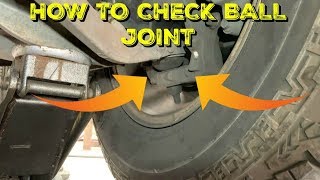
Clunking can also be caused by worn sway bar links, tie rod ends, or strut mounts. A mechanic can diagnose this by lifting the vehicle and checking for play. To check the ball joint, a pry bar is often placed under the tire while the lower control arm is supported by a jack stand to unload the joint; prying up will reveal any vertical looseness. 🎬 Watch: How to properly check for bad ball joints Bushings can be visually inspected for cracks and tears.
Helpful Videos

Technical Specifications
OEM Part Numbers: 1F2Z3078AA 1F2Z3079AA F58Z-3078-A F58Z3078A F58Z3078AA F58Z3078B F58Z3078BA F58Z3078C F58Z3079A F58Z3079B F78Z-3079-CA F78Z3078CA F78Z3079CA
Control Arm to Subframe Bolt Torque: 98-113 ft-lbs. Ball Joint Pinch Bolt Torque: 40-55 ft-lbs.
We Have This Part in Stock



The information in this article is provided for general reference and educational purposes only. Vehicle specifications, procedures, and part compatibility can vary by production date, trim level, and region. Always consult your vehicle's factory service manual and verify part numbers before purchasing or performing repairs. Safety-critical components such as airbags, seat belts, and braking systems should be installed by a qualified professional.
- Ford Windstar: