

2005-2010 Ford Mustang K-Frame: A Guide to Damage, Noises, and Replacement
This critical subframe is prone to collision damage and can cause alignment issues and noises; learn how to choose the right used part and avoid costly compatibility mistakes.
- The K-frame for Shelby GT500 models is NOT interchangeable with V6 and GT models due to different engine and steering mounts.
- Primary failure causes are collision damage and severe rust, not typical wear and tear.
- When buying used, inspect for cracks near welds and any signs of bending; surface rust is okay, but avoid deep or flaking rust.
- Replacement is a major, 5/5 difficulty job requiring engine support and a full front-end alignment afterward.
Common Failure Points and Symptoms


Unlike some parts that fail from simple wear and tear, the factory K-frame on a 2005-2010 Mustang is a robust, stamped-steel component. Failures are almost always caused by external factors like collisions, hitting a large pothole or curb, or severe rust in vehicles from northern climates. A bent or damaged K-frame can lead to a host of problems that are often misdiagnosed.
Symptoms of a Damaged K-Frame
- Persistent Alignment Issues: If your Mustang constantly pulls to one side and an alignment shop cannot get the front wheels within specification, it's a strong indicator that a control arm mounting point on the K-frame has been bent or shifted.
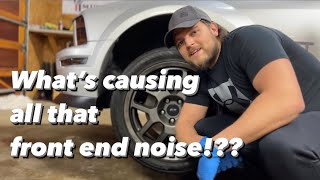
- Clunking or Popping Noises: Loud clunking, popping, or grinding sounds from the front end when turning or driving over bumps can be a sign of a cracked or loose K-frame. While other components like sway bar end links and strut mounts can cause similar noises, a damaged K-frame should be considered if those parts are in good condition.
- Uneven Tire Wear: A bent K-frame alters suspension geometry, leading to rapid and uneven tire wear that can't be corrected with a standard alignment.
- Steering Wheel Off-Center: After an impact, if your steering wheel is no longer straight when driving straight, it could point to a shifted K-frame.
- Visible Damage: In severe cases, you may be able to see cracks near welds, bent sections of the frame, or areas of severe, flaking rust.
Pro Tip: Front-end clunks on the S197 Mustang are common and can be caused by many parts. Before suspecting the K-frame, check for loose sway bar end links, worn sway bar bushings, and failing upper strut mounts, as these are more frequent and less severe issues.
🎬 Watch this guide to diagnose front-end clunksBuying a Used 2005-2010 Mustang K-Frame: What to Check


Since a new OEM K-frame can be expensive or discontinued, a used, recycled part from a reputable seller is often the best choice for a stock repair. Aftermarket tubular K-frames are popular for performance, but they often increase noise, vibration, and harshness (NVH) and may not offer the same durability for a daily-driven vehicle. Here’s what to look for in a used OEM K-frame:
1. Physical Inspection is Key
- Check for Bends and Twists: Lay the K-frame on a flat, level surface. It should sit flush without rocking. Look down the length of the main beams to spot any subtle bends or warps. Pay close attention to the control arm mounting brackets and steering rack mounts, as these are the most critical alignment points.
- Inspect All Welds: Carefully examine the factory welds, especially where the control arm mounts and engine perches attach to the main structure. Look for any signs of cracking in the metal next to the weld, which indicates stress from an impact.
- Assess Rust Damage: Surface rust is normal for a used part. However, you must reject any K-frame with heavy, flaking rust or any signs of rust perforation (holes). Tap suspect areas with a small hammer; if it sounds dull or rust flakes off, the metal is compromised.
- Verify Engine Mount Pads: Ensure the rubber engine mount pads are present and not torn or degraded. While they can be replaced, their condition gives a clue to the part's overall history.
2. Critical Compatibility Warnings
Not all 2005-2010 Mustang K-frames are the same. The initial data provided contained some conflicting information, but research clarifies the key differences.
Warning: The K-frame for a Shelby GT500 is different from the one used in V6 and GT models. The GT500 uses different engine mounts and steering rack configurations. To ensure you get the correct part for a GT500, you must verify the engineering ID on your original K-frame. Look for stampings like 8R3V-AA or 9R3V-AA. The standard V6/GT part number is often based on 5R3Z-5C145-A. Do not interchange them.
3. Cross-Generational Compatibility (2011-2014)
Many aftermarket K-frames are listed as fitting 2005-2014 Mustangs. This is because the core mounting points to the chassis are the same. However, there is a key difference: 2005-2010 models used a hydraulic power steering rack, while 2011-2014 models switched to an Electric Power Assisted Steering (EPAS) rack. The mounting points for these two racks on the K-frame are different. While a 2005-2010 K-frame can physically bolt into a 2011-2014 car (and vice-versa), you must use the corresponding steering rack or modify the mounts. For a direct, bolt-in used replacement, always match the part to your vehicle's specific year range.
Recalls and Technical Service Bulletins (TSBs)
My research found no direct recalls or TSBs for K-frame failure on the 2005-2010 Mustang. The numerous recalls for this generation primarily concern the Takata airbag inflators. However, several TSBs address front-end noises that could be confused with a K-frame issue:
- TSB 07-18-1: Addresses a popping noise from the front while turning at low speeds on vehicles built before April 2005, caused by the upper strut bearing.
- TSB for Front End Clunk: Owners frequently report a "clunk" from the front end. This is often traced to loose sway bar end links, worn strut mounts, or lower control arm bushings, not the K-frame itself. TSB 13-7-8 was issued for a squeak/creak from the front lower control arm hydro bushing on 2011-2014 models, but the symptom is similar to noises owners of earlier models report.
Cost to Replace a 2005-2010 Mustang K-Frame
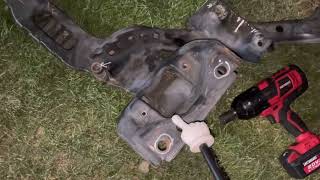
Replacing the K-frame is a labor-intensive job. The engine must be supported from above, and the entire front suspension and steering rack must be disconnected. An alignment is mandatory after installation.
🎬 See how to replace an S197 Mustang subframe| Part or Service | Estimated Cost |
|---|---|
| New OEM (Ford) | $800 - $1,200+ (if available) |
| New Aftermarket (Tubular) | $650 - $1,000+ |
| Used OEM (Recycled) | $250 - $500 |
| Shop Labor | $600 - $1,200 |
Frequently Asked Questions (FAQ)
Is a tubular aftermarket K-frame better than the stock one?
It depends on your goals. For racing, a tubular K-frame offers significant weight savings (20+ lbs) and improved suspension geometry for lowered cars. However, for a street-driven car, they often use polyurethane bushings that drastically increase noise, vibration, and harshness (NVH). The factory stamped-steel K-frame is designed for durability and quiet operation, making a clean used OEM part a better choice for most daily drivers.
How do I know if my K-frame is bent after hitting a curb?
The most definitive sign is if the car can no longer be properly aligned. If the alignment technician runs out of adjustment trying to correct camber or caster, the K-frame mounting points are likely bent. Other signs include a crooked steering wheel, persistent pulling, and unusual tire wear patterns.
Can I really use a 2005-2010 K-frame on a 2012 Mustang?
Physically, it will bolt to the car's frame, but you will run into issues with the steering rack. The 2005-2010 models used a hydraulic rack and the 2011-2014 models used an electric rack (EPAS), and they mount differently to the K-frame. For a straightforward repair, you must use a K-frame from the correct year range (2005-2010 or 2011-2014) to match your steering system.
What else should I replace while the K-frame is out?
Replacing the K-frame requires disassembling most of the front suspension. This is the perfect opportunity to replace wear items with minimal extra labor cost. Consider installing new lower control arms (or at least new bushings), ball joints, engine mounts, and sway bar end links.
Helpful Videos
Technical Specifications
OEM Part Numbers: 4R335A095AB 4R335A095AC 4R3Z5025A 5R3Z-5C145-A 5R3Z5C145A 7R335019AA 7R335019AB 7R3Z5019A 8R335019AA 8R3V-5019-AA 8R3Z5019B 9R335019AA 9R335020AA 9R3V-5019-AA 9R3Z-5019-A
Material: Stamped Steel. Weight (OEM): Approx. 46 lbs. Primary Function: Mounts engine, lower control arms, and steering rack.
We Have This Part in Stock


The information in this article is provided for general reference and educational purposes only. Vehicle specifications, procedures, and part compatibility can vary by production date, trim level, and region. Always consult your vehicle's factory service manual and verify part numbers before purchasing or performing repairs. Safety-critical components such as airbags, seat belts, and braking systems should be installed by a qualified professional.
- Ford Mustang:
- 🎬 Helpful Videos
- 🛍️ Shop This Part
- Common Failure Points and Symptoms
- Symptoms of a Damaged K-Frame
- Buying a Used 2005-2010 Mustang K-Frame: What to Check
- 1. Physical Inspection is Key
- 2. Critical Compatibility Warnings
- 3. Cross-Generational Compatibility (2011-2014)
- Recalls and Technical Service Bulletins (TSBs)
- Cost to Replace a 2005-2010 Mustang K-Frame
- Frequently Asked Questions (FAQ)
- 🎟️ Get 5% Off