

1999-2003 Protege & Protege5 Rear Stub Axle: Your Guide to Disc, Drum, and ABS Versions
This guide decodes the confusing variations of the rear stub axle (spindle) for the 1999-2003 Mazda Protege and 2002-2003 Mazda Protege5 to ensure you get the right part.
- You MUST identify if your car has rear disc or drum brakes, and with or without ABS, before buying a replacement.
- All 2002-2003 Mazda Protege5 models use rear disc brakes, simplifying the choice for those owners.
- When buying a used stub axle, the most critical inspections are checking for bends with a straight edge and ensuring the axle nut threads are not damaged.
- The stub axle itself is very durable; it's typically only replaced due to damage from an accident, curb impact, or a catastrophic wheel bearing failure.
The #1 Problem: Identifying Your Correct Stub Axle
The most common mistake when replacing a rear stub axle on a 1999-2003 Mazda Protege or Protege5 is buying the wrong one. Mazda used four different rear brake and ABS combinations across these models, and each requires a specific stub axle. The mounting points for disc brake calipers are completely different from those for drum brake backing plates, and models with an Anti-lock Brake System (ABS) have a provision for a wheel speed sensor that non-ABS models lack. The parts are also specific to the driver (Left) and passenger (Right) sides.
Warning: Before ordering, you must visually inspect your vehicle's rear brakes to confirm your setup. The Protege5 model came exclusively with rear disc brakes, which simplifies the choice for those owners.
How to Identify Your Brakes:
- Rear Disc Brakes: You will see a flat, metallic rotor and a separate caliper that clamps onto it. This setup was standard on the Protege5 and higher-trim Protege sedans (like the ES, MP3, and Mazdaspeed).
- Rear Drum Brakes: You will see a large, enclosed metal drum that covers the brake components. This was common on base model Protege sedans (like the DX and LX).
- ABS vs. Non-ABS: Look for a wire leading to the back of the hub area. This is the ABS wheel speed sensor wire. If you see this wire and a sensor bolted to the knuckle, you have ABS.
| Configuration | Side | Known OEM Part Number | Notes |
|---|---|---|---|
| Rear Disc Brakes with ABS | Right (Passenger) | G14T-26-1A0 | Common on Protege5 and late model Protege ES. |
| Rear Disc Brakes with ABS | Left (Driver) | G14T-26-1B0 (Unconfirmed) | Part number is inferred; verify with seller. |
| Rear Disc Brakes without ABS | Right (Passenger) | GF4K-26-1A0 | Common on early Protege ES and non-ABS Protege5. |
| Rear Disc Brakes without ABS | Left (Driver) | GF4K-26-1B0 | Common on early Protege ES and non-ABS Protege5. |
| Rear Drum Brakes without ABS | Right (Passenger) | BJ0E-26-110 (Unconfirmed) | Part number is inferred; verify with seller. |
| Rear Drum Brakes without ABS | Left (Driver) | BJ0E-26-115 | Common on Protege DX and LX models. |
| Rear Drum Brakes with ABS | Left / Right | Unconfirmed | This is a rare configuration. Extreme caution is needed to visually match the part. |
Symptoms of a Bad Stub Axle
A solid steel stub axle rarely fails on its own. Failure is almost always caused by external forces like hitting a curb, a major pothole, or an accident. It can also be damaged by a completely failed wheel bearing that seizes and spins on the spindle shaft.
- Vehicle Pulling or Drifting: A bent stub axle will ruin the rear wheel alignment, causing the car to pull to one side.
- Uneven Tire Wear: You may notice the inside or outside edge of one rear tire wearing out much faster than the others. This is a classic sign of a bent suspension component.
- Vibrations or Wobble: A bent spindle can cause a noticeable vibration or wheel wobble that gets worse with speed.
- Grinding or Clunking Noises: While more commonly a symptom of a bad wheel bearing, a severely damaged stub axle or a bearing that has failed catastrophically can cause loud grinding or clunking sounds from the wheel area.
Pro Tip: A humming or roaring noise from the rear that changes with speed is almost always a bad wheel bearing, not the stub axle itself. However, if a bad bearing is ignored for too long, its failure can damage the surface of the stub axle, requiring both parts to be replaced.
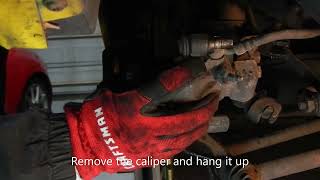
🎬 Watch: Rear wheel bearing replacement walkthroughBuying a Used Rear Stub Axle: What to Inspect
A used OEM stub axle is an excellent, cost-effective option, as it's a durable part that rarely wears out. However, a careful inspection is crucial to avoid buying a damaged unit.
- Confirm Compatibility: First, match the part to your vehicle's brake system (disc or drum) and ABS status. Use photos to compare the brake mounting points and the ABS sensor hole to your original part.
- Check for Bends: This is the most important check. Lay a straight edge (like a metal ruler) along the machined shaft of the spindle. Rotate the spindle and check from multiple angles. There should be no visible gaps or wobbling. Even a slight bend makes the part unusable.
- Inspect the Axle Nut Threads: Carefully examine the threads at the end of the shaft where the large axle nut tightens. If the threads are stripped, cross-threaded, or damaged, the part is junk. You will not be able to safely torque the wheel hub in place.
- Examine the Bearing Surface: Look at the smooth, machined surface where the wheel bearing/hub assembly slides on. It should be free of deep scratches, scoring, or blue discoloration from heat. Damage here indicates the previous bearing failed and spun on the shaft.
- Check Mounting Holes: Ensure all threaded holes for the brake caliper bracket or drum backing plate are clean and not stripped.
Known Issues, Recalls, and TSBs
There are no known recalls or Technical Service Bulletins (TSBs) from Mazda specifically for the rear stub axle on these vehicles. However, there is a related safety recall that owners should be aware of:
- NHTSA Recall #01V024: Issued for some 2000-2001 Mazda Protege models, this recall addresses rear brake hoses that may have been damaged during assembly. A leaking hose can lead to a loss of braking performance. While not a fault of the stub axle, it is a critical safety issue for the rear brake system.
Replacement Overview and Difficulty
- Difficulty: 3 out of 5. This is a manageable DIY job for someone comfortable with brake work.
- Estimated Time: 1.5 - 2.5 hours per side.
- Special Tools: You will need a 35mm or 36mm socket for the large axle nut, a powerful breaker bar or impact wrench, a torque wrench, and a punch or chisel to unstake and re-stake the axle nut.
The basic process involves lifting and supporting the vehicle, removing the wheel, brake caliper and rotor (or brake drum), and then removing the dust cap and the large central axle nut. Once the nut is off, the wheel hub/bearing assembly slides off the spindle. Finally, you will unbolt the stub axle itself from the rear trailing arm and lateral links. Installation is the reverse of removal, paying close attention to the high torque specification for the axle nut.
Cost of a Replacement Stub Axle
| Part Type | Estimated Cost |
|---|---|
| New OEM | $195 - $300 |
| New Aftermarket | $70 - $150 (Availability may be limited) |
| Used OEM | $50 - $100 |
| Shop Labor | $200 - $350 per side |
Frequently Asked Questions (FAQ)
Can I use a disc brake stub axle to convert my car from drum brakes?
Yes, this is a popular upgrade. To convert from rear drums to discs, you will need the stub axles, calipers, caliper brackets, rotors, pads, and brake hoses from a disc brake model (like a Protege ES or Protege5). Some forum users also recommend swapping the brake proportioning valve to ensure proper front-to-rear brake bias.
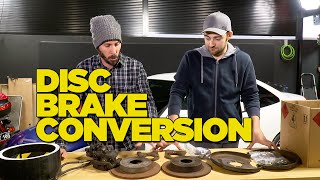
🎬 See: DIY drum to disc brake conversionIs the stub axle the same as the wheel bearing?
No. The stub axle (or spindle) is the fixed shaft that bolts to the suspension. The wheel bearing is pressed into a hub, and this entire hub/bearing assembly slides onto the stub axle and is held in place by a large nut. On these cars, the rear wheel bearing is sold as a complete hub assembly.
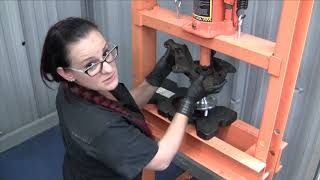
🎬 Watch: How to install a rear hub kitAre the left and right side stub axles interchangeable?
No. The mounting points and geometry are specific to the driver's side (Left) and passenger's side (Right). They cannot be swapped.
What happens if I drive on a bent stub axle?
Driving on a bent stub axle is unsafe. It will cause poor handling, unpredictable steering, and rapid, dangerous tire wear. If the damage is severe, it puts extreme stress on the wheel bearing, which could lead to a catastrophic failure and potential wheel separation.
Helpful Videos
Technical Specifications
OEM Part Numbers: G14T-26-1A0 GF4K-26-1A0 GF4K-26-1B0 BJ0E-26-115
Varies based on brake type (disc or drum) and ABS configuration. Axle nut size is typically 35mm or 36mm.
We Have This Part in Stock



The information in this article is provided for general reference and educational purposes only. Vehicle specifications, procedures, and part compatibility can vary by production date, trim level, and region. Always consult your vehicle's factory service manual and verify part numbers before purchasing or performing repairs. Safety-critical components such as airbags, seat belts, and braking systems should be installed by a qualified professional.
- Mazda Protege:
- Mazda Protege5:
- 🎬 Helpful Videos
- 🛍️ Shop This Part
- The #1 Problem: Identifying Your Correct Stub Axle
- How to Identify Your Brakes:
- Symptoms of a Bad Stub Axle
- Buying a Used Rear Stub Axle: What to Inspect
- Known Issues, Recalls, and TSBs
- Replacement Overview and Difficulty
- Cost of a Replacement Stub Axle
- Frequently Asked Questions (FAQ)
- 🎟️ Get 5% Off