

2003-2004 Lincoln Aviator Rear Knuckle: Solving Bearing Noise & Avoiding Part Mismatches
This guide covers diagnosing a bad rear wheel bearing, replacing the knuckle, and ensuring you buy the correct part for your Aviator without Roll Stability Control.
- The most critical step is verifying your Aviator does NOT have Roll Stability Control (RSC)/AdvanceTrac, as this knuckle is only for base models.
- Symptoms like humming noises are almost always caused by the press-fit wheel bearing, not the knuckle itself, but the knuckle must be removed for replacement.
- Replacement requires a hydraulic shop press, making it unsuitable for most DIY mechanics. A wheel alignment is mandatory afterward.
- Do not use a knuckle from a Ford Explorer or Mercury Mountaineer; the Aviator part is unique to accommodate larger brakes.
Symptoms of a Failing Rear Knuckle or Bearing
The cast iron knuckle itself rarely fails unless it is cracked or bent from a severe impact, like hitting a curb or a major pothole. In almost all cases, the symptoms people experience are due to a worn-out wheel bearing housed inside the knuckle. Rear wheel bearing failure is a known issue on the 2003-2004 Lincoln Aviator.
- Humming or Grinding Noise: The most common symptom is a deep, humming or rumbling noise coming from a rear wheel. This noise typically starts at higher speeds (above 40 mph) and gets louder as speed increases. It may also change in pitch or volume when turning.
- Wheel Looseness or "Play": A worn bearing can cause the wheel to feel loose. You can check this by safely jacking up the rear of the vehicle and trying to wiggle the tire by grabbing it at the top and bottom. Any noticeable clunking or movement indicates a problem.
- Vibration: A bad bearing can cause vibrations that you might feel through the seat or the entire vehicle, especially at highway speeds.
- Uneven Tire Wear: The looseness from a failed bearing can disrupt the wheel alignment, leading to accelerated or uneven tire wear patterns.
The Critical Compatibility Check: Roll Stability Control (RSC)
Before purchasing a replacement knuckle, you must determine if your 2003-2004 Aviator is equipped with Lincoln's Roll Stability Control (RSC), also called AdvanceTrac. This part is specifically for vehicles WITHOUT this feature. Using the wrong knuckle will make a repair impossible.
How to Check for RSC:
- Dashboard Button: The easiest way to check is to look for a button on your dashboard, often near the radio or climate controls, that allows you to turn the traction control system off. If you have this button, your vehicle is likely equipped with RSC.
- Startup Lights: When you first start the vehicle, an icon for stability control (often a car with squiggly lines behind it) may briefly light up on the instrument cluster if the system is present.
- Visual Part Inspection: The knuckle for a vehicle with RSC has an extra mounting boss with a threaded hole for the wheel speed sensor. The non-RSC knuckle, which this guide covers, will be a solid piece of cast iron in that area with no place to mount a sensor. Always compare a potential replacement part to your original part.
Warning: The rear knuckle for a Lincoln Aviator is NOT the same as the one for a Ford Explorer or Mercury Mountaineer of the same era. A forum post indicates the Aviator uses larger rear brakes, and its knuckle is designed to position the brake caliper further out. Do not use a knuckle from an Explorer or Mountaineer as a substitute.
Buying a Used 2003-2004 Aviator Rear Knuckle
A used OEM knuckle is an excellent, cost-effective option, as the cast iron part is extremely durable. The value is in the knuckle casting itself, not the other components that may come with it.
What to Inspect:
- Confirm Compatibility: First and foremost, verify it is the correct part: Rear, Driver Side (Left), and for a vehicle WITHOUT Roll Stability Control/AdvanceTrac.
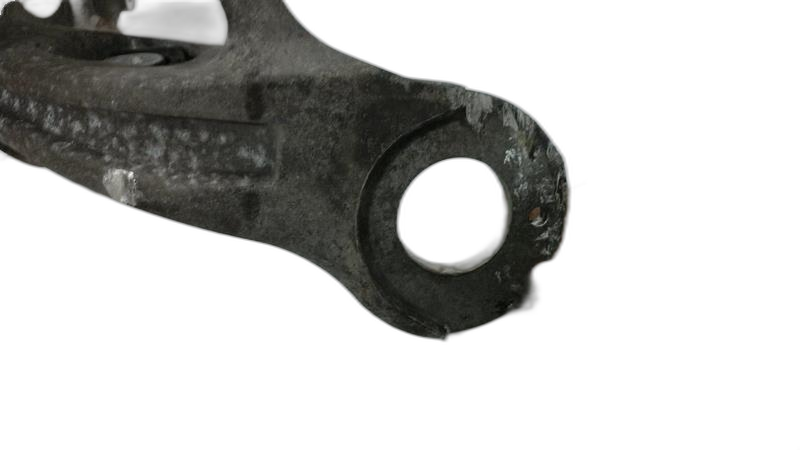
- Check for Cracks: Carefully inspect the entire knuckle for any hairline cracks, especially around the bearing bore and the mounting points for the control arms. An impact that was severe enough to send the vehicle to a salvage yard could have damaged the knuckle.
- Inspect the Bearing Bore: Look inside the hole where the wheel bearing sits. It should be a smooth, clean circle. Avoid any knuckle with deep rust, scoring, or visible distortion in this area, as it will be impossible to press a new bearing in correctly.
- Ignore Attached Parts: A used knuckle will often come with the old hub, bearing, and backing plate still attached. Assume these parts are bad. You are buying the knuckle with the full intention of pressing out the old components and installing a new wheel bearing and hub.
Replacement Overview & Difficulty
Replacing the rear knuckle is a complex and labor-intensive job. Due to the special tools required, it is not recommended for most DIY mechanics.
- Difficulty: 5 out of 5
- Special Tools: A hydraulic shop press is mandatory to remove the old wheel bearing and press in the new one without damaging it. A slide hammer may also be needed to separate the hub.
- General Steps: The process involves removing the wheel, brake caliper, and rotor. The axle nut is then removed, and the axle shaft is pushed out of the hub. All rear control arms must be disconnected from the knuckle. Once removed, the knuckle is taken to a bench where the old hub and bearing are pressed out, and the new parts are pressed in.
- Wheel Alignment: A four-wheel alignment is not optional after this repair. Replacing the knuckle directly affects all rear alignment angles. Skipping this step will result in poor handling and rapid tire wear.
Pro Tip: While the knuckle is removed, it is an ideal time to inspect the rear control arm bushings for wear, cracking, or deterioration. These rubber components are also common wear items and are much easier to replace at the same time.
Known Issues, TSBs, and Recalls
There are no open recalls for the rear suspension knuckle on the 2003-2004 Lincoln Aviator. However, Ford did issue a Technical Service Bulletin (TSB) that is directly related to the most common failure.
- TSB #051710: Titled "NOISE FROM REAR WHEEL HUB BEARINGS," this bulletin acknowledges the issue of rear wheel bearing noise that necessitates this repair.
Cost Comparison
Prices can vary by region and supplier, but this provides a general estimate for the rear driver-side knuckle assembly.
| Part Type | Estimated Cost |
|---|---|
| New OEM (Ford Part #3L2Z-5A969-BA) | $150 - $220 |
| New Aftermarket | $70 - $170 |
| Used OEM | $100 - $125 |
| Shop Labor (Knuckle Replacement) | $300 - $450 |
| Shop Labor (Bearing Only) | $245 - $360 |
Frequently Asked Questions (FAQ)
Can I just replace the wheel bearing instead of the whole knuckle?
Yes. If your existing knuckle is in good condition (not cracked or bent), a shop can press out the old bearing and press in a new one. This can save you the cost of the knuckle itself, but the labor cost is similar since the knuckle must still be removed from the vehicle to use a press.
What is the difference between the knuckle with and without Roll Stability Control (RSC)?
The knuckle for a vehicle with RSC has a dedicated mounting point with a threaded hole for a wheel speed sensor. The base model knuckle (without RSC) does not have this provision. They are not interchangeable.
Is it safe to drive with a bad wheel bearing?
It is not recommended. While the vehicle may be drivable for a short time with a noisy bearing, the condition will only get worse. A complete failure can cause the wheel to wobble excessively or seize, leading to a loss of vehicle control.
Do I need to replace the axle nut?
Yes, the large nut that holds the axle shaft in the hub is typically a one-time-use, torque-to-yield fastener. It should always be replaced with a new one during this job to ensure it does not back off while driving.
Technical Specifications
OEM Part Numbers: 1L2Z5A969AC 3L2Z-5A969-BA 3L2Z-5A969-BB 3L2Z5A969BA 3L2Z5A969BB
Position: Rear Driver Side (Left). Compatibility: For models WITHOUT Roll Stability Control (RSC) / AdvanceTrac only.
We Have This Part in Stock

The information in this article is provided for general reference and educational purposes only. Vehicle specifications, procedures, and part compatibility can vary by production date, trim level, and region. Always consult your vehicle's factory service manual and verify part numbers before purchasing or performing repairs. Safety-critical components such as airbags, seat belts, and braking systems should be installed by a qualified professional.
- Lincoln Aviator:
- 🛍️ Shop This Part
- Symptoms of a Failing Rear Knuckle or Bearing
- The Critical Compatibility Check: Roll Stability Control (RSC)
- How to Check for RSC:
- Buying a Used 2003-2004 Aviator Rear Knuckle
- What to Inspect:
- Replacement Overview & Difficulty
- Known Issues, TSBs, and Recalls
- Cost Comparison
- Frequently Asked Questions (FAQ)
- 🎟️ Get 5% Off