

2010-2019 Jaguar XJ Strut Tower Brace: Solving Front-End Clunks and Pops
This guide details the symptoms of a failing front strut tower brace on the 2010-2019 Jaguar XJ (X351), how to inspect a used part, and replacement considerations.
- The most common symptom of a failing brace is a clunking or popping noise from the front end over bumps at low speeds.
- This part is a structural component; when buying used, you must inspect it for cracks and ensure it is not bent.
- The Jaguar XJ uses different part numbers for the left and right braces: AW933A201AC and AW933A200AC are a common pair.
- Before replacing the brace, check that its mounting bolts are tight, as this can cause identical symptoms.
Symptoms of a Failing Strut Tower Brace
Failure of the strut tower brace is most often noticed as a noise from the front of the vehicle. Because it is a structural part, any looseness or cracks will cause sounds as the chassis flexes during normal driving.
- Clunking or Popping Sounds: The most common symptom is a distinct clunk, pop, or knocking sound coming from the front suspension area, especially over small bumps at low speeds. This can also occur when turning the steering wheel back and forth while stationary or at a slow crawl.
- Creaking or Squeaking: As a crack in the brace flexes, or if mounting bolts become loose, a creaking noise may develop.
- Reduced Steering Precision: While harder to notice, a failing brace can introduce a slight vagueness or looseness to the steering feel. The car may feel less "planted" or stable during turns as the front chassis flexes more than it should.
- Vibrations: In some cases, a failing brace can contribute to increased vibrations felt in the cabin or through the steering wheel, as it's no longer effectively damping structural flex.
Pro Tip: Before condemning the strut tower brace, check the torque on its mounting bolts. Loose bolts can cause identical clunking noises and are a much simpler fix. Also, be aware that similar noises can be caused by worn sway bar bushings, end links, or upper strut mounts, which are also common issues on the XJ.
Known Issues and TSBs
There are no specific recalls or widespread Technical Service Bulletins (TSBs) from Jaguar for the strut tower braces themselves on the 2010-2019 XJ. However, front-end clunking noises are a well-documented complaint among owners in forums. 🎬 Watch: Diagnose common front suspension noises on your XJ The issue is often traced to various suspension components, including control arm bushings, sway bar bushings, and the upper strut mounts. The strut tower brace can fail from metal fatigue over time, developing hairline cracks that eventually lead to noise. These failures are typically diagnosed when chasing down a persistent front-end clunk that isn't resolved by replacing other common wear items.
🎬 See this complete front suspension overhaul walkthroughBuying a Used Strut Tower Brace: What to Inspect
A used OEM strut tower brace is an excellent, cost-effective replacement part, as long as it's inspected carefully. Since this is a structural component, you must verify its integrity before installation.
- Check for Cracks: This is the most critical inspection. Thoroughly clean the brace and examine it under bright light. Pay close attention to the areas around the bolt holes and in the corners where stress is concentrated. Even a tiny hairline crack means the part is unusable.
- Verify it is Straight: The brace must be perfectly straight. Lay it on a known flat surface to check for any warping or bending. A bent brace is a clear sign it came from a vehicle involved in a front-end collision and should be rejected.
- Inspect for Corrosion: Look for any signs of heavy oxidation, which appears as a chalky white powder on the cast aluminum. While minor cosmetic blemishes are acceptable, deep corrosion can weaken the metal.
- Confirm Part Numbers: The Jaguar XJ uses a different brace for the left and right sides. Verify you are purchasing the correct one. The primary part number is AW933A201AC (often for the left/passenger side in LHD markets) and the corresponding part for the other side is AW933A200AC. Always double-check the part number you are removing against the one you are buying.
Replacement Overview
Replacing the strut tower brace is a straightforward job suitable for a DIY mechanic with basic tools.
- Installation Difficulty: 2 out of 5
- Procedure: The process generally involves removing the upper plastic cowl panels at the base of the windshield to gain access to the mounting bolts. The brace is then simply unbolted from the strut tower and the bulkhead. Installation is the reverse of removal.
- Tools Required: Basic metric socket set and a torque wrench.
- Torque Specs: While specific factory specs can be hard to find, standard torque for M8 bolts of this type is typically around 18-22 lb-ft (24-30 Nm). It is crucial not to overtighten and damage the bolts or the brace.
Cost Comparison
Opting for a used OEM brace can offer significant savings over a new part from the dealer.
| Part Type | Estimated Cost |
|---|---|
| New OEM | $150 - $250 |
| New Aftermarket | $120 - $200 (Typically performance-oriented bars, not direct OEM replacements) |
| Used OEM | $20 - $75 |
| Shop Labor | $100 - $200 |
Frequently Asked Questions (FAQ)
Do I need to replace strut tower braces in pairs?
No, it is not necessary to replace them in pairs. You can replace only the side that has failed. However, since both braces have been subjected to the same age and stress, if one fails from fatigue, the other may not be far behind.
Is this the same as an aftermarket performance strut bar?
No. This is an OEM structural component designed to be an integral part of the chassis. Aftermarket bars are typically designed to supplement the existing structure for even greater stiffness, often for high-performance driving. For a standard repair, the OEM brace is the correct part.
Can a bad strut tower brace cause uneven tire wear?
It is unlikely to be a direct cause. While a failing brace can slightly alter chassis flex, it typically does not affect static alignment angles enough to cause noticeable tire wear. Uneven tire wear is more commonly caused by bad alignment, worn control arm bushings, or failing strut mounts.
🎬 Watch: How to replace the upper strut mountsWill a bad strut tower brace show up on a diagnostic scan?
No. The strut tower brace is a purely mechanical, structural part. It has no sensors or electronics, so it will not trigger any warning lights or diagnostic trouble codes (DTCs).
Helpful Videos

Technical Specifications
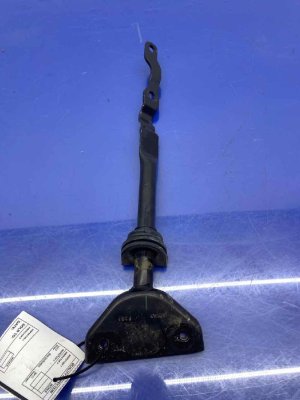
OEM Part Numbers: AW933A201AC AW933A200AC
Material: Cast Aluminum
We Have This Part in Stock

The information in this article is provided for general reference and educational purposes only. Vehicle specifications, procedures, and part compatibility can vary by production date, trim level, and region. Always consult your vehicle's factory service manual and verify part numbers before purchasing or performing repairs. Safety-critical components such as airbags, seat belts, and braking systems should be installed by a qualified professional.
- Jaguar XJ: