

2015-2019 BMW X5M & X6M Front Strut Guide: Clunks, Leaks, and Chassis Warnings
A complete guide to diagnosing, buying, and replacing the adaptive front struts on your F85 X5M or F86 X6M.
- The most definitive signs of failure are a visible oil leak on the strut body and a clunking noise over bumps.
- These are electronic 'Adaptive M' struts (VDC/EDC); replacing them with cheaper, non-electronic parts will cause system errors and poor handling.
- When replacing, it is critical to use new one-time-use bolts for safety and to perform a four-wheel alignment afterward.
- A quality used OEM strut is a cost-effective alternative to a new part, which can cost over $1,200. Inspect used parts for leaks before buying.
Symptoms of a Failing Front Strut
A failing front strut on a BMW X5M or X6M can manifest through noises, changes in handling, visual signs, and electronic warnings. Because these are adaptive struts, you may notice both mechanical and electronic symptoms.
Noises and Vibrations
- Clunking or Knocking: This is the most common symptom. You may hear a loud clunk or knock from the front of the vehicle when driving over bumps, potholes, or even small road imperfections. This sound is caused by excessive movement within the worn-out strut, which can no longer properly dampen suspension travel.
- Rattling Sounds: A looser, rattling noise can indicate that internal components of the strut have failed or that the strut is moving around in its mounts.
Changes in Ride Quality and Handling
- Bouncy or Uncontrolled Ride: A classic sign of any failed shock absorber, this feels like the vehicle is floating or bouncing multiple times after hitting a bump. The strut has lost its ability to control the spring's oscillation.
- Nose-Diving and Squatting: When you apply the brakes firmly, the front end may dip forward excessively. Conversely, the rear may squat down during hard acceleration. This indicates the struts are too weak to manage the vehicle's weight transfer.
- Unstable Cornering: The vehicle may feel less stable or 'floaty' when cornering, not providing the sharp, planted feel you expect from an M vehicle. This can be dangerous, especially at higher speeds.
Visual and Electronic Signs
- Fluid Leaks: This is a definitive sign of failure. Look for an oily, wet film covering the body of the strut. The strut contains oil, and when its seals fail, this oil leaks out, rendering the damper useless. A leaking strut will also attract a lot of road dust and grime, making it look dirty compared to a healthy, dry strut.
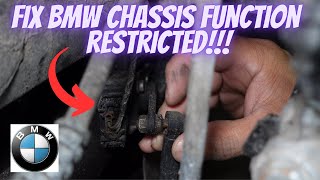
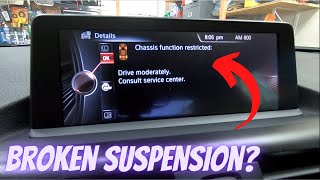
- "Chassis Function Restricted" Warning: Since these are electronic struts, a mechanical or electrical failure can trigger a warning message on the iDrive screen. The vehicle's computer monitors the struts, and if one fails to respond to commands, it will often default the system to its firmest setting and display an error. 🎬 See how to fix the chassis function restricted message
- Uneven Tire Wear: A bad strut can cause the tire to bounce erratically against the pavement, leading to a specific type of wear called 'cupping' or 'scalloping'. This appears as a pattern of alternating high and low spots along the tire's tread.
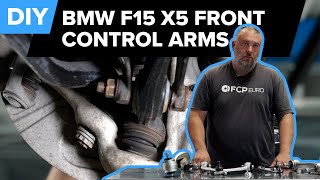
Pro Tip: Clunking noises from the front suspension can also be caused by worn control arms or tension struts. While inspecting for a bad strut, it's wise to also check the bushings on these related components for any signs of cracking or play.
🎬 Watch: How to replace front control armsBuying a Used Strut for Your X5M or X6M
Given that a new OEM adaptive strut can cost over $1,200, a used OEM part is an excellent value. However, you must inspect it carefully to ensure you're getting a good part.
What to Inspect
- Check for Leaks: This is the most important check. The strut body should be completely dry. Any sign of oil residue, wetness, or a thick layer of caked-on grime is a major red flag indicating the seals have failed.
- Inspect the Electrical Connector: Check that the connector and its wiring are intact. Look for any bent pins, frayed wires, or cracks in the connector housing.
- Examine the Physical Condition: Look for any dents, deep scrapes, or bends in the strut body or mounting points. While minor cosmetic scratches are okay, significant physical damage could compromise its function.
- Verify Part Numbers: Ensure the part number on the used strut matches the one you are replacing. The left and right struts are different. The front right (passenger side) is typically 31317856490, and the front left (driver side) is 31317856489.
Mileage Considerations
Strut life can vary greatly, but failures are commonly seen between 50,000 and 80,000 miles. When buying used, look for a part from a lower-mileage vehicle if possible. A strut from a vehicle with 40,000-60,000 miles is likely to have significant life left, especially if it came from a region with well-maintained roads.
Warning: Avoid cheap, non-electronic aftermarket struts. While they may be inexpensive, they will delete the Adaptive M Suspension functionality, leading to a permanent "Chassis Function Restricted" error and a compromised ride. A quality used OEM strut is a far better option than a new, incorrect aftermarket part.
Known Issues, TSBs, and Recalls
While there have been several recalls issued for the 2015-2019 BMW X5 and X6 platform, none specifically address the failure of the front adaptive struts.
Notable recalls for these vehicles include:
- Rear Upper Control Arm Bolts: A recall was issued for some 2019 models because the rear upper control arm pivot bolts may have been improperly hardened, potentially leading to breakage.
- Child Seat Anchors: A recall affected 2015-2019 X6 models where the lower anchor bars for child seats could become damaged over time.
- Wheel Bolts: Some 2018-2019 models were recalled because the wheel bolts may not have been properly tightened at the factory.
There are no widespread Technical Service Bulletins (TSBs) for premature front strut failure on the F85 X5M and F86 X6M. Failures are generally considered to be the result of normal wear and tear.
Replacement Overview
Replacing the front strut assembly is a job that can be done by an experienced DIY mechanic. Since these are sold as complete assemblies (including the spring), you do not need a dangerous spring compressor. The basic process involves lifting the vehicle, removing the wheel, and unbolting the assembly from the top strut mount and the lower steering knuckle.
🎬 Watch this quick front strut replacement walkthroughKey Procedures and Torque Specs
Certain bolts on BMW suspensions are torque-to-yield, meaning they are designed for one-time use and must be replaced. It is critical to use new bolts and follow the correct torque specifications to ensure safety.
| Fastener Location | Torque Spec | Notes |
|---|---|---|
| Strut to Steering Knuckle | 81 Nm | Renew screw (must use a new bolt). |
| Strut Mount to Body (Top Nuts) | 34 Nm | Replace nuts. |
Important: A four-wheel alignment is mandatory after replacing a front strut. Skipping this step will result in poor handling, crooked steering, and rapid, uneven tire wear.
Cost of Replacement
The cost to replace these adaptive struts can be high, especially when using new OEM parts from a dealership.
| Part or Service | Estimated Cost (per strut) |
|---|---|
| New OEM (Dealer) | $1,800+ |
| New OEM (Online) | $1,150 - $1,350 |
| New Aftermarket (Adaptive) | $450 - $700 |
| Used OEM (Recycled) | $300 - $600 |
| Shop Labor (per pair) | $500 - $800 |
Frequently Asked Questions (FAQ)
Can I replace just one strut?
It is highly recommended to replace struts in pairs (both front struts at the same time). If one has failed due to age and mileage, the other is likely not far behind. Replacing only one can lead to unbalanced handling and suspension performance.
Do I need to program or code the new struts?
No, typically you do not need to program or code new OEM or equivalent adaptive struts. The vehicle's Vertical Dynamics Control unit should recognize the new component automatically. However, if a "Chassis Function Restricted" error persists, the fault codes may need to be cleared with a diagnostic tool.
Is this the same as the air suspension on a regular X5?
No, it is not. The F85 X5M and F86 X6M use a coil-over-strut system with electronic dampers in the front. Standard BMW X5 models can have a completely different air suspension system, and the parts are not interchangeable. The M models only use air suspension on the rear axle.
What is the difference between a strut and a shock absorber?
A shock absorber is simply a damper. A strut is a structural component of the suspension that combines a damper and a coil spring into a single assembly, connecting the wheel hub to the vehicle's chassis. These BMWs use a strut assembly in the front.
Helpful Videos
Technical Specifications
OEM Part Numbers: 31317856490 7856490 31317856489 7856489 31317850211
Electronically controlled adaptive damper strut assembly for vehicles with Adaptive M Suspension (VDC/EDC). Not compatible with standard or air suspension systems.
We Have This Part in Stock


The information in this article is provided for general reference and educational purposes only. Vehicle specifications, procedures, and part compatibility can vary by production date, trim level, and region. Always consult your vehicle's factory service manual and verify part numbers before purchasing or performing repairs. Safety-critical components such as airbags, seat belts, and braking systems should be installed by a qualified professional.
- BMW X6M:
- BMW X5M:
- 🎬 Helpful Videos
- 🛍️ Shop This Part
- Symptoms of a Failing Front Strut
- Noises and Vibrations
- Changes in Ride Quality and Handling
- Visual and Electronic Signs
- Buying a Used Strut for Your X5M or X6M
- What to Inspect
- Mileage Considerations
- Known Issues, TSBs, and Recalls
- Replacement Overview
- Key Procedures and Torque Specs
- Cost of Replacement
- Frequently Asked Questions (FAQ)
- 🎟️ Get 5% Off