

2011-2014 Ford Edge & Lincoln MKX Radio Problems: Fixing No Sound & ACM Failures
This guide explains common issues with the Audio Control Module (ACM), including no sound, popping noises, and CD player failures, and clarifies programming requirements for replacement.
- The stereo receiver is the Audio Control Module (ACM), which is separate from the display screen and the SYNC (APIM) module.
- The most common failure symptom is no sound from any source while the display screen still appears to function normally.
- When buying a used ACM, you MUST match the part number exactly to your original unit to ensure compatibility with your vehicle's options.
- A replacement ACM is NOT plug-and-play. It requires programming with the vehicle's 'As-Built' data using dealer software or a tool like FORScan to work correctly.
Understanding the Ford/Lincoln Audio System (2011-2014)
One of the most common points of confusion for owners of the 2011-2014 Ford Edge and Lincoln MKX is the audio system's architecture. Many issues are incorrectly blamed on the touchscreen or 'the radio' as a whole. The system is modular, consisting of three key parts:
- The Display: This is either the 4.2-inch 'MyFord' screen or the 8-inch 'MyFord Touch' / 'MyLincoln Touch' touchscreen. It acts as a display and control interface. A failing screen typically has touch response issues or visual defects, but does not cause a 'no sound' problem.
- The APIM (Accessory Protocol Interface Module): This is the SYNC module. It manages Bluetooth, voice commands, USB media, and navigation functions. APIM failure often results in a black screen, the system being stuck on the Ford/Lincoln logo, or Bluetooth connectivity problems.
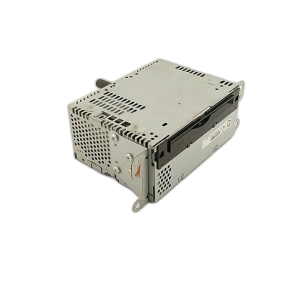
- The ACM (Audio Control Module): This is the part discussed in this guide. It is the actual radio receiver and CD player, housed in a metal box behind the dash controls. Failure of the ACM is the primary cause of issues like no audio from any source, loud popping noises, or a non-functional CD player.
Pro Tip: If your screen works and you can navigate menus, but you have no sound from AM, FM, or CD, the ACM is the most likely culprit. If your screen is black or unresponsive, the APIM module is a more likely cause.
Known Issues, TSBs, and Recalls
While there are no specific recalls for the ACM itself, several Technical Service Bulletins (TSBs) and common complaints are relevant to the audio system in these vehicles.
- TSB 14-0169: Addresses intermittent audio failure after starting the vehicle, especially in cold temperatures or with a low battery. This affects 2013-2014 Edge and MKX models. The issue is often a software glitch that can be resolved by reprogramming the ACM.
- TSB 13-1-13: For some 2013 models, this TSB addresses static, popping, or distorted sound from the speakers, particularly on FM radio. The fix is to reprogram the ACM to the latest calibration.
- No Sound in Cold Weather: A very common complaint among owners is that the audio system produces no sound on cold days, sometimes below 40°F. The radio appears to function normally—displaying the station and responding to controls—but no audio comes out. The sound may return after the vehicle warms up and is restarted. This points to an internal component failure within the ACM that is sensitive to temperature.
- General Failure: The ACM is a known failure point. Problems range from intermittent issues to complete failure, often manifesting as no sound, loud pops, or a blinking clock on the display.
Symptoms of a Failing Stereo / Receiver (ACM)
Diagnosing a bad ACM is usually straightforward based on the symptoms. If you experience one or more of the following, the ACM is the most likely cause.
- No Sound from Any Source: The most common symptom. The display screen works, you can change stations or select different inputs (AM, FM, CD, SYNC), but there is complete silence from all speakers.
- Loud Popping or Static: A loud pop or crackle from the speakers when the vehicle is started, or random static during operation. This can indicate a failure in the ACM's internal amplifier or output stage.
- Intermittent Audio: The sound may cut out and return randomly. This can be triggered by bumps, temperature changes, or for no apparent reason.
- CD Player Malfunction: The CD player may refuse to accept, eject, or play discs.
- AM/FM Reception Issues: Sudden poor reception or inability to tune into stations when you previously could.
- Blinking Clock: The clock on the display may flash continuously and fail to hold the correct time, a documented symptom of ACM failure.
Warning: Before replacing the ACM, always check the fuses first. In the interior fuse panel (driver's side footwell), fuses 5, 19, and 29 are related to the audio system. A blown fuse can cause a complete loss of power to the unit.
Buying a Used Stereo / Receiver (ACM)
Purchasing a used OEM ACM is a cost-effective way to restore your vehicle's audio. However, compatibility is critical.
- Match the Part Number EXACTLY: The most important rule is to match the engineering part number (e.g., BT4T-19C107-CC) from your original unit. These units may look identical and have the same connectors, but they are programmed differently for various vehicle options like the Sony/THX premium sound system, satellite radio, or base audio. Using a module with a different part number will likely result in it not working correctly, or at all. The part number is printed on a sticker on the module's case.
- Inspect Connectors: When you receive the used part, inspect the connector pins for any signs of corrosion, damage, or pushed-out pins.
- Source from a Reputable Supplier: Buy from a seller that offers a warranty and has a good return policy. This protects you in case the used unit is also faulty.
- Why Used OEM is Better: For this specific part, a used OEM module that is properly programmed to your vehicle is often a better choice than a new aftermarket unit. Aftermarket head units require complex wiring adapters, dash kits, and special interfaces (like iDatalink Maestro) to retain steering wheel controls and other factory features, which can be costly and complicated to install. A direct-replacement OEM unit avoids these hassles.
Programming and Installation
Replacing the ACM is not always a simple plug-and-play process.
Physical Installation: The ACM is located behind the main center stack control panel. To access it, you must carefully pry off the large trim piece that surrounds the screen and controls. The ACM itself is then held in by four 7mm or 8mm screws. The process is relatively simple and requires only basic tools.
Programming Requirements: A replacement ACM, even with a matching part number, must be programmed to your vehicle's specific configuration. This is done by loading the vehicle's 'As-Built' data into the module. This data tells the ACM which features your car has (e.g., Sony amplifier, number of speakers, satellite radio).
- Dealer Programming: A Ford or Lincoln dealer can program the module using their IDS software.
- DIY Programming with FORScan: A popular and cost-effective method for DIYers is to use FORScan software on a laptop with a compatible OBD-II adapter. The process involves connecting to the vehicle, backing up the configuration from the old module (if possible), installing the new module, and writing the saved configuration to it. If the old module is dead, you can download your vehicle's original As-Built data from Ford's website using your VIN and load that into the new module.
Warning: Failure to program the ACM will likely result in no sound, or features not working correctly. For example, an ACM from a vehicle with the base sound system will not work correctly in a vehicle equipped with the Sony or THX premium amplified system until it is programmed for that option.
Cost Comparison
| Part Type | Estimated Cost |
|---|---|
| New OEM (Dealer) | $600 - $1,200+ |
| New Aftermarket (Head Unit + Install Kit) | $400 - $1,000+ |
| Used OEM (Salvage) | $50 - $200 |
| Remanufactured OEM | $150 - $350 |
| Shop Labor (Replacement & Programming) | $150 - $400 |
Frequently Asked Questions (FAQ)
Will replacing the ACM fix my unresponsive touchscreen?
No. The touchscreen is part of the display unit, and its responsiveness is managed by the APIM (SYNC) module. A failing ACM causes audio problems like 'no sound', but does not affect the screen's operation.
Do I need an anti-theft code after replacing the ACM?
No. Unlike older Ford radios, these modules do not use a traditional anti-theft code. They are, however, tied to the vehicle's specific configuration and require programming (As-Built data) to function correctly.
Can I install an ACM from a Lincoln MKX into a Ford Edge, or vice-versa?
While they are physically identical and share part numbers, it is not recommended. The internal programming can have subtle differences related to the vehicle's branding and specific features (e.g., THX audio in the Lincoln). Even if programmed, some functions may not work correctly. It is always best to use a module from the same model.
My radio only stops working when it's cold outside. Is the ACM bad?
This is a very common symptom of a failing ACM. Electronic components and solder joints on the internal circuit board can contract in the cold, causing a temporary open circuit. When the cabin warms up, the connection is sometimes restored. This is a clear sign that the ACM needs to be repaired or replaced.
Can an independent shop or locksmith program the new ACM?
Many independent shops with advanced diagnostic tools capable of module programming (like Autel or Snap-on scanners with the right software) can perform the programming. A DIY-savvy owner can also do it with FORScan software and a compatible adapter. A locksmith is generally not equipped for this type of module programming.
Technical Specifications
OEM Part Numbers: BT4T-19C107-CA BT4T-19C107-CB BT4T-19C107-CC BT4T-19C107-CD BT4T-19C107-CE BT4T-19C107-CF BT4T-19C107-CG BT4T-19C107-CH BT4T-19C107-CJ BT4T-19C107-CK BT4T-19C107-CL BT4T-19C107-CM BT4T-19C107-CN BT4T-19C107-CP BT4T-19C107-FA BT4T-19C107-FB BT4T-19C107-EB BT4Z-18C869-CA
Single-disc CD/MP3 player with AM/FM tuner. Integrates with SYNC system. Output varies based on vehicle configuration (base audio vs. premium amplified Sony/THX systems).
We Have This Part in Stock





The information in this article is provided for general reference and educational purposes only. Vehicle specifications, procedures, and part compatibility can vary by production date, trim level, and region. Always consult your vehicle's factory service manual and verify part numbers before purchasing or performing repairs. Safety-critical components such as airbags, seat belts, and braking systems should be installed by a qualified professional.
- Ford Edge:
- Lincoln MKX: