

Tesla Model 3 & Y Steering Wheel (2017-2026): Peeling, Recalls, and Highland Incompatibility
This guide covers the common peeling material defect, critical safety recalls, and the crucial compatibility differences for Tesla Model 3 and Model Y steering wheels.
- The #1 compatibility trap: Wheels for 2024+ 'Highland' models without stalks are NOT interchangeable with older cars that have stalks.
- Widespread peeling and bubbling of the vegan leather is a known cosmetic issue (TSB SB-23-32-003), but warranty coverage is not guaranteed.
- A critical safety recall was issued for some 2022-23 Model Ys for steering wheels that could detach while driving due to a missing bolt.
- If your car did not come with a heated wheel from the factory, simply swapping to a heated wheel will not work without an additional aftermarket module.
Critical Safety Recalls and Investigations

Warning: Before diagnosing any issue, be aware of two major safety concerns investigated by the National Highway Traffic Safety Administration (NHTSA). While these issues may not be caused by the steering wheel itself, their symptoms are directly related to steering control.
- Steering Wheel Detachment: A small number of 2022-2023 Model Y vehicles were recalled (NHTSA ID: 23V-402) because the steering wheel could detach while driving. This was caused by a missing or improperly torqued retaining bolt from the factory. 🎬 Watch: News report on the NHTSA steering wheel detachment investigation. If your steering wheel feels loose or makes a clunking noise, stop driving immediately and have the vehicle inspected.
- Loss of Power Steering: A large-scale NHTSA investigation (Engineering Analysis: EA24-001) is ongoing for 2023 Model 3 and Model Y vehicles for a sudden loss of power steering or a 'notchy' feeling while turning. This can make the vehicle extremely difficult to steer. Tesla has issued an over-the-air software update (version 2023.38.4 and later) to address a potential cause, but thousands of complaints have been filed. This issue is typically related to the steering rack, not the steering wheel itself.
Critical Compatibility Warnings: Stalks, Heating, and Model Refreshes

The single most important factor when purchasing a replacement steering wheel for a Model 3 or Model Y is ensuring it is compatible with your specific vehicle's year and features. A wheel from a newer model will NOT work on an older model, and vice-versa.
2017-2023 Model 3 & 2020-Early 2024 Model Y (Stalk-Equipped)
These vehicles feature a traditional steering column with a gear selector stalk on the right and a turn signal/wiper stalk on the left. The steering wheels for these models are designed to work with this setup. They will have two scroll wheels and a standard horn pad/airbag. Part numbers commonly associated with this generation include the 1490214 series.
2024+ Model 3 ('Highland') & 2025+ Model Y ('Juniper')
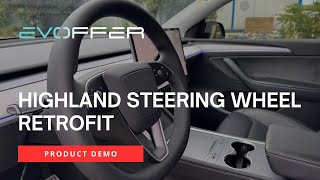
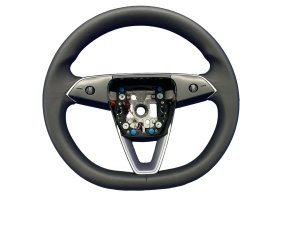
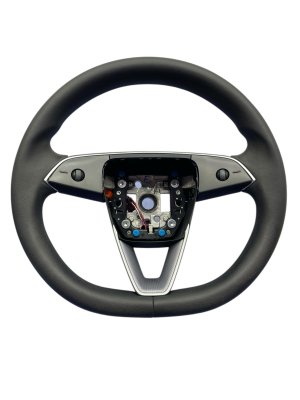
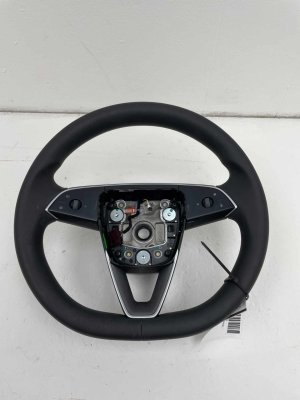
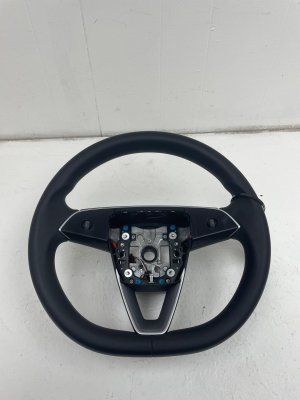
The refreshed Model 3, known as 'Highland', and the upcoming Model Y 'Juniper' refresh, eliminate the steering column stalks. Turn signals, high beams, wipers, and the horn are all controlled by capacitive touch buttons directly on the steering wheel itself. These wheels are electronically different and are NOT a direct swap for older models. Attempting to install a Highland wheel on a pre-Highland car will result in non-functional buttons without a special aftermarket decoder module. Part numbers for this new design include the 1735339 series.
Heated Steering Wheel Functionality
The heated steering wheel feature became standard around the 2021 model year.
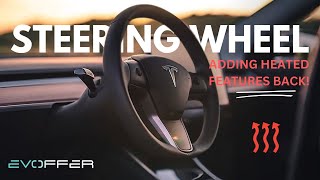
- If your car came with a heated wheel: You must replace it with another heated wheel to retain the function. The wiring is present in the wheel.
- If your car did NOT come with a heated wheel (typically pre-2021): You cannot simply install a heated wheel and expect it to work. The vehicle's computer and wiring harness are different. Aftermarket kits are available that include a special module to enable heating, but it is not a plug-and-play OEM upgrade.
Symptoms of a Failing Steering Wheel

Bubbling, Peeling, or Tacky Material
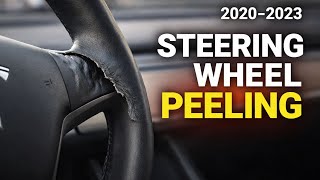
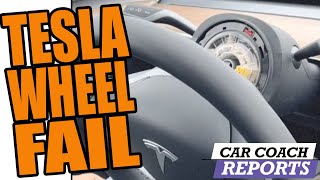
This is the most common issue. The vegan leather (polyurethane) material on the wheel begins to separate from the core, creating bubbles, wrinkles, or peeling edges. It most often occurs at the 3 and 9 o'clock positions where hands rest. This is widely believed to be caused by a combination of heat, sun exposure, and chemical reactions with hand lotions or sanitizers. 🎬 See this explanation of why Tesla steering wheels peel and bubble. While Tesla has a service bulletin for this issue (SB-23-32-003), warranty claims are sometimes denied as 'normal wear and tear'.
Malfunctioning Buttons or Scroll Wheels
The scroll wheels or other buttons on the steering wheel may become unresponsive or function intermittently. This can sometimes be a software glitch that is fixed with a system reboot (holding down both scroll wheels until the center screen restarts). If the problem persists, it could be a failure in the button contacts, the internal wiring, or the clock spring (a separate part that connects the wheel's electronics to the car).
Heated Wheel Inoperative
If your vehicle is equipped with a heated steering wheel and it no longer heats up, the first step is to check the on-screen controls. If the function is enabled but the wheel remains cold, the heating element within the steering wheel has likely failed. This requires replacement of the entire steering wheel assembly.
Buying a Used Tesla Steering Wheel: What to Check

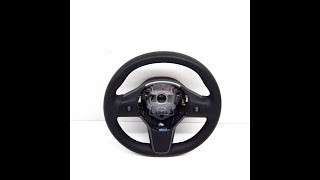
A used OEM steering wheel is an excellent, cost-effective replacement for a damaged or peeling unit, provided you verify compatibility.
- Match Your Generation: This is the most critical check. Does your car have stalks? If yes, you need a wheel from a stalk-equipped car (pre-Highland). Does your car have no stalks? You need a 'Highland' style wheel. They are not interchangeable.
- Inspect the Material Closely: Look for any signs of the beginning of bubbling or peeling, especially around the sides and top. Press firmly on the grip areas; it should feel solid, not squishy or separated. Avoid wheels that already feel tacky or sticky.
- Check the Buttons and Scroll Wheels: Physically click the buttons and roll the scroll wheels. They should move freely without sticking and have a consistent, tactile click.
- Verify Heated Function: If your car has a heated wheel, you must buy a replacement that also has the heating element. It is difficult to tell visually. The best way is to match the part number. Part numbers like 1490214-00-C are known to be heated. Ask the seller to confirm the feature was working on the donor vehicle.
- Airbag is NOT Included: The steering wheel is sold as the wheel itself. You will reuse your original airbag and control switches. Ensure the used wheel you are buying is just the wheel core, as shipping airbags is heavily restricted.
Pro Tip: When in doubt, match the part number. The OEM part number is the single best way to guarantee you are getting the correct wheel for your vehicle's specific configuration.
Replacement Overview
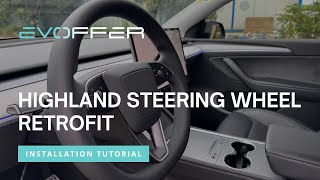
Replacing the steering wheel is a manageable DIY task for those comfortable with basic tools. The airbag must be handled carefully.
- Difficulty: 3 out of 5
- Estimated Time: 0.5 - 1 hour
- Tools Needed: T-20 and T-10 Torx drivers, 10mm hex bit socket, small screwdriver or punch to release airbag clips.
Simplified Steps:
- From the vehicle's touchscreen, power off the vehicle completely.
- Disconnect the 12V battery.
- Use a small screwdriver or punch to release the two or three spring clips holding the airbag module to the wheel.
- Carefully lift the airbag, disconnect its electrical connector, and set it aside in a safe place, pad-side up.
- Use a 10mm hex socket to remove the center bolt holding the steering wheel to the column.
- Transfer the control button pods 🎬 Watch: Step-by-step DIY tutorial for installing your new steering wheel. from the old wheel to the new one.
- Install the new wheel, ensuring it is straight. Torque the center bolt to specification (approximately 22 ft-lbs or 30 Nm).
- Reconnect the airbag and press it firmly back into place until it clicks.
- Reconnect the 12V battery and power the vehicle on to test all functions.
Cost Comparison
| Item | Estimated Cost |
|---|---|
| New OEM | $400 - $700 |
| New Aftermarket | $350 - $1,000+ (Varies widely with style/materials) |
| Used OEM | $150 - $300 |
| Shop Labor | $100 - $200 |
Frequently Asked Questions (FAQ)
Can I install a 'Highland' (no stalk) steering wheel on my older Model 3/Y?
No, not as a direct replacement. The wiring and electronics are completely different. While some aftermarket companies offer complex conversion kits, it is not a simple plug-and-play swap.
Can I upgrade my non-heated steering wheel to a heated one?
Not with OEM parts alone. Vehicles without the factory heated wheel lack the necessary software and wiring. You would need to purchase a heated wheel and a special aftermarket control module to enable the function.
Is the peeling steering wheel covered under warranty?
It depends. Tesla has a Technical Service Bulletin (TSB) acknowledging the issue (SB-23-32-003). However, many owners report that service centers classify the problem as 'normal wear and tear' and deny warranty coverage, especially if the vehicle is out of its basic warranty period or if they suspect harsh cleaning chemicals were used.
Does replacing the steering wheel void my car's warranty?
Replacing the steering wheel with a genuine OEM part should not void your vehicle's warranty. However, if an issue arises that can be directly attributed to the installation or the part itself, Tesla may deny a warranty claim for that specific issue. Installing an aftermarket wheel, especially one that modifies the electronics, has a higher chance of causing warranty complications.
Helpful Videos
Technical Specifications
OEM Part Numbers: 1095222 1095222-00-K 1095222-00-L 1095222-00-O 1095222-90-O 1490214-00-B 1490214-00-C 1490214-CN-B 1735339-00-E 1735339-00-F 1735339-00-G 1735339-70 1735339-70-E 1735339-CN-E 2003660-00-F
Center retaining bolt torque: 22 ft-lbs (30 Nm). Uses a 10mm hex socket for removal.
We Have This Part in Stock

The information in this article is provided for general reference and educational purposes only. Vehicle specifications, procedures, and part compatibility can vary by production date, trim level, and region. Always consult your vehicle's factory service manual and verify part numbers before purchasing or performing repairs. Safety-critical components such as airbags, seat belts, and braking systems should be installed by a qualified professional.
- Tesla Model 3:
- Tesla Model Y:
- 🎬 Helpful Videos
- 🛍️ Shop This Part
- Critical Safety Recalls and Investigations
- Critical Compatibility Warnings: Stalks, Heating, and Model Refreshes
- 2017-2023 Model 3 & 2020-Early 2024 Model Y (Stalk-Equipped)
- 2024+ Model 3 ('Highland') & 2025+ Model Y ('Juniper')
- Heated Steering Wheel Functionality
- Symptoms of a Failing Steering Wheel
- Bubbling, Peeling, or Tacky Material
- Malfunctioning Buttons or Scroll Wheels
- Heated Wheel Inoperative
- Buying a Used Tesla Steering Wheel: What to Check
- Replacement Overview
- Cost Comparison
- Frequently Asked Questions (FAQ)
- 🎟️ Get 5% Off