

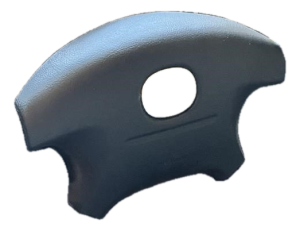
2000-2002 Mazda 626 Steering Wheel Air Bag: SRS Light, Recalls, and Replacement Guide
This guide covers the common causes of an SRS warning light, critical compatibility details for the 2000 model year, and why professional installation is essential for your Mazda 626.
- If the SRS warning light is on, the entire air bag system is disabled and will not deploy in an accident.
- Installation of this part MUST be done by a qualified professional due to extreme safety risks and potential legal liability.
- For the 2000 model year, this air bag ONLY fits vehicles built on or after October 4, 1999 (VIN 116742+).
- Always check your VIN on the NHTSA website for potential open Takata inflator recalls, which are repaired for free by Mazda dealers.
Symptoms of a Faulty Steering Wheel Air Bag
The most common and serious symptom of a problem with the steering wheel air bag, or any part of the SRS system, is an illuminated warning light on your instrument cluster. This light typically looks like a person with an air bag deployed or simply says "SRS" or "AIR BAG".
- Solid SRS Light: A light that stays on continuously after the initial startup check indicates a current fault in the system. The SRS computer has detected a problem and has disabled the entire air bag system for safety.
- Flashing SRS Light: On some Mazda vehicles, the SRS light may flash a specific pattern. This is a diagnostic code that can help a technician pinpoint the source of the fault. For example, different flash patterns can point to issues with the driver's air bag, passenger's air bag, seat belt pretensioners, or various sensors.
Warning: If the SRS light is on, your vehicle's entire air bag system is disabled. No air bags will deploy in an accident until the fault is diagnosed and repaired. Do not ignore this warning light.
Known Issues, Recalls, and Compatibility Warnings
Takata Air Bag Inflator Recall
While there are no specific recalls for the entire steering wheel air bag module on the 2000-2002 Mazda 626, these vehicles fall into the age range affected by the massive Takata air bag inflator recall. This recall addresses defective inflators that can rupture during deployment, sending metal fragments toward vehicle occupants. This is an extremely dangerous condition that has been linked to serious injuries and deaths.
It is essential that you check if your specific vehicle is affected. You can check for any open recalls for free by entering your 17-digit Vehicle Identification Number (VIN) on the NHTSA website at NHTSA.gov/recalls. If your vehicle has an open recall, a Mazda dealer will replace the inflator free of charge.
Critical 2000 Model Year Compatibility Warning
There was a mid-year production change for the 2000 Mazda 626. The steering wheel air bag is specific to the vehicle's build date.
- This air bag fits all 2001 and 2002 Mazda 626 models.
- It fits 2000 Mazda 626 models built on or after October 4, 1999. This corresponds to vehicles with a VIN of 116742 and higher.
Before purchasing a replacement, you must verify your vehicle's production date, which can be found on the sticker in the driver's side door jamb. Using the wrong air bag may result in it not fitting or not functioning correctly.
Pro Tip: While some parts catalogs may show confusing date ranges like "From 5/29/98", the most reliable information for North American models points to the October 1999 changeover for the 2000 model year. Always verify with the donor vehicle's VIN or your vehicle's build date.
Buying a Used 2000-2002 Mazda 626 Air Bag
Buying a used OEM air bag can be a safe and cost-effective option, but only if you follow strict guidelines. Given the safety-critical nature of this part, cheap aftermarket copies are not available or recommended.
- Source Matters: Only purchase used SRS components from reputable, licensed, and certified auto recyclers who can provide information about the donor vehicle.
- Verify Compatibility: Double-check that the part number (e.g., GG2A57K00B29) matches and, most importantly, that the donor vehicle's year and production date are compatible with yours.
- Visual Inspection: Carefully inspect the air bag module upon arrival. Look for any signs of damage, such as cracks in the plastic housing, cut or frayed wires, and corrosion on the electrical connectors. Reject any part that looks damaged or shows signs of water exposure.
- Never Buy Deployed: Air bags are single-use items. Never purchase an air bag that has been deployed or one from a vehicle that was in a major front-end collision, even if the bag itself did not deploy.
Why Professional Installation is Non-Negotiable
Replacing a steering wheel air bag is NOT a do-it-yourself job. The risks associated with improper installation are severe and multifaceted.
Safety Risks
An air bag is a pyrotechnic device. It contains an explosive charge. Mishandling it without proper training and precautions can cause it to deploy accidentally, resulting in serious injury or even death. Technicians are trained to follow specific procedures, including disconnecting the vehicle's battery and waiting for the system's backup power to discharge before handling any SRS components.
Legal and Financial Liability
If you install an air bag yourself and it fails to operate correctly in a future accident, you could be held legally and financially liable for any resulting injuries. Similarly, repair shops carry liability insurance and employ certified technicians for this reason. Federal law does not force used car dealers to replace deployed air bags, but state laws and civil liability are a major deterrent against selling cars with non-functional safety systems.
System Reset and Calibration
After a new or used air bag is installed, the SRS control module must be scanned for diagnostic trouble codes. Any codes must be cleared, and the system must be verified to be functioning correctly using a professional-grade diagnostic tool. Simply disconnecting the battery is not sufficient to reset the SRS module, especially if it has stored crash data.
Related Components: The Clock Spring
The clock spring is a circular electrical connector located between the steering wheel and the steering column. It contains a coiled ribbon of wires that allows the steering wheel to turn while maintaining a constant electrical connection for the air bag, horn, and any steering wheel-mounted controls (like cruise control). A broken clock spring is a common reason for the SRS light to illuminate and will prevent the driver's air bag from deploying. Because replacing the clock spring requires removing the steering wheel and air bag, it is often recommended to inspect or replace a faulty clock spring at the same time as the air bag module.
Cost of Replacement
The cost to replace a steering wheel air bag can vary based on the source of the part and local labor rates. Here are some approximate costs:
| Part/Service | Estimated Cost | Notes |
|---|---|---|
| New OEM Air Bag | $600 - $910 | Price from a Mazda dealership. |
| Used OEM Air Bag | $75 - $200 | Price from a reputable auto recycler. |
| New Aftermarket | Not Available | Not manufactured or recommended for safety reasons. |
| Shop Labor | $200 - $400 | Includes installation and clearing of SRS codes. |
Frequently Asked Questions (FAQ)
Can I install a steering wheel air bag myself to save money?
No. This is a job that must be performed by a qualified professional. The risk of accidental deployment, causing serious injury, is very high. Furthermore, improper installation can cause the air bag to fail in an accident, and you may be held legally liable.
My SRS light is on. Does this mean my air bag is bad?
Not necessarily. The SRS light indicates a fault somewhere in the Supplemental Restraint System. While it could be the air bag module itself, it is also commonly caused by a faulty clock spring, a bad seat belt sensor, a wiring issue, or a problem with the main SRS control unit. A professional diagnosis is required to identify the exact cause.
Will a used air bag be safe?
A used OEM air bag can be safe if it is sourced from a reputable auto recycler, has been inspected, has no signs of damage or deployment, and is correctly installed by a professional technician. Never buy a used air bag from an unknown source or one that shows any signs of damage.
How do I know if this air bag fits my 2000 Mazda 626?
You must check the production date of your vehicle, which is printed on a sticker inside the driver's door jamb. This air bag is for models built on or after October 4, 1999 (VIN 116742 and up). If your car was built before this date, you will need a different part number.
Technical Specifications
OEM Part Numbers: GG2A57K00 GG2A57K00B29 GG2A57K00B90
Fits 2000 models built on or after 10/4/1999 (from VIN 116742). Fits all 2001 and 2002 models.
We Have This Part in Stock


The information in this article is provided for general reference and educational purposes only. Vehicle specifications, procedures, and part compatibility can vary by production date, trim level, and region. Always consult your vehicle's factory service manual and verify part numbers before purchasing or performing repairs. Safety-critical components such as airbags, seat belts, and braking systems should be installed by a qualified professional.
- Mazda 626:
- 🛍️ Shop This Part
- Symptoms of a Faulty Steering Wheel Air Bag
- Known Issues, Recalls, and Compatibility Warnings
- Takata Air Bag Inflator Recall
- Critical 2000 Model Year Compatibility Warning
- Buying a Used 2000-2002 Mazda 626 Air Bag
- Why Professional Installation is Non-Negotiable
- Safety Risks
- Legal and Financial Liability
- System Reset and Calibration
- Related Components: The Clock Spring
- Cost of Replacement
- Frequently Asked Questions (FAQ)
- 🎟️ Get 5% Off