

2003-2006 Mitsubishi Outlander Steering Knuckle: Noises, Recalls, and ABS vs. Non-ABS Guide
This definitive guide covers the noises and symptoms of a bad steering knuckle or wheel bearing, and how to choose the correct used part for your 2003-2006 Outlander.
- The most critical step is verifying if your Outlander has ABS. The knuckles for ABS and non-ABS cars are different and not interchangeable. Check for an ABS sensor hole on the knuckle.
- Symptoms like grinding or humming are usually the wheel bearing inside the knuckle, not the knuckle itself. When buying used, always check the condition of this bearing.
- A recall for front crossmember corrosion (NHTSA SR-16-003) affects these vehicles in salt-belt states. Inspect this area carefully during the repair.
- A professional wheel alignment is mandatory after replacing a steering knuckle to prevent unsafe handling and rapid tire wear.
Symptoms of a Failing Steering Knuckle
The steering knuckle itself is a very durable cast part that typically only fails from a major impact like hitting a curb or a severe pothole. More often, the symptoms people notice are from the wheel bearing housed inside the knuckle, or from worn ball joints connected to it. Here’s what to look and listen for:
- Grinding, Whining, or Humming Noises: This is the classic sign of a bad wheel bearing. The noise is usually speed-dependent, getting louder as you drive faster. It may change or disappear when you turn the steering wheel; for example, a noise that gets louder when turning left often points to a bad right-side wheel bearing.
- Clunking or Popping Sounds: A clunking noise when going over bumps or during sharp, low-speed turns often indicates a worn lower ball joint, which connects the control arm to the knuckle.
- Vibration in the Steering Wheel: A vibration or pulsing feeling in the steering wheel, especially at highway speeds, can be caused by a worn wheel bearing or a bent knuckle that is throwing the wheel assembly out of balance.
- Vehicle Pulling to One Side: If the knuckle is bent from an impact, it will alter the suspension geometry (camber and toe angles). This can cause the vehicle to pull to one side and may not be correctable with a standard alignment.
- Uneven Tire Wear: A direct result of incorrect alignment from a bent knuckle is accelerated wear on the inner or outer edge of a tire.
- Loose or Wandering Steering: Excessive play in the steering can be caused by wear in the knuckle's mounting points for the ball joint or tie rod, making the vehicle feel less responsive.
Known Issues, Recalls, and TSBs for 2003-2006 Outlander
While there are no recalls or Technical Service Bulletins (TSBs) specifically for the steering knuckle on the 2003-2006 Outlander, there is a critical safety recall that affects the front suspension.
NHTSA Recall SR-16-003: Front Crossmember Corrosion
This recall was issued for Outlanders sold or registered in salt-belt states. Road salt can cause severe corrosion on the front subframe (crossmember). In advanced cases, this can lead to the front lower control arm mount breaking away from the crossmember, causing a sudden loss of vehicle control.
Pro Tip: If you are replacing a steering knuckle, you will already be working in this area. It is an excellent time to thoroughly inspect the front crossmember for rust, especially around the control arm mounting points. If significant corrosion is present, the vehicle may be unsafe to drive and should be inspected by a dealer for the recall repair.
Buying a Used 2003-2006 Outlander Steering Knuckle
A used OEM steering knuckle is an excellent, cost-effective replacement part, as the knuckle itself rarely fails. However, verifying you have the correct part is critical, as there are key differences between models.
Compatibility: The ABS vs. Non-ABS Check
The most important factor when choosing a knuckle is whether your Outlander is equipped with an Anti-lock Braking System (ABS). The knuckles are different, and they are not interchangeable.
- Knuckle with ABS: Will have a small, threaded mounting hole for the wheel speed sensor. You will see the sensor bolted to your original knuckle with a wire leading from it.
- Knuckle without ABS: Will be a solid casting with no mounting hole for an ABS sensor.
Warning: You must match the replacement knuckle to your vehicle's braking system. Installing a non-ABS knuckle on an ABS-equipped vehicle will leave you with no place to mount the sensor, disabling your ABS. Conversely, an ABS knuckle on a non-ABS car will leave an open hole, which is not ideal.
Compatibility: FWD vs. AWD
Research does not show a difference in the steering knuckle part itself between Front-Wheel Drive (FWD) and All-Wheel Drive (AWD) models for this generation. However, it is always best practice to visually compare the used part to your original part before installation to ensure all mounting points match perfectly.
Physical Inspection Checklist
When buying a used knuckle, perform these checks:
- Check for Cracks: Carefully inspect the entire part for hairline cracks, especially around the strut mounts, ball joint taper, and the bore where the wheel bearing is pressed in. A cracked knuckle is unsafe and must be discarded.
- Inspect the Wheel Bearing: Most used knuckles come with the hub and bearing already installed. Grab the hub and try to spin it. It should be completely silent and smooth. Any grinding, roughness, or noise means the bearing is bad and will need to be replaced—a job that requires a hydraulic press.
- Check for Play: Try to wiggle the hub side-to-side. There should be zero play. Any movement indicates a worn bearing.
- Examine Mounting Holes: Check the threaded holes for the brake caliper and the tapered hole for the ball joint. Damaged threads or a distorted ball joint hole can make the knuckle unusable.
Replacement Overview and Torque Specs
Replacing a steering knuckle is an advanced DIY job that requires significant disassembly of the suspension. An alignment is mandatory after the job is complete to prevent tire damage and ensure safe handling.
Related Parts to Replace
While the knuckle is off, it's wise to consider replacing other nearby wear items:
- Wheel Bearing: If the bearing in the used knuckle is old or shows any signs of wear, it's best to have a new one pressed in before installation.
- Axle Nut: The large nut holding the CV axle in the hub is a one-time-use part and must be replaced with a new one.
- Lower Ball Joint & Outer Tie Rod End: Inspect these for any play or torn rubber boots. They are easy to replace at the same time.
Torque Specifications
Using correct torque is critical for safety. Always use a torque wrench for final tightening.
| Component | Torque Spec | Notes |
|---|---|---|
| Front Axle Nut | 181 ft-lbs (245 Nm) | Must use a new nut. |
| Strut-to-Knuckle Bolts | 123 ft-lbs (167 Nm) | Connects the bottom of the strut to the knuckle. |
| Brake Caliper Bracket Bolts | 74 ft-lbs | |
| Lower Ball Joint Pinch Bolt/Nut | 52 ft-lbs | |
| Outer Tie Rod End Castle Nut | 18 ft-lbs | Always use a new cotter pin. |
Cost Comparison: New vs. Used
Replacing a steering knuckle can be costly, but buying a used OEM part offers significant savings.
| Part/Service | Estimated Cost (Per Side) |
|---|---|
| New OEM | $340 - $500 |
| New Aftermarket | $225 - $350 |
| Used OEM | $75 - $150 |
| Shop Labor | $240 - $350 |
| Mandatory Wheel Alignment | $100 - $200 |
Frequently Asked Questions (FAQ)
Do I need an alignment after replacing a steering knuckle?
Yes, absolutely. The steering knuckle is a primary component that determines your vehicle's alignment angles. Replacing it will alter the alignment, and failure to have it professionally aligned will result in poor handling and rapid tire wear.
Can I just replace the wheel bearing instead of the whole knuckle?
Yes. If the knuckle itself is not damaged, you can replace just the wheel bearing. However, this requires a hydraulic press to remove the old bearing and press in the new one, which most DIY mechanics do not have. For many, replacing the entire knuckle assembly (with a good used bearing) is faster and easier.
What is the difference between the left and right steering knuckle?
The left (driver's side) and right (passenger's side) knuckles are mirror images of each other and are not interchangeable. Ensure you are purchasing the correct side for your repair.
How do I know if my 2003-2006 Outlander has ABS?
The easiest way is to look at your dashboard when you first start the car; an amber "ABS" light should illuminate briefly. You can also look at the steering knuckle on your vehicle. If you see a wire leading to a sensor that is bolted onto the back of the knuckle, your vehicle has ABS.
Technical Specifications
OEM Part Numbers: MN101357 MN101363 MR491323 MR491324 MR491325 MR491326
Compatibility is primarily determined by the presence or absence of a mounting hole for an ABS wheel speed sensor. Part numbers vary for Left and Right sides. FWD and AWD models appear to use the same knuckle.
We Have This Part in Stock


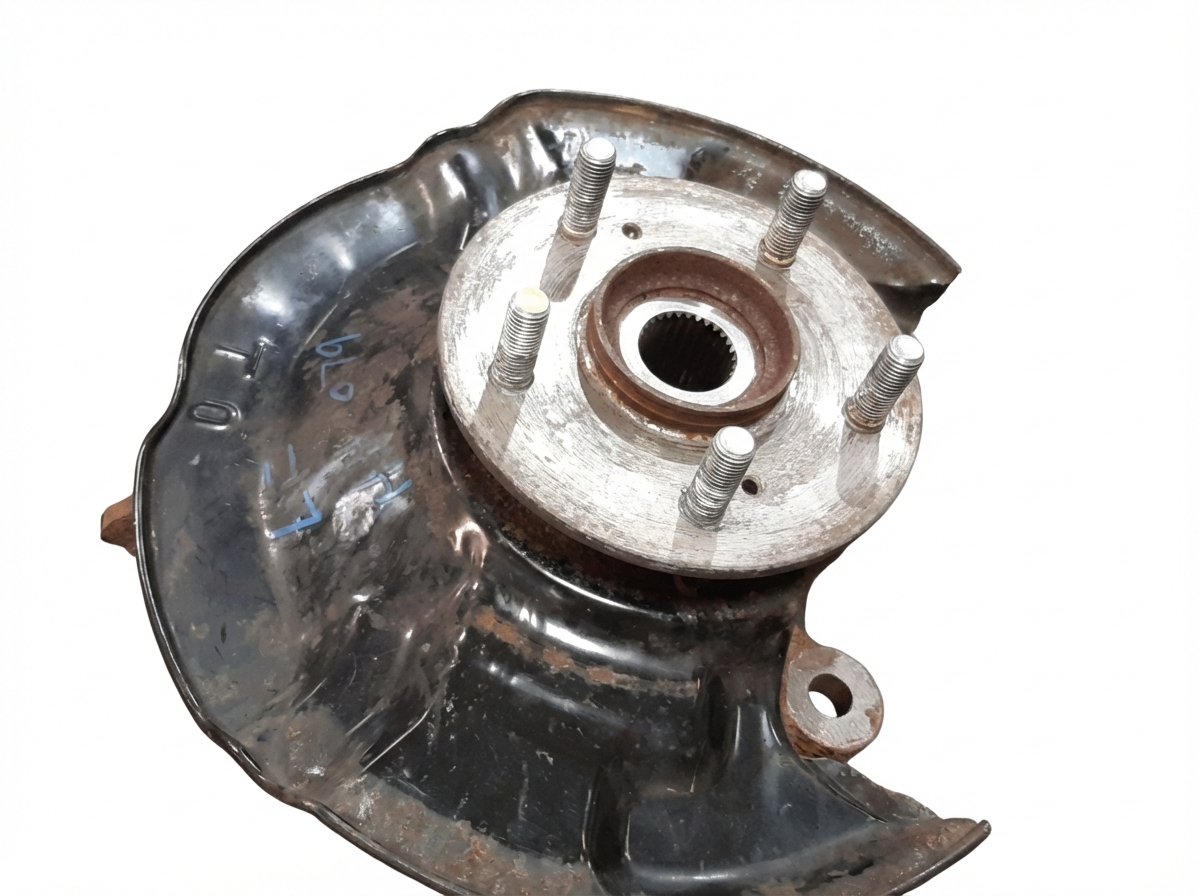

The information in this article is provided for general reference and educational purposes only. Vehicle specifications, procedures, and part compatibility can vary by production date, trim level, and region. Always consult your vehicle's factory service manual and verify part numbers before purchasing or performing repairs. Safety-critical components such as airbags, seat belts, and braking systems should be installed by a qualified professional.
- Mitsubishi Outlander:
- 🛍️ Shop This Part
- Symptoms of a Failing Steering Knuckle
- Known Issues, Recalls, and TSBs for 2003-2006 Outlander
- NHTSA Recall SR-16-003: Front Crossmember Corrosion
- Buying a Used 2003-2006 Outlander Steering Knuckle
- Compatibility: The ABS vs. Non-ABS Check
- Compatibility: FWD vs. AWD
- Physical Inspection Checklist
- Replacement Overview and Torque Specs
- Related Parts to Replace
- Torque Specifications
- Cost Comparison: New vs. Used
- Frequently Asked Questions (FAQ)
- 🎟️ Get 5% Off