

2023-2025 Mazda CX-50 Steering Knuckle: Noises, Recalls, and Replacement Guide
A deep dive into the common failure points, recalls, and replacement costs for the front steering knuckle on the 2023-2025 Mazda CX-50.
- A clicking noise when turning on a CX-50 is most likely a failing CV axle, not the wheel bearing or knuckle.
- A safety recall exists for some 2025 models for improperly torqued suspension bolts connecting to the knuckle; check your VIN.
- The wheel bearing is a simple bolt-on assembly, making it easy to replace without removing the knuckle.
- A wheel alignment is mandatory after any steering knuckle replacement to ensure safety and prevent tire damage.
Known Issues for 2023-2025 Mazda CX-50

While the steering knuckle itself is a robust component, its related parts are the primary source of issues on the CX-50. As this is a relatively new vehicle platform, long-term wear patterns are still emerging, but early owner reports and official recalls point to several key areas of concern.
Safety Recall: Improperly Tightened Suspension Bolts
Warning: Mazda issued a safety recall (NHTSA Campaign Number: 23V732, Mazda recall 7925J) for approximately 1,007 units of the 2025 CX-50, including both gasoline and hybrid models, produced between January and February 2025. The fasteners connecting front suspension components—specifically the bolt securing the lower control arm ball joint to the steering knuckle—may not have been properly torqued at the factory.
This can cause abnormal noises, component separation, and a potential loss of vehicle control or power, increasing the risk of a crash. Owners of affected vehicles should contact a Mazda dealer immediately to have the fasteners inspected and retightened or replaced.
Common Owner Complaints: Clicks, Clunks, and Groans
Forum and owner discussions reveal a pattern of front-end noises, which are often misdiagnosed. The most common are:
- Clicking or Popping When Turning: This is frequently reported by CX-50 owners, sometimes at very low mileage. In most documented cases, this noise is caused by a failing front CV axle, not the knuckle or wheel bearing. The noise is especially noticeable when accelerating from a stop while turning. 🎬 Watch: Hear the clicking noise caused by a failing CV axle.
- Clunking or Crunching Over Bumps: Owners have reported clunking, groaning, or crunching sounds at low speeds over bumps or when braking. Dealerships have diagnosed these issues as failed control arm bushings or worn strut bearings, which can be damaged by dirt and debris.
Technical Service Bulletins (TSBs)
While no TSBs point directly to steering knuckle failure, a related bulletin, SA-013-24, addresses a steering shimmy or body vibration that may be present on new vehicles due to flat spots on the tires from storage. This is a vibration issue, not a mechanical failure of the knuckle.
Symptoms of a Failing Steering Knuckle or Bearing

The steering knuckle itself rarely fails unless it is cracked in a collision or bent from a severe impact with a curb or pothole. Most symptoms come from the wheel bearing housed within it or the ball joint connected to it.
1. Humming, Rumbling, or Grinding Noises
This is the classic sign of a bad wheel bearing. The noise is rotational and directly related to vehicle speed—it gets louder and higher-pitched as you go faster. A key diagnostic trick is to notice if the sound changes when you turn. For example, a failing right-front wheel bearing will often get louder when you steer left, as this puts more load on that corner of the car.
🎬 See how to distinguish between wheel bearing and CV axle symptoms.2. Vague or Loose Steering
A worn wheel bearing or a loose ball joint can introduce excessive play into the suspension, making the steering feel less precise or responsive. This may feel like the vehicle is wandering on the road.
3. Clunking or Popping Sounds
A sharp clunk or pop when going over bumps or making low-speed turns often points to a worn ball joint, which connects the lower control arm to the steering knuckle. If the ball joint stud hole in the knuckle becomes worn or elongated, the knuckle itself must be replaced.
4. Uneven Tire Wear
A bent steering knuckle will alter the vehicle's suspension geometry (camber and caster angles). This will cause rapid and uneven tire wear that cannot be corrected with a standard wheel alignment. If your alignment shop says they cannot get the alignment into specification, a bent knuckle or control arm is a likely cause.
Buying a Used 2023-2025 CX-50 Steering Knuckle

For a new vehicle like the CX-50, a used OEM steering knuckle is an excellent value. Aftermarket options are not yet widely available, making recycled OEM parts the best alternative to expensive new dealer parts. Here’s what to look for:
Physical Inspection Checklist:
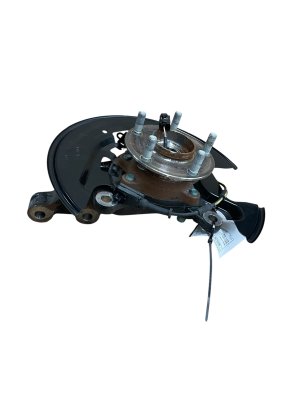
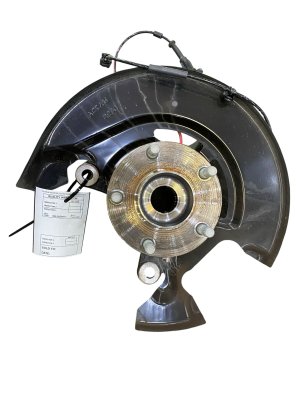
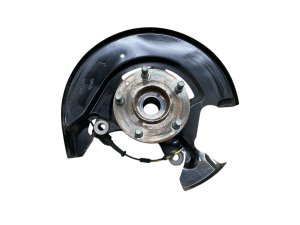
- Check for Cracks or Bends: Carefully inspect the entire knuckle for any signs of hairline cracks, especially around the ball joint mount, strut mount, and hub mounting area. Any cracks mean the part is unsafe and unusable. Use a straight edge to check for any visible bends.
- Inspect the Ball Joint Taper: Look at the tapered hole where the lower control arm's ball joint stud inserts. It should be perfectly round and smooth. If it appears oval-shaped, damaged, or worn, the knuckle will not hold the ball joint securely and must be rejected.
- Examine the Wheel Hub/Bearing: Most used knuckles are sold with the wheel hub and bearing assembly still attached. Spin the hub by hand. It should rotate smoothly and silently. If you hear any grinding or feel any roughness or excessive play (wobble), the bearing is bad.
- Condition of Threads: Check the threaded holes for the brake caliper bracket and hub assembly bolts. They should be clean and free of damage.
Pro Tip: Because the 2023-2025 CX-50 uses a bolt-on wheel hub assembly (Part No. VA40-33-04X), replacing a bad bearing on a used knuckle is a simple DIY job that doesn't require a shop press. 🎬 Watch this walkthrough for replacing a Mazda front wheel bearing. This makes buying a used knuckle with a bad bearing a viable option if the price is right and you plan to install a new hub assembly.
Compatibility and Part Numbers
Compatibility is critical. Suspension components often differ between trim levels and drivetrain options.
- Gasoline vs. Hybrid: The initial warning is correct; suspension parts may differ for Hybrid models. Always confirm the donor vehicle's specifications.
- Wheel Size: Some part diagrams show different components for vehicles with 17-inch wheels versus 18 or 20-inch wheels.
- Part Numbers: Verify the OEM part number before purchasing.
- Right (Passenger Side): VA40-33-021B
- Left (Driver Side): VA40-33-031B
Replacement and Installation

Replacing a steering knuckle is an advanced DIY job that requires proper tools and attention to safety. The difficulty is moderate, primarily due to the need to disconnect several key suspension and brake components.
Related Parts to Replace
While the knuckle is off, it is the perfect time to inspect and replace other wear items. Given the known issues on the CX-50, pay special attention to:
- Wheel Hub/Bearing Assembly: If the existing one has high mileage or makes any noise, replace it.
- CV Axle: Inspect the rubber boots for tears. Given the high rate of clicking complaints, consider replacing it if any noise is present.
- Lower Ball Joint: Often part of the lower control arm. Check for play.
- Outer Tie Rod End: Check for play or torn boots.
- Axle Nut: This is typically a one-time-use part and should be replaced.
Torque Specs
Proper torque is critical for safety. While official CX-50-specific specs can be hard to find without a factory manual, data from the similar CX-5 platform and owner's manuals provide a strong baseline. Always verify with an official service manual if possible.
| Component | Torque Specification (Likely) | Source/Note |
|---|---|---|
| Wheel Lug Nuts | 80–108 ft-lbs (108–147 N·m) | Confirmed from Owner's Manual |
| Axle Nut | ~174–231 ft-lbs | Based on general Mazda specs; critical for bearing preload |
| Hub-to-Knuckle Bolts | ~25 ft-lbs + 60° | Based on CX-5 data; these are torque-to-yield bolts |
| Brake Caliper Bracket Bolts | ~75 ft-lbs | Based on CX-5 data |
Important: A wheel alignment is mandatory after replacing a steering knuckle to ensure proper handling, safety, and to prevent premature tire wear.
Cost Comparison
Replacing a steering knuckle can be costly at a dealership. Buying a used OEM part can offer significant savings.
| Part/Service | Estimated Cost | Notes |
|---|---|---|
| New OEM Knuckle | $85 - $115 | Part only, from online Mazda dealers |
| New Aftermarket Knuckle | Not Yet Available | As of early 2026, aftermarket options are not common for this model. |
| Used OEM Knuckle | $100 - $250 | Price varies. A higher price may include a good hub/bearing assembly. |
| Shop Labor (Replacement) | $200 - $350 | Estimated 2-3 hours of labor. |
| Wheel Alignment | $100 - $200 | Mandatory after replacement. |
| Total Estimated Job Cost | $400 - $800+ | Varies based on parts source and shop labor rates. |
Frequently Asked Questions (FAQ)
Do I need to replace the knuckle if only my wheel bearing is bad?
No. On the 2023-2025 CX-50, the wheel bearing is a bolt-on hub assembly. It can be unbolted from the knuckle and replaced separately without removing the knuckle from the vehicle, saving significant time and labor.
Is a clicking noise when I turn always a bad wheel bearing?
No, on the CX-50, a clicking or popping noise specifically when turning and accelerating is a widely reported symptom of a failing front CV axle. A bad wheel bearing typically makes a constant humming or grinding noise that changes with speed, not just when turning.
Can I drive with a bent or cracked steering knuckle?
No. A damaged steering knuckle is a critical safety failure. It can cause a loss of steering control or, in a worst-case scenario, wheel detachment. The vehicle should not be driven until it is repaired.
Why is a wheel alignment required after replacing a knuckle?
The steering knuckle is the central component that determines the wheel's alignment angles (camber, caster, and toe). Even a brand new part can have slight manufacturing variances, and the process of replacing it disturbs all these settings. An alignment is required to restore the correct geometry for safe handling and proper tire wear.
Helpful Videos
Technical Specifications
OEM Part Numbers: VA40-33-021B (Right/Passenger Side) VA40-33-031B (Left/Driver Side)
Wheel Lug Nut Torque: 80-108 ft-lbs (108-147 N·m)
We Have This Part in Stock


The information in this article is provided for general reference and educational purposes only. Vehicle specifications, procedures, and part compatibility can vary by production date, trim level, and region. Always consult your vehicle's factory service manual and verify part numbers before purchasing or performing repairs. Safety-critical components such as airbags, seat belts, and braking systems should be installed by a qualified professional.
- Mazda CX-50:
- 🎬 Helpful Videos
- 🛍️ Shop This Part
- Known Issues for 2023-2025 Mazda CX-50
- Safety Recall: Improperly Tightened Suspension Bolts
- Common Owner Complaints: Clicks, Clunks, and Groans
- Technical Service Bulletins (TSBs)
- Symptoms of a Failing Steering Knuckle or Bearing
- 1. Humming, Rumbling, or Grinding Noises
- 2. Vague or Loose Steering
- 3. Clunking or Popping Sounds
- 4. Uneven Tire Wear
- Buying a Used 2023-2025 CX-50 Steering Knuckle
- Physical Inspection Checklist:
- Compatibility and Part Numbers
- Replacement and Installation
- Related Parts to Replace
- Torque Specs
- Cost Comparison
- Frequently Asked Questions (FAQ)
- 🎟️ Get 5% Off