

2001-2005 Lexus IS300 Steering Knuckle: Diagnosis for Alignment Pull and Noises
This guide covers how to diagnose a bad steering knuckle on a 2001-2005 Lexus IS300, what to inspect on a used part, and why it's often mistaken for other suspension issues.
- A bent steering knuckle is a common result of hitting a curb or pothole and will cause alignment and tire wear issues that cannot be adjusted away.
- The knuckle itself rarely fails, but symptoms are often caused by a bad wheel bearing (grinding/humming) or ball joint (clunking), which attach to it.
- When buying a used knuckle, visually inspect it for cracks, bends, and damage to the smooth bores where the bearing and ball joints mount.
- Replacement is a major job requiring a hydraulic press for the wheel bearing and a mandatory four-wheel alignment afterward.
- The correct OEM part numbers for the 2001-2005 IS300 are 43211-30191 (Right) and 43212-30141 (Left).
Symptoms of a Bad or Failing Steering Knuckle
A steering knuckle is a very durable part that rarely fails on its own. Most problems are caused by a powerful impact, like hitting a curb or a major pothole, or from the failure of a connected part like a ball joint. The symptoms are often subtle and can be confused with other suspension problems.
- Vehicle Pulling to One Side: If your IS300 constantly pulls to the left or right even after a wheel alignment, the knuckle may be bent. A bent knuckle changes the suspension geometry (camber or caster angles) in a way that normal adjustments can't fix.
- Uneven or Rapid Tire Wear: A bent knuckle will cause the tire to lean, leading to rapid wear on the inside or outside edge of a single tire. This is one of the most common signs of a knuckle issue.
- Steering Wheel Off-Center or Not Returning: If you have to hold the steering wheel at an angle to drive straight, or if the wheel is slow to return to center after a turn, it could point to a bent knuckle altering the caster angle.
- Grinding, Clicking, or Clunking Noises: While the knuckle itself is silent, a damaged one can cause stress on other parts. A grinding or humming noise that changes with speed is often a bad wheel bearing, which is pressed into the knuckle. A clunking or popping sound when turning or hitting bumps is more likely a worn ball joint or tie rod end, both of which connect to the knuckle.
Known Issues for the 2001-2005 Lexus IS300
The first-generation Lexus IS300 is a robust vehicle, but one common issue is directly related to the steering knuckle: lower ball joint failure. The original ball joints can wear out, and if they fail completely, the suspension can collapse. This event can cause the wheel to fold under the car, damaging the fender, axle, and often bending or cracking the steering knuckle. When inspecting a used IS300 or diagnosing a front-end noise, the lower ball joints should be a primary point of inspection.
Pro Tip: Many IS300 owners proactively replace their lower ball joints as preventative maintenance, especially on cars with over 100,000 miles or those that are driven aggressively.
As of late 2023, there are no specific recalls from the National Highway Traffic Safety Administration (NHTSA) for the steering knuckles or related suspension components on the 2001-2005 Lexus IS300. Always check the latest recall status using your vehicle's VIN on the NHTSA website.
Buying a Used IS300 Steering Knuckle: What to Look For
A used OEM steering knuckle is an excellent, cost-effective option, as a straight, undamaged original part is often superior in material quality and geometry to a cheap aftermarket alternative. Since these cars are popular in drifting and motorsport, be extra careful when inspecting a used part.
- Check for Bends or Cracks: This is the most important inspection. Look at the knuckle from all angles. Compare it to a picture of a new one if possible. Pay close attention to the mounting points for the caliper, control arms, and tie rod. Any sign of cracking, especially near the welds or bolt holes, means the part is junk.
- Inspect the Bearing Bore: The inner surface where the wheel bearing presses in should be perfectly smooth and round. Look for scoring, gouges, or signs of a bearing spinning inside the knuckle. Damaged mounting points can cause premature failure of new bearings.
- Examine Ball Joint and Tie Rod Tapers: The tapered holes for the ball joint and tie rod end should be clean and perfectly round. If they are oval-shaped, damaged, or show signs of excessive wear, the knuckle may not hold the new parts securely.
- Look for Heat Marks or Grinding: Blue discoloration from a torch or deep grinding marks are red flags. This often indicates a seized bolt was forcibly removed, potentially warping the knuckle or damaging a mounting surface.
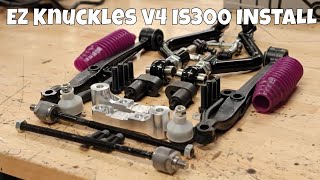
- Avoid Modified Knuckles: The IS300 is a popular drift car, and many companies sell modified "drift knuckles" that increase steering angle. These are not suitable for a standard street car as they drastically change the steering geometry. Ensure you are buying a standard OEM part unless you are building a dedicated track car. 🎬 Watch: How to install aftermarket drift knuckles on an IS300
Replacement Overview & Related Parts
Replacing a steering knuckle is a labor-intensive job that requires disassembly of the entire corner suspension and brake system. While it can be done by an experienced DIY mechanic, it requires special tools.
Warning: You will need a hydraulic press to install a new wheel bearing and lower ball joint into the steering knuckle. This is not a job that can be done with a hammer.
Parts That Should Be Replaced at the Same Time:
- Wheel Bearing and Seals: Never reuse an old wheel bearing. It will be destroyed during removal from the old knuckle. Always press in a new bearing and new seals.
- Lower Ball Joint: Since the knuckle must be removed to replace the lower ball joint, it's essential to replace it at the same time.
- Axle Nut: This is a one-time-use lock nut and must be replaced.
- Cotter Pins: Always use new cotter pins for the ball joint and tie rod castle nuts.
After replacement, a full four-wheel alignment is mandatory to ensure proper handling and prevent tire wear.
Key Torque Specs:
Using correct torque specs is critical for safety. Always consult a factory service manual for your specific vehicle, but common specs for the IS300 include:
- Lower Ball Joint to Knuckle Bolts: ~83 ft-lbs
- Lower Ball Joint Castle Nut: ~91 ft-lbs
- Axle Nut: ~181 ft-lbs
- Caliper to Knuckle Bolts: ~87 ft-lbs
Cost Comparison
Prices can vary significantly based on location and supplier. The estimates below are for a single side.
| Part Type | Estimated Cost |
|---|---|
| New OEM (Lexus) | $475 - $670 |
| New Aftermarket | $150 - $250 |
| Used OEM | $100 - $200 |
| Shop Labor for Replacement | $245 - $360 |
| Wheel Alignment | $100 - $200 |
Technical Specifications & Part Numbers
These are the primary front steering knuckle part numbers for the 2001-2005 Lexus IS300 in the North American market. The knuckle is also shared with some GS300/400/430 and SC430 models.
- Right (Passenger Side): 43211-30191 (replaces 43211-30190)
- Left (Driver Side): 43212-30141 (replaces 43212-30140)
The part number 43202-30040 listed in some databases is for a later generation IS/GS model and does not fit the 2001-2005 IS300.
Frequently Asked Questions (FAQ)
Can I replace just one steering knuckle?
Yes. Steering knuckles are replaced individually. You only need to replace the side that is damaged. There is no need to replace them in pairs.
Is the steering knuckle the same as a spindle or hub?
The terms are often used interchangeably, but they are distinct parts. The steering knuckle is the large cast piece that pivots. The wheel hub (or hub assembly) contains the wheel studs and bolts to the knuckle. The wheel bearing is pressed into the knuckle, allowing the hub to spin freely. On the IS300, these are all separate but connected components.
Can a bent steering knuckle be repaired?
No. A steering knuckle should never be repaired, bent back into shape, or welded. It is a critical safety component made of cast steel, and any attempt to repair it will create a weak point that could lead to catastrophic failure. A damaged knuckle must always be replaced.
Why is a used OEM knuckle sometimes better than a new aftermarket one?
A genuine Lexus OEM knuckle is manufactured to extremely high tolerances for geometry and material strength. While many aftermarket parts are high quality, some cheaper options can have slight variations in their dimensions. These small errors can lead to alignment problems or premature wear on other suspension parts. A straight, undamaged used OEM part guarantees a perfect fit and original material quality.
Helpful Videos
Technical Specifications
OEM Part Numbers: 43211-30191 43211-30190 43212-30141 43212-30140
Material: Cast Steel. The part is specific to the 2001-2005 Lexus IS300 (and some GS/SC models) and is not interchangeable with later model years.
We Have This Part in Stock


The information in this article is provided for general reference and educational purposes only. Vehicle specifications, procedures, and part compatibility can vary by production date, trim level, and region. Always consult your vehicle's factory service manual and verify part numbers before purchasing or performing repairs. Safety-critical components such as airbags, seat belts, and braking systems should be installed by a qualified professional.
- Lexus IS300:
- 🎬 Helpful Videos
- 🛍️ Shop This Part
- Symptoms of a Bad or Failing Steering Knuckle
- Known Issues for the 2001-2005 Lexus IS300
- Buying a Used IS300 Steering Knuckle: What to Look For
- Replacement Overview & Related Parts
- Key Torque Specs:
- Cost Comparison
- Technical Specifications & Part Numbers
- Frequently Asked Questions (FAQ)
- 🎟️ Get 5% Off