

2019-2024 Jaguar I-Pace Steering Knuckle: Diagnosing Bends, Cracks, and Noises
This guide covers the common failure points, symptoms, and replacement costs for the steering knuckle on the 2019-2024 Jaguar I-Pace.
- Failure is almost always caused by impact (curbs, potholes, accidents), not mileage.
- The most common symptom is a persistent pull and uneven tire wear that a wheel alignment cannot fix.
- A damaged knuckle is a critical safety issue; the vehicle should not be driven if a crack or severe bend is suspected.
- A four-wheel alignment is mandatory immediately after replacement to ensure safety and prevent tire damage.
Symptoms of a Bad Jaguar I-Pace Steering Knuckle
A steering knuckle is a very durable part that does not have a typical wear-out mileage. Failure is almost always caused by an external force, like hitting a curb, a deep pothole, or being in an accident. Because it is a non-moving part, the knuckle itself does not make noise, but its damage can cause other parts to fail and create sounds.
- Persistent Vehicle Pulling: The most common symptom of a bent steering knuckle is a vehicle that constantly pulls to one side, even immediately after a wheel alignment. A bent knuckle permanently alters the suspension geometry (camber or caster angles) in a way that a standard alignment, which primarily adjusts toe, cannot correct.
- Uneven or Rapid Tire Wear: If you notice the inside or outside edge of a single tire wearing down much faster than the others, it's a strong indication of a bent knuckle. This is a direct result of the wheel being held at an incorrect angle.
- Steering Wheel Off-Center: After an impact, if your steering wheel is no longer straight when driving in a straight line, the knuckle on the impacted side may be bent.
- Grinding or Whining Noises: These noises, which often change pitch with vehicle speed, are classic signs of a failing wheel bearing. A bent knuckle can put uneven stress on the wheel bearing it houses, leading to premature failure.
- Clunking or Popping Sounds: A clunk or pop, especially when turning at low speeds or going over bumps, often points to a worn ball joint. Damage to the knuckle can accelerate the wear on the ball joints connected to it.
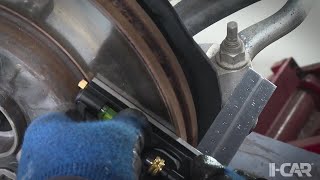
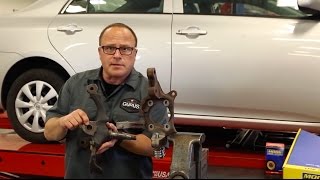
- Visible Cracks or Bending: In severe cases, a visual inspection may reveal a crack or obvious bend 🎬 Watch: How to check for a damaged steering knuckle in the knuckle itself. This is most common after a significant collision.
Warning: A cracked or severely bent steering knuckle is a critical safety issue. If you suspect your knuckle is damaged, do not drive the vehicle. A complete failure of the knuckle can result in a total loss of steering control.
Known Issues, Recalls, and Technical Service Bulletins (TSBs)
While there are no specific recalls for the steering knuckle on the 2019-2024 Jaguar I-Pace, several TSBs and recalls address related suspension and steering components.
- Front Suspension Knocking Noise: Jaguar issued TSB JTB00674NAS1 for 2019 I-Pace models experiencing a knocking noise from the front suspension over bumps at low speeds (8-20 mph). The cause was identified as the shock absorber rebound spring contacting its stop. While not a knuckle issue, this noise could be confused with a worn ball joint or bearing. Other TSBs like SSM75649 also mention front suspension knocking noises on rough roads or during low-speed turns.
- Braking System Recalls: A recall was issued for some 2019-2020 models for a delay in the regenerative braking system, which required a software update.
- Battery-Related Recalls: Numerous recalls have been issued for the high-voltage battery system on 2019-2024 I-Pace models due to risks of overheating and fire. Some 2019 models were even subject to a buyback program. These are unrelated to the steering knuckle but are important for owners to be aware of.
Buying a Used I-Pace Steering Knuckle: What to Look For
Since a new OEM knuckle can be very expensive, a quality used OEM part is an excellent alternative. Unlike wear items, a knuckle's condition is not determined by mileage but by its history. A part from a low-mileage vehicle that hit a curb can be useless, while one from a high-mileage car with no impact history can be perfect.
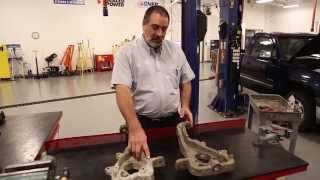
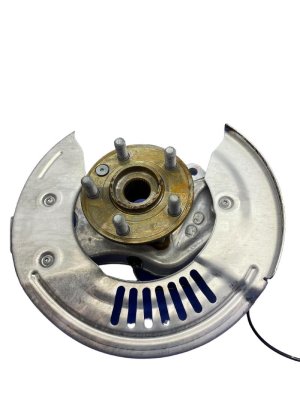
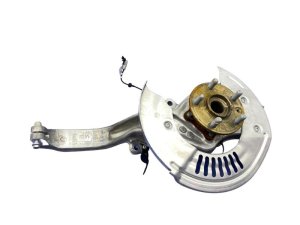
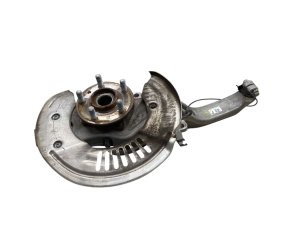
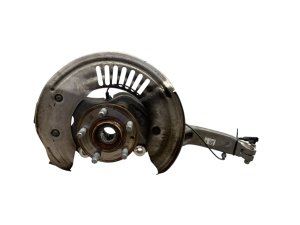
- Check for Bends or Cracks: This is the most important inspection. Lay the knuckle on a flat surface. Look for any signs of warping or cracks, especially around the mounting points for the ball joints, tie rod, and strut. Pay close attention to the spindle (the shaft the wheel hub mounts on) to ensure it is perfectly straight.
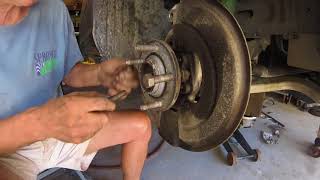
- Inspect Mounting Holes: All mounting holes should be round and free of elongation or damage. 🎬 Watch: Why overtightening can cause steering knuckle damage Damaged holes indicate the part was under extreme stress, possibly during an accident.
- Verify Part Numbers: Ensure the part number on the used knuckle matches the one you are replacing. The primary part number for the right (passenger side) front knuckle is T4K12768, which supersedes T4K4735. Always confirm the correct part for the specific side (left or right) you need.
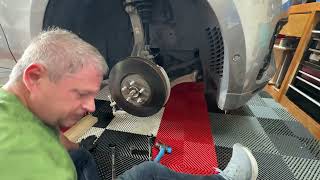
- Wheel Bearing Condition: Most used knuckles will come with the wheel bearing still pressed in. It is highly recommended to replace the wheel bearing when you replace the knuckle, as the labor to press out the old one and install a new one is significant. Consider the included bearing a core and plan on installing a new one. 🎬 See this walkthrough on Jaguar front wheel bearing removal
Pro Tip: A used OEM aluminum knuckle is almost always superior to a new, cheap aftermarket part. The casting quality, material strength, and precise geometry of the OEM part are critical for proper fitment, alignment, and safety.
Replacement Costs and Part Numbers
Replacing a steering knuckle is a labor-intensive job. The cost can vary significantly based on the source of the parts and labor rates.
| Part/Service | Estimated Cost |
|---|---|
| New OEM Knuckle (T4K12768) | $750 - $920 |
| New Aftermarket Knuckle | $150 - $250 (Limited availability, quality may vary) |
| Used OEM Knuckle | $200 - $450 |
| Shop Labor Cost | $300 - $500 |
| Total (with Used OEM Part) | $500 - $950 + alignment |
| Total (with New OEM Part) | $1050 - $1420 + alignment |
Note: A four-wheel alignment is mandatory after replacing a steering knuckle and typically costs an additional $150 - $250.
Related Parts to Replace
When replacing a steering knuckle, it is best practice to replace the following components at the same time:
- Wheel Hub/Bearing Assembly: The old bearing should not be pressed into the new knuckle.
- Axle Nut: This is a one-time-use torque-to-yield nut.
- Ball Joint and Tie Rod End Nuts/Bolts: Often, these are also single-use fasteners.
Installation Tips and Torque Specs
While this is a job best left to experienced technicians, here are some key specifications if you are performing the replacement. These are general specs and should be verified for your specific vehicle.
| Component | Torque (Nm) | Torque (lb-ft) |
|---|---|---|
| Wheel Hub Retaining Nut (Axle Nut) | 270 Nm | 200 lb-ft |
| Wheel Knuckle Pinch Bolt (for strut) | 85 Nm | 63 lb-ft |
| Lower Arm Ball Joint Retaining Nut | 83 Nm | 61 lb-ft |
| Tie-Rod End to Knuckle Nut | 40 Nm | 30 lb-ft |
Important: A four-wheel alignment must be performed immediately after replacing a steering knuckle to ensure proper handling, safety, and to prevent premature tire wear.
Frequently Asked Questions (FAQ)
Can I drive with a bad steering knuckle?
No. It is not safe to drive with a suspected bent or cracked steering knuckle. A complete failure could lead to a loss of steering control, which is extremely dangerous.
Will a bad steering knuckle make noise?
The knuckle itself is a solid piece of metal and won't make noise. However, it can cause other parts like the wheel bearing (grinding, whining) or ball joints (clunking, popping) to wear out and make noise.
Why can't a wheel alignment fix the pulling from a bent knuckle?
A standard wheel alignment primarily adjusts the 'toe' angle. A bent knuckle affects the 'camber' or 'caster' angles, which are generally not adjustable on the I-Pace. No amount of toe adjustment can compensate for a bent knuckle.
Is it better to buy a used OEM knuckle or a new aftermarket one?
For a critical structural part like a steering knuckle, a verified, damage-free used OEM part is often the better choice. The material quality and manufacturing precision of the OEM part are guaranteed to meet factory specifications, whereas the quality of cheap aftermarket castings can be inconsistent.
Helpful Videos
Technical Specifications
OEM Part Numbers: T4K12768 t4k4735
Material: Cast Aluminum
We Have This Part in Stock

The information in this article is provided for general reference and educational purposes only. Vehicle specifications, procedures, and part compatibility can vary by production date, trim level, and region. Always consult your vehicle's factory service manual and verify part numbers before purchasing or performing repairs. Safety-critical components such as airbags, seat belts, and braking systems should be installed by a qualified professional.
- Jaguar I-Pace:
- 🎬 Helpful Videos
- 🛍️ Shop This Part
- Symptoms of a Bad Jaguar I-Pace Steering Knuckle
- Known Issues, Recalls, and Technical Service Bulletins (TSBs)
- Buying a Used I-Pace Steering Knuckle: What to Look For
- Replacement Costs and Part Numbers
- Related Parts to Replace
- Installation Tips and Torque Specs
- Frequently Asked Questions (FAQ)
- 🎟️ Get 5% Off