

2022-2026 Genesis GV70 Steering Knuckle: Wheel Bearing Failures and Critical Compatibility Checks
This guide covers the common wheel bearing failure symptoms, critical compatibility checks for engine and suspension types, and how to inspect a used steering knuckle for your GV70.
- The most common failure is the integrated wheel bearing, which causes a humming/grinding noise that changes with speed.
- Compatibility is extremely complex and strict. Before buying, you must verify your GV70's engine (2.5L), drivetrain (AWD), suspension (Standard, not ECS), and brake system.
- A four-wheel alignment is mandatory after replacing a steering knuckle to prevent dangerous handling and rapid tire wear.
- When buying a used knuckle, the condition of the integrated wheel bearing is the most important factor. Check for any roughness or play in the hub. A low-mileage part is strongly preferred.
Symptoms of a Failing GV70 Steering Knuckle Assembly

For the 2022-2026 Genesis GV70, problems with the steering knuckle assembly are most often related to the integrated wheel bearing, rather than the knuckle itself cracking or bending. It is crucial to distinguish between symptoms of a bad bearing and a bent knuckle, as the urgency and diagnosis differ.
Symptoms of a Failing Wheel Bearing (Most Common Issue)
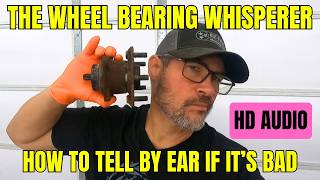
- Humming, Grinding, or Roaring Noise: The most common symptom is a noise from one of the front wheels that sounds like a hum, roar, or metal-on-metal grinding. This noise is directly related to vehicle speed—it gets louder and higher-pitched as you accelerate and quieter as you slow down. 🎬 Watch: Hear what a failing wheel bearing sounds like while driving. A technician in one video described it as a "rubbing noise" that appeared after 15-20 minutes of driving once the components heated up.
- Noise Changes While Turning: A key diagnostic trick is to notice if the noise changes when you steer. For example, when turning right, weight shifts to the left side of the car. If the noise gets louder during a right turn, it often points to a failing left front wheel bearing, and vice-versa.
- Steering Wheel Vibration: A worn wheel bearing can cause vibrations that you can feel in the steering wheel. This may be subtle at first but will worsen as the bearing deteriorates.
Symptoms of a Bent or Cracked Knuckle
A bent or cracked knuckle is much less common and is almost always the result of a significant impact, like hitting a deep pothole, a curb, or being in an accident.
- Vehicle Pulling to One Side: If the vehicle consistently pulls to one side and a wheel alignment cannot correct it, a bent steering knuckle is a likely cause. The bent part physically alters the suspension geometry beyond what alignment adjustments can compensate for.
- Uneven or Rapid Tire Wear: This is a direct result of the incorrect alignment caused by a bent knuckle. You may see the inside or outside edge of one specific tire wear down much faster than the others.
- Off-Center Steering Wheel: After an impact, if your steering wheel is no longer straight when driving in a straight line, a component like the knuckle or a tie rod may be bent.
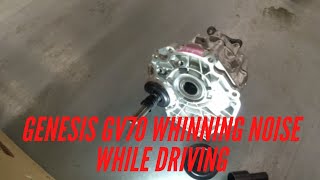
- Clunking or Popping Noises: While more common with worn ball joints or control arm bushings, a cracked knuckle or a damaged ball joint mounting point on the knuckle can cause clunking or popping sounds, especially over bumps or during low-speed turns. 🎬 See this example of GV70 whining and clicking noises while turning.
Known Issues, TSBs, and Recalls

As of early 2026, there are no specific recalls or Technical Service Bulletins (TSBs) issued by Genesis for steering knuckle failure on the 2022-2026 GV70. However, owners may encounter other issues that produce similar noises.
- Recalls: Several recalls exist for the GV70, but they relate to the fuel pump, instrument panel software, and transmission control harness, not the suspension knuckles.
- Related TSBs: Genesis has issued TSBs for other noise-related issues that could be confused with a knuckle problem. These include a TSB for a squeak from the rear suspension coil spring (TSB 22-01-053G), a noise from the rear differential (TSB 23-DS-004G), and a front brake squeal noise (TSB 25-01-078G). It's important to rule out these other potential sources when diagnosing a noise.
CRITICAL: Compatibility and Part Verification
The steering knuckles for the Genesis GV70 are highly specific. Ordering the wrong part is a common and expensive mistake. You MUST verify compatibility based on your exact vehicle configuration. A knuckle for a 2.5T AWD model will not fit a 3.5T Sport model.
Key Compatibility Checks
- Engine & Drivetrain: This guide's specified part numbers fit 2.5L Turbo All-Wheel Drive (AWD) models only. They are not compatible with Rear-Wheel Drive (RWD) or 3.5L V6 models.
- Suspension Type: These parts fit models with the standard suspension only. They will not fit vehicles equipped with the optional Electronically Controlled Suspension (ECS), which is typically found on 3.5T Sport models.
- Brake System: These knuckles are for vehicles with the standard brake system. They will not fit models equipped with the larger, optional performance brakes. Visually compare the brake calipers and rotor size on your vehicle to the donor vehicle if possible.
- Powertrain: These parts are for gasoline-powered GV70 models only and are not compatible with the Electrified GV70.
Buying a Used Steering Knuckle: What to Inspect

A used OEM steering knuckle is an excellent way to save money, especially given the high cost of a new one. However, careful inspection is essential.
Physical Inspection
- Check for Cracks: Carefully inspect the entire knuckle, especially around the mounting points for the ball joints and tie rod, and where the wheel hub bolts on. Look for any hairline cracks or signs of stress. A cracked knuckle is unsafe and unusable.
- Inspect Mounting Holes: Ensure all threaded holes are clean and not stripped. Check that the mounting surfaces for the strut, control arms, and brake caliper are flat and free of damage.
- Look for Impact Damage: Check for scrapes, gouges, or any signs that the knuckle was involved in a collision. A bent knuckle is often impossible to detect by eye but any sign of impact is a major red flag.
The Wheel Bearing is Key
Since the wheel bearing is the most common failure point, its condition is paramount when buying a used knuckle assembly.
- Check for Play: With the knuckle off the car, try to wiggle the wheel hub flange (where the wheel bolts on). There should be absolutely zero play, wobble, or roughness. If you can feel any movement or hear a gritty sound when turning it by hand, the bearing is bad and will need to be replaced.
- Mileage Consideration: Wheel bearings are wear items. While they can last over 100,000 miles, failure can happen earlier. A knuckle from a low-mileage vehicle (under 50,000 miles) is a much safer bet. Be wary of high-mileage units, as the bearing's remaining lifespan is unknown.
Pro Tip: If you find a good, straight knuckle but the bearing feels rough, you can have a machine shop press out the old bearing and install a new one. Factor this potential cost into your purchase price.
Replacement Overview & Related Parts

Replacing a steering knuckle is an advanced job that requires significant disassembly of the suspension and brakes. It is generally recommended for experienced DIY mechanics or professionals.
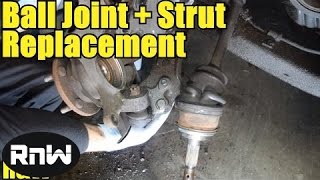
- Key Steps: The process involves removing the wheel, brake caliper and rotor, axle nut, and disconnecting the tie rod end, upper control arm ball joint, and lower control arm ball joint from the knuckle. The axle shaft must then be separated from the wheel hub. 🎬 Watch: A step-by-step guide to replacing the steering knuckle assembly.
- Related Parts: It is highly recommended to use a new axle nut, as they are typically single-use, torque-to-yield parts. Inspect the ball joints and tie rod end for wear; since you are already disassembling everything, now is the perfect time to replace any other worn components.
- Wheel Alignment: A four-wheel alignment is mandatory after replacing a steering knuckle. Skipping this step will result in poor handling and will destroy your tires in a very short time, even if the car seems to drive straight.
Cost Breakdown
The cost of a new OEM steering knuckle for the GV70 is exceptionally high, making a quality used part a very attractive alternative.
| Part or Service | Estimated Cost |
|---|---|
| New OEM Steering Knuckle (Part Only) | $1,400 - $1,500 |
| New Aftermarket | Not widely available as of early 2026 |
| Used OEM Steering Knuckle Assembly | $250 - $500 |
| Shop Labor (Knuckle Replacement) | $200 - $300 per side |
| Shop Labor (Wheel Alignment) | $100 - $200 |
| Total Professional Replacement (New OEM) | $1,700 - $2,000+ per side |
Frequently Asked Questions (FAQ)
Do I have to get an alignment after replacing the knuckle?
Yes, absolutely. A wheel alignment is not optional. The steering knuckle is the primary component that sets the wheel's angles. Failure to get an alignment will cause unsafe handling and rapid tire wear.
Can I just replace the wheel bearing instead of the whole knuckle?
Yes. The wheel bearing can be pressed out of the knuckle and a new one pressed in. This requires specialized hydraulic press tools and is typically done by an automotive machine shop. If your knuckle is not bent or damaged, this is a viable repair option. A video of a GV70 repair shows the hub assembly being replaced on its own.
Is a noisy wheel bearing dangerous to drive on?
Yes, it can be. While you can drive on it for a short time, a failing wheel bearing will get progressively worse. In a severe failure, the bearing can seize, which could cause the wheel to lock up, or it could develop excessive play, potentially leading to a loss of control or the wheel separating from the vehicle. It should be addressed as soon as possible.
Why is the new part so expensive?
The high cost for the new OEM part is likely due to it being a complex, low-volume part for a luxury vehicle. It is also sold as an assembly that often includes a new wheel hub and bearing, which adds to the cost. The estimate from RepairPal for a GV70 knuckle replacement is between $1,689 and $1,780.
Helpful Videos
Technical Specifications
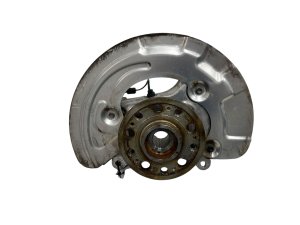
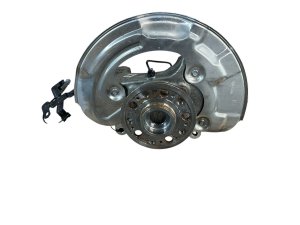
OEM Part Numbers: 51700-IY600 51715-IY500 51711-IT500
Fits 2022-2026 Genesis GV70 models with 2.5L Turbo engine, All-Wheel Drive (AWD), and standard suspension/brakes only.
We Have This Part in Stock




The information in this article is provided for general reference and educational purposes only. Vehicle specifications, procedures, and part compatibility can vary by production date, trim level, and region. Always consult your vehicle's factory service manual and verify part numbers before purchasing or performing repairs. Safety-critical components such as airbags, seat belts, and braking systems should be installed by a qualified professional.
- GENESIS GV70:
- 🎬 Helpful Videos
- 🛍️ Shop This Part
- Symptoms of a Failing GV70 Steering Knuckle Assembly
- Symptoms of a Failing Wheel Bearing (Most Common Issue)
- Symptoms of a Bent or Cracked Knuckle
- Known Issues, TSBs, and Recalls
- Key Compatibility Checks
- Buying a Used Steering Knuckle: What to Inspect
- Physical Inspection
- The Wheel Bearing is Key
- Replacement Overview & Related Parts
- Cost Breakdown
- Frequently Asked Questions (FAQ)
- 🎟️ Get 5% Off