

2002-06 Thunderbird & Lincoln LS Steering Knuckle: Solving the 14mm vs. 16mm Ball Joint Puzzle
This guide covers the critical mid-year ball joint change on 2002 models and provides a complete reference for diagnosing and replacing the steering knuckle on your Ford Thunderbird or Lincoln LS.
- For 2002 models, you MUST verify if your car needs the 14mm or 16mm lower ball joint stud version; the changeover date was around March 11, 2002.
- A failing knuckle or ball joint is a critical safety issue that can lead to a loss of steering control; do not drive with symptoms like clunking or steering wander.
- A four-wheel alignment is mandatory after replacing a steering knuckle to ensure safety and prevent rapid tire wear.
- When replacing the knuckle, it is highly recommended to also inspect the wheel bearing, upper control arm, and tie rod end, and replace them if they show signs of wear.
Known Issues & Compatibility Warnings
The Critical 2002 14mm vs. 16mm Lower Ball Joint Change
The single most important factor when buying a steering knuckle for a 2002 Ford Thunderbird or 2002 Lincoln LS is the diameter of the lower ball joint stud. Ford changed the stud size mid-production year.
- Early Production (Before March 11, 2002): These vehicles typically use a steering knuckle designed for a 14mm lower ball joint stud. The corresponding aftermarket ball joint is a Moog K500084.
- Late Production (After March 11, 2002): These vehicles use a steering knuckle designed for a 16mm lower ball joint stud. The corresponding aftermarket ball joint is a Moog K500085.
All 2003-2005 Ford Thunderbirds and 2003-2006 Lincoln LS models use the 16mm version. The knuckles themselves are different to accommodate the different tapers of the ball joint studs, so you cannot use a 14mm ball joint in a 16mm knuckle or vice-versa. Always verify your vehicle's build date or measure the existing ball joint stud before ordering a replacement knuckle.
Pro Tip: To find your vehicle's build date, check the sticker on the driver's side door jamb. If you are unsure, the safest method is to measure the diameter of the threaded stud on your existing lower ball joint before purchasing a replacement part.
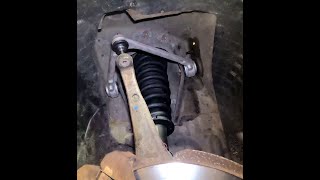
🎬 See this 2002 Lincoln LS lower ball joint replacementRecalls and Technical Service Bulletins (TSBs)
While there are no specific recalls for the steering knuckle itself on these models, earlier 2000-2001 Lincoln LS models were recalled for front suspension lower ball joints that were not tightened to specification. Additionally, a recall for 2003 Lincoln LS models involved improperly heat-treated 17-inch chrome wheels that could crack, potentially leading to wheel separation. Although not directly related to the knuckle, these issues highlight the importance of inspecting all suspension and wheel components in this area.
Symptoms of a Failing Steering Knuckle
Steering knuckle failure symptoms are often caused by the integrated lower ball joint or the wheel bearing wearing out, rather than the knuckle itself cracking (unless it has suffered a major impact).
- Clunking or Popping Noises: A common symptom is a clunking, popping, or grinding sound from the front suspension, especially when driving over bumps or turning at low speeds. This usually points to a worn ball joint moving excessively within its socket. 🎬 Watch: How to diagnose front suspension noise
- Steering Wander and Pulling: The vehicle may pull to one side or feel like it's 'wandering' on the road, requiring constant steering corrections. This happens when a bent knuckle or worn ball joint changes the wheel alignment angles.
- Uneven Tire Wear: A bad knuckle or ball joint will cause incorrect wheel alignment, leading to rapid and uneven wear on the inside or outside edge of a tire.
- Loose or Vibrating Steering Wheel: Excessive play or vibration felt through the steering wheel can indicate looseness in the suspension, often traced back to the ball joints connected to the knuckle.
Buying a Used Steering Knuckle: What to Inspect
A used OEM steering knuckle is an excellent, cost-effective option, as they are robust parts that rarely fail unless subjected to external forces. Here’s what to look for:
- Check for Cracks or Bending: This is the most important inspection. Carefully examine the entire part, especially around the mounting points for the ball joints, tie rod, and wheel hub. Look for any hairline cracks or signs of bending. A knuckle from a vehicle involved in a collision is at high risk for unseen damage.
- Verify the Ball Joint Stud Size (for 2002 models): If you are buying for a 2002 model, confirm whether you need the 14mm or 16mm version. If the used part seller cannot confirm, it's best to pass unless you can physically inspect it.
- Inspect the Included Ball Joint: Most used knuckles come with the lower ball joint pre-installed. Check the rubber boot for any rips or tears. If the boot is torn, the joint is likely contaminated and will fail soon. Check for any excessive play in the joint itself.
- Examine Mounting Holes and Threads: Ensure all threaded holes (for the hub bearing and brake caliper bracket) are clean and undamaged. Check that the tapered holes for the ball joints and tie rod end are smooth and not distorted or worn out.
- Surface Condition: Surface rust is usually not a major concern on these heavy cast parts, but avoid any knuckle with deep, flaking rust that could compromise its structural integrity.
Replacement Overview and Torque Specs
Replacing a steering knuckle is an advanced DIY job that requires proper tools and a focus on safety. The basic process involves lifting the vehicle, removing the wheel, brake caliper and rotor, axle nut, and then disconnecting the tie rod end, upper ball joint, and lower ball joint to free the knuckle. A ball joint separator tool is essential.
Warning: A four-wheel alignment is mandatory after replacing a steering knuckle. Skipping this step will result in poor handling, unsafe driving characteristics, and rapid tire wear.
Using a torque wrench is critical for safety. The following specifications are for the Lincoln LS and are applicable to the Ford Thunderbird.
| Component | Torque Specification |
|---|---|
| Suspension upper arm-to-knuckle nut | 66 ft-lbs (90 Nm) |
| Suspension lower arm-to-knuckle nut | 148 ft-lbs (200 Nm) |
| Tie-rod end-to-knuckle nut | 59 ft-lbs (80 Nm) |
| Hub and bearing-to-knuckle bolts | 66 ft-lbs (90 Nm) |
| Wheel nuts | 100 ft-lbs (135 Nm) |
Related Parts to Consider Replacing
Since you'll have everything disassembled, it's the perfect time to inspect and replace other related wear items:
- Wheel Hub & Bearing Assembly: This bolts directly to the knuckle. If it has high mileage or is making any noise, replace it now to save on future labor.
- Upper Control Arm: The upper ball joint is integrated into the upper control arm. Inspect it for play and check the condition of the arm's bushings.
- Tie Rod Ends: Check for any play or torn boots.
- Brake Rotor and Pads: If they are near the end of their service life, now is the easiest time to replace them.
Cost of Steering Knuckle Replacement
The cost can vary significantly based on the parts you choose and local labor rates.
| Item | Estimated Cost (Per Side) |
|---|---|
| New OEM (Dealer) | $800 - $1000+ |
| New Aftermarket | $150 - $270 |
| Used OEM | $75 - $150 |
| Shop Labor | $200 - $400 |
| Mandatory Wheel Alignment | $100 - $200 |
Frequently Asked Questions (FAQ)
How do I know for sure if I have the 14mm or 16mm ball joint on my 2002 model?
The most reliable way is to check the build date on your driver's side door jamb sticker. Vehicles built before March 11, 2002, likely have the 14mm stud, while those built after have the 16mm stud. If the sticker is missing or you want to be 100% certain, you must expose the lower ball joint stud and measure its diameter with a caliper.
Can I just replace the lower ball joint instead of the whole knuckle?
Yes, this is possible. Aftermarket companies like Moog sell the lower ball joints separately. However, this requires a heavy-duty hydraulic press and the proper adapters to press the old joint out and the new one in without damaging the aluminum knuckle. 🎬 Watch: Pressing a lower ball joint with a shop press For many DIY mechanics, buying a quality used knuckle with a good ball joint already installed is a faster and safer repair.
Is a rusty steering knuckle safe to use?
Surface rust on a cast iron or steel knuckle is generally cosmetic and not a safety concern. However, you should inspect it carefully to ensure the rust is not deep, flaking, or causing pitting that could weaken the structure, especially around the mounting points.
What happens if a steering knuckle fails while driving?
Failure is extremely dangerous. If the knuckle itself cracks or if one of the ball joints attached to it separates, you can lose control of that wheel, causing it to turn abruptly or even detach from the vehicle. This can easily lead to a total loss of steering control and a serious crash.
Do I need to replace both the left and right knuckles at the same time?
It is not strictly necessary to replace them in pairs. Steering knuckles are not considered a typical wear item like brake pads. You generally only replace the side that is damaged or has a failed ball joint. However, if one side's ball joint has failed due to high mileage, it's wise to inspect the other side carefully, as it may also be near the end of its service life.
Helpful Videos
Technical Specifications
OEM Part Numbers: 2W4Z-3K185-AA 2W4Z-3K186-BA 4W4Z-3K185-AA 4W4Z-3K186-AA 4W4Z-3K186-BA 6W4Z-3K185-AA 6W4Z-3K186-AA
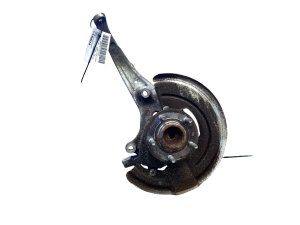
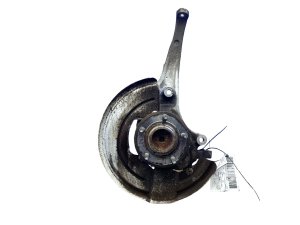
Fits 2002-2005 Ford Thunderbird and 2002-2006 Lincoln LS. 2002 models have two variants based on lower ball joint stud size: 14mm (early production) and 16mm (late production). All 2003-2006 models use the 16mm stud size. The knuckle is made of cast aluminum.
We Have This Part in Stock



The information in this article is provided for general reference and educational purposes only. Vehicle specifications, procedures, and part compatibility can vary by production date, trim level, and region. Always consult your vehicle's factory service manual and verify part numbers before purchasing or performing repairs. Safety-critical components such as airbags, seat belts, and braking systems should be installed by a qualified professional.
- Ford Thunderbird:
- Lincoln LS:
- 🎬 Helpful Videos
- 🛍️ Shop This Part
- Known Issues & Compatibility Warnings
- The Critical 2002 14mm vs. 16mm Lower Ball Joint Change
- Recalls and Technical Service Bulletins (TSBs)
- Symptoms of a Failing Steering Knuckle
- Buying a Used Steering Knuckle: What to Inspect
- Replacement Overview and Torque Specs
- Related Parts to Consider Replacing
- Cost of Steering Knuckle Replacement
- Frequently Asked Questions (FAQ)
- 🎟️ Get 5% Off