

2002-2008 Dodge Ram 1500 Steering Knuckle: Diagnosing Noises, Wandering, and Wear
This guide covers the common failure symptoms, replacement costs, and critical compatibility details for the front steering knuckle on 2002-2008 Dodge Ram 1500 pickups.
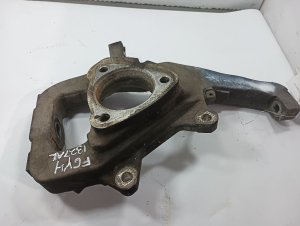
- This specific knuckle (52106724AC) is only for the front passenger side on 4WD models with Rear Wheel ABS; it will not fit 2WD or Mega Cab trucks.
- Failure is almost always due to impact (potholes, curbs), not mileage. Key symptoms are persistent pulling to one side and uneven tire wear on one wheel.
- It is highly recommended to replace the wheel bearing and ball joints at the same time as the knuckle to save on future labor costs.
- Driving with a bent knuckle is unsafe, and a cracked knuckle can lead to a complete wheel detachment. This is a critical safety issue.
Symptoms of a Failing Steering Knuckle

A steering knuckle is a very durable part, and failure is almost always caused by a significant impact—like hitting a curb or a deep pothole—or by extreme corrosion. While the knuckle itself doesn't have moving parts, its failure will cause a cascade of other problems. Here are the most common signs that your knuckle is bent or cracked.
1. Vehicle Pulling and Alignment Issues
This is the most common symptom of a bent steering knuckle. If the truck constantly pulls to one side, even after multiple wheel alignments, the knuckle is likely bent. An alignment shop may not be able to get the camber or toe angles within specification. The steering wheel may also be off-center when driving straight.
2. Abnormal Noises: Clunking, Popping, or Grinding
While a cracked knuckle itself may not make noise, the added stress it puts on connected parts will. You might hear clunking or popping sounds when turning or going over bumps. This is often due to premature wear on the ball joints or wheel bearing, which are trying to operate at an incorrect angle. A grinding or humming noise that changes with wheel speed often points to a failing wheel bearing, which can be a secondary effect of a bad knuckle.
3. Uneven or Rapid Tire Wear
A bent knuckle forces the tire to sit at an improper angle, causing rapid and uneven tire wear. Typically, you will see excessive wear on the inner or outer edge of just one front tire. This is a clear visual sign that the wheel's alignment geometry is incorrect.
4. Loose or Vibrating Steering
A feeling of looseness or vibration in the steering wheel can indicate a problem. This might be caused by a worn-out wheel bearing that was damaged by a bent knuckle, or from worn ball joints struggling with incorrect geometry. Some owners of Ram trucks from this era also report a condition known as "memory steer," where the steering wheel does not return to center easily after a turn. This can sometimes be traced back to binding in the ball joints caused by a poorly machined or damaged knuckle.
Warning: A cracked steering knuckle is a critical safety failure. If you suspect a crack, do not drive the vehicle. A complete failure can cause the wheel to detach from the suspension.
Known Issues, Recalls, and TSBs
There are no specific recalls or Technical Service Bulletins (TSBs) from the NHTSA for the steering knuckles on 2002-2008 Dodge Ram 1500 pickups. The widely reported NHTSA investigations into Ram steering issues concern the electronic power steering systems on much newer 2013-2016 models and are not relevant to this generation's hydraulic steering system or its knuckles.
However, the front suspension on this generation of Ram is known for premature wear on ball joints and tie rod ends, which can exhibit similar symptoms like clunking and wandering. It is common to replace these components when replacing a steering knuckle.
Buying a Used Steering Knuckle: What to Look For

Because a new OEM steering knuckle can be expensive, a quality used OEM part is often the best value. Aftermarket knuckles can have issues with casting quality or incorrect machining of the ball joint and hub mounting surfaces, potentially leading to the "memory steer" issues or alignment problems mentioned earlier. An OEM part ensures correct geometry.
1. Physical Inspection
- Check for Cracks: Carefully inspect the entire knuckle, especially around the mounting points for the ball joints and tie rod. Pay close attention to any signs of hairline cracks in the cast iron. A cracked knuckle is useless and unsafe.
- Examine Mounting Surfaces: The surfaces where the wheel hub bearing and brake caliper bracket mount must be flat and free of corrosion or damage. The tapered holes for the ball joints and tie rod end should be perfectly round, not oval or deformed.
- Look for Impact Damage: Check for scrapes, gouges, or areas where rust has been knocked off, indicating a hard impact from a curb or accident. A bent knuckle may not be visually obvious, so buying from a reputable recycler is key.
2. Compatibility Verification
This is the most critical step. The part must match your truck's configuration exactly.
- Drivetrain: 4-Wheel Drive (4WD) and 2-Wheel Drive (2WD) models use different knuckles.
- Side: This guide focuses on the front right (passenger side) knuckle, OEM part number 52106724AC. The front left (driver side) is part number 52106725AC.
- ABS System: The provided part number is for trucks with Rear Wheel ABS (RWAL) only. Ensure this matches your vehicle's braking system.
- Cab Size: This part will NOT fit Mega Cab models.
Pro Tip: Mileage is not a primary concern for a used knuckle, as failure is almost always from impact, not wear. A high-mileage part from a truck that was not in a front-end collision is perfectly acceptable. Focus on the physical condition and compatibility.
Replacement Cost Breakdown
Replacing a steering knuckle is a labor-intensive job. A wheel alignment is mandatory after the repair, adding to the total cost.
| Part or Service | Estimated Cost |
|---|---|
| New OEM (Mopar) | $480 - $600+ |
| New Aftermarket | $130 - $250 |
| Used OEM | $100 - $180 |
| Shop Labor | $200 - $400 (2-4 hours) |
| Wheel Alignment | $100 - $200 |
| Total Professional Replacement | $800 - $1,500+ (using new OEM part) |
Related Parts to Replace at the Same Time

To replace the knuckle, the wheel hub, ball joints, and tie rod end must all be disconnected. It is highly recommended to replace these wear items at the same time to save on future labor costs and ensure the entire corner of the suspension is refreshed.
- Wheel Hub & Bearing Assembly: This is often seized into the knuckle and can be damaged during removal. 🎬 Watch this walkthrough for replacing the front wheel bearing assembly.
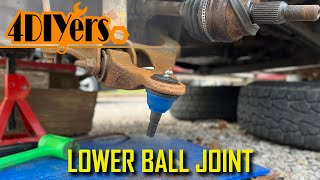
- Upper and Lower Ball Joints: These are pressed into the control arms 🎬 See how to properly replace the lower ball joints. and are a very common wear item on these trucks.
- Outer Tie Rod End: Connects the steering rack to the knuckle and is another common wear part.
Key Torque Specs & Installation Notes
These specifications are critical for a safe installation. Always use a torque wrench and new cotter pins for all castle nuts.
| Component | Torque Specification | Source |
|---|---|---|
| Axle Hub Nut (35mm) | 185 ft-lbs (250 Nm) | |
| Brake Caliper Bracket Bolts (21mm) | 130 ft-lbs (176 Nm) | |
| Wheel Hub to Knuckle Bolts | 149 ft-lbs | |
| Upper Ball Joint Nut | 40 ft-lbs (54 Nm) | |
| Lower Ball Joint Nut | 38 ft-lbs (52 Nm) | |
| Outer Tie Rod End Nut | 45 ft-lbs (61 Nm) |
Pro Tip: For castle nuts on the ball joints and tie rod, after reaching the specified torque, you must continue to tighten (never loosen) the nut just enough to align the slot with the hole for the cotter pin.
Frequently Asked Questions (FAQ)
Can I just replace the ball joints if they are bad, or do I need a whole new knuckle?
If your only problem is worn ball joints (which is common), you can just replace them. The knuckle only needs to be replaced if it is bent from an impact, cracked, or if the mounting holes for the ball joints or wheel bearing are damaged or corroded beyond repair.
Is this a difficult DIY job?
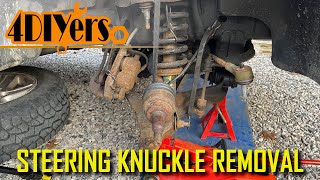
Yes, this is an advanced repair, rated a 4 out of 5 for difficulty. 🎬 Watch this step-by-step guide on how to remove the knuckle. It requires safely lifting the vehicle, a variety of heavy-duty tools including a ball joint separator ('pickle fork') or press, a 35mm axle nut socket, and high-torque wrenches. Due to the safety-critical nature of the part and the mandatory wheel alignment, many people leave this job to a professional.
What's the difference between the 4WD and 2WD steering knuckle?
The 4WD knuckle is designed with a large opening in the center to accommodate the front drive axle (CV shaft). The 2WD knuckle does not have this opening and instead has a solid spindle that the wheel bearing rides on. They are not interchangeable.
My mechanic says the wheel bearing is seized in the knuckle. Do I have to replace both?
Often, yes. In areas with rust, the steel wheel bearing assembly can fuse to the cast iron knuckle. While it's sometimes possible to press the old bearing out, the extreme force required can damage or crack the knuckle, making replacement of the entire assembly the only safe option.
Helpful Videos
Technical Specifications
OEM Part Numbers: 52106724AC (Front Right, Passenger Side) 52106725AC (Front Left, Driver Side)
Material: Cast Iron. Fits: 4-Wheel Drive models with Rear Wheel ABS only. Does not fit Mega Cab models.
We Have This Part in Stock



The information in this article is provided for general reference and educational purposes only. Vehicle specifications, procedures, and part compatibility can vary by production date, trim level, and region. Always consult your vehicle's factory service manual and verify part numbers before purchasing or performing repairs. Safety-critical components such as airbags, seat belts, and braking systems should be installed by a qualified professional.
- Dodge Ram 1500 Pickup:
- 🎬 Helpful Videos
- 🛍️ Shop This Part
- Symptoms of a Failing Steering Knuckle
- 1. Vehicle Pulling and Alignment Issues
- 2. Abnormal Noises: Clunking, Popping, or Grinding
- 3. Uneven or Rapid Tire Wear
- 4. Loose or Vibrating Steering
- Known Issues, Recalls, and TSBs
- Buying a Used Steering Knuckle: What to Look For
- 1. Physical Inspection
- 2. Compatibility Verification
- Replacement Cost Breakdown
- Related Parts to Replace at the Same Time
- Key Torque Specs & Installation Notes
- Frequently Asked Questions (FAQ)
- 🎟️ Get 5% Off