

1999-2004 Tracker & 1999 Sunrunner Steering Knuckle: Decoding Noises and ABS vs. Non-ABS
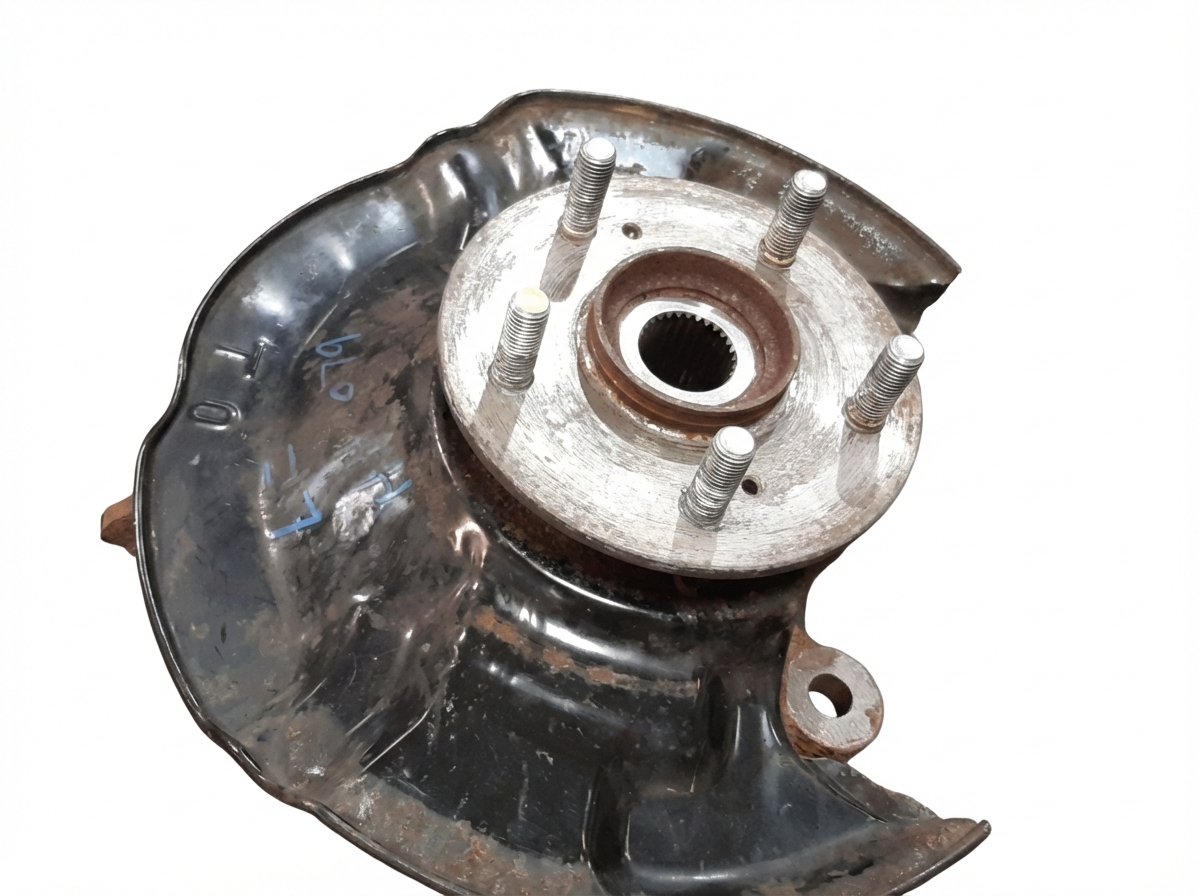
This guide covers the front right steering knuckle for the 1999-2004 Chevrolet Tracker and 1999 Pontiac Sunrunner, focusing on failure diagnosis, replacement costs, and the critical differences between ABS and non-ABS parts.
- The most critical compatibility check is for ABS vs. non-ABS; the knuckle must have a sensor mount if your vehicle has ABS.
- New OEM knuckles are discontinued, making used OEM or new aftermarket parts your only options.
- Always replace the wheel hub/bearing assembly and the lower ball joint when installing a replacement knuckle.
- A wheel alignment is mandatory after replacement to prevent unsafe handling and rapid tire wear.
Diagnosing a Failing Front Right Steering Knuckle
A problem with the front passenger-side steering knuckle on a 1999-2004 Chevrolet Tracker or 1999 Pontiac Sunrunner can manifest in several ways. While the knuckle itself is a solid piece of metal, the symptoms you notice are often caused by the failure of parts connected to it or by the knuckle being bent or cracked from an impact.
Symptoms of Failure
- Clunking or Popping Noises: A common symptom is a clunking or popping sound, especially when turning at low speeds or going over bumps. This noise often points to a worn lower ball joint, which is pressed into the knuckle, or a worn tie rod end connected to it.
- Grinding or Humming Sounds: A constant grinding, humming, or whining noise that changes with vehicle speed is a classic sign of a failed wheel hub and bearing assembly. Since the hub bolts directly to the knuckle, this is the most common noise associated with this part of the suspension.
- Vehicle Pulling to One Side: If the knuckle is bent from hitting a curb or a deep pothole, it can throw the wheel alignment out of specification, causing the vehicle to pull to one side. This pull may be constant or happen only during braking. An alignment that cannot be corrected may indicate a bent knuckle.
- Uneven Tire Wear: A bent or damaged knuckle will alter the camber (the inward or outward tilt of the top of the tire), leading to rapid and uneven wear on the inner or outer edge of the passenger-side front tire.
- Vibrating or Crooked Steering Wheel: A steering wheel that shakes or is no longer centered when driving straight can be a sign of a damaged knuckle or a severely worn wheel bearing.
Warning: A cracked steering knuckle is a critical safety hazard that can lead to a loss of steering control or the wheel separating from the vehicle. If you suspect your knuckle is cracked or bent, do not drive the vehicle.
Known Issues, Recalls, and TSBs
As of mid-2026, there are no specific recalls or Technical Service Bulletins (TSBs) from the NHTSA for the steering knuckles on the 1999-2004 Chevrolet Tracker or 1999 Pontiac Sunrunner. However, owners should be aware of a related issue. GM initiated a special coverage program for front suspension crossmember corrosion on vehicles registered in salt-belt states, extending the warranty for that specific part. While this doesn't cover the knuckle, it highlights that these vehicles can be susceptible to significant rust and corrosion in their suspension components. Always inspect the knuckle and surrounding parts for heavy rust, which can weaken the metal and seize bolts, complicating repairs.
Buying a Used Steering Knuckle: What to Look For
Since new OEM steering knuckles for these vehicles have been discontinued, a quality used OEM part is often the best choice. An original GM or Suzuki part offers guaranteed fitment and material quality compared to potentially lower-quality aftermarket alternatives. Here’s what to inspect before buying.
1. Verify ABS Compatibility (CRITICAL)
The single most important check is whether you need a knuckle for a vehicle with or without Anti-lock Brakes (ABS).
- ABS Knuckle: Has a threaded mounting hole for the wheel speed sensor.
- Non-ABS Knuckle: Does not have a mounting hole for the sensor.
You cannot use a non-ABS knuckle on an ABS-equipped vehicle, as you will have nowhere to mount the sensor, resulting in a disabled ABS system and a warning light. Please verify which system your vehicle has before ordering.
2. Physical Inspection
- Check for Cracks: Carefully inspect the entire knuckle for hairline cracks, especially around the mounting points for the strut, the lower ball joint, and the tie rod end arm. Stress fractures are most common in these high-load areas.
- Inspect Mounting Holes: Check that the tapered hole for the ball joint stud is not worn, distorted, or enlarged. Ensure all threaded holes for the brake caliper bracket and ABS sensor are clean and not stripped.
- Look for Corrosion: Surface rust is normal, but avoid knuckles with deep, flaky rust or heavy pitting, as this can compromise structural integrity. Pay close attention to the area where the wheel hub mounts, as severe rust can make it difficult to install the new hub.
- Ignore the Old Bearing and Ball Joint: The condition of the old wheel bearing or ball joint on the used knuckle is irrelevant. These are wear items and should always be replaced before installing the knuckle on your vehicle.
Pro Tip: Plan to replace the wheel hub/bearing assembly and the lower ball joint at the same time as the knuckle. The labor to install them in the knuckle is minimal when it's off the vehicle, and it ensures all key components are new and reliable.
Replacement Cost Breakdown
The total cost to replace a front right steering knuckle on a Chevrolet Tracker or Pontiac Sunrunner can vary based on part choice and labor rates. An alignment is mandatory after the job, adding to the total cost.
| Part/Service | Estimated Cost | Notes |
|---|---|---|
| New OEM Knuckle | Discontinued | No longer available from General Motors. |
| New Aftermarket Knuckle | $75 - $200 | Availability can be limited. Quality may vary. |
| Used OEM Knuckle | $100 - $150 | A common and cost-effective option. Price is for the bare knuckle. |
| Shop Labor | $250 - $375 | Typically 2-4 hours of work. |
| Wheel Alignment | $100 - $200 | Required after knuckle replacement to prevent tire wear and handling issues. |
| Total Estimated Cost (Installed) | $475 - $725 | Using a used OEM knuckle and including alignment. Does not include related parts like a new bearing or ball joint. |
Installation and Related Parts
Replacing the steering knuckle is an advanced DIY job that requires specific tools. If you are not comfortable separating suspension joints or using a torque wrench, this job is best left to a professional.
Key Replacement Steps:
- Lift and support the vehicle safely on jack stands.
- Remove the wheel, brake caliper (hang it securely to avoid straining the brake line), and brake rotor.
- Disconnect the ABS wheel speed sensor, if equipped.
- Remove the axle nut.
- Separate the outer tie rod end and the lower ball joint from the knuckle. A ball joint separator tool is often required.
- Remove the two large bolts connecting the knuckle to the bottom of the strut assembly.
- Slide the knuckle off the end of the axle shaft.
- Before installation, press in a new lower ball joint and bolt on a new wheel hub/bearing assembly to the replacement knuckle.
- Installation is the reverse of removal. Use a torque wrench for all critical fasteners.
Important Torque Specifications:
These values are critical for safety. They are based on the identical Geo Tracker platform.
- Strut-to-Knuckle Bolts: 74 lb-ft (100 N·m). Some sources list a range of 58-72 lb-ft.
- Axle Spindle Nut: 155 ft-lbs (211 N·m).
- Lower Ball Joint Nut: 63 ft-lbs (85 N·m) for 1993+ models.
- Tie Rod End Nut: 58-72 ft-lbs (79-98 N·m).
Related Parts to Replace:
To do the job right and avoid future problems, it's highly recommended to replace these parts at the same time:
- Wheel Hub & Bearing Assembly: This is a mandatory replacement. The old one is often damaged during removal or is near the end of its service life anyway.
- Lower Ball Joint: This part is pressed into the knuckle and takes significant load. It's inexpensive and wise to replace.
- Outer Tie Rod End: You have to disconnect it anyway, so if it shows any signs of wear, now is the perfect time to replace it.
- Seals: On 4WD models, there are inner and outer knuckle seals that should be replaced to protect the axle and bearings.
Frequently Asked Questions (FAQ)
Do I really need an alignment after replacing a steering knuckle?
Yes, absolutely. The steering knuckle is a primary component that determines wheel alignment angles (camber and toe). Skipping the alignment will cause poor handling, crooked steering, and will destroy your tires in a very short time.
What is the difference between the ABS and non-ABS steering knuckle?
The steering knuckle for a vehicle with ABS has a small, threaded hole where the wheel speed sensor bolts on. The non-ABS version does not have this provision. You must match the knuckle to your vehicle's braking system.
Can I reuse my old wheel bearing or ball joint?
No. The wheel bearing is almost always damaged when separated from the old knuckle, and the labor to press out an old ball joint and press it into the new knuckle makes little sense. Both are wear items that should be replaced with new parts for safety and reliability.
Is the front right (passenger) knuckle the same as the front left (driver) side?
No, they are not interchangeable. The left and right steering knuckles are mirror images of each other to accommodate the steering linkage and brake caliper mounting on each side.
Technical Specifications
OEM Part Numbers: 91175802 91175803 96058661 45111-65D00 45111-65DV1
Side: Front Right (Passenger Side). Key Torque Specs: Strut-to-Knuckle Bolts (74 lb-ft), Axle Nut (155 lb-ft), Lower Ball Joint Nut (63 lb-ft).
We Have This Part in Stock



The information in this article is provided for general reference and educational purposes only. Vehicle specifications, procedures, and part compatibility can vary by production date, trim level, and region. Always consult your vehicle's factory service manual and verify part numbers before purchasing or performing repairs. Safety-critical components such as airbags, seat belts, and braking systems should be installed by a qualified professional.
- Chevrolet Tracker:
- Pontiac Sunrunner:
- 🛍️ Shop This Part
- Diagnosing a Failing Front Right Steering Knuckle
- Symptoms of Failure
- Known Issues, Recalls, and TSBs
- Buying a Used Steering Knuckle: What to Look For
- 1. Verify ABS Compatibility (CRITICAL)
- 2. Physical Inspection
- Replacement Cost Breakdown
- Installation and Related Parts
- Key Replacement Steps:
- Important Torque Specifications:
- Related Parts to Replace:
- Frequently Asked Questions (FAQ)
- 🎟️ Get 5% Off