

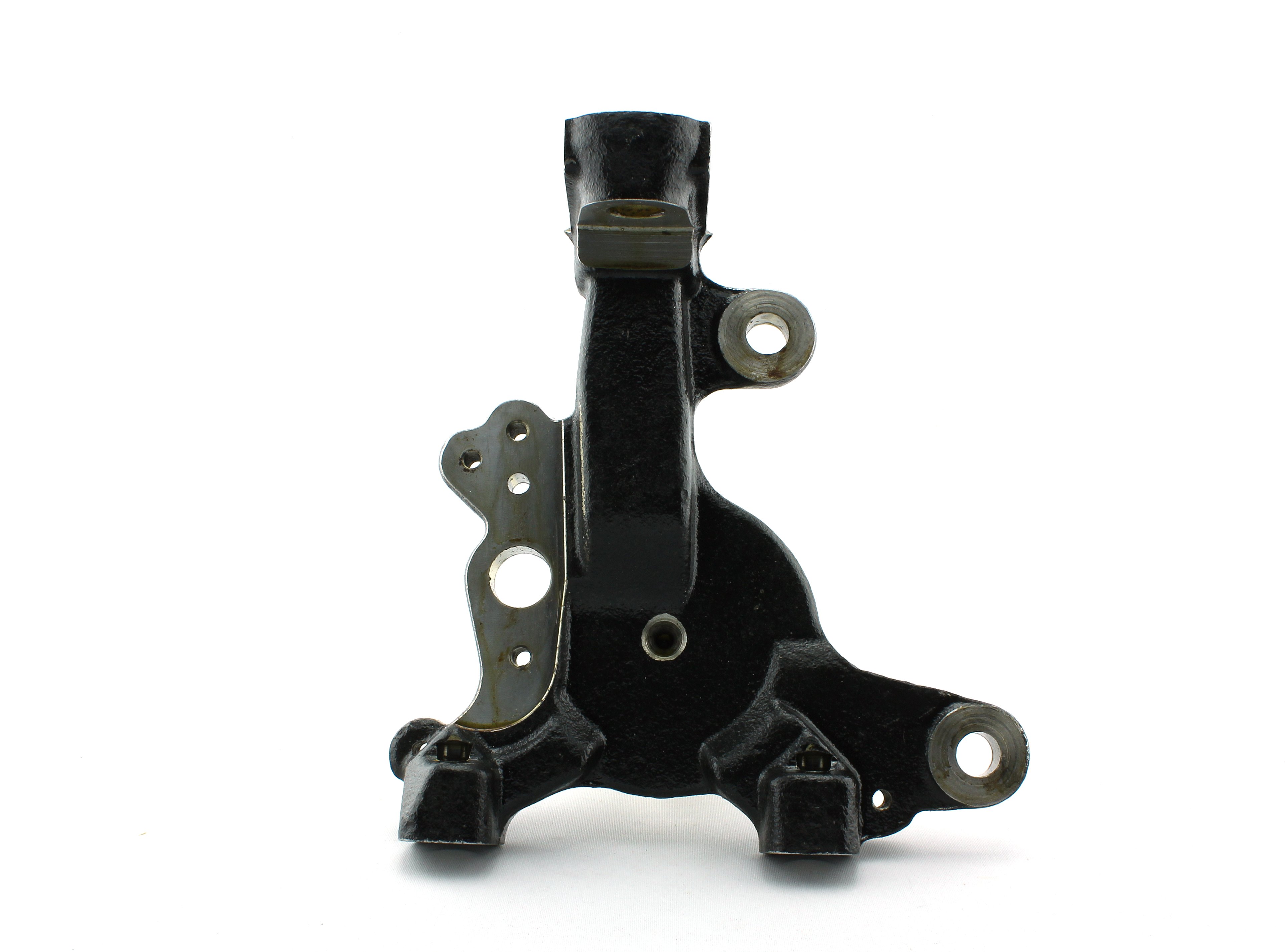
2013-2015 Chevrolet Spark Steering Knuckle: Failure Diagnosis and Gas vs. EV Guide
This guide covers symptoms of a bad steering knuckle on your 2013-2015 Chevrolet Spark, critical recalls, and the essential differences between gasoline and EV model parts.
- This knuckle fits 2013-2015 gasoline-powered Sparks ONLY and is NOT interchangeable with the Spark EV model.
- A front-end alignment is mandatory after replacement to ensure safety and prevent tire damage.
- It is highly recommended to replace the wheel bearing and hub assembly at the same time as the knuckle.
- Check for a history of GM Safety Recall 14V440, which involves the bolt connecting the lower control arm to the knuckle and can cause a loss of steering if it fails.
Symptoms of a Bad Steering Knuckle
A steering knuckle is a very durable part, and failure is almost always caused by an impact, like hitting a curb, a deep pothole, or being in an accident. It can also fail due to improper torque on connected parts. Here are the most common signs of a bad or failing steering knuckle:
- Clunking or Popping Noises: You may hear a distinct clunk, pop, or grinding sound when turning the steering wheel, especially at low speeds. This can be caused by a cracked knuckle or a worn mounting hole where the ball joint or tie rod connects.
- Uneven Tire Wear: A bent steering knuckle will permanently alter the vehicle's suspension geometry (camber and toe angles). This leads to rapid and uneven wear on the inside or outside edge of one specific tire, a problem that a standard alignment cannot fix.
- Vehicle Pulling to One Side: If the car consistently pulls to the left or right even after a wheel alignment, a bent knuckle is a likely culprit. This indicates the wheel is no longer pointing straight as it should.
- Steering Wheel Vibration or Looseness: A damaged knuckle can cause the wheel to wobble, creating vibrations that you can feel in the steering wheel. The steering may also feel vague or loose, requiring constant small corrections to drive straight.
- Visible Damage: After an impact, a visual inspection may reveal obvious cracks, especially around bolt holes, or bending in the knuckle itself.
Safety Recall Notice: General Motors issued a safety recall (NHTSA Campaign ID: 14V440) for some 2014 Spark models due to a lower control arm bolt that may not have been properly tightened at the factory. This bolt connects the control arm to the steering knuckle. If it loosens, it can separate, causing a complete loss of steering control. The recall notice urged owners not to drive their vehicles until the inspection and repair were completed. When inspecting a used vehicle or part, check for any signs of looseness or damage at this connection point.
Buying a Used 2013-2015 Spark Steering Knuckle
A used OEM steering knuckle is an excellent, cost-effective replacement part, as it's a solid component without internal moving parts. However, careful inspection is critical.
- Verify Vehicle Compatibility: This is the most important step. These knuckles fit 2013-2015 gasoline-powered Chevrolet Sparks with the 1.2L engine ONLY. They will NOT fit the Spark EV (Electric Vehicle). OEM part catalogs explicitly state "Without EV" for these parts. The EV model has different suspension components. Before buying, confirm the donor vehicle was a gas model by checking for a tailpipe or looking at the engine.
- Inspect for Impact Damage: The primary reason for knuckle failure is impact. Carefully inspect the entire part for hairline cracks, especially around the mounting holes for the strut, ball joint, and tie rod. Look for any signs of bending; lay it on a flat surface to see if it sits flush.
- Check Mounting Holes: Pay close attention to the tapered hole for the ball joint stud. If the hole appears worn, elongated, or out-of-round, the knuckle is junk. A new ball joint will not seat properly, leading to premature failure and unsafe handling.
- Mileage vs. Condition: For a steering knuckle, the vehicle's history is more important than its mileage. A low-mileage knuckle from a car that hit a curb is far worse than a high-mileage knuckle from a vehicle with no accident history. Corrosion is a secondary concern, but avoid parts with heavy, flaking rust that could compromise structural integrity.
- Why Used OEM is a Smart Choice: A used OEM knuckle guarantees the exact geometry and fitment as the original part. Cheap aftermarket knuckles can sometimes have slight casting variations, leading to persistent alignment issues or difficulty installing the wheel bearing and other components.
Pro Tip: The transmission on 2014-2015 Sparks was subject to a special coverage program for repairs. This repair requires removal of front suspension components. One owner reported a catastrophic failure of the ball joint-to-knuckle connection due to improperly tightened bolts following this service. If you are buying a used Spark, ask if this service was performed and be extra diligent in inspecting the front suspension hardware.
Replacement Overview and Related Parts
Replacing a steering knuckle is a job for an experienced DIY mechanic or a professional shop. It requires separating several key suspension joints, which can be difficult without the right tools.
- Related Parts to Replace: It is highly recommended to install a new wheel hub and bearing assembly with the replacement knuckle. The old bearing is often seized into the knuckle and will likely be destroyed during removal. You should also inspect the lower ball joint and outer tie rod end for wear and replace them if needed.
- Mandatory Wheel Alignment: A four-wheel alignment is not optional after replacing a steering knuckle. The new part will change the suspension geometry, and driving without an alignment will cause poor handling and destroy your tires.
- Special Tools: You will need a heavy-duty torque wrench, a ball joint separator (pickle fork or press), and potentially a slide hammer or press for the wheel hub if you attempt to reuse it.
Key Torque Specs
Proper torque is critical for safety. Always use a torque wrench and replace any single-use torque-to-yield bolts or nuts as specified. While you should always consult a vehicle-specific service manual, here are common torque values:
| Component | Torque Specification | Notes |
|---|---|---|
| Axle Spindle Nut | 177 ft-lbs (240 Nm) | Must use a new nut. |
| Strut-to-Knuckle Bolts | 59 ft-lbs + 180 degrees | General GM spec; may vary. These are often torque-to-yield and should be replaced. |
| Lower Ball Joint Pinch Bolt/Nut | 18 ft-lbs + 120 degrees | General GM spec; may vary. |
Cost Comparison for Steering Knuckle Replacement
The labor is a significant portion of the total cost, as the job can take 2-4 hours per side.
| Item | Estimated Cost | Notes |
|---|---|---|
| New OEM Part | $125 - $220 | Price for one knuckle from a GM dealer or online OEM wholesaler. |
| New Aftermarket Part | $150 - $250 | Price from retailers like AutoZone or RockAuto. Quality can vary. |
| Used OEM Part | $50 - $120 | Typical price from a salvage yard. Offers OEM quality at a lower price. |
| Shop Labor | $350 - $515 | Based on 2.5-4 hours of labor at typical shop rates. |
| Wheel Alignment | $100 - $200 | Mandatory additional cost after the repair. |
Frequently Asked Questions (FAQ)
Do I have to get an alignment after replacing a steering knuckle?
Yes, absolutely. A four-wheel alignment is mandatory. The steering knuckle is the central component that determines the wheel's angles. Skipping the alignment will result in unsafe handling, crooked steering, and rapid tire wear.
Can I reuse my old wheel bearing?
It is not recommended. The wheel bearing is pressed into the knuckle with thousands of pounds of force. Removing it almost always damages the bearing. For this reason, it's standard practice to install a new wheel bearing and hub assembly into the replacement knuckle.
What is the difference between the gas and EV Spark steering knuckle?
While the exact geometric differences are not widely documented, OEM parts catalogs for the 2013-2015 Spark explicitly list different part numbers for the gasoline and EV models, with the gas version's parts marked as "Without EV". The suspension and drivetrain components are different between the two models, meaning the knuckles are not interchangeable. Attempting to use the wrong one will result in parts not fitting correctly and an unsafe vehicle.
How do I know if my 2013-2015 Spark is a gas or EV model?
The easiest way to tell is to look at the back of the car for a tailpipe; the gas model has one, the EV does not. You can also look under the hood for a conventional gasoline engine versus a large orange high-voltage cable and electric motor. The badging on the rear of the car will also say "Spark EV" on the electric model.
Technical Specifications
OEM Part Numbers: 94555796 (Left, Current) 94555797 (Right, Current) 95214875 (Left, Superseded) 95352712 (Left, Superseded) 95214876 (Right, Superseded) 95352713 (Right, Superseded) 95471182 95952783 95048311
Fits 1.2L gasoline engine models. Does not fit Spark EV. Axle nut torque: 177 ft-lbs (240 Nm).
We Have This Part in Stock



The information in this article is provided for general reference and educational purposes only. Vehicle specifications, procedures, and part compatibility can vary by production date, trim level, and region. Always consult your vehicle's factory service manual and verify part numbers before purchasing or performing repairs. Safety-critical components such as airbags, seat belts, and braking systems should be installed by a qualified professional.
- Chevrolet Spark: