

2020-2025 Cadillac CT4 AWD Steering Knuckle: Noises, Fitment, and Replacement Guide
This guide covers the essential details for diagnosing, buying, and replacing the All-Wheel Drive steering knuckle on your 2020-2025 Cadillac CT4.
- This steering knuckle (GM Part 84702875) is for All-Wheel Drive (AWD) models ONLY and will not fit Rear-Wheel Drive (RWD) vehicles.
- Failure is almost always caused by impact (curbs, potholes). When buying used, inspect carefully for cracks or bends.
- The wheel hub and bearing assembly is a separate part and is not included with a new knuckle. It is highly recommended to replace it at the same time.
- A professional wheel alignment is mandatory immediately after replacement to ensure safety and prevent tire damage.
Symptoms of a Failing Steering Knuckle
On a newer vehicle like the 2020-2025 Cadillac CT4, steering knuckle failure is almost always caused by a sudden impact—like hitting a deep pothole, sliding into a curb, or being in a collision—rather than by simple wear and tear. Here are the signs to look and listen for:
- Clunking or Popping Noises: A metallic clunk, pop, or grinding sound when turning at low speeds, such as in a parking lot, can indicate a problem with the knuckle or the components attached to it, like ball joints or a worn wheel bearing. 🎬 Watch: A mechanic's guide to diagnosing suspension noises
- Vehicle Pulling to One Side: If the car consistently pulls to the left or right even after a proper wheel alignment, the knuckle on one side may be bent. This is a classic symptom that alignment technicians look for.
- Uneven or Rapid Tire Wear: A bent knuckle changes the camber or toe angle of the wheel, causing the inside or outside edge of a single tire to wear out much faster than the others.
- Vibrating or Loose Steering Wheel: A steering wheel that shakes or feels disconnected from the road can be a sign of a worn wheel bearing housed within the knuckle, or damage to the knuckle itself.
- Off-Center Steering Wheel: If you have to hold the steering wheel crooked to drive straight, and an alignment doesn't fix it, a bent knuckle is a likely suspect.
Warning: A damaged steering knuckle is a critical safety failure. Do not drive a vehicle with a suspected bent or cracked knuckle, as it can lead to a loss of steering control or wheel detachment.
Known Issues, Recalls, and TSBs
As of early 2026, there are no specific recalls or Technical Service Bulletins (TSBs) issued by GM or the NHTSA for the steering knuckles on the 2020-2025 Cadillac CT4.
Some owners have reported issues related to steering feel, vibrations, or a temporary increase in steering effort, particularly on 2022 models. However, these complaints are generally associated with the electronic power steering system, steering angle sensors, or software calibrations, not the physical steering knuckle itself. If you experience these symptoms without any signs of impact damage, a diagnostic scan by a qualified technician is recommended to check for electronic faults before assuming a mechanical issue with the knuckle.
Buying a Used 2020-2025 CT4 Steering Knuckle: What to Look For
Since new aftermarket knuckles for this specific model are not widely available, a quality used OEM part is a common and cost-effective alternative to a new dealer part. Because failure is almost always from impact, a used knuckle from an undamaged vehicle is functionally as good as a new one. Here’s what to inspect:
- Verify the Part Number: This is the most important step. The AWD models use different knuckles than RWD models. The OEM part number for the right (passenger) side AWD knuckle is 84702875. The left (driver) side is 84702874. Ensure the part you are buying matches your vehicle's drivetrain and side.
- Inspect for Cracks: Carefully examine the entire part, especially around the mounting points for the ball joint, tie rod, and strut. Pay close attention to the areas where the casting is thinnest. Any visible crack, no matter how small, means the part is junk.
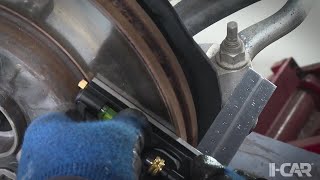
- Check for Bends or Warping: Place the knuckle on a flat surface. It should sit flush without rocking. Look for any signs of impact, like scraped or flattened areas, which could indicate it was damaged in a collision. Compare it to photos of a new part to spot any subtle bends. 🎬 Watch: How to check for a damaged steering knuckle
- Examine Mounting Holes: Check the tapered hole for the ball joint and the threaded holes for the brake caliper and wheel hub. The ball joint hole should be perfectly round and smooth, not oval-shaped or distorted. The threads should be clean and undamaged.
- Mileage is Not a Major Concern: Unlike a moving part, a steering knuckle doesn't wear out with mileage. Its condition is determined by its history. A high-mileage part from a car that never hit a curb is better than a low-mileage part from a wreck.
Pro Tip: Many used knuckles are sold with the wheel hub and bearing still attached. While this can be a bonus, always assume the used bearing is a liability. It's best practice to install a new wheel hub and bearing assembly into the used knuckle.
Cost of Replacement
The total cost can vary based on your location and choice of parts. An alignment is always required after replacement, adding to the final bill.
| Part/Service | Estimated Cost |
|---|---|
| New OEM Steering Knuckle | $115 - $180 |
| Used OEM Steering Knuckle | $100 - $175 |
| New Aftermarket Steering Knuckle | Not commonly available as of 2026 |
| Shop Labor for Replacement | $220 - $325 |
| Mandatory Wheel Alignment | $100 - $200 |
| Total Estimated Cost (Used OEM) | $420 - $700 |
| Total Estimated Cost (New OEM) | $435 - $705 |
Related Parts to Inspect and Replace
When replacing a steering knuckle, several related parts must be disconnected. This is the perfect time to inspect them for wear and replace them if needed, as you'll save on future labor costs.
- Wheel Hub and Bearing Assembly: The initial prompt was correct; this is not included with a new knuckle. It is highly recommended to replace the wheel hub and bearing when you replace the knuckle. Pressing an old bearing into a new knuckle is not advisable.
- Lower Ball Joint: Inspect the rubber boot for tears and check for any play in the joint.
- Outer Tie Rod End: Check for play and the condition of the boot. A damaged tie rod end will ruin your new alignment.
- CV Axle Shaft: On AWD models, the axle shaft passes through the hub. Inspect the CV boots for any rips or leaking grease.
Replacement Overview & Torque Specs
Replacing a steering knuckle is an advanced DIY job that requires specialized tools, including a ball joint separator and a torque wrench. The vehicle must be safely supported on jack stands.
General Steps:
- Lift and support the front of the vehicle and remove the wheel.
- Remove the brake caliper, bracket, and rotor. Secure the caliper so it doesn't hang by the brake hose.
- Remove the axle nut and push the CV axle out of the hub.
- Disconnect the outer tie rod end from the knuckle.
- Disconnect the upper and lower ball joints from the knuckle.
- Unbolt the strut from the knuckle.
- Remove the old knuckle.
- If necessary, press the new wheel hub/bearing into the replacement knuckle. 🎬 See this walkthrough on how to replace a wheel hub
- Installation is the reverse of removal. Use a torque wrench for all critical fasteners.
- Get a professional wheel alignment immediately.
Torque Specifications: Exact torque specs are critical for safety. These values are specific and must be sourced from the official GM factory service manual for your exact year and model. Do not use generic specs. Critical bolts include the wheel hub-to-knuckle bolts, ball joint nuts, tie rod end nut, strut bolts, and brake caliper bracket bolts.
Frequently Asked Questions (FAQ)
Will this knuckle fit my Rear-Wheel Drive (RWD) Cadillac CT4?
No. This part, GM 84702875, is specifically for All-Wheel Drive (AWD) models only. It will not fit a RWD vehicle. You must verify your drivetrain before ordering.
Does the steering knuckle include the wheel bearing?
No, a new OEM steering knuckle is a bare part. The wheel hub and bearing assembly is sold separately. Some used knuckles may come with the hub still attached, but it is always recommended to install a new hub and bearing.
Do I really need an alignment after replacing the knuckle?
Yes, absolutely. Replacing the steering knuckle completely changes the suspension geometry. A four-wheel alignment is mandatory to ensure the vehicle drives straight, handles correctly, and does not cause premature tire wear.
Why would a steering knuckle fail on a relatively new car?
Unlike parts that wear out over time, a steering knuckle is a durable, non-moving component. Failure on a new car is almost always the result of an impact, such as hitting a curb, a major pothole, or being in an accident. Corrosion in areas that use heavy road salt can also weaken the part over a longer period.
Helpful Videos

Technical Specifications
OEM Part Numbers: 84702875 (Right/Passenger Side, AWD) 84702874 (Left/Driver Side, AWD)
Material: Cast Aluminum or Cast Iron (Varies by specific application, visual confirmation needed). Drivetrain Fitment: All-Wheel Drive (AWD) only.
We Have This Part in Stock



The information in this article is provided for general reference and educational purposes only. Vehicle specifications, procedures, and part compatibility can vary by production date, trim level, and region. Always consult your vehicle's factory service manual and verify part numbers before purchasing or performing repairs. Safety-critical components such as airbags, seat belts, and braking systems should be installed by a qualified professional.
- Cadillac CT4:
- 🎬 Helpful Videos
- 🛍️ Shop This Part
- Symptoms of a Failing Steering Knuckle
- Known Issues, Recalls, and TSBs
- Buying a Used 2020-2025 CT4 Steering Knuckle: What to Look For
- Cost of Replacement
- Related Parts to Inspect and Replace
- Replacement Overview & Torque Specs
- Frequently Asked Questions (FAQ)
- 🎟️ Get 5% Off