

2019-2024 Jaguar I-PACE Steering Knuckle: Diagnosing Front-End Noises and Wobbles
This guide covers failure symptoms, replacement costs, and how to inspect a used steering knuckle assembly for your electric Jaguar.
- Steering knuckle failure is almost always caused by impact from a pothole, curb, or accident.
- Symptoms include uncorrectable alignment, pulling to one side, steering wobble, and clunking noises.
- A wheel alignment is mandatory after replacing a steering knuckle to prevent tire damage and ensure safety.
- When buying used, carefully inspect for cracks and bending, as these are the primary failure modes.
Known Issues for 2019-2024 Jaguar I-PACE
While the steering knuckle itself is a durable component, the Jaguar I-PACE can exhibit front-end noises that may be related to the knuckle or its connected parts. Owners on forums frequently report clunking, popping, or knocking sounds, especially when driving over bumps or at low speeds. These noises are often attributed to worn sway bar links, sway bar bushings, or ball joints, all of which connect to or interact with the steering knuckle. A worn ball joint can cause the knuckle to have excessive play, leading to noise and handling issues. There are no specific recalls or widespread Technical Service Bulletins (TSBs) for the steering knuckle on the I-PACE. However, numerous recalls exist for the high-voltage battery system, which can pose a fire risk.
Symptoms of a Failing Steering Knuckle
A damaged steering knuckle is a serious safety concern that directly impacts steering control and stability. Failure is almost always caused by an impact, such as hitting a deep pothole, a curb, or being in a collision.
Clunking or Popping Noises
A distinct clunk, pop, or knock from one of the front corners, especially during low-speed turns (like in a parking lot) or when going over bumps, can indicate a problem. While this can also be caused by bad ball joints or sway bar links, it may point to a cracked knuckle or a worn mounting point where the ball joint sits.
Steering Wheel Vibration or Wobble
A bent steering knuckle can cause a persistent vibration or wobble in the steering wheel that gets worse with speed. This symptom feels similar to an unbalanced tire, but it will not be resolved by a wheel balance. The vehicle may feel unstable or wander on the road.
Vehicle Pulling and Alignment Issues
If the vehicle pulls to one side, and the issue cannot be corrected with a proper wheel alignment, a bent steering knuckle is a likely cause. A damaged knuckle alters the suspension geometry (camber and toe angles) in a way that alignment adjustments cannot compensate for. A crooked steering wheel while driving straight is another key indicator.
Uneven Tire Wear
A direct result of incorrect alignment from a bent knuckle is rapid and uneven tire wear. Typically, you will see excessive wear on the inner or outer edge of just one tire, corresponding to the damaged side.
Warning: Do not drive a vehicle with a suspected broken or cracked steering knuckle. A complete failure can cause a loss of steering control or wheel detachment, leading to a serious accident.
Buying a Used Steering Knuckle Assembly
For a vehicle like the I-PACE, where new parts can be expensive, a used OEM knuckle is a practical and safe alternative to cheap aftermarket parts, provided it's inspected thoroughly. The original Jaguar part is engineered for the specific weight and performance of the vehicle.
Physical Inspection Checklist:
- Check for Cracks: Carefully inspect the entire part for hairline cracks, especially around the mounting points for the ball joints, tie rod, and strut/control arms. Pay close attention to bolt holes.
- Look for Bending or Warping: Place the knuckle on a flat surface to check for any signs of being bent or twisted. Compare it to photos of a new part if possible. Even slight warping can make alignment impossible.
- Inspect Mounting Holes: The tapered hole for the ball joint pin must be perfectly round and free of distortion or excessive wear. An oval-shaped hole means the knuckle is bad and will not hold the ball joint securely.
- Check the Wheel Bearing Bore: The surface where the wheel hub bearing is pressed in must be smooth and free of deep scratches, scoring, or corrosion. A damaged bore can prevent the new bearing from seating correctly.
- Verify Part Numbers: The steering knuckles are side-specific (left and right). The initial part numbers T4K12768 and T4K4735 have been superseded. The current right-side knuckle is part number 602123458. Always confirm the correct part for your vehicle's side and VIN.
Mileage vs. Condition
For a solid metal part like a steering knuckle, its history is far more important than its mileage. A low-mileage part from a vehicle that hit a curb is a bad choice. A high-mileage part from a vehicle with no collision history is perfectly acceptable. Always prioritize a part that is verified to be straight and crack-free.
Cost Breakdown for Replacement
Replacing a steering knuckle is a labor-intensive job. Costs can vary based on location and whether related parts like the wheel bearing or ball joints are replaced at the same time.
| Part/Service | Estimated Cost | Notes |
|---|---|---|
| New OEM (Dealer) | $525 - $910 per side | Part only. Prices vary by dealer and part number. |
| New Aftermarket | Not Widely Available | Due to the vehicle's age and niche status, aftermarket options are rare. |
| Used OEM | $150 - $400 per side | Price depends on condition and source (e.g., eBay, salvage yards). |
| Shop Labor | $240 - $500 per side | Typically 2-4 hours of labor. May be higher if bolts are seized. |
| Wheel Alignment | $100 - $200 | Mandatory after knuckle replacement. |
| Total Estimated Cost | $490 - $1610+ | Total cost will depend on the combination of parts and labor chosen. |
Pro Tip: It is highly recommended to replace the wheel bearing when replacing the steering knuckle. The old bearing must be pressed out of the old knuckle and a new one pressed into the replacement, so replacing it at the same time saves on future labor costs.
Related Parts to Consider
When replacing a steering knuckle, it's wise to inspect and likely replace other connected components that may have been damaged or are near the end of their service life.
- Wheel Bearing/Hub Assembly: The bearing is pressed into the knuckle and should almost always be replaced with it.
- Ball Joints: These are wear items and are often stressed during a knuckle failure.
- Tie Rod Ends: Connects the steering rack to the knuckle. Check for play or damage.
- Axle Nut: This is typically a one-time-use nut and should be replaced.
Frequently Asked Questions (FAQ)
Do I need a wheel alignment after replacing a steering knuckle?
Yes, an alignment is absolutely mandatory. The steering knuckle is a primary component that determines the vehicle's suspension geometry. Without an alignment, you will experience poor handling and rapid tire wear.
Is the left steering knuckle the same as the right one?
No, they are not interchangeable. Steering knuckles are designed specifically for the driver's side (left) or passenger's side (right) and are mirror images of each other.
Can I just replace the wheel bearing instead of the whole knuckle?
Yes, if only the wheel bearing has failed and the knuckle itself is not damaged, you can replace just the bearing. However, this requires a hydraulic press to remove the old bearing and install the new one. If the knuckle is damaged in any way, or if the bearing is seized due to corrosion, the entire assembly must be replaced.
What causes a steering knuckle to fail?
The most common cause of failure is a significant impact, such as hitting a curb, a deep pothole at speed, or being involved in a collision. Severe corrosion can also weaken the metal over time, but impact damage is the primary reason for replacement.
Technical Specifications
OEM Part Numbers: T4K12768 t4k4735 602123458 J9D33K185BB J9D33K185BC
Part numbers are side-specific. T4K4735 and 602123458 are listed for the right (passenger) side. T4K12768 is the corresponding left (driver) side part. These numbers may be superseded over time.
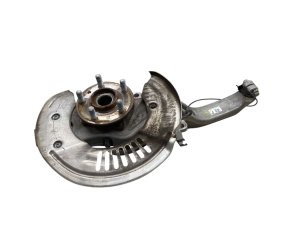
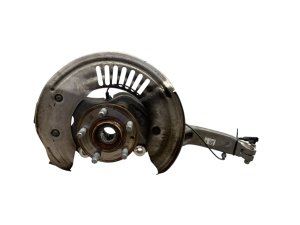
We Have This Part in Stock

The information in this article is provided for general reference and educational purposes only. Vehicle specifications, procedures, and part compatibility can vary by production date, trim level, and region. Always consult your vehicle's factory service manual and verify part numbers before purchasing or performing repairs. Safety-critical components such as airbags, seat belts, and braking systems should be installed by a qualified professional.
- Jaguar I-PACE:
- 🛍️ Shop This Part
- Known Issues for 2019-2024 Jaguar I-PACE
- Symptoms of a Failing Steering Knuckle
- Clunking or Popping Noises
- Steering Wheel Vibration or Wobble
- Vehicle Pulling and Alignment Issues
- Uneven Tire Wear
- Buying a Used Steering Knuckle Assembly
- Physical Inspection Checklist:
- Mileage vs. Condition
- Cost Breakdown for Replacement
- Related Parts to Consider
- Frequently Asked Questions (FAQ)
- 🎟️ Get 5% Off