

2002-2006 Thunderbird & Lincoln LS Steering Knuckle: The Critical 16mm Ball Joint Change
This guide covers the passenger side steering knuckle for the 2002-2005 Ford Thunderbird and 2002-2006 Lincoln LS, focusing on the crucial mid-year design change and symptoms of failure.
- For 2002 models, you MUST verify if you need the early (14mm) or late (16mm) design; this part is for the 16mm version.
- Symptoms are usually from attached parts: humming/grinding points to the wheel bearing, while clunking points to the ball joint.
- A bent knuckle from an impact will cause the car to pull to one side and cannot be fixed by an alignment.
- Replacing the knuckle is a good time to also replace the wheel bearing, ball joint, and inspect control arms to save on future labor.
Critical Compatibility Warning: The 2002 Mid-Year Ball Joint Change
Warning: For 2002 models of both the Ford Thunderbird and Lincoln LS, a significant design change occurred mid-production. This passenger-side steering knuckle is designed for the LATER production models that use a lower ball joint with a 16mm diameter stud.
- Fits 2002 Lincoln LS models built from March 11, 2002.
- Fits 2002 Ford Thunderbird models built from March 6, 2002.
- Fits all 2003-2005 Ford Thunderbird and 2003-2006 Lincoln LS models.
Early 2002 models used a smaller 14mm ball joint stud and require a different steering knuckle. Before ordering, you must verify the production date of your vehicle or measure the diameter of the lower ball joint stud. Installing the wrong knuckle will make it impossible to safely connect the lower control arm.
Symptoms of a Failing Steering Knuckle Assembly
The steering knuckle itself is a durable, solid component. Failure symptoms are almost always caused by a bent knuckle from an impact (like hitting a curb or deep pothole) or by the failure of parts attached to it, like the wheel bearing or ball joint.
Noises
- Grinding, Humming, or Roaring: A continuous humming or grinding noise that gets louder with vehicle speed is a classic sign of a bad wheel bearing. The noise may change pitch or disappear when turning one direction and get louder when turning the other.
- Clunking or Popping: A sharp clunk or pop sound when turning at low speeds (like in a parking lot) or when going over bumps often points to a worn-out lower ball joint, which is pressed into the knuckle.
- Squealing When Turning: A high-pitched squeal during turns can indicate a dry or failing ball joint.
Steering and Handling Issues
- Vehicle Pulling to One Side: If the knuckle is bent from an impact, it can alter the suspension geometry, causing the vehicle to pull to one side. This issue cannot be corrected with a standard wheel alignment.
- Vibrating or Shaking Steering Wheel: A vibration that travels up into the steering wheel can be caused by a failing wheel bearing or a bent knuckle assembly.
- Wandering or Loose Steering: A feeling that the steering is imprecise or that you constantly have to make small corrections to drive straight can be caused by excessive play in a worn ball joint or wheel bearing.
- Uneven Tire Wear: A bent knuckle will cause the wheel to lean in or out, resulting in rapid wear on the inner or outer edge of the tire.
Known Issues, Recalls, and TSBs
The Ford DEW98 platform, shared by the Thunderbird and Lincoln LS, is known for being tough on front lower ball joints.
- NHTSA Recall 00V359001: This recall was issued for 2000 model year Lincoln LS vehicles due to front lower ball joint nuts not being properly tightened at the factory. This could lead to the ball joint stud fracturing and a loss of vehicle control. While this recall does not apply to the 2002-2006 models covered here, it highlights a known stress point in the front suspension design.
- No Knuckle-Specific Recalls: There are no major recalls or Technical Service Bulletins (TSBs) specifically for the steering knuckle on the 2002-2005 Thunderbird or 2002-2006 Lincoln LS. Most owner complaints and shop repairs relate to the serviceable components attached to it.
Buying a Used Steering Knuckle Assembly
Since new OEM knuckles for these vehicles are often discontinued, a quality used OEM part is an excellent alternative. Used OEM parts are typically made from higher-grade materials than cheap aftermarket replacements, offering better durability.
Inspection Checklist for Used Parts:
- Check for Cracks: Carefully inspect the entire knuckle for hairline cracks, especially around the mounting points for the ball joints, tie rod, and wheel bearing. Pay close attention to the areas where the control arms attach.
- Verify Straightness: A bent knuckle is scrap metal. While hard to verify by eye, look for any signs of impact damage, scrapes, or deformation. Compare it to pictures of a new part if possible.
- Inspect Ball Joint Taper: Check the tapered hole for the lower ball joint stud. It should be perfectly round and free of distortion, corrosion, or excessive wear. A damaged taper will prevent the ball joint from seating correctly.
- Condition of Included Components: A used knuckle may come with the wheel hub/bearing and ball joint. Assume these are wear items and may need replacement. If the wheel bearing feels rough or has play when you try to spin it, it must be replaced.
- Mileage is Not the Main Factor: For the knuckle itself, mileage is less important than its history. A low-mileage part from a car that hit a curb is worse than a high-mileage part from a well-maintained vehicle. The primary concern is impact damage and corrosion.
Replacement and Installation
Replacing a steering knuckle is an advanced DIY job that requires specialized tools, including a ball joint press and a torque wrench capable of high values. An alignment is required after replacement.
Related Parts to Replace
Pro Tip: While the knuckle is removed, it is the perfect time to replace other related wear items. This saves you from paying for duplicate labor in the near future.
- Wheel Hub & Bearing Assembly: This bolts directly to the knuckle. If the original has high mileage or shows any signs of noise or play, replace it now.
- Lower Ball Joint: The lower ball joint is pressed into the aluminum knuckle. This is a common failure point on these cars. Given the difficulty of pressing it in and out, many choose to replace the entire knuckle assembly.
- Upper Control Arm: The upper ball joint is part of the upper control arm. If its boot is torn or it has play, replace the entire arm.
- Outer Tie Rod End: Connects the steering rack to the knuckle. Check for play and replace if necessary.
Torque Specifications
Using correct torque specs is critical for safety. These specs are for the Lincoln LS but apply to the Thunderbird as well. Always use new nuts on ball joints and tie rods as they are typically single-use locking nuts.
| Component | Torque Spec (Nm) | Torque Spec (ft-lbs) |
|---|---|---|
| Suspension lower arm-to-knuckle nut | 200 Nm | 148 ft-lbs |
| Suspension upper arm-to-knuckle nut | 90 Nm | 66 ft-lbs |
| Tie-rod end-to-knuckle nut | 80 Nm | 59 ft-lbs |
| Hub and bearing-to-knuckle bolts | 90 Nm | 66 ft-lbs |
| Wheel nuts (lugs) | 135 Nm | 100 ft-lbs |
Warning: The aluminum knuckle can be damaged if ball joints are pressed in or out improperly. If you do not have a heavy-duty press and the correct adapters, it is safer to replace the knuckle as an assembly or take it to a machine shop.
Cost of Replacement
Replacement costs can vary significantly based on your location and whether you perform the labor yourself.
| Item | Estimated Cost |
|---|---|
| New OEM Part (If available) | $500 - $700+ (Largely discontinued) |
| New Aftermarket Part | $80 - $350 |
| Used OEM Part | $100 - $250 |
| Shop Labor | $240 - $550 (includes alignment) |
| Total Professional Replacement | $400 - $1,200 |
Frequently Asked Questions (FAQ)
Do I need to replace the driver's side knuckle at the same time?
No, steering knuckles are not typically replaced in pairs. You only need to replace the side that is damaged or has a failed component like a seized wheel bearing. However, if one side's ball joints or bearings are worn out due to age and mileage, it's likely the other side is not far behind.
Can I just replace the ball joint instead of the whole knuckle?
Yes, the lower ball joint is serviceable. However, it requires a powerful press to remove the old one and install the new one. Because the knuckle is aluminum, there is a risk of cracking it if the job is not done correctly. For many DIY mechanics, replacing the knuckle assembly is a faster and safer option.
How do I know if I have the 14mm or 16mm ball joint on my 2002 model?
The most reliable way is to measure the stud of the ball joint where the nut attaches. You can also check your vehicle's build date, which is located on a sticker in the driver's side door jamb. Lincoln LS models built from 03/11/2002 and Thunderbirds from 03/06/2002 use the 16mm stud. If your car was built before these dates, you likely have the 14mm version.
Is a wheel alignment always necessary after replacing a knuckle?
Yes, absolutely. The steering knuckle is a primary component that determines the alignment angles (camber, caster, and toe). Replacing it will alter these settings, so a full four-wheel alignment is required to ensure proper handling, safety, and to prevent premature tire wear.
Technical Specifications
OEM Part Numbers: 2W4Z-3K185-AA 2W4Z-3K185-BA 2W4Z-3K185-CA 4W4Z-3K185-AA 4W4Z-3K185-BA 6W4Z-3K185-AA
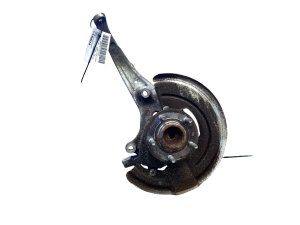
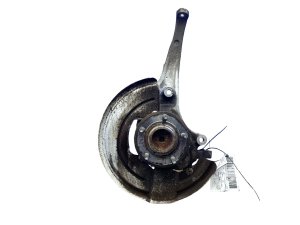
Fits passenger side only. Designed for models with 16mm lower ball joint stud. Material: Aluminum.
We Have This Part in Stock




The information in this article is provided for general reference and educational purposes only. Vehicle specifications, procedures, and part compatibility can vary by production date, trim level, and region. Always consult your vehicle's factory service manual and verify part numbers before purchasing or performing repairs. Safety-critical components such as airbags, seat belts, and braking systems should be installed by a qualified professional.
- Ford Thunderbird:
- Lincoln LS:
- 🛍️ Shop This Part
- Critical Compatibility Warning: The 2002 Mid-Year Ball Joint Change
- Symptoms of a Failing Steering Knuckle Assembly
- Noises
- Steering and Handling Issues
- Known Issues, Recalls, and TSBs
- Buying a Used Steering Knuckle Assembly
- Inspection Checklist for Used Parts:
- Replacement and Installation
- Related Parts to Replace
- Torque Specifications
- Cost of Replacement
- Frequently Asked Questions (FAQ)
- 🎟️ Get 5% Off