

2012-2014 Dodge Charger Steering Knuckle: Decoding Noises, Wobbles, and Replacement
Learn to diagnose a failing steering knuckle or wheel bearing on your Charger and understand what to look for when buying a used replacement.
- The most common reason to service this area is a failing wheel bearing, which produces a humming or grinding noise; it's best practice to replace the bearing when replacing the knuckle.
- A four-wheel alignment is mandatory after replacing a steering knuckle to prevent dangerous handling and rapid tire wear.
- When buying a used knuckle, carefully inspect for cracks and ensure the wheel bearing mounting surface is not damaged.
- Knuckles are side-specific (left/right) and drivetrain-specific (AWD/RWD); ensure you buy the correct part for your Charger.
Symptoms of a Failing Steering Knuckle or Wheel Bearing
The steering knuckle itself is a very durable part, and failure usually happens from a sudden impact like hitting a curb or a major pothole. More commonly, the symptoms people notice are from a worn-out wheel bearing, which is a bolt-on hub assembly attached to the knuckle. Since these parts are so closely related, their symptoms are often grouped together.
- Grinding, Humming, or Growling Noises: This is the classic sign of a bad wheel bearing. The noise is usually most noticeable between 30-60 mph and may change pitch or disappear when you turn the steering wheel. A grinding noise that gets worse when turning is a strong indicator.
- Clunking or Popping Sounds: If you hear a clunk or pop when turning at low speeds, like in a parking lot, it can point to excessive play in the knuckle's connection points with the ball joints.
- Steering Wheel Vibration: A bent knuckle or a failing wheel bearing can cause the wheel to run off-center, leading to vibrations in the steering wheel, especially at highway speeds.
- Vehicle Pulling to One Side: A damaged knuckle can throw off your car's alignment, causing it to pull to the left or right. This can also be a symptom of a bad wheel bearing.
- Uneven Tire Wear: If you notice one of your front tires wearing out much faster on the inner or outer edge, it's a major red flag for an alignment issue caused by a damaged knuckle or other worn suspension parts.
Pro Tip: To help tell the difference between wheel bearing noise and tire noise, try driving on a smooth road and gently swerving left and right. If the humming noise changes pitch or intensity when you load and unload the weight on one side of the car, it's very likely a bad wheel bearing.
Known Issues, TSBs, and Recalls
As of mid-2026, there are no specific recalls or widespread Technical Service Bulletins (TSBs) from Dodge for steering knuckle failure on the 2012-2014 Charger. The part is generally considered robust. However, several recalls were issued for this generation of Charger for other issues, including alternator failure and overly sensitive side airbag sensors. While not directly related to the knuckle, it's important to ensure all applicable recalls have been addressed on your vehicle.
Buying a Used 2012-2014 Charger Steering Knuckle
A used OEM steering knuckle can be an excellent, cost-effective choice compared to expensive new dealer parts or potentially lower-quality aftermarket options. Since the knuckle itself is not a typical wear item, a good used part from a low-mileage, accident-free vehicle is often just as good as a new one. Here’s what to look for:
- Visual Inspection: Carefully inspect the entire knuckle for any signs of cracks, especially around the mounting points for the ball joints, brake caliper, and wheel hub. Look for any evidence of bending or warping, which can indicate it came from a vehicle that was in an accident or hit a curb hard.
- Check the Bearing Mounting Surface: The surface where the wheel hub/bearing assembly bolts on must be clean, flat, and free of damage or severe corrosion. If this surface is damaged, the new bearing may not sit correctly, leading to premature failure.
- Examine Ball Joint Tapers: Check the tapered holes where the ball joint studs mount. If these holes are distorted, egg-shaped, or excessively corroded, the knuckle should be rejected.
- Confirm Compatibility: The Dodge Charger has both Rear-Wheel Drive (RWD) and All-Wheel Drive (AWD) versions, and their steering knuckles are different. They are also side-specific (left vs. right). Ensure you are buying the correct part for your exact vehicle configuration. Parts from a 2012-2014 Chrysler 300 with the same drivetrain (AWD or RWD) are often interchangeable.
Replacement Considerations
Replacing a steering knuckle is a job for an experienced DIY mechanic or a professional shop. It involves disassembling most of the front suspension and requires special tools.
- Related Parts: It is highly recommended to install a new wheel hub and bearing assembly when replacing the knuckle. Since you'll be disconnecting them anyway, it's the perfect time to inspect and potentially replace the upper and lower ball joints and the outer tie rod end.
- Special Tools: You will likely need a ball joint separator (or a large hammer to shock the joints loose), a large 32mm axle nut socket (for AWD models), and a torque wrench.
- Alignment is Mandatory: After replacing a steering knuckle, a full four-wheel alignment is not optional—it is absolutely required. Skipping the alignment will result in poor handling, crooked steering wheel, and rapid tire wear.
Warning: The axle nut and many of the ball joint and control arm nuts are torque-to-yield, meaning they are designed for one-time use. It is safest to replace them with new hardware during installation.
Torque Specifications
These are common torque specs for the 2012-2014 Charger. Always verify with a model-specific service manual for your exact vehicle.
| Component | Torque Spec |
|---|---|
| Upper Ball Joint Nut | 35 ft-lbs + 90° turn |
| Lower Control Arm Ball Joint Nut | 50 ft-lbs + 90° turn |
| Outer Tie Rod End Nut | 37 ft-lbs + 80° turn |
| Wheel Hub/Bearing Bolts | 85 ft-lbs (approximate, verify) |
| Brake Caliper Bracket Bolts | 130 ft-lbs (approximate, verify) |
| Wheel Lug Nuts | 130 ft-lbs |
Cost Comparison
The cost to replace a steering knuckle can vary widely based on the parts you choose and local labor rates. The knuckle itself is expensive from the dealer, making used OEM a very attractive option.
| Item | Estimated Cost | Notes |
|---|---|---|
| New OEM (Mopar) | $800 - $1000 | Part only, from a dealership. |
| New Aftermarket (Dorman, etc.) | $250 - $500 | Quality can vary. |
| Used OEM (Recycled) | $90 - $200 | Often includes the hub and sensor, offering great value. |
| Shop Labor | $200 - $300 | Per side, for installation only. Does not include alignment. |
Frequently Asked Questions (FAQ)
Do I have to get an alignment after replacing a steering knuckle?
Yes, absolutely. The steering knuckle is a key component that determines your vehicle's alignment angles. Replacing it without performing an alignment will lead to unsafe handling and destroy your tires very quickly.
Can I just replace the wheel bearing instead of the whole knuckle?
Yes. On the 2012-2014 Charger, the wheel bearing is a self-contained, bolt-on hub assembly. It can be replaced without replacing the knuckle, provided the knuckle is not damaged. However, if the knuckle is being replaced, it is standard practice to install a new hub assembly at the same time.
Is the left steering knuckle the same as the right one?
No, they are not interchangeable. Steering knuckles are side-specific (driver's side and passenger's side). You must order the correct part for the side you are repairing.
Will a steering knuckle from a Chrysler 300 or Dodge Challenger fit my Charger?
Often, yes. The Charger shares its platform with the Chrysler 300 and Dodge Challenger of the same era. A knuckle from a 2012-2014 Chrysler 300 or Challenger with the same drivetrain (RWD or AWD) will typically fit. However, always verify compatibility using part numbers before purchasing.
Technical Specifications
OEM Part Numbers: 04877275AA 04877275AB 4877275AA 4877275AB
Material: Cast Iron or Aluminum, depending on RWD/AWD configuration. The wheel bearing is a bolt-on hub assembly, not a press-in style.
We Have This Part in Stock

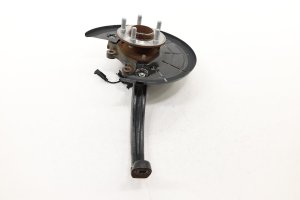



The information in this article is provided for general reference and educational purposes only. Vehicle specifications, procedures, and part compatibility can vary by production date, trim level, and region. Always consult your vehicle's factory service manual and verify part numbers before purchasing or performing repairs. Safety-critical components such as airbags, seat belts, and braking systems should be installed by a qualified professional.
- Dodge Charger: