

2017-2026 Tesla Model 3 & Model Y Steering Rack: Failure Symptoms, Recalls, and Replacement Costs
This guide covers the common steering rack issues in the Tesla Model 3 and Model Y, including sudden power steering loss, recalls, and critical compatibility differences between model years and drivetrains.
- A "Steering Assist Reduced" warning is a critical safety issue that can lead to a sudden loss of power steering and must be addressed immediately.
- A major recall (NHTSA 25V-092) for 2023 models was addressed with a software update, but many vehicles still experience hardware failures requiring a full rack replacement.
- Part compatibility is extremely important. You must distinguish between pre-2024 and 2024+ 'Highland' models, as well as RWD and AWD versions. Always match the OEM part number.
- This is an expensive repair, with total costs often exceeding $3,000 at a service center. A quality used OEM part is a cost-effective alternative, provided it is inspected carefully.
Symptoms of a Failing Steering Rack

A failing steering rack in a Model 3 or Model Y can manifest in several ways, ranging from subtle noises to a complete loss of power assist. Some issues may be resolved with a software update, while others require a full hardware replacement.
"Steering Assist Reduced" Warning Message
This is the most common and critical symptom. You may see a visual alert on the touchscreen that reads, "Steering assist reduced. Steering may require increased effort." This indicates the electric power steering (EPS) motor is not providing full assistance. The steering can become extremely heavy and difficult to turn, especially at low speeds or when parking. In many cases, this warning precedes a complete loss of power assist. While the vehicle remains technically steerable through manual effort, the increased force required can be unexpected and dangerous, especially in an emergency maneuver. This issue has been reported on cars that are only a few weeks old.
"Notchy" or "Clicky" Steering Feel
Drivers often describe a strange feeling through the steering wheel before or during a failure. This has been characterized as a "notchy" or "clicky" sensation, almost like rotating a watch bezel. This feeling can be intermittent and may be more noticeable in cold weather. While a software update addressed a cold-weather-related notchy feel for some vehicles, a persistent physical clicking or notchy sensation often points to an internal mechanical failure within the steering rack that requires replacement.
Clunking or Grinding Noises
Audible noises when turning the steering wheel can indicate a problem. While clunking sounds on these vehicles are frequently caused by worn front upper control arms or sway bar end links, they can also be a symptom of a failing steering rack. A grinding or rubbing sound that changes as you turn the wheel could point to an issue within the steering column or the rack itself. Some owners have noted a creaking sound that seems to come from the brakes but is actually related to the slight movement of suspension components when steering at a standstill. However, any new, persistent noise from the front end while steering warrants an inspection.
Warning: A "Steering Assist Reduced" message is a serious safety concern. The steering can become extremely heavy without warning, particularly after coming to a stop. It is strongly recommended to have the vehicle serviced immediately.
Known Issues, Recalls, and Service Bulletins

The steering systems in the Model 3 and Model Y have been the subject of NHTSA investigations and a major recall.
NHTSA Recall 25V-092: Sudden Loss of Power Steering
🎬 Watch: Expert breakdown of the NHTSA power steering recall causesIn early 2025, Tesla recalled over 376,000 Model 3 and Model Y vehicles from the 2023 model year due to a defect that could cause a sudden loss of power steering assist. The investigation found that an "overvoltage breakdown" could overstress components on the steering rack's printed circuit board. By design, if this fault occurs while driving, the assist continues to work until the vehicle comes to a complete stop. When the driver attempts to accelerate again, the power assist may be completely gone. The official remedy for this recall was an over-the-air (OTA) software update (version 2023.38.4 or later) designed to prevent the overvoltage condition.
Water Ingress Concerns
While not specific to the Model 3 or Y, a service bulletin for the older Tesla Model S (SB-14-32-001) highlighted a condition where water could travel down the power steering wiring harness and enter the steering rack connector, causing electrical faults. This establishes that the electrical connectors on the rack are a potential point of failure if exposed to moisture. When inspecting a used part, checking the connectors for any signs of corrosion or water intrusion is critical.
Compatibility: Decoding Tesla Part Numbers

Choosing the correct steering rack is critical, as there are significant variations between models, years, and drivetrains. Installing the wrong part will not work.
Warning: The single most important step is to verify the part number on your vehicle's original steering rack and match it to the replacement part. Do not rely on year and model alone.
Pre-Refresh vs. 'Highland'
The steering racks are different for the original Model 3 and the 2024+ 'Highland' refresh.
- 2017-2023 Model 3 & 2020-2025 Model Y: These models typically use racks with part numbers beginning in 1044831, 1044832, or 1188832. Revisions are common, indicated by trailing letters like -00-H or -00-J.
- 2024+ Model 3 'Highland': The refreshed Model 3 uses a different rack, often with a part number starting with 1344831. This rack has a slower steering ratio (10.6:1 vs. 10.3:1) for improved high-speed stability.
All-Wheel Drive (AWD) vs. Rear-Wheel Drive (RWD)
The steering racks and replacement procedures can differ between AWD (Dual Motor) and RWD (Single Motor) configurations. Tesla's own service manuals have separate, distinct procedures for RWD and AWD models, underscoring the physical differences. Always confirm the replacement part is correct for your specific drivetrain.
Buying a Used Model 3 & Model Y Steering Rack

Given the high cost of a new steering rack from Tesla, a quality used OEM part is a viable option. However, careful inspection is key.
- Verify the Part Number: This is the most critical step. Physically match the part number, including the revision letters, from your old rack to the used one you are considering.
- Inspect the Electrical Connectors: Carefully check all electrical plugs and pins on the rack. Look for any signs of green or white corrosion, bent pins, or physical damage to the plastic housings. Water intrusion is a known failure mode for steering electronics.
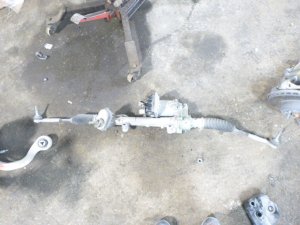
- Check for Physical Damage: Inspect the main body of the rack, the motor housing, and the tie rods for any cracks, dents, or signs of a major impact. A collision can cause internal damage that is not visible from the outside.
- Tie Rod and Boot Condition: Ensure the rubber boots covering the inner tie rods are not torn or leaking grease. While tie rods can be replaced separately, their condition is a good indicator of the part's overall wear and tear.
- Mileage Considerations: Steering rack failure is not strictly tied to mileage. Problems have been reported on cars with less than 1,000 miles. A low-mileage part is generally better, but the primary cause of failure is often an electronic or manufacturing defect rather than simple wear. Focus on the physical condition and correct part number over mileage alone.
Pro Tip: A used OEM (Original Equipment Manufacturer) steering rack that has been carefully inspected is often a better choice than a new, cheap aftermarket part. The fitment and electronic compatibility of the OEM part are guaranteed, which is crucial for a complex component like this.
Replacement Overview

Replacing the steering rack on a Model 3 or Y is a complex job rated as difficult for a DIY mechanic. It requires significant disassembly of the front of the vehicle.
The basic steps, according to Tesla's service manual and technician videos, include:
- Disconnecting 12V power.
- Removing the large underhood storage unit (frunk tub).
- Removing the front wheels and disconnecting the outer tie rod ends from the steering knuckles.
- Disconnecting the steering column intermediate shaft from the rack's input shaft inside the cabin or frunk area. This connection must be marked and reinstalled precisely.
- Disconnecting the four electrical connectors from the steering rack motor and control module.
- Unbolting the steering rack (typically four main bolts) from the front subframe.
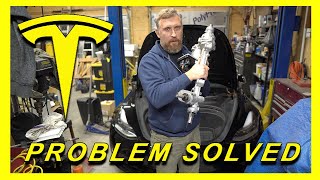
- Maneuvering the old rack out and the new one in, which is a tight fit and may require a second person. 🎬 Watch: A professional walkthrough of the steering rack installation
A full four-wheel alignment is mandatory after replacement. Failure to align the vehicle will result in poor handling and rapid tire wear.
| Component | Torque | Notes |
|---|---|---|
| Steering Gear to Intermediate Shaft Bolt | 18 Nm (13.3 lb-ft) | Replace bolt. |
| Steering Gear to Subframe Bolts (Inner) | Not specified, but 18mm socket required. | |
| Steering Gear to Subframe Bolts (Outer) | Not specified in summary. | |
| Tie Rod End to Knuckle Nut | Varies by model/year. | Always use a new nut if specified. |
Cost of Replacement
Replacing a Tesla steering rack is an expensive repair, whether done at a dealership or an independent shop.
| Item | Cost Range | Notes |
|---|---|---|
| New OEM Part | $1,500 - $3,000+ | Price from Tesla Service. One owner was quoted $3,000 for the job. A new Bosch aftermarket unit was listed over $2,300. |
| Used OEM Part | $300 - $750 | Based on listings from online recyclers and eBay. |
| Remanufactured Part | $250 - $800 | Availability varies. |
| Shop Labor | $700 - $1,200+ | Estimated 4-6 hours of labor. A wheel alignment adds to the cost. |
| Total Estimated Cost (Shop) | $2,200 - $4,200+ | Using a new OEM part. |
Frequently Asked Questions
Can I still drive my Tesla with a "Steering Assist Reduced" warning?
It is not recommended. While you can technically steer the car with manual force, the effort required is extremely high, especially at low speeds. This can make it impossible to react quickly in an emergency or navigate a parking lot safely. The system can fail completely after coming to a stop, leaving you stranded. It should be considered unsafe to drive.
Is the steering rack failure covered under warranty?
Yes, if the vehicle is within Tesla's Basic Vehicle Limited Warranty period (typically 4 years or 50,000 miles), this failure should be covered. Many owners have had the rack replaced under warranty, even on very new cars.
Do I need to program the new steering rack?
The search results do not specify if post-installation programming is required. However, with modern vehicles, it is common for a new electronic module to require calibration or configuration with a diagnostic tool to work correctly with the vehicle's other systems. Tesla's service documentation notes that the vehicle gateway configuration is the same for different generations of racks, suggesting the car's software can adapt. It is safest to assume a calibration step may be needed.
What is a "Steering Gear Poppet Rack"?
This term is not standard in the automotive industry for this part. It may be an internal, legacy, or incorrect name. The correct terms are "Electric Power Steering Rack," "Steering Gear," or "Rack and Pinion Assembly." The system is fully electric and does not use hydraulic fluid or poppet valves for its operation.
Helpful Videos
Technical Specifications
OEM Part Numbers: 1044831 1044831-00-F 1044831-00-G 1044831-00-H 1044831-00-J 1044831-99-B 1044831-99-D 104483100 104483100B 1044832-00-A 1188832-00-B 1344831-00-A 1344831-00-B 1344831-00-C
System Type: Electric Power Steering (EPS). Fluid Type: None (fully electric system). Key Torque Spec: Steering gear to intermediate shaft bolt - 18 Nm (13.3 lb-ft).
We Have This Part in Stock

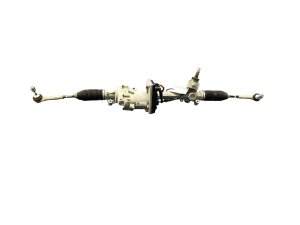
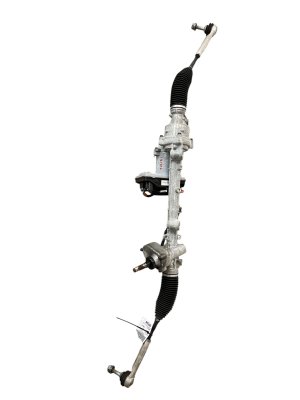
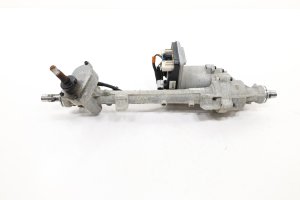
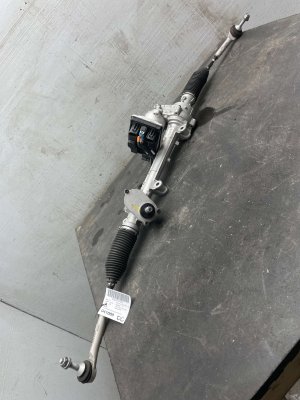

The information in this article is provided for general reference and educational purposes only. Vehicle specifications, procedures, and part compatibility can vary by production date, trim level, and region. Always consult your vehicle's factory service manual and verify part numbers before purchasing or performing repairs. Safety-critical components such as airbags, seat belts, and braking systems should be installed by a qualified professional.
- Tesla Model 3:
- Tesla Model Y:
- 🎬 Helpful Videos
- 🛍️ Shop This Part
- Symptoms of a Failing Steering Rack
- "Steering Assist Reduced" Warning Message
- "Notchy" or "Clicky" Steering Feel
- Clunking or Grinding Noises
- Known Issues, Recalls, and Service Bulletins
- NHTSA Recall 25V-092: Sudden Loss of Power Steering
- Water Ingress Concerns
- Compatibility: Decoding Tesla Part Numbers
- Pre-Refresh vs. 'Highland'
- All-Wheel Drive (AWD) vs. Rear-Wheel Drive (RWD)
- Buying a Used Model 3 & Model Y Steering Rack
- Replacement Overview
- Cost of Replacement
- Frequently Asked Questions
- 🎟️ Get 5% Off