

2009-2016 Toyota Corolla Steering Column: Fixing Noises, Clicks, and Power Steering Faults
Your guide to diagnosing common steering clunks, understanding electronic power steering (EPS) failures, and choosing the right used column for your 2009-2016 Corolla.
- The most common problem is a clunking noise when turning, caused by a bad intermediate shaft.
- Compatibility is critical. You must match the ignition type (key vs. push-button) and options like cruise control and fog lamps.
- A sudden loss of power steering is a major safety issue; it could be the EPS motor on the column or a vehicle charging system fault.
- Disconnecting the battery before starting work is a non-negotiable safety step to disable the airbag.
Symptoms of a Failing Steering Column


Problems with the steering column can range from annoying noises to serious safety concerns. Because this assembly integrates mechanical and electrical parts, symptoms can vary widely.
1. Clunking, Popping, or Knocking Noises
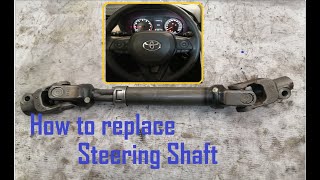
This is the most frequently reported issue for this generation of Corolla. A clunk, pop, or knock is often heard and felt through the steering wheel, especially when turning at low speeds, like in a parking lot. This noise is almost always caused by a faulty steering intermediate shaft, which is the section that connects the bottom of the steering column to the steering rack. Toyota issued a Technical Service Bulletin (TSB) for 2009-2010 models acknowledging this issue and providing a procedure to replace the shaft with an improved part.
2. Stiff Steering or Sudden Loss of Power Assist
The 2009-2016 Corolla uses an Electric Power Steering (EPS) system. If the steering suddenly becomes very heavy and difficult to turn, it usually indicates a failure in the EPS system. This could be due to a problem with the electric motor on the column, the EPS control module, or related wiring. Sometimes, this can be intermittent, with steering effort returning to normal after restarting the car. If the battery or alternator is failing, it can also cause the EPS system to shut down to save power, making the steering stiff.
3. Steering Wheel Drifts or Wanders
Some owners of 2009-2010 models reported a sensation of the car wandering or drifting at highway speeds, requiring constant small corrections to keep the car straight. This was the subject of an NHTSA investigation, which ultimately did not find a specific defect and was closed. While some attributed this to a sensitive EPS system, these symptoms can also be caused by alignment issues or worn tires.
4. Steering Wheel Controls or Horn Not Working
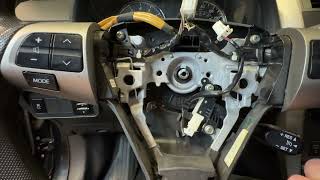
If the buttons on your steering wheel (for radio, cruise control, etc.) or the horn stop working, the most likely culprit is a failed clock spring. The clock spring is a special coiled ribbon of wires inside the steering column that allows the wheel to turn without breaking the electrical connections. A broken clock spring can also cause the airbag warning light to illuminate.
Warning: A malfunctioning clock spring that triggers an airbag light means the airbag may not deploy in a crash. This should be repaired immediately.
🎬 See how to replace the clock spring to fix your horn.Known Issues, Recalls, and Technical Service Bulletins (TSBs)

While generally reliable, this generation of Corolla has a few well-documented steering issues.
- Steering Intermediate Shaft Noise (TSB-0243-09): As mentioned above, Toyota acknowledged a clunking or popping noise from the steering on 2009-2010 Corolla and Matrix models. The fix involves replacing the steering intermediate shaft. While the TSB specifically covers early models, the issue can occur on later years as well.
- NHTSA Power Steering Investigation (PE10-008): In 2010, NHTSA investigated complaints of wandering or inconsistent steering feel in 2009-2010 Corollas. The investigation was closed in 2011 without finding a defect requiring a recall, concluding that the system performed as designed.
- Steering Shaft Recall (2012): Toyota issued a recall in November 2012 that included some 2009 Corolla models for an issue with the steering intermediate extension shaft. The problem could cause noise and, in some cases, a reduction in steering response.
Note: A more recent recall for steering shafts on 2023-2024 Corollas does NOT apply to the 2009-2016 generation.
Buying a Used 2009-2016 Corolla Steering Column

A used OEM steering column is often the most cost-effective solution. However, careful inspection and verification are crucial to ensure you get a good, compatible part.
How to Verify Compatibility
This is the most critical step. Not all 2009-2016 Corolla columns are interchangeable. The initial warnings are correct and vital to follow:
- Ignition Type: The biggest difference is between models with a conventional key ignition and those with a keyless push-button start system. The columns are physically different and not interchangeable.
- Trim and Options: The column houses the switches for various features. You must match your vehicle's options. Check for compatibility with:
- Cruise Control
- Steering Wheel Radio Controls
- Fog Lamps (the switch is on the turn signal stalk)
- Wiper Type (standard intermittent vs. variable intermittent)
- Market: Ensure the part is from a US-market vehicle, as international versions can have different wiring.
Pro Tip: The easiest way to ensure compatibility is to match the OEM part number from your original column to the used one. If you can't see the part number, take detailed photos of all switches and connectors on your original column and compare them side-by-side with the potential replacement.
What to Physically Inspect
- Connectors: Check all electrical connectors for bent, broken, or corroded pins. Ensure the plastic housings aren't cracked.
- Shaft and U-Joints: Inspect the intermediate shaft (if included) and the U-joints at the base of the column. There should be no excessive play, binding, or rust.
- Tilt/Telescope Mechanism: Operate the tilt and telescope lever. The column should move smoothly and lock firmly in place. A column that won't lock is a common failure point.
- Clock Spring: Ask the seller if the clock spring is intact and centered. A spun clock spring will break immediately upon installation. A reputable seller will secure the clock spring to prevent it from rotating during shipping.
- Overall Condition: Look for signs of damage from a collision, water damage (rust, corrosion), or tampering (stripped screw heads, cut wires).
Replacement Overview & Difficulty
Replacing the steering column is a moderately difficult job that requires careful attention to detail, especially regarding the airbag system.
Safety Warning: You MUST disconnect the negative battery terminal and wait at least 15 minutes before beginning any work. This is to de-energize the airbag system and prevent accidental deployment, which can cause serious injury.
The general steps include:
- Disconnect the battery.
- Remove the lower dash panels and knee bolster.
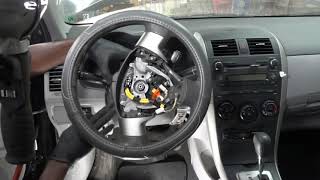
- Remove the steering wheel airbag and then the steering wheel itself (a steering wheel puller may be needed).
- Disconnect all electrical connectors to the column.
- Unbolt the intermediate shaft U-joint from the base of the column.
- Unbolt the steering column mounting brackets from the dashboard support.
- Carefully lower and remove the column from the vehicle. 🎬 Watch a complete walkthrough of the steering column removal process.
Installation is the reverse of removal. It is critical to ensure the front wheels are straight and the clock spring is centered before installing the steering wheel.
| Item | Estimated Cost |
|---|---|
| New OEM (Dealer) | $1,350 - $2,100 |
| New Aftermarket (Intermediate Shaft Only) | $100 - $150 |
| Used OEM (Recycled) | $150 - $400 |
| Shop Labor Cost (Column Replacement) | $230 - $600 |
Frequently Asked Questions (FAQ)
What's that clunking noise I hear when I turn the wheel?
That is almost certainly a worn steering intermediate shaft. It's a very common issue on this Corolla. While annoying, it is not typically considered a major safety risk in its early stages, but it should be addressed.
Is it safe to drive with a failing steering column?
It depends on the symptom. A clunking noise is generally safe to drive with for a short time. However, if you experience a sudden loss of power steering, or if the steering wheel feels loose or disconnected, you should stop driving immediately and have the vehicle towed. Driving without power steering is possible but requires significant physical effort, making it dangerous in an emergency.
Do I need to program or calibrate a used steering column?
For a 2009-2016 Corolla, if you are swapping the entire column assembly, there is typically no programming required. However, if you are only replacing a component like the EPS motor or control unit, a steering angle sensor calibration might be necessary. This is a procedure that a shop with a professional scan tool can perform.
My power steering stopped working and the battery light is on. Is it the steering column?
Probably not. The Electric Power Steering (EPS) system draws a lot of electrical power. If the alternator fails (which usually triggers the battery light), the car's computer will shut down non-essential, high-power systems to conserve energy. The EPS is one of the first things to be turned off. If you have a stiff steering wheel and a battery light, the root cause is almost certainly a charging system problem (bad alternator, slipping belt, or bad battery), not the steering column itself.
Helpful Videos
Technical Specifications
OEM Part Numbers: 4525002820 4525002890 4526002170 841400R020 841400R030 8463207040 8463208021 8463234011 8465206340 8465206350
This is an Electric Power Steering (EPS) column assembly. It does not use hydraulic fluid.
We Have This Part in Stock



The information in this article is provided for general reference and educational purposes only. Vehicle specifications, procedures, and part compatibility can vary by production date, trim level, and region. Always consult your vehicle's factory service manual and verify part numbers before purchasing or performing repairs. Safety-critical components such as airbags, seat belts, and braking systems should be installed by a qualified professional.
- Toyota Corolla:
- 🎬 Helpful Videos
- 🛍️ Shop This Part
- Symptoms of a Failing Steering Column
- 1. Clunking, Popping, or Knocking Noises
- 2. Stiff Steering or Sudden Loss of Power Assist
- 3. Steering Wheel Drifts or Wanders
- 4. Steering Wheel Controls or Horn Not Working
- Known Issues, Recalls, and Technical Service Bulletins (TSBs)
- Buying a Used 2009-2016 Corolla Steering Column
- How to Verify Compatibility
- What to Physically Inspect
- Replacement Overview & Difficulty
- Frequently Asked Questions (FAQ)
- 🎟️ Get 5% Off