

2012-2025 Tesla Model S & X Steering Column: Fixing Noises, Binding, and Refresh Compatibility
This guide covers common failures like binding steering, noisy adjustment motors, and the critical differences between pre- and post-2021 'Refresh' steering columns.
- The most critical factor is compatibility: columns for pre-mid-2021 cars (with stalks) and mid-2021+ 'Refresh' cars (stalk-less) are NOT interchangeable.
- Stiff or binding steering is a common issue caused by corrosion on the lower steering I-shaft U-joint, a problem addressed in TSB SB-20-32-004.
- A grinding noise from the tilt/telescope motor is often just a lubrication issue and may not require replacing the entire column.
- A new steering column from Tesla can cost over $5,000 installed, making a verified used OEM part a highly cost-effective alternative.
Key Compatibility Warning: Pre-Refresh vs. 2021+ 'Refresh' Models

Warning: Tesla made a major change to the steering column in mid-2021. This change divides compatibility for the Model S and Model X into two distinct generations.
- Pre-Refresh (2012-early 2021 Model S, 2016-early 2021 Model X): These vehicles use a steering column with traditional stalks for turn signals, wipers, and cruise control.
- Refresh / Palladium (Mid-2021-2025 Model S & X): These vehicles feature a stalk-less design and are compatible with either the controversial 'Yoke' or a redesigned round steering wheel. The turn signals and other functions are operated by buttons on the wheel itself.
These two types of steering columns are NOT interchangeable. You must purchase a column that matches your vehicle's specific generation. Installing the wrong type will result in non-functional controls and incompatibility with your steering wheel and airbag.
Symptoms of a Failing Steering Column

Failures in the Model S and Model X steering column can manifest as strange noises, poor steering feel, or electrical issues. Here are the most common symptoms reported by owners.
1. Steering Feel Problems
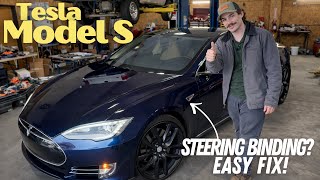
- Stiff or Binding Steering: The most-reported issue is steering that feels intermittently stiff and easy, often changing every 90 degrees of a turn. This can feel like the power steering is cutting out. The primary cause is corrosion of the universal joint (U-joint) on the lower steering intermediate shaft (I-shaft) 🎬 Watch: How to diagnose and fix a binding steering joint, which is exposed to road salt and debris.
- Loose Steering or "Play": Some owners experience a sensation of looseness in the steering wheel, where it can be moved slightly without the front wheels turning. This can be caused by wear in the column itself or a failing lower steering shaft.
- Loss of Power Steering: While often related to the steering rack, a recall for 2017-2021 models showed that a software glitch could cause a loss of power steering assist after hitting a bump. While this was fixed via an over-the-air (OTA) update, a sudden loss of assist points to an issue in the steering system.
2. Noises
- Grumbling/Vibrating Tilt or Telescope: A deep grumbling noise or heavy vibration when the steering wheel moves in or out (telescoping) is a very common complaint. This is often caused by wear and a lack of lubrication in the gears of the adjustment motors, frequently aggravated by the 'Easy Entry' feature which moves the wheel on every entry and exit.
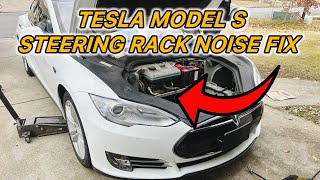
- Clicking, Grinding, or Clunking: Audible clicks or grinding sounds when turning the wheel can point to failing bearings inside the steering column. A clunking sound could indicate a loose bushing or worn internal components. 🎬 Watch: Identifying and fixing common steering clunks and noises
3. Electrical and Mechanical Failures
- Tilt/Telescope Function Inoperative: The adjustment motors for the tilt and telescope functions can fail, preventing the wheel from being repositioned. This can be due to a burned-out motor or a problem with the control switch.
- Broken Stalks (Pre-Refresh Models): The plastic stalks for the turn signals or cruise control can physically break, becoming floppy or non-functional. Since these are integrated into the column assembly, this often requires replacing the entire column.
- Warning Lights: A failure in the steering column, particularly the steering angle sensor within the clock spring, can disable stability control, traction control, and regenerative braking, triggering warning lights on the dash.
Known Issues, Recalls, and Technical Service Bulletins (TSBs)

Several official campaigns and service bulletins relate to the steering system on these vehicles.
| Issue | Affected Vehicles | Description & Solution |
|---|---|---|
| Recall: Power Steering Bolt Corrosion | Pre-April 2016 Model S, Pre-mid-October 2016 Model X | Bolts attaching the power steering gear to the steering rack could suffer from excessive corrosion, especially in cold climates, potentially leading to a loss of power assist. Tesla's recall involved replacing the bolts and applying a corrosion-preventative sealer. |
| Recall: Loss of Power Steering Assist (NHTSA 22V818000) | 2017-2021 Model S & Model X | A firmware update could cause the system to misinterpret bumps on the road, resulting in a temporary loss of power steering assist. The fix was a subsequent over-the-air (OTA) software update (version 2022.36.5 or later). |
| Recall: Incorrect Airbag Installation | 2021-2023 'Refresh' Model S & Model X | A small number of vehicles that had their steering wheel retrofitted (e.g., from a yoke to a round wheel) may have had the incorrect airbag installed. The airbags for the yoke and round wheel are different. The fix requires a physical inspection and replacement by Tesla. |
| TSB SB-20-32-004: Stiff Steering | Model S & Model X (various years) | Addresses customer complaints of stiff or binding steering. The cause is identified as corrosion at the lower steering column I-shaft U-joint. The recommended repair is to replace the lower I-shaft. | 🎬 See how to lubricate the U-joint for a free fix
Buying a Used Steering Column: What to Check

Given the high cost of a new steering column from Tesla, a used OEM part is an excellent value. However, careful inspection is critical to ensure you get a good part.
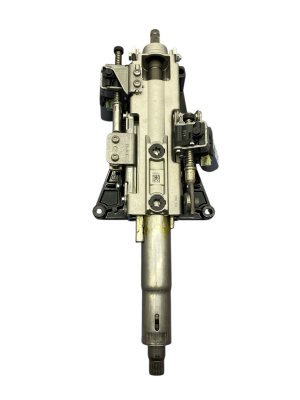
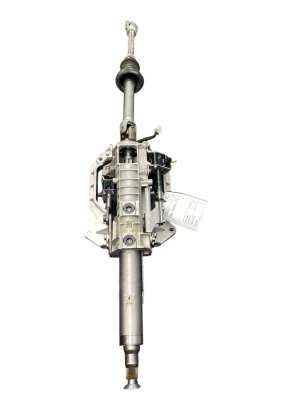
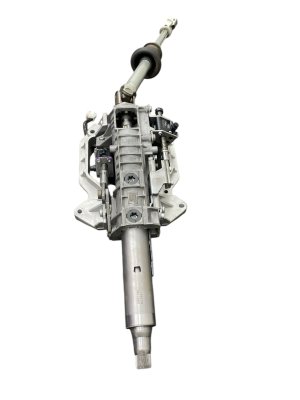
- Verify the Generation (Stalks vs. Stalk-less): This is the most important step. Physically look at the part. If your car has stalks, the replacement column MUST have stalks. If you have a 2021+ 'Refresh' model with a yoke or stalk-less wheel, the replacement MUST be the stalk-less design. They are not cross-compatible.
- Match Part Numbers When Possible: Tesla has used many different part numbers and revisions over the years. While the initial vetted list provides a starting point, the safest bet is to match the part number on your original column exactly. An incompatible revision, even from the same generation, might require also replacing the steering wheel and airbag.
- Inspect the Lower I-Shaft U-Joint: If the used column includes the lower intermediate shaft, inspect its U-joint carefully. Look for heavy rust, flaking metal, or stiffness. A clean, smoothly articulating joint is what you want. A rusty, binding joint is the cause of many steering problems.
- Check the Adjustment Motors: If possible, ask the seller if the tilt and telescope motors were working smoothly when removed. A column from a vehicle with low mileage is less likely to have worn-out adjustment motor gears.
- Examine the Clock Spring: Ensure the clock spring (the round module where the steering wheel mounts) is intact and its connectors are not damaged. The ribbon cable inside is delicate.
- Why Used OEM is a Good Choice: For a complex part like this, a used Original Equipment Manufacturer (OEM) column is generally superior to a new, cheap aftermarket alternative. The fit, finish, and electronic compatibility are guaranteed to match factory specifications, which is crucial for integrating with Tesla's sensitive electronic systems.
Pro Tip: Many of the noise issues with the tilt/telescope function are due to dried-out grease on the internal gears. If you are mechanically inclined, you may be able to disassemble the motor assembly on a used column and apply fresh molybdenum or lithium grease as a preventative measure before installation.
Cost of Replacement
Replacing the steering column is a significant repair, primarily due to the high cost of a new OEM part and the labor involved.
| Part/Service | Estimated Cost | Notes |
|---|---|---|
| New OEM (from Tesla) | $3,000 - $3,500+ | Based on owner reports for the part alone. One owner was quoted $3,316 for the part. |
| Used OEM | $250 - $800 | Price varies significantly based on condition, mileage, and whether it's for a pre-refresh or refresh model. |
| Shop Labor | $1,500 - $2,100+ | This is a labor-intensive job. A Reddit user reported a labor quote of $2,041 from Tesla. The job can take several hours. |
Replacement Overview & Difficulty
Replacing the steering column is an advanced DIY job that requires care, especially when handling the airbag.
- Difficulty Rating: 4 out of 5
- Estimated Time: 3-5 hours
- Process Summary: The process involves disconnecting the 12V battery and first responder loop, removing the driver's airbag, steering wheel, and knee airbag assembly. Then, various trim panels and the steering column control module (clock spring) are removed. Finally, the bolts securing the column to the cross-car beam are unfastened, and the column is disconnected from the intermediate shaft. Installation is the reverse of removal.
- Post-Installation: After replacement, a steering angle sensor calibration may be required to re-enable systems like stability control and autopilot. If a column with different adjustment motors is installed, a software configuration may also be necessary.
Frequently Asked Questions (FAQ)
Can I install a 'Refresh' yoke and column on my older Model S/X?
No, this is not a simple swap. The 'Refresh' models (mid-2021 and newer) have a completely different electrical architecture for steering wheel controls. The stalk-less column is not compatible with the wiring and computers in pre-refresh vehicles.
Does the replacement steering column include the clock spring?
Typically, yes. Most used steering column assemblies are sold with the steering column control module (which includes the clock spring) attached. However, you should always verify with the seller what is included in the sale.
My steering wheel makes a grinding noise when moving up/down. Do I need a whole new column?
Not necessarily. If the noise is only during tilt or telescope adjustment, the problem is likely with the small electric motor and gears that drive that function. Some owners have successfully fixed this by removing the motor, cleaning the old grease from the gears, and applying new lubricant. This is much cheaper than replacing the entire column.
Will I need to program the car after installing a used steering column?
Possibly. At a minimum, a steering angle sensor calibration will likely be needed. If you install a column that is a different revision from your original, further software configuration may be required by Tesla or a qualified independent shop to ensure all features work correctly.
Helpful Videos
Technical Specifications
OEM Part Numbers: 1027811-00-F 1027826-00-B 1027827-00-A 1420811-00-A 1420811-00-B 1620811-00-A 163251004C 1028053-00-A 1057355-00-B 1057354-00-B
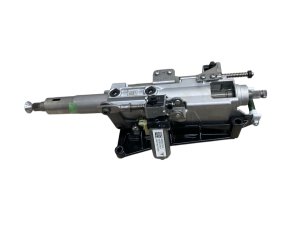
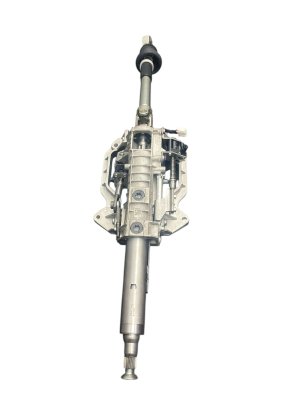
Houses power tilt and telescope motors, steering column control module (clock spring), and control stalks (pre-2021 models) or supports stalk-less controls (2021+ models).
We Have This Part in Stock

The information in this article is provided for general reference and educational purposes only. Vehicle specifications, procedures, and part compatibility can vary by production date, trim level, and region. Always consult your vehicle's factory service manual and verify part numbers before purchasing or performing repairs. Safety-critical components such as airbags, seat belts, and braking systems should be installed by a qualified professional.
- Tesla Model X:
- Tesla Model S:
- 🎬 Helpful Videos
- 🛍️ Shop This Part
- Key Compatibility Warning: Pre-Refresh vs. 2021+ 'Refresh' Models
- Symptoms of a Failing Steering Column
- 1. Steering Feel Problems
- 2. Noises
- 3. Electrical and Mechanical Failures
- Known Issues, Recalls, and Technical Service Bulletins (TSBs)
- Buying a Used Steering Column: What to Check
- Cost of Replacement
- Replacement Overview & Difficulty
- Frequently Asked Questions (FAQ)
- 🎟️ Get 5% Off