

1990-1994 Eclipse, Talon, & Laser Steering Column: Diagnosing Looseness and FWD/AWD Differences
This guide covers the common failure points, compatibility issues, and replacement costs for the steering column in first-generation DSM cars.
- The single most important compatibility check is FWD vs. AWD; the columns are not interchangeable due to different intermediate shaft lengths.
- The most common failure is a wobbly steering wheel, usually caused by internal bolts in the tilt mechanism working loose over time.
- New OEM and aftermarket columns are no longer available, making a quality used OEM part the only viable option.
- While the entire column can be replaced, the common 'wobble' can sometimes be fixed by disassembling the column and tightening the internal bolts, though this is a complex job.
Symptoms of a Failing Steering Column
Failures in the steering columns of the 1990-1994 Mitsubishi Eclipse, Eagle Talon, Plymouth Laser, and Chrysler Laser are most often related to its moving parts and attached components rather than the main shaft itself. Here are the most common symptoms owners experience:
- Loose or Wobbly Steering Wheel: This is the most frequently reported issue. The wheel may feel like it has excessive play, moving up and down or side-to-side without affecting the direction of the car. This is often caused by bolts inside the column housing working themselves loose over time or by worn internal bearings.
- Tilt Mechanism Failure: The lever for the tilt adjustment may break, or the mechanism may fail to lock the steering wheel in the desired position. This can cause the wheel to suddenly drop or move while driving, creating a significant safety hazard.
- Grinding or Clicking Noises: Audible grinding, clicking, or squeaking sounds when turning the steering wheel often point to failing bearings within the column. These bearings can corrode or become contaminated with dirt, leading to rough operation.
- Ignition and Electrical Problems: Since the column houses the ignition lock cylinder and various switches, problems like the key not turning, the car failing to start, or malfunctioning turn signals/wipers can sometimes be traced back to the column assembly. A binding ignition lock is a known issue for these models.
Vehicle and Part Compatibility: The Critical FWD vs. AWD Difference
All four first-generation (1G) DSM cars—the Mitsubishi Eclipse, Eagle Talon, Chrysler Laser, and Plymouth Laser—share steering column designs. However, there is one crucial difference you must be aware of before purchasing a replacement.
Warning: The steering column for Front-Wheel Drive (FWD) models is NOT interchangeable with the one for All-Wheel Drive (AWD) models. The AWD system includes a transfer case that requires the steering rack to be mounted higher in the subframe. To accommodate this, the AWD steering column uses a shorter intermediate shaft to connect to the rack. Attempting to use a FWD column in an AWD car (or vice-versa) will result in incorrect geometry and an unsafe connection.
The initial buyer warnings about "16-inch wheels" are generally a reference to the turbo models (GST, TSi) which came with larger wheels and always included a tilt steering column. Base models with smaller wheels may have had a non-tilt column. The OEM part numbers MB532678 and MB673307 refer to the common tilt-steering version for FWD models. Always confirm your vehicle's drivetrain (FWD or AWD) before ordering a part.
Known Issues, Recalls, and Technical Service Bulletins (TSBs)
Given the age of these vehicles, most major safety issues have been addressed. A search of the National Highway Traffic Safety Administration (NHTSA) database shows several recalls for the 1990-1994 model years, but none are directly related to the steering column's main structure. One recall was issued for the multi-function switch on the column, which could break and cause issues with lights and wipers. However, the most common problem reported by owners on forums like DSMTuners is the tendency for the internal bolts in the tilt-head assembly to loosen, causing the signature "wobbly column." This is not an official recall but a widely documented wear-and-tear issue.
Buying a Used Steering Column: What to Inspect
Since new OEM steering columns for these cars are long discontinued, a quality used part is the only practical option. A thorough inspection is critical to ensure you get a good one.
- Check for Shaft Play: Grab the steering wheel input shaft and the lower output shaft. Try to move them up, down, and side-to-side. There should be no significant wobble or clunking. Any looseness indicates worn internal bearings or loose fasteners.
- Test the Tilt Mechanism: If the tilt lever is present, operate it through its full range of motion. It should move smoothly and lock securely in each position without slipping.
- Inspect the Ignition Housing: Check the area where the ignition lock cylinder mounts for any cracks or damage. A broken housing can cause ignition switch and starting problems.
- Verify Wiring and Connectors: Carefully inspect all electrical pigtails and connectors for the ignition switch, multi-function switch, and clock spring. Ensure they are not cut, cracked, or corroded. Damaged wiring can be very difficult to repair.
- Confirm FWD or AWD Application: This is the most important step. If possible, compare the used column to your old one, paying close attention to the length of the intermediate shaft that connects to the steering rack. As noted, AWD shafts are shorter.
Pro Tip: Many used steering columns come as complete assemblies with the ignition switch, lock cylinder, and multi-function switch. If the used column does not come with a key, you will need to swap your original ignition lock cylinder into the replacement column.
Replacement Overview and Difficulty
Replacing the steering column is a moderately difficult job that requires patience and working in a tight space under the dashboard.
- Difficulty Rating: 4 out of 5
- Estimated Time: 2-4 hours
- DIY Feasible: Yes, for experienced mechanics. Novices may find it challenging.
The basic steps involve disconnecting the battery, removing the lower dash panels and knee bolster, unplugging all electrical connectors, unbolting the intermediate shaft from the steering rack, and finally unbolting the column's mounting brackets from the dashboard support. Installation is the reverse, but care must be taken to properly align the intermediate shaft with the steering rack spline. Loosening the column mounting bolts can provide extra play to help slide the U-joint onto the rack's input shaft.
🎬 Watch: Step-by-step steering column replacement walkthrough| Part Type | Estimated Cost |
|---|---|
| New OEM | $0 (Discontinued) |
| New Aftermarket | Not Generally Available |
| Used OEM | $75 - $200 |
| Remanufactured | Not Generally Available |
| Shop Labor | $280 - $500+ |
Frequently Asked Questions (FAQ)
Is a wobbly steering column dangerous to drive with?
Yes, but the degree of danger depends on the severity. A minor wobble is an annoyance, but if the tilt mechanism fails to lock or the looseness is extreme, it can compromise your control of the vehicle and is a major safety hazard. It is highly recommended to get it repaired as soon as possible.
Can I just tighten the loose bolts inside the column instead of replacing it?
Yes. For the common issue of a loose tilt head, it is possible to disassemble the upper portion of the column and tighten the internal Torx bolts. 🎬 See how to repair a loose tilt steering column This is a complex procedure that requires special tools like a steering wheel puller and lock plate compressor. For many, swapping the entire column with a good used unit is a faster and simpler repair.
Will a column from a car with an automatic transmission fit my manual transmission car?
Yes. For the 1G DSM platform, the steering columns are the same between automatic and manual transmission models. The key compatibility factor is the drivetrain (FWD vs. AWD).
What is the difference between the FWD and AWD steering columns?
The All-Wheel Drive (AWD) models have a transfer case that sits where the FWD steering rack is located. To clear it, the AWD subframe positions the steering rack higher and further back. This requires a shorter steering column intermediate shaft to make the connection. The main column assemblies are similar, but the intermediate shafts are different lengths and are not interchangeable.
Helpful Videos
Technical Specifications
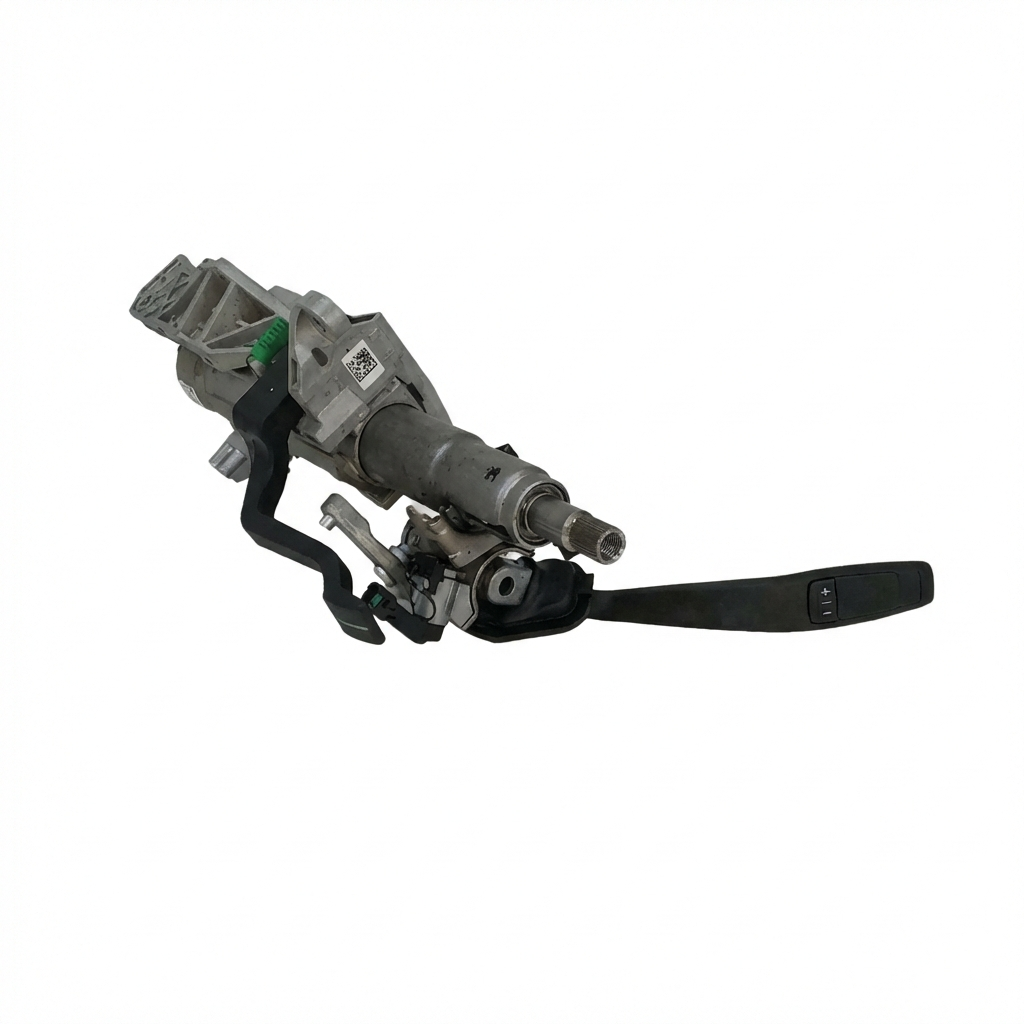
OEM Part Numbers: MB532678 MB673307
Fits 1st Generation (1G) DSM platform vehicles. Includes tilt steering and is intended for floor-shift models. Drivetrain-specific parts for Front-Wheel Drive (FWD) and All-Wheel Drive (AWD).
We Have This Part in Stock

The information in this article is provided for general reference and educational purposes only. Vehicle specifications, procedures, and part compatibility can vary by production date, trim level, and region. Always consult your vehicle's factory service manual and verify part numbers before purchasing or performing repairs. Safety-critical components such as airbags, seat belts, and braking systems should be installed by a qualified professional.
- Mitsubishi Eclipse:
- Eagle Talon:
- Chrysler Laser:
- Plymouth Laser:
- 🎬 Helpful Videos
- 🛍️ Shop This Part
- Symptoms of a Failing Steering Column
- Vehicle and Part Compatibility: The Critical FWD vs. AWD Difference
- Known Issues, Recalls, and Technical Service Bulletins (TSBs)
- Buying a Used Steering Column: What to Inspect
- Replacement Overview and Difficulty
- Frequently Asked Questions (FAQ)
- 🎟️ Get 5% Off