

2002-2015 Hyundai Sonata Steering Column: Clicks, Recalls, and Fitment Guide
This guide decodes the common clicking noises, power steering failures, recalls, and confusing compatibility issues across three generations of the Hyundai Sonata.
- The most common problem on 2011-2015 Sonatas is a clicking noise caused by a cheap, easily replaceable flexible coupler; do not replace the whole column for this issue.
- For 2006-2010 Sonatas, you MUST verify if your car has a telescopic wheel and/or Electronic Stability Control (ESC) before buying a used column, as there are four incompatible versions.
- Any replacement on a vehicle with ESC will require a steering angle sensor (SAS) calibration with a professional scan tool to re-enable the stability control system.
- A recall was issued for some 2011 models for loose steering column bolts that could cause a total loss of steering.
Article Body

The steering column in the 2002-2015 Hyundai Sonata is not a one-size-fits-all part. Over this 14-year span, the Sonata went through three distinct generations, each with a different steering system. Understanding which generation you have is the first and most important step in diagnosing problems or buying a replacement part.
Critical Note on Generations:
- 2011-2015 (YF/LF Generation): Uses Motor-Driven Power Steering (MDPS). The most common issue is a clicking noise from a failed flexible coupler, which has a specific fix.
- 2006-2010 (NF Generation): Uses a hydraulic power steering system. Compatibility depends on whether the vehicle has Electronic Stability Control (ESC) and a telescopic (adjustable) steering wheel.
- 2002-2005 (EF Generation): Uses a simpler hydraulic power steering system. Failures are typically due to mechanical wear on joints and bearings.
Symptoms of a Failing Steering Column

While specific issues vary by generation, some general symptoms point to a problem within the steering column assembly.
1. Clicking or Popping Noises When Turning
This is the most widely reported symptom, especially for the 2011-2015 models. The noise is often most noticeable at low speeds or when the car is stationary. For 2011+ models, this almost always points to a worn-out flexible steering coupler. For older models, it can indicate a worn universal joint (U-joint) in the intermediate shaft or failing bearings inside the column.
2. Excessive Play or Looseness in the Steering Wheel
If you can move the steering wheel more than an inch or two without the front wheels responding, you have excessive play. This can be caused by a completely disintegrated flexible coupler (2011+ models) or worn U-joints and internal column components on all generations. This is a serious safety issue that requires immediate attention.
3. Power Steering Warning Light (EPS or ESC Light)
For 2011 and newer Sonatas, an illuminated "EPS" (Electric Power Steering) light often signals a failure in the steering column motor, torque sensor, or related wiring. For 2006-2010 models with Electronic Stability Control, an "ESC OFF" light can illuminate if the steering angle sensor, located in the column, is failing or has lost its calibration.
4. Steering Feels Stiff, Binds, or Locks Up
A steering wheel that is suddenly hard to turn, feels like it's catching or binding at certain points, or even locks up, is a critical failure. This can be caused by a seized U-joint in the intermediate shaft or a catastrophic failure of the MDPS unit in newer models. Driving the vehicle in this condition is extremely dangerous.
Generation-Specific Issues and Recalls

2011-2015 Sonata (YF/LF): The Flexible Steering Coupler
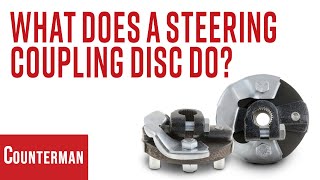
The defining issue for this generation is the failure of the small, star-shaped rubber part called the flexible steering coupler. This part sits inside the MDPS assembly and dampens vibrations. Over time, it degrades and falls apart, causing a clicking noise and eventually excessive play in the steering.
- The Fix: In most cases, you do not need to replace the entire steering column. The flexible coupler is available as a separate part and is much cheaper to replace. 🎬 Watch: What to know about the steering coupler disc Hyundai extended the warranty on this specific part to 10 years or 100,000 miles.
- Recall 10V426000 (NHTSA Campaign 097): Affecting early 2011 models, this recall was for improperly tightened bolts on the steering column's intermediate shaft universal joints, which could lead to a loss of steering.
- TSB 18-ST-003: Addresses a yoke noise that can develop in the steering rack, which can be mistaken for a column issue.
2006-2010 Sonata (NF): Telescopic and ESC Variations
This generation used a traditional hydraulic power steering system, so failures are more mechanical. The main challenge here is part compatibility.
- Compatibility is Key: The steering column for these years comes in four main variations based on two options: a telescopic (manually adjustable for reach) steering wheel and Electronic Stability Control (ESC). You must match your replacement part to the exact configuration of your vehicle.
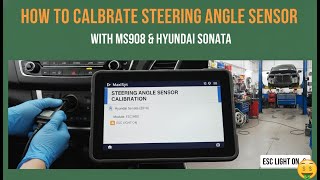
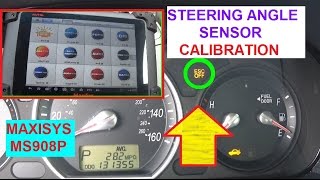
- Steering Angle Sensor (SAS): Models with ESC have a steering angle sensor integrated with the column. If this sensor fails or is disturbed during a repair, the "ESC OFF" light will come on, and the sensor will need to be calibrated with a professional scan tool. 🎬 See this steering angle sensor calibration walkthrough
Buying a Used Steering Column: What to Check
A used OEM steering column can be a cost-effective solution, but careful inspection and verification are essential.
1. Verify Exact Fitment (The Most Important Step)
- For 2011-2015 models: While the core column is similar, check for options like a heated steering wheel or paddle shifters, as these affect the attached wiring and clock spring.
- For 2006-2010 models: This is critical. Physically check your vehicle before buying. Does your steering wheel pull in and out (telescopic)? Do you have an "ESC OFF" button on your dashboard? You must buy a column that matches these two features. For example, part number 56310-3K200 is for models WITH telescopic steering but WITHOUT stability control.
- For 2002-2005 models: These are simpler, but always match the OEM part number from your original column to the used part.
2. Physical Inspection Checklist
- Check the U-Joints: Hold the intermediate shaft and try to move the universal joints. They should move smoothly in all directions with no binding or gritty feeling. Any stiffness is a red flag.
- Inspect for Collision Damage: Look for any bends in the shaft, cracks in the plastic housing, or damage to the electrical connectors. A column from a front-end collision vehicle should be avoided.
- Ask About the Flexible Coupler (2011+): Ask the seller if the flexible coupler has been replaced. If not, assume you will need to replace it yourself.
- Clock Spring Condition: If the column includes the clock spring (the part that manages wiring for the airbag and steering wheel controls), it should be centered and locked in place to prevent damage during shipping and installation.
Replacement Overview and Difficulty

Replacing a steering column is an advanced DIY job that involves critical safety systems.
- Difficulty: 4 out of 5.
- Key Steps: The process generally involves disconnecting the battery, removing the driver's airbag (handle with extreme care), steering wheel, and plastic column shrouds. Then, you'll unbolt the column from its mounting bracket and disconnect the intermediate shaft U-joint from the steering rack down by the pedals.
- Special Procedures:
- Wheel Alignment: Keep the front wheels pointing straight ahead before you begin.
- Clock Spring: Do not allow the clock spring to rotate freely once the steering wheel is off. If it does, it must be re-centered to avoid breaking the internal ribbon cable upon reinstallation.
- Steering Angle Sensor (SAS) Calibration: On any model with ESC, the SAS must be calibrated using a compatible diagnostic scan tool after the new column is installed. Failure to do this will result in a persistent ESC warning light and a disabled stability control system.
Pro Tip: For 2011+ models with a clicking noise, always attempt to replace the flexible coupler first. It's a much cheaper and easier job than replacing the entire column and solves the problem in over 90% of cases.
Cost Comparison
| Part/Service | Estimated Cost |
|---|---|
| New OEM Steering Column | $1,600 - $2,400+ |
| New Aftermarket Column | $400 - $800 |
| Used OEM Steering Column | $150 - $450 |
| Flexible Coupler Part Only (2011+) | $5 - $20 |
| Shop Labor for Column Replacement | $300 - $500 |
| Shop Labor for Coupler Replacement | $150 - $250 |
Frequently Asked Questions (FAQ)
Can I drive my Sonata if the steering is clicking?
If it's the common flexible coupler issue on a 2011+ model, you can drive it for a short time, but you should get it fixed soon. The clicking will turn into excessive looseness in the steering, which is unsafe. If you have any other symptom like binding, stiffness, or an illuminated power steering light, do not drive the vehicle.
How do I know if I have a telescopic wheel or ESC (2006-2010 models)?
To check for a telescopic wheel, look for a lever on the side or bottom of the steering column. If you can pull it and the steering wheel moves toward or away from you (not just up and down), you have a telescopic column. To check for ESC, look for a button on your dashboard, typically to the left of the steering wheel, that says "ESC OFF". If you have this button, your car is equipped with Electronic Stability Control.
What is a steering angle sensor (SAS) and why does it need calibration?
The SAS tells the car's computer the exact position and turning rate of the steering wheel. The Electronic Stability Control (ESC) system uses this data to help keep the car from skidding. If you replace the steering column or have an alignment, the sensor's "zero point" (straight ahead) may be lost. Calibration with a scan tool resets this zero point, ensuring the ESC system works correctly.
Was there a recall for the clicking steering coupler?
There was not a formal safety recall, but Hyundai acknowledged the problem and issued a warranty extension (TSB 17-ST-002) covering the flexible coupler for 10 years or 100,000 miles on affected Sonata models. Many owners were able to get the part replaced by a dealer at no cost under this program.
Helpful Videos
Technical Specifications
OEM Part Numbers: 3Q563-99500 3Q563-99580 56310-0A000 56310-0A100 56310-3D000 56310-3K200 56310-3K220 56310-3Q200 56310-3Q201 56310-3Q601 56310-3Q602 563100A000 563103D000 563103D100 563103K200
Compatibility varies by generation, presence of Motor-Driven Power Steering (MDPS), Electronic Stability Control (ESC), and telescopic adjustment.
We Have This Part in Stock



The information in this article is provided for general reference and educational purposes only. Vehicle specifications, procedures, and part compatibility can vary by production date, trim level, and region. Always consult your vehicle's factory service manual and verify part numbers before purchasing or performing repairs. Safety-critical components such as airbags, seat belts, and braking systems should be installed by a qualified professional.
- Hyundai Sonata:
- 🎬 Helpful Videos
- 🛍️ Shop This Part
- Article Body
- Symptoms of a Failing Steering Column
- 1. Clicking or Popping Noises When Turning
- 2. Excessive Play or Looseness in the Steering Wheel
- 3. Power Steering Warning Light (EPS or ESC Light)
- 4. Steering Feels Stiff, Binds, or Locks Up
- Generation-Specific Issues and Recalls
- 2011-2015 Sonata (YF/LF): The Flexible Steering Coupler
- 2006-2010 Sonata (NF): Telescopic and ESC Variations
- Buying a Used Steering Column: What to Check
- 1. Verify Exact Fitment (The Most Important Step)
- 2. Physical Inspection Checklist
- Replacement Overview and Difficulty
- Cost Comparison
- Frequently Asked Questions (FAQ)
- 🎟️ Get 5% Off