

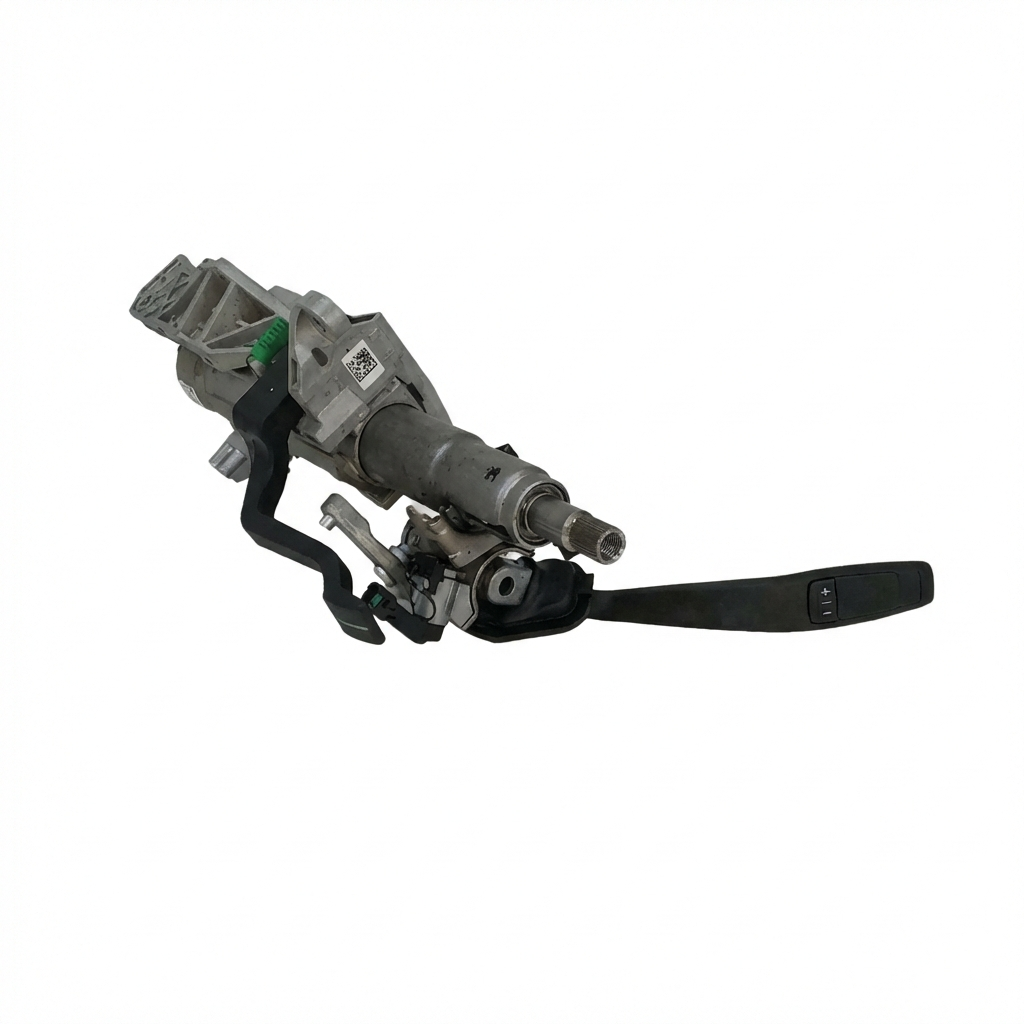
2014-2017 Ford Fiesta Steering Column: EPAS Faults, Noises, and Replacement Guide
This guide covers the common 'Power Steering Assist Fault,' clunking noises, and crucial compatibility checks for the 2014-2017 Ford Fiesta steering column.
- The most common failure is the Electronic Power Assisted Steering (EPAS), causing a 'Power Steering Assist Fault' and heavy steering. Always check the battery and its connections first, as low voltage is a primary cause.
- A replacement steering column is NOT plug-and-play. It contains the control module and MUST be programmed to the vehicle using specialized software like FORScan or Ford's IDS.
- Compatibility is critical. These columns are for turn-key ignition models only and will NOT fit push-button start or ST models. Always match the OEM part number.
- A clunking noise when turning is usually a dry intermediate shaft, which can sometimes be re-greased instead of requiring a full column replacement.
Primary Failure Symptoms


When the steering column or its integrated components begin to fail on a 2014-2017 Ford Fiesta, you will notice distinct symptoms. The most common issues are related to the Electronic Power Assisted Steering (EPAS) system, but mechanical problems can also occur.
1. "Power Steering Assist Fault" Warning
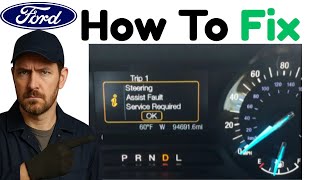
This is the most common and concerning symptom. A message will appear on the instrument cluster, often accompanied by a complete and sudden loss of power steering. The steering wheel will become extremely heavy and difficult to turn, especially at low speeds or when parking. This failure can be intermittent, sometimes occurring in cold weather or seemingly at random.
The root cause is often electrical. The EPAS system requires a stable voltage to operate correctly. A weak or aging battery, corroded battery terminals, or a bad ground connection are frequent culprits and should be the first things you check. 🎬 Watch: Diagnosing Causes of Ford Steering Assist Faults If the electrical system is healthy, the fault may lie with the EPAS motor or its control module, which are integrated into the steering column assembly.
2. Clunking or Knocking Noises When Turning
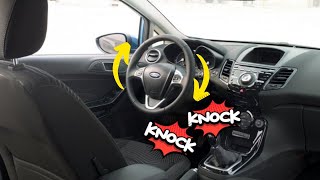
A distinct clunk, pop, or knock sound coming from the driver's footwell area during slow-speed turns is another widespread complaint. This noise is typically caused by a lack of lubrication in the splines of the collapsible intermediate steering shaft. Over time, the factory grease dries out, allowing for metal-on-metal contact as the shaft moves. 🎬 Watch: How the Fiesta Steering Column Knock Sounds While Ford issued a Technical Service Bulletin (TSB 11-10-28) for this issue on earlier 2011-2012 models, the mechanical design and problem persist in the 2014-2017 generation.
3. Key Won't Turn in Ignition
If you find that your key won't turn past the accessory position, preventing you from starting the car, the issue may not be the steering lock itself. While wiggling the steering wheel is the standard procedure for a bound steering lock, a more common cause on these Fiestas is a failing ignition switch. This is a small, relatively inexpensive electrical component attached to the steering column that can be replaced separately.
4. Airbag Light, Horn, or Steering Wheel Buttons Inoperative
If the airbag warning light is on and/or the horn and radio/cruise control buttons on the steering wheel stop working, the problem is likely a failed clock spring. The clock spring is a coiled ribbon of wires inside the steering column that maintains electrical contact for these components as the wheel turns. A break in this ribbon will interrupt the circuits, causing these systems to fail.
Pro Tip: Before suspecting a major steering column failure, always test your vehicle's battery. A battery with low voltage, even if it can still start the car, is a known cause for EPAS faults on Ford vehicles. Cleaning the battery terminals and checking the main ground straps is a cheap and easy first diagnostic step.
Known Issues, TSBs, and Recalls

While there are no major recalls specifically for EPAS failure on the 2014-2017 Fiesta in the US market, the platform has well-documented issues. The most significant is the sensitivity of the EPAS system to battery voltage. Additionally, TSB 11-10-28 was released for a clunking noise in the intermediate shaft on 2011-2012 models, a problem that continues to affect the 2014-2017 models due to a similar design. The fix involves either re-greasing the intermediate shaft splines or replacing the shaft itself.
Buying a Used 2014-2017 Fiesta Steering Column

Purchasing a used steering column can save you a significant amount of money, but careful verification is essential to get the right part and avoid immediate failure. A used OEM column is often a better choice than a cheap aftermarket alternative due to the complexity of the integrated electronics.
How to Inspect a Used Steering Column
- Verify Part Numbers: The most critical step. Match the part number from your original column to the replacement. The primary part number is often BE8Z-3C529-Q, which supersedes many earlier versions.
- Check Connectors: Inspect all electrical connectors for bent pins, corrosion, or damage to the plastic housings. A damaged connector can prevent the EPAS system from functioning.
- Test Mechanical Functions: If possible, test the tilt and telescopic adjustment. It should move smoothly without binding or excessive force.
- Inspect the Shafts: Check the intermediate shaft U-joint for stiffness or play. Examine the splines at both ends for stripping or damage.
- Ask About Mileage: A column from a lower-mileage vehicle is always preferable, as components like the EPAS motor and clock spring have a finite lifespan.
Compatibility Warnings
Warning: Compatibility is extremely specific. This steering column assembly is for Ford Fiesta models with a conventional turn-key ignition. It will NOT fit models with a keyless push-button start system. It is also NOT compatible with the high-performance ST trim level. While the core steering system is the same for sedan and hatchback models, always verify the OEM part number to ensure all wiring and features match your specific vehicle.
Cost Comparison
Replacing the entire steering column assembly is a costly repair, making a used OEM part an attractive option.
| Part Type | Estimated Cost |
|---|---|
| New OEM | $1,050 - $1,850 |
| New Aftermarket | $400 - $700 |
| Used OEM | $100 - $350 |
| Shop Labor | $230 - $600 |
Replacement Information
Replacing the Ford Fiesta steering column is a complex job that requires both mechanical and electronic knowledge. The most critical part of the process is the electronic programming required after installation.
- Difficulty: 4 out of 5
- DIY Feasible: Not recommended for beginners.
- Special Tools: Torx sockets, torque wrench, and a diagnostic scan tool capable of module programming (like FORScan with an extended license or Ford's IDS).
Programming Required: A replacement steering column (which includes the Power Steering Control Module) is NOT plug-and-play. The module must be programmed with the vehicle's specific 'as-built' data. Without this step, the power steering will not function, and you will have a 'configuration not complete' error code. This procedure requires specialized software like FORScan or the dealer's IDS tool.
Frequently Asked Questions (FAQ)
Can I drive my Fiesta with a "Power Steering Assist Fault"?
You can, but it will be very difficult. The steering will be extremely heavy, requiring significant physical effort to turn the wheel, especially at low speeds. It is a safety risk and should be repaired as soon as possible.
Do I have to replace the whole column for a clunking noise?
Not always. The common clunking noise is often just the intermediate shaft lacking lubrication. Some mechanics can successfully re-grease the shaft's splines to solve the problem. However, Ford's official repair is to replace the intermediate shaft.
🎬 Watch: Overview of Ford Fiesta Power Steering IssuesWhy did my power steering fail after getting a jump start or replacing the battery?
The EPAS system is very sensitive to voltage fluctuations. A low or failing battery is a primary cause of EPAS faults. Sometimes, the fault code needs to be cleared with a scan tool after the battery issue is resolved. In some cases, a voltage spike during a jump start can damage the steering control module.
What is FORScan and do I need it?
FORScan is a powerful software tool that can communicate with Ford vehicle modules. For this job, it is essential. After installing a new or used steering column, you must use FORScan (with an extended license) or the dealer's IDS tool to program the Power Steering Control Module with your car's factory data. Without this step, the power steering will not work.
Helpful Videos
Technical Specifications
OEM Part Numbers: BE8Z-3C529-Q AE8Z-3C529-A AE8Z-3C529-D BE8Z-3C529-L BE8Z-3C529-P BE8Z-3C529-N BE8Z-3C529-M BE8Z-3C529-E BE8Z-3C529-F BE8Z-3C529-G BE8Z-3C529-H BE8Z-3C529-J BE8Z-3C529-K
Integrated Electronic Power Assisted Steering (EPAS) motor and Power Steering Control Module (PSCM). Features tilt and telescopic adjustment. Designed for conventional turn-key ignition systems.
We Have This Part in Stock



The information in this article is provided for general reference and educational purposes only. Vehicle specifications, procedures, and part compatibility can vary by production date, trim level, and region. Always consult your vehicle's factory service manual and verify part numbers before purchasing or performing repairs. Safety-critical components such as airbags, seat belts, and braking systems should be installed by a qualified professional.
- Ford Fiesta:
- 🎬 Helpful Videos
- 🛍️ Shop This Part
- Primary Failure Symptoms
- 1. "Power Steering Assist Fault" Warning
- 2. Clunking or Knocking Noises When Turning
- 3. Key Won't Turn in Ignition
- 4. Airbag Light, Horn, or Steering Wheel Buttons Inoperative
- Known Issues, TSBs, and Recalls
- Buying a Used 2014-2017 Fiesta Steering Column
- How to Inspect a Used Steering Column
- Compatibility Warnings
- Cost Comparison
- Replacement Information
- Frequently Asked Questions (FAQ)
- 🎟️ Get 5% Off