

2009-2017 Ferrari California & 2015-2019 488 Steering Angle Sensor Issues and Diagnosis
Understanding the common 'CST Failure' and 'Manettino Failure' warnings and how the steering angle sensor is often the culprit on your Ferrari California or 488.
- A failing steering angle sensor is a primary cause of the 'CST Failure' and 'Manettino Failure' warnings on these models.
- After physical replacement, the new sensor absolutely must be calibrated with a professional-grade scan tool; the car cannot 'relearn' the position on its own.
- Driving with a failed sensor is risky, as critical safety systems like stability and traction control will be disabled.
- A used OEM part is a viable, cost-effective option, provided the part number is an exact match and it comes from a reputable source.
Symptoms of a Failing Steering Angle Sensor
A problem with the steering angle sensor on the 2009-2017 Ferrari California and 2015-2019 Ferrari 488 will almost always announce itself with a cascade of warning lights on the dashboard. Because the sensor provides data to so many other systems, its failure causes them to report faults as well.
- Multiple Dashboard Warning Lights: This is the most common symptom. Owners typically see messages like "CST System Failure," "Manettino Failure," and "ABS Failure" appear simultaneously. This happens because the stability control (CST) and drive mode (Manettino) systems lose the critical steering input data they need to operate.
- Disabled Safety Systems: The traction and stability control systems will be disabled. This is a significant safety concern on a high-horsepower, rear-wheel-drive car, as the electronic aids that prevent skids and wheelspin will no longer function.
- Manettino Switch Inoperable: The Manettino dial will become non-functional, often defaulting to a 'low grip' or 'wet' mode and refusing to change.
- Other System Faults: In some cases, faults with adaptive headlights (if equipped) may also appear, as they use steering angle data to aim the beams.
Pro Tip: While a failing steering angle sensor is a common cause for these warnings, it's not the only one. On Ferraris, a weak or failing battery can also cause a variety of seemingly unrelated electronic gremlins and warning lights. It's always a good practice to ensure your battery is fully charged and in good health before diagnosing more complex sensor issues.
Known Issues, Recalls, and TSBs
As of mid-2024, there are no specific recalls or Technical Service Bulletins (TSBs) issued by Ferrari or the NHTSA for steering angle sensor failure on the Ferrari California or Ferrari 488. While both models have been subject to other recalls for issues related to brakes and airbags, the steering angle sensor itself has not been part of an official recall campaign. Failures appear to be isolated incidents related to the age and mileage of the component rather than a widespread manufacturing defect.
Replacement and Calibration
Replacing the steering angle sensor is a complex job that requires specialized tools and procedures. It is located inside the steering column switch assembly, which also houses the turn signal stalks and clock spring.
The procedure generally involves:
- Disconnecting the vehicle's battery.
- Carefully removing the driver's side airbag module.
- Removing the steering wheel.
- Removing the steering column covers and the switch/clock spring assembly.
- Replacing the sensor within the assembly.
- Reassembling all components in reverse order.
Warning: Calibration is Mandatory. After the new sensor is installed, it MUST be calibrated using a compatible, professional-grade diagnostic scan tool. This procedure tells the car's computers the new sensor's 'zero point' or straight-ahead position. Simply turning the wheel from lock-to-lock will not work on these vehicles. Failure to perform the calibration will result in the same CST, ABS, and Manettino failure warnings, and the car's safety systems will remain disabled. Some advanced consumer scan tools (like certain LAUNCH models) may have this function, but many do not, often requiring a trip to a dealer or a specialist with Ferrari-specific diagnostic equipment.
Buying a Used Steering Angle Sensor
Given the high cost of new OEM parts, a used steering angle sensor from a reputable automotive recycler can be a smart, cost-effective solution. However, since this is a sensitive electronic part, there are important factors to consider.
- Verify the Part Number: The most critical step is to match the part number exactly. Common part numbers for the California and 488 include 1275100721, 52031504, and 188171. Check the number on your original part before ordering.
- Source is Everything: Purchase from a supplier who can tell you the donor vehicle's history. Avoid parts from flood-damaged cars, as moisture is a primary enemy of electronics. Parts from vehicles with front-end collisions should also be inspected carefully for any signs of physical damage to the sensor housing or connectors.
- Physical Inspection: Before installation, carefully inspect the used sensor. Look for any cracks in the plastic housing, bent or corroded connector pins, and ensure all mounting points are intact.
- Why Used OEM?: For a critical safety component like this, a used OEM part is often a better choice than a new, unbranded aftermarket part (if one were even available). The OEM sensor was designed and tested by Ferrari to communicate perfectly with the car's other electronic modules. An aftermarket part risks creating new communication errors and compatibility problems.
Cost Comparison
Prices can vary based on supplier and location, but this provides a general idea of the costs involved.
| Part Type | Estimated Cost |
|---|---|
| New OEM (Dealer) | $350 - $500+ |
| New Aftermarket | Not generally available |
| Used OEM | $65 - $150 |
| Shop Labor (Replacement & Calibration) | $300 - $500 |
Frequently Asked Questions (FAQ)
Can I drive my Ferrari with a 'CST Failure' warning?
While the car will likely still drive, it is not recommended. A CST failure warning means your electronic stability and traction control systems are disabled. This significantly increases the risk of losing control, especially in a high-performance car under acceleration, during cornering, or on wet surfaces.
Do I have to get the new sensor calibrated at a Ferrari dealer?
Not necessarily, but the calibration must be done with a compatible scan tool. Many independent shops that specialize in European or exotic cars will have the necessary equipment, such as a Leonardo, Texa, or high-end LAUNCH or Autel scanner. Always confirm with the shop that they have the ability to perform a Ferrari steering angle sensor calibration before booking the job.
Is the steering angle sensor the same as the clock spring?
No, but they are often housed in the same assembly behind the steering wheel. The clock spring is a special rotary electrical connector that allows the steering wheel's electronic components (airbag, horn, buttons) to stay connected while the wheel is turned. The steering angle sensor is a separate component that is often integrated into this same housing.
Could a bad wheel alignment cause these steering sensor errors?
It's possible, but less common. After a wheel alignment, the steering wheel might not be perfectly centered when driving straight. If this offset is large enough, the steering angle sensor might report a turn when the car is going straight, confusing the stability control system. More importantly, after any alignment, the steering angle sensor should be reset/recalibrated to ensure it knows the new 'straight-ahead' position.
Technical Specifications
OEM Part Numbers: 1275100721 52031504 188171 309296
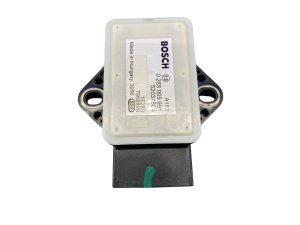
The sensor is an electronic component located in the steering column assembly that measures steering wheel angle and rate of rotation.
We Have This Part in Stock

The information in this article is provided for general reference and educational purposes only. Vehicle specifications, procedures, and part compatibility can vary by production date, trim level, and region. Always consult your vehicle's factory service manual and verify part numbers before purchasing or performing repairs. Safety-critical components such as airbags, seat belts, and braking systems should be installed by a qualified professional.
- Ferrari California:
- Ferrari 488: