

2001-2007 C-Class (W203) Stabilizer Bar: Solving Clunks and Choosing the Right Bar
This guide decodes the common clunking noises, part variations, and replacement needs for the 2001-2007 Mercedes-Benz W203 C-Class front stabilizer bar.
- The most common failure is a clunking noise from worn links or bushings, not the bar itself.
- You MUST verify your bar's diameter (20mm standard, 22mm sport) or drivetrain (RWD vs. 4Matic) before buying.
- Replacing the inexpensive links and bushings at the same time as the bar is essential for a complete repair.
- A used OEM bar is a great value, but always inspect it for damage and verify its diameter with a caliper.
Symptoms of a Failing Stabilizer Bar System


On the W203 C-Class, problems in the stabilizer bar system are extremely common and often misdiagnosed. The issue is rarely the steel bar itself, but rather the inexpensive links and bushings that connect it to the car.
- Clunking or Knocking Noises: This is the most frequent complaint. You'll hear a distinct clunk, knock, or rattle from the front end, especially when driving at low speeds over bumps, uneven pavement, or driveways. The sound can often be felt through the floorboard.
- Excessive Body Roll: The car will lean more than usual during turns, feeling less stable and “wallowy.”
- Loose Steering Feel: The steering may feel less precise, and the car might seem to wander or "float" on the road, particularly in curves.
- Distinguishing Noises: While not a perfect science, some mechanics note that worn stabilizer bar links tend to produce a sharper, higher-pitched "clunk" or "rattle," while worn bushings may cause a duller, lower-pitched "thud."
Pro Tip: These noises are very often mistaken for failing struts or shocks, which are much more expensive to replace. Before committing to a strut replacement, always have the stabilizer bar links and bushings thoroughly inspected, as they are the most common cause of front-end clunks on the W203 chassis.
Known Issues, Variants, and Compatibility Warnings
Mercedes-Benz used several different front stabilizer bars on the W203 C-Class. Ordering the wrong one is a common and frustrating mistake. You must verify your vehicle's original equipment before buying a replacement.
| Suspension Type | Bar Diameter | Common Part Number(s) | Notes |
|---|---|---|---|
| Standard / Base (RWD) | 20mm | 2033234265 | Fits models WITHOUT Sport Suspension (Option Code 486). This is the most common bar for non-sport, rear-wheel-drive models. |
| Sport Suspension (RWD) | 22mm | 2033234465 | Fits models WITH Sport Suspension (Option Code 486). This thicker bar provides sportier handling. |
| 4Matic (AWD) | Varies | 2033234865, 2033234665 | Specifically for all-wheel-drive models. The 4Matic suspension geometry is different to accommodate the front drive axles. These bars are not interchangeable with RWD versions. |
Warning: Do not rely on model year or engine alone. The only way to be certain is to check your vehicle's data card for option code 486 (Sport Suspension) or physically measure the diameter of your existing bar with a caliper. Some aftermarket polyurethane bushings are sold for a 21mm bar, suggesting another variant may exist. When in doubt, measure.
The Updated Bracket Myth
Some guides mention needing an "updated bracket" (part number 2033232740) for early models. This part is simply the standard bracket that holds the bushing and bar to the car's frame. While these can corrode or break, they are not typically an "updated" part that needs to be swapped preventatively. Replace them if they are damaged during the repair.
Buying a Used Stabilizer Bar
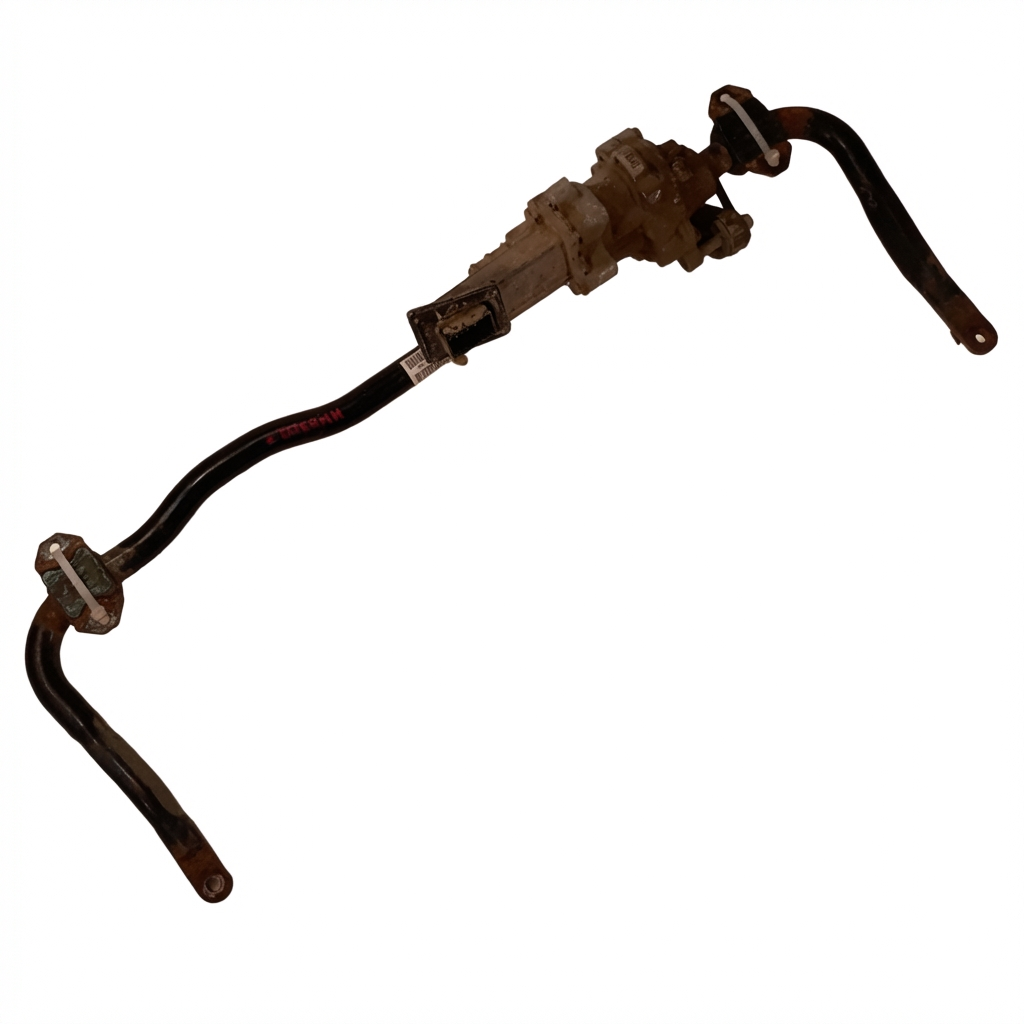
A used OEM stabilizer bar is an excellent, cost-effective option, as the bar itself is a simple, durable piece of spring steel that rarely fails. A used OEM bar is often superior in material quality to a cheap, new aftermarket bar.
- Verify the Diameter: This is the most important step. Use a digital caliper to measure the diameter of the bar you are considering buying. It must match your car's original equipment (20mm, 22mm, etc.). Do not trust a seller's description without a measurement.
- Inspect for Damage: Check the bar carefully on a flat surface to ensure it is straight and not bent from an accident. Look for any deep gouges, cracks, or signs of extreme corrosion that could weaken the steel.
- Check for Rust: Minor surface rust is normal and can be easily cleaned off and repainted before installation. However, avoid any bar with heavy, flaking rust, as this can compromise its structural integrity.
- Bushings and Links: Assume the rubber bushings and end links on a used bar are worn. They are inexpensive and should be replaced with new parts during installation for a complete and lasting repair.
Related Parts to Replace at the Same Time
When replacing the stabilizer bar, it is highly recommended to replace the related wear items. The bar itself is usually not the source of noise; these parts are.
- Front Stabilizer Bar Links (2): Also called end links or drop links. These are the number one cause of front-end clunks on the W203. They connect the ends of the stabilizer bar to the front struts.
- Front Stabilizer Bar Bushings (2): These rubber mounts hold the bar to the subframe. They dry out and shrink over time, allowing the bar to move and make a thudding noise.
- Lower Control Arms: While a more involved job, the large, fluid-filled bushings on the W203's front lower control arms are another very common failure point that causes clunking. If you are already working on the suspension, inspect these arms for any signs of leaking fluid, which indicates the bushing has failed.
Replacement Overview & Torque Specs

Replacing the front stabilizer bar is a straightforward job for a DIY mechanic. The estimated time is about 2-2.5 hours.
- Safely raise and support the front of the vehicle on jack stands and remove both front wheels.
- Remove the plastic engine undertray, which is typically held on by several 8mm bolts.
- Using a 16mm wrench and a 7mm socket or wrench to hold the stud, unbolt the stabilizer links from both the strut and the stabilizer bar.
- Using an E12 external Torx socket, remove the two bolts on each of the two brackets holding the stabilizer bar bushings to the subframe.
- With the brackets and links disconnected, maneuver the old bar out of the vehicle.
- If installing a used bar, clean it and install new rubber bushings. The bushings have a slit to slide over the bar.
- Installation is the reverse of removal. It can be helpful to loosely attach all components before final tightening.
Pro Tip: The stabilizer bar may be under slight tension. You might need to use a pry bar to help align bolt holes, or use a second jack to slightly raise or lower one of the suspension knuckles to relieve pressure on the stabilizer links for easier removal and installation.
Key Torque Specifications:
- Stabilizer Link Nuts: 55-60 Nm (41-44 lb-ft).
- Stabilizer Bar Bushing Bracket Bolts (E12): 80 Nm (59 lb-ft).
Cost Comparison
Replacing the stabilizer bar system can vary in cost depending on which parts you replace and their source. Labor at an independent shop typically costs between $240 and $360.
| Part | Estimated Cost | Notes |
|---|---|---|
| New OEM Stabilizer Bar | $95 - $150 | Genuine Mercedes-Benz part. Price varies by diameter. |
| New Aftermarket Bar | $240 - $800+ | Often sold as performance upgrades (e.g., thicker, adjustable). |
| Used OEM Stabilizer Bar | $50 - $100 | A common, cost-effective option from recycled vehicles. |
| New Links & Bushings Kit | $40 - $120 | Highly recommended. Prices vary by brand (e.g., Febi, Lemforder). |
| Shop Labor | $240 - $360 | For replacement of the bar, bushings, and links (2-2.5 hours). |
Frequently Asked Questions (FAQ)
Do I need a wheel alignment after replacing the stabilizer bar?
No. The stabilizer bar and its links do not affect the primary alignment angles (camber, caster, toe). An alignment is not necessary after this specific job.
Can I upgrade to the thicker Sport Suspension (22mm) stabilizer bar?
Yes, this is a popular and simple upgrade for non-sport models. If you have a base model with the 20mm bar, you can install the 22mm sport bar to reduce body roll and improve handling. You must use the corresponding 22mm bushings with the thicker bar.
My car has 4Matic AWD. Can I use a RWD stabilizer bar?
No. The 4Matic all-wheel-drive models use a different front subframe and suspension layout to make room for the front axles. You must use a stabilizer bar specifically designed for a W203 4Matic model.
Is it the link or the bushing making noise?
It can be difficult to tell. A common diagnostic trick is to disconnect one of the stabilizer links and carefully drive over a familiar bump. If the noise disappears, the links are the likely culprit. If the noise remains, the bushings are a more likely source. Given their low cost, it is best practice to replace both the links and bushings at the same time.
Are there any recalls for the W203 stabilizer bar?
No. As of mid-2026, there are no NHTSA safety recalls specifically for the stabilizer bar, links, or bushings on the 2001-2007 Mercedes-Benz C-Class. Recalls for this generation typically involve other items like sunroof bonding.
Technical Specifications
OEM Part Numbers: 2033231265 2033231865 2033233165 2033233265 2033233365 2033234265 2033234365 2033234465 2033234565 2033234665 2033234865 2033261265 2033261465 2033261565 2093200210
Common Diameters: 20mm (Standard RWD), 22mm (Sport RWD). Specific bars required for 4Matic models. Torque Specs: Link Nuts: 55-60 Nm (41-44 lb-ft), Bushing Bracket Bolts: 80 Nm (59 lb-ft).
We Have This Part in Stock


The information in this article is provided for general reference and educational purposes only. Vehicle specifications, procedures, and part compatibility can vary by production date, trim level, and region. Always consult your vehicle's factory service manual and verify part numbers before purchasing or performing repairs. Safety-critical components such as airbags, seat belts, and braking systems should be installed by a qualified professional.
- Mercedes-Benz C300:
- 🛍️ Shop This Part
- Symptoms of a Failing Stabilizer Bar System
- Known Issues, Variants, and Compatibility Warnings
- The Updated Bracket Myth
- Buying a Used Stabilizer Bar
- Related Parts to Replace at the Same Time
- Replacement Overview & Torque Specs
- Cost Comparison
- Frequently Asked Questions (FAQ)
- 🎟️ Get 5% Off