

1997-2001 Hyundai Tiburon Stabilizer Bar: Diagnosing Clunks and Replacement Costs
This guide covers the common failure symptoms, replacement costs, and what to look for when buying a used stabilizer bar for your first-generation Hyundai Tiburon.
- Suspension clunks on a 1997-2001 Tiburon are almost always caused by worn stabilizer end links or bushings, not the bar itself.
- When installing a used stabilizer bar, always replace the end links and frame bushings with new parts to ensure a complete and lasting repair.
- It is safe to drive with a broken sway bar link, but handling is compromised; avoid high speeds and sharp turns until it is fixed.
- The front and rear stabilizer bars are different parts and are not interchangeable. Verify part numbers before purchasing.
Symptoms of a Failing Stabilizer Bar System

When a stabilizer bar system fails on a 1997-2001 Hyundai Tiburon, the issue is almost always with the supporting components—the end links and bushings—rather than the steel bar itself. The bar is a solid piece of metal and rarely breaks unless subjected to a severe impact. The symptoms below point to worn links or bushings.
Clunking, Rattling, or Knocking Noises
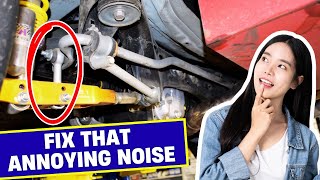
The most common symptom is a distinct clunking or rattling sound coming from the front or rear suspension. This noise is most noticeable when driving over bumps, uneven pavement, or speed bumps. You might also hear it when turning the steering wheel. A worn sway bar link will typically produce a higher-pitched 'clunk' or rattle, 🎬 Watch this guide on fixing noisy sway bar links. while a worn frame bushing often creates a lower-pitched 'thud' sound.
Poor Handling and Increased Body Roll
A failing stabilizer system compromises its ability to control body roll. You'll notice the car leans more heavily into turns, feeling less stable and responsive. This can be particularly dangerous in emergency maneuvers where quick steering inputs are required.
Visible Wear or Damage
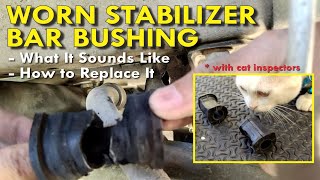
A visual inspection can often confirm the problem. Look at the stabilizer bar end links, which are vertical rods connecting the end of the bar to the strut or control arm. The rubber or plastic bushings on these links may be cracked, deteriorated, or missing entirely. Likewise, check the D-shaped rubber bushings that hold the stabilizer bar to the vehicle's frame; they may appear cracked, flattened, or have an enlarged opening, allowing the bar to move and clunk.
Buying a Used 1997-2001 Tiburon Stabilizer Bar

Since the stabilizer bar itself is a very durable component, a used OEM bar is an excellent, cost-effective option. Aftermarket bars are available, but a straight, undamaged OEM bar will restore the original handling characteristics perfectly.
What to Inspect on a Used Bar
- Straightness: Lay the bar on a flat surface to ensure it is not bent or twisted. Any deformation will negatively affect suspension geometry and handling.
- Mounting Points: Carefully inspect the ends of the bar where the end links attach. Ensure the holes are not excessively worn, elongated, or cracked from a previous link failure.
- Corrosion: Surface rust is normal for a used suspension part and can be cleaned and painted. However, avoid any bar with deep, flaking rust or pitting that compromises the structural integrity of the metal.
- Compatibility: The 1997-2001 Tiburon has distinct front and rear stabilizer bars. They are not interchangeable. Verify the OEM part number to ensure you are buying the correct bar for your needs. The front bar is generally associated with part numbers like 54811-27000 or 54811-27001, while the rear bar is 55511-27000.
Pro Tip: Assume the bushings and end links that come with a used stabilizer bar are worn out. Always plan to replace them with new parts during installation. The value of the used part is in the steel bar itself, not the consumable rubber and plastic components attached to it.
Known Issues, Recalls, and TSBs
For the 1997-2001 Hyundai Tiburon, there are no specific recalls or Technical Service Bulletins (TSBs) directly related to the stabilizer bars themselves. Searches on the NHTSA database show recalls for other suspension components like front lower control arms on some model years due to corrosion, but not the stabilizer bar. The most common issues reported by owners in forums are related to the rapid wear of stabilizer bar end links and bushings, which are considered normal wear-and-tear items.
Cost Comparison for Stabilizer Bar Replacement

The cost of replacement varies significantly depending on whether you are replacing just the links and bushings or the entire bar. The vast majority of repairs will only require new links and/or bushings.
| Part / Service | Estimated Cost | Notes |
|---|---|---|
| New OEM Stabilizer Bar | $150 - $250+ (if available) | Often sold by dealerships. May be discontinued. |
| New Aftermarket Stabilizer Bar | $80 - $180 | Prices vary by brand. |
| Used OEM Stabilizer Bar | $40 - $100 | A cost-effective option, inspect for damage before purchase. |
| Stabilizer Bar Links (Pair) | $30 - $80 | Many aftermarket brands available. It is highly recommended to replace these in pairs. |
| Stabilizer Bar Bushings (Pair) | $10 - $30 | An inexpensive but critical part to eliminate clunking noises. |
| Shop Labor (Links/Bushings Only) | $60 - $150 | Typically 0.5 to 1.5 hours of labor. |
| Shop Labor (Entire Bar) | $100 - $250 | A more involved job that may take 1-2 hours. |
Related Parts to Replace Together
When you replace a stabilizer bar or diagnose a clunking noise, it's wise to replace related wear items at the same time to save on labor and ensure a complete repair.
- Stabilizer Bar End Links: These are the most common failure point in the system. If one is bad, the other is likely not far behind. Always replace them in pairs (left and right).
- Stabilizer Bar Bushings: These rubber bushings mount the bar to the frame. They are inexpensive and wear out over time, causing noise. It's best practice to replace them whenever the bar or links are serviced.
- Control Arm Bushings & Ball Joints: While you are working on the suspension, inspect the control arms. The noises from worn control arm bushings or ball joints can be similar to those of a bad sway bar link.
Installation Tips and Torque Specs

Replacing the stabilizer bar components is a feasible DIY job for those with basic mechanical skills and tools.
Warning: Always use jack stands to safely support the vehicle. Never work under a car supported only by a jack.
- Load the Suspension: Before tightening the end link nuts and bushing brackets to their final torque, the vehicle's weight must be on the suspension. This can be achieved by placing the wheels on ramps or by using a jack to lift the control arm to its normal ride height. Failure to do this can preload the bushings, causing them to fail prematurely.
- Use Penetrating Oil: The nuts and bolts will likely be rusted. Spray them with penetrating fluid and let them soak before attempting removal.
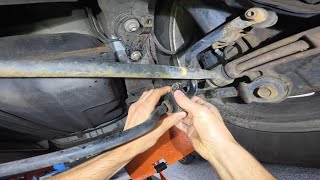
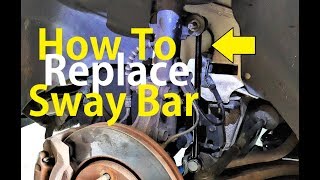
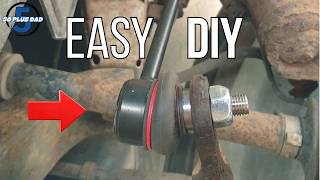
- Hold the Stud: 🎬 Watch an easy walkthrough on installing new sway bar links. The stud on the end link's ball joint will often spin when you try to loosen the nut. There is usually a provision to hold the stud with another wrench or an Allen/Torx key.
- Torque Specs: While specific OEM specs for the 1997-2001 Tiburon are scarce in general sources, a common torque value for Hyundai sway bar end links of this era is 25-33 ft-lbs. However, it is always best to verify with a model-specific repair manual if possible. Over-tightening can damage the new bushings.
Frequently Asked Questions (FAQ)
Can I drive my Tiburon with a broken stabilizer bar link?
Yes, but it's not recommended for long. The vehicle will be safe for gentle, straight-line driving, but handling will be significantly compromised. Body roll will increase, making the car less stable in turns or during emergency maneuvers. It's best to get it repaired as soon as possible.
Do I need a wheel alignment after replacing the stabilizer bar or links?
Generally, no. Replacing the stabilizer bar, its links, or bushings does not typically affect the primary alignment angles (camber, caster, toe). However, if other suspension parts like control arms or struts were loosened or replaced at the same time, an alignment is highly recommended.
What's the difference between a stabilizer bar and a strut bar?
A stabilizer (sway) bar is part of the suspension mounted low on the chassis, connecting the left and right suspension to control body roll. A strut bar (or strut tower brace) is an aftermarket bar mounted high in the engine bay between the tops of the two strut towers to increase chassis stiffness, which can improve steering response.
Why should I buy a used OEM stabilizer bar instead of a new aftermarket one?
For a non-wear part like the bar itself, a used OEM bar offers excellent value. It was designed by Hyundai specifically for your vehicle's weight and handling characteristics. As long as it's inspected for damage, it will perform identically to a new one. Many aftermarket bars are also high quality, but a used OEM part is a reliable and budget-friendly choice, provided you pair it with new bushings and links.
Helpful Videos
Technical Specifications
OEM Part Numbers: 54811-27000 54811-27001 55511-27000 5551127000
Front Bar OEM Numbers: 54811-27000, 54811-27001. Rear Bar OEM Number: 55511-27000. End link torque spec is approximately 25-33 ft-lbs.

The information in this article is provided for general reference and educational purposes only. Vehicle specifications, procedures, and part compatibility can vary by production date, trim level, and region. Always consult your vehicle's factory service manual and verify part numbers before purchasing or performing repairs. Safety-critical components such as airbags, seat belts, and braking systems should be installed by a qualified professional.
- Hyundai Tiburon:
- 🎬 Helpful Videos
- Symptoms of a Failing Stabilizer Bar System
- Clunking, Rattling, or Knocking Noises
- Poor Handling and Increased Body Roll
- Visible Wear or Damage
- Buying a Used 1997-2001 Tiburon Stabilizer Bar
- What to Inspect on a Used Bar
- Known Issues, Recalls, and TSBs
- Cost Comparison for Stabilizer Bar Replacement
- Related Parts to Replace Together
- Installation Tips and Torque Specs
- Frequently Asked Questions (FAQ)
- 🎟️ Get 5% Off