

1994-2002 Dodge Ram 1500 & 3500 Front Stabilizer Bar: Solving Clunks and Fitment Confusion
This guide clarifies the common clunking noises and complex fitment issues for the front stabilizer bar on 1994-2001 Ram 1500 and 1994-2002 Ram 3500 trucks.
- The most common failure is not the bar itself, but the end links and bushings, which cause a distinct clunking noise over bumps.
- Fitment is tricky. You MUST measure your bar's diameter (likely 32mm) and know your suspension type (solid axle vs. IFS) before buying parts.
- A used OEM bar is a great value, but you must replace the end links and bushings with new parts during installation.
- Replacement is a straightforward DIY job, but the truck must be on level ground to avoid tension on the bar.
Symptoms of a Bad Stabilizer Bar


The stabilizer bar itself is a simple, durable piece of steel. When you experience problems, they are almost always caused by the failure of its supporting components: the end links and the frame bushings. Here’s what to look and listen for:
Clunking or Knocking Noises
This is the most common symptom of a failing stabilizer bar system. You'll hear a distinct metallic clunking, knocking, or rattling sound coming from the front end of the truck. This noise is most noticeable when driving at lower speeds over bumps, potholes, or uneven surfaces. It can also occur when turning into a driveway or parking lot. The sound is caused by worn-out bushings or loose end links, which allow the heavy steel bar to move around and impact the frame or other suspension parts.
Poor Handling and Excessive Body Roll
If the end links are broken or the bushings are completely worn out, the stabilizer bar can't do its job. You'll notice the truck leans much more than usual when you take a corner. This can feel like the truck is unstable or has a 'loose' feeling in the steering. In severe cases, handling can become unpredictable, especially during quick maneuvers.
Visual Signs of Failure
A quick look under the front of your truck can often confirm the problem. Check the rubber or polyurethane bushings that hold the bar to the frame; they may be cracked, visibly flattened, or have an elongated hole. Inspect the end links, which are the vertical rods connecting the end of the bar to the lower control arm. Their boots may be torn, or the joints may be visibly loose. You can often grab the bar or the links and feel for excessive play by hand.
Compatibility Warning: Fitment for these trucks is complex. The most common front stabilizer bar has a 32mm (approximately 1.25 inches) diameter, but other sizes were used. It is critical to measure the diameter of your existing bar before ordering a replacement or new bushings. Fitment also depends on your truck's drivetrain (2WD/4WD) and front suspension type (solid beam axle vs. independent front suspension). Always verify these details to ensure you get the correct part.
Buying a Used Stabilizer Bar
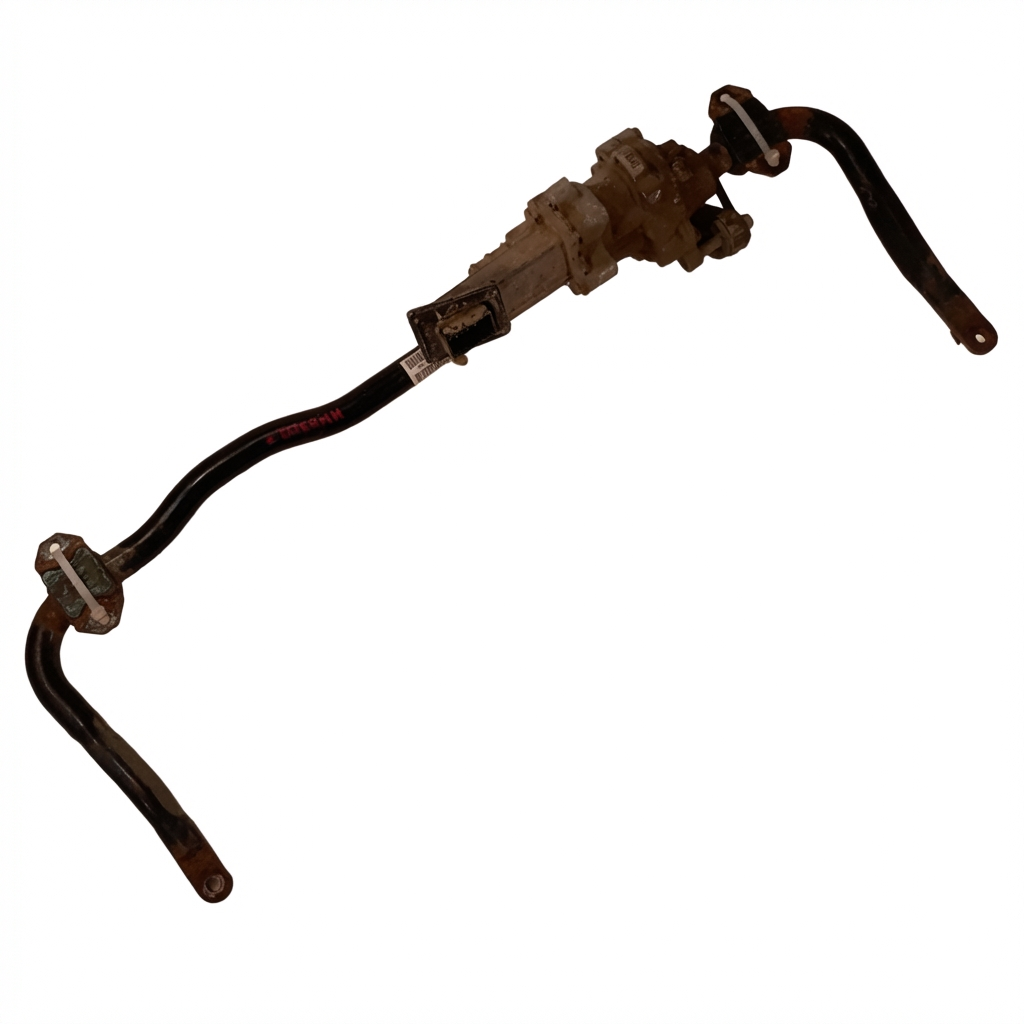
For a part like this, a used OEM stabilizer bar is an excellent choice. The bar itself rarely fails unless it's been bent in an accident or is severely weakened by rust. Here’s what to look for when buying used:
- Inspect for Straightness: Lay the bar on a flat surface. It should sit level without any obvious bends, twists, or signs of being straightened. A bent bar will compromise your truck's handling and can be unsafe.
- Check for Corrosion: Surface rust is normal and not a major concern. However, you should reject any bar with deep rust pits or flaking metal, as this can create a weak spot where the bar could potentially break under stress.
- Ignore the Bushings and Links: The condition of the rubber or polyurethane parts on a used bar doesn't matter. You should always replace the frame bushings and end links with new parts when installing a stabilizer bar. They are inexpensive wear items, and installing a good used bar with old, worn components will lead to the same clunking noises you were trying to fix.
- Why Used OEM is a Good Option: An original Mopar stabilizer bar is made from high-quality spring steel designed specifically for your truck's weight and suspension geometry. A good, straight used OEM bar is often superior in material quality and fit to a cheap, new aftermarket bar.
Known Issues, TSBs, and Recalls

There are no major recalls or Technical Service Bulletins (TSBs) specifically for the front stabilizer bar on the 1994-2001 Dodge Ram 1500 or 1994-2002 Dodge Ram 3500. However, this generation of Ram trucks was subject to several recalls for other front suspension components.
- Track Bar Issues: Some 4x4 models were recalled for front suspension track bars that could fail, leading to a loss of steering control. While this is a different part, it highlights the importance of inspecting the entire front suspension on these trucks.
- Control Arm Corrosion: Later model Rams had recalls for rear control arm corrosion, but it's a good practice to inspect the front control arms and all suspension mounting points for severe rust, especially in regions that use road salt.
Replacement Overview and Torque Specs

Replacing the stabilizer bar, end links, and bushings is a common DIY job that can be done with basic hand tools. The bar itself is only replaced if bent or broken; most of the time, you will only be replacing the end links and/or frame bushings.
Replacing End Links: The end links are held on by nuts at the top (connecting to the sway bar) and bottom (connecting to the control arm). You'll typically need a wrench to hold the stud while you turn the nut. The lower nut on the 1994-2001 Ram 1500 is torqued to 35 ft-lbs. For the upper nut, tighten it until the rubber bushings swell slightly wider than the washers, but do not crush them flat.
Replacing Frame Bushings: The bar is held to the frame by two brackets, each with two bolts. Simply unbolt the brackets, remove the old bushings, slip the new ones over the bar, and bolt the brackets back in place. It's easiest to do this with the end links disconnected to allow the bar to move freely.
Pro Tip: When replacing end links or bushings, do both sides at the same time. Make sure the vehicle is on level ground. If you jack up only one side of the truck, the stabilizer bar will be under tension, making it very difficult to remove or install the parts.
| Item | Estimated Cost |
|---|---|
| New OEM Stabilizer Bar | $150 - $250 |
| New Aftermarket Stabilizer Bar | $80 - $150 |
| Used OEM Stabilizer Bar | $40 - $90 |
| Shop Labor (End Link Replacement) | $70 - $100 per hour |
| Shop Labor (Bushing Replacement) | $80 - $110 per hour |
Frequently Asked Questions
Do I need to get an alignment after replacing the stabilizer bar or links?
No. Replacing the stabilizer bar, its bushings, or its end links does not affect your truck's wheel alignment settings.
Can I drive with a broken stabilizer bar end link?
You can, but it's not recommended for long. While the truck is still drivable, your handling will be compromised, with significantly more body roll in turns. This can be dangerous in an emergency maneuver. The broken link may also make loud clunking noises.
Should I upgrade to polyurethane bushings?
Polyurethane bushings are firmer than the original rubber ones and can provide a slightly stiffer, more responsive feel. They are also more resistant to oil and heat. However, they can sometimes cause squeaking noises if not lubricated properly during installation. For a stock daily driver, new high-quality rubber bushings are often the quietest and most comfortable option.
What's the difference between a stabilizer bar and a steering stabilizer?
They are completely different parts. The stabilizer (sway) bar is a torsion bar that connects the left and right sides of the suspension to control body roll. A steering stabilizer is a small shock absorber that connects the steering linkage to the frame or axle to dampen jarring impacts and prevent the steering wheel from being jerked out of your hands on rough terrain.
Technical Specifications
OEM Part Numbers: 52038454 52038455 52038907 52038907AB 52038907AC 52038924 52038924AB 52038925 52039120 52039120AB 52039440 52039440AB
Common Diameter: 32mm (approx. 1.25 inches). End Link Lower Nut Torque (1500): 35 ft-lbs.
We Have This Part in Stock




The information in this article is provided for general reference and educational purposes only. Vehicle specifications, procedures, and part compatibility can vary by production date, trim level, and region. Always consult your vehicle's factory service manual and verify part numbers before purchasing or performing repairs. Safety-critical components such as airbags, seat belts, and braking systems should be installed by a qualified professional.
- Dodge Ram 1500:
- Dodge Ram 3500: