

1994-2002 Ram 2500 & 3500 Stabilizer Bar: Solving Clunks and Fitment Confusion
This guide clarifies the common clunking noises and critical fitment differences for the front and rear stabilizer bars on 1994-2002 Dodge Ram 2500 and 3500 trucks.
- Suspension clunks on these trucks are almost always caused by worn stabilizer bar end links or frame bushings, not the bar itself.
- Front stabilizer bar fitment is complex; you must verify if your truck is 4WD or 2WD, and if it has a solid front axle or independent suspension.
- The OEM end links are a known weak point; durable aftermarket upgrades are a popular and recommended fix.
- When performing repairs, always replace the end links and frame bushings together for a complete, long-lasting solution.
Critical Compatibility: Front Stabilizer Bar Fitment

Warning: Fitment for the front stabilizer bar on 1994-2002 Dodge Ram 2500 and 3500 trucks is highly specific and depends on the drivetrain (2WD vs. 4WD) and the model year. The initial data provided contained several contradictions, which research helps clarify. The primary difference is the front axle and end link mounting style.
- 4WD Models (1994-2002): All 4x4 models in this generation use a solid front axle. The stabilizer bar and its end links are designed for this specific setup.
- 2WD Models (1994-2002): Most 2WD Ram 2500 and 3500 models also use a solid (beam) front axle and share the same stabilizer bar system as the 4WD trucks. However, some lighter-duty 2WD Ram 2500 models may have an independent front suspension (IFS), which uses a completely different stabilizer bar.
- Year-Specific Changes (1994-1998): Early models from 1994 to mid-1998 used a "cobra style" axle mount for the sway bar. Later models from mid-1998 to 2002 used a simpler eyelet-style bracket. While the bars may be similar, the end links and mounting points differ.
Before buying, you must verify which suspension and sway bar mounting style your truck has. The most common front bar diameter is 32mm. Always measure your existing bar's diameter to confirm.
Symptoms of a Failing Stabilizer Bar System


The steel stabilizer bar itself rarely fails. More commonly, the bushings and end links that connect it to the frame and axle wear out, causing noticeable symptoms.
- Clunking or Rattling Noises: This is the most frequent complaint. You'll hear a metallic clunking, knocking, or rattling sound from the front or rear suspension, especially when driving over bumps, uneven roads, or turning into a driveway at low speeds. Worn end links tend to make a higher-pitched clunk, while worn frame bushings produce a lower-pitched thud.
- Increased Body Roll and Loose Handling: A disconnected or loose stabilizer bar system will cause the truck to lean excessively in corners. The steering may feel less precise, and the vehicle can feel unstable, particularly when towing or hauling.
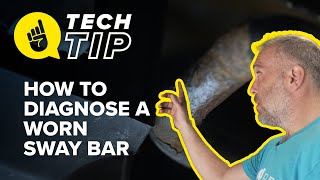
- Visible Wear or Damage: A visual inspection can often reveal the problem. Look for cracked, rotted, or missing rubber bushings where the bar mounts to the frame. 🎬 Watch this guide on how to diagnose sway bar noises Check the end links for play in their joints or damaged boots.
Known Issues, TSBs, and Recalls

For the 1994-2002 Dodge Ram 2500 and 3500, the stabilizer bar system is a common source of maintenance issues, though rarely a safety recall itself.
- Frequent End Link Failure: The original ball-in-socket style end links are a known weak point and wear out frequently, sometimes in as little as 50,000 miles. This is the primary cause of front-end clunking noises. Many aftermarket companies offer more durable, maintenance-free replacements.
- TSB 02-002-19 (Related): While for a later model, this TSB addresses clunking noises from loose sway bar link nuts, indicating the importance of proper torque.
- TSB #10182004: Issued for 2002 models, this bulletin notes that stabilizer bar link nut torque specifications have been changed, highlighting that proper tightening is critical.
- No Direct Recalls: Searches of the NHTSA database did not find any direct recalls for the stabilizer bar itself on these models. However, there were numerous recalls for other front suspension components like the track bar, which can cause similar symptoms like the infamous "Death Wobble".
Buying a Used Stabilizer Bar
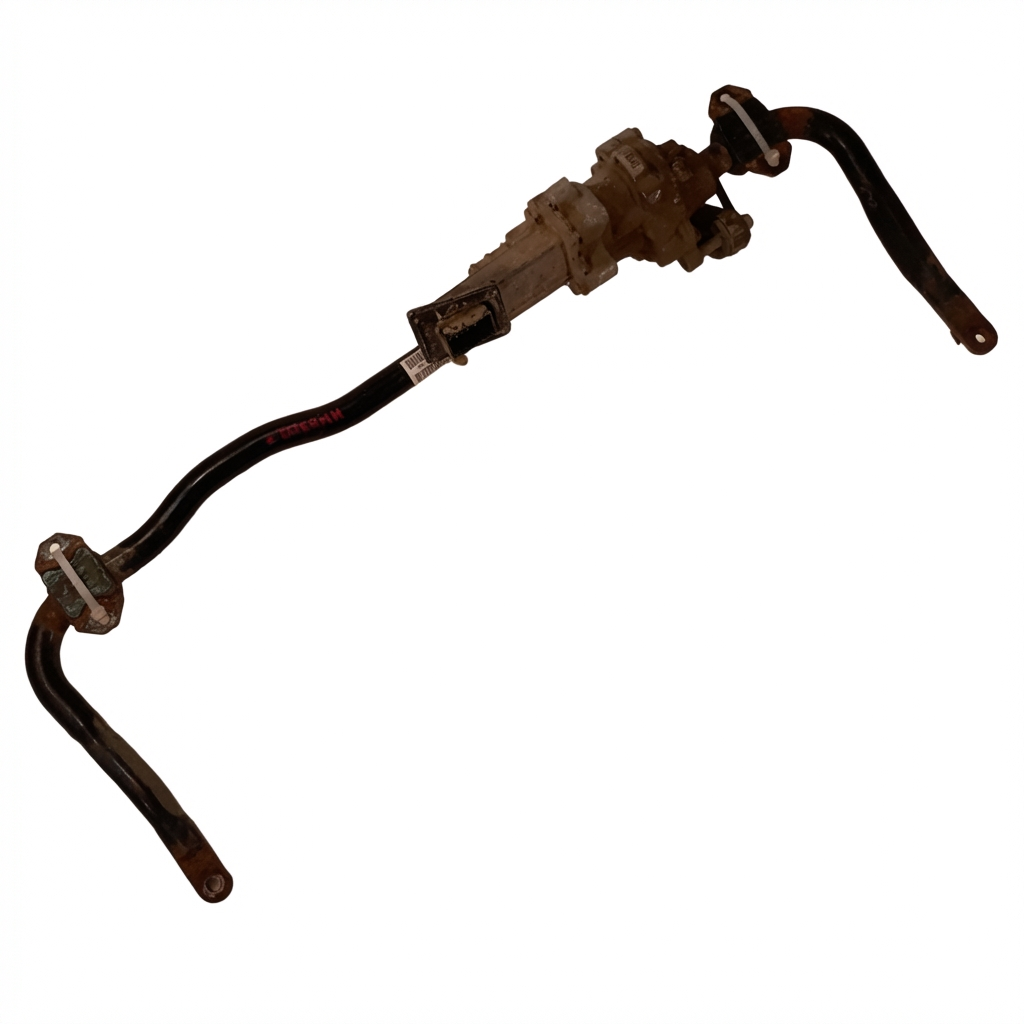
Since the bar itself is a durable piece of steel, a used OEM stabilizer bar is an excellent, cost-effective option, provided you inspect it correctly.
- Why Used OEM is a Good Choice: The original Mopar stabilizer bars are made from high-quality spring steel with specific geometry and torsional rates designed for the truck's weight and handling characteristics. A used OEM bar is often superior to a cheap, new aftermarket bar that may not have the same durability or precise fit.
- What to Inspect:
- Check for Bends or Cracks: The bar should be straight. Any signs of bending from an accident or cracks mean the part is unusable.
- Inspect Mounting Points: Pay close attention to the ends of the bar where the links attach and the areas where the frame bushings sit. Look for excessive rust pitting or distortion that could prevent a secure fit.
- Ignore Bushings and Links: Assume the rubber bushings and end links on any used stabilizer bar are worn out. These are inexpensive wear items and should always be replaced with new parts during installation for a complete and lasting repair.
- Mileage Concerns: Mileage is not a significant factor for the steel bar itself. A high-mileage bar from a rust-free region is perfectly acceptable. The condition of the associated bushings and links is far more important, and they should be replaced regardless of mileage.
Replacement Overview and Related Parts
Replacing a stabilizer bar, or more commonly its links and bushings, is a straightforward job for a DIY mechanic.
- Related Parts to Replace: For a complete repair that eliminates noise and restores handling, always replace the stabilizer bar end links and the stabilizer bar frame bushings at the same time.
- General Procedure (Front):
- Park the vehicle on a level surface. For easiest access, you may want to raise the front of the vehicle and support it on jack stands.
- Remove the nuts connecting the old end links to the sway bar and the axle bracket. An 18mm wrench is commonly used.
- Unbolt the two brackets holding the stabilizer bar frame bushings to the truck's frame.
- Remove the old bar and bushings.
- Install the new frame bushings onto the new/used bar and loosely bolt the assembly back onto the frame.
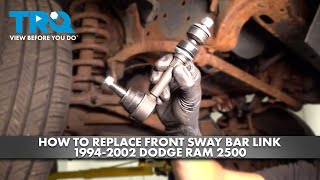
- Install the new end links, connecting the bar to the axle. 🎬 Watch: How to replace front sway bar links on a Ram 2500
- Once all components are in place, tighten all fasteners to their specified torque.
Torque Specifications
Proper torque is essential to prevent noise and ensure safety. Values can vary slightly by year and component manufacturer, but these are common targets. Always consult a service manual for your specific vehicle if possible.
| Fastener | Torque Spec | Notes |
|---|---|---|
| Front End Link (Upper Nut to Bar) | 27 - 40 ft-lbs | Tighten until the rubber bushing expands to the width of the washer. |
| Front End Link (Lower Nut to Axle) | 75 ft-lbs | For 2003+ models, but a good reference for this generation. Some aftermarket kits specify 88 ft-lbs. |
| Frame Bushing Bracket Bolts | 45-50 ft-lbs | General specification. |
| Rear Stabilizer Bar Bolts | 73 ft-lbs | Reference from a recall on a later model. |
Cost Comparison
The cost of addressing stabilizer bar issues can vary significantly depending on whether you replace the whole bar or just the common wear items.
| Part | New OEM | New Aftermarket | Used OEM | Shop Labor |
|---|---|---|---|---|
| Front Stabilizer Bar | $250 - $400+ (often discontinued) | $150 - $600+ (often sold in kits) | $75 - $150 | $100 - $200 |
| Front End Link Kit (Pair) | $100 - $170 | $40 - $130 | Not Recommended | $61 - $90 |
| Frame Bushing Kit (Pair) | $30 - $60 | $15 - $30 | Not Recommended | (Included with bar replacement) |
Technical Specifications & Part Numbers
The following OEM part numbers have been associated with this generation of Ram trucks. Due to the fitment complexity, always verify the part number with a dealer or by matching it to your original part.
- Front Stabilizer Bar (4WD / 2WD Solid Axle, 2000-2002): 52113551AA
- Other Associated Numbers (Verification Required): 52038455, 52038907, 52038907AB, 52038907AC, 52038924, 52038924AB, 52038925, 52039120, 52039120AB, 52039440, 52039440AB
- Bar Diameter (Front): 32mm (1.25") is most common.
- Bar Diameter (Rear): 23mm or 24mm options exist.
Pro Tip: Many owners of 1994-2002 Ram trucks upgrade to heavy-duty aftermarket end links. These often replace the original ball-joint style with a more robust design using polyurethane bushings, offering a longer service life, especially on lifted or hard-working trucks.
Frequently Asked Questions (FAQ)
Can I just replace the end links or bushings instead of the whole bar?
Yes, and this is the most common repair. The steel bar itself is very durable. In over 95% of cases, clunking noises and poor handling are caused by worn end links and/or frame bushings, which can be replaced separately.
How do I know if my 2WD truck has a solid front axle or independent front suspension (IFS)?
Look under the front of your truck. If you see a large, solid tube running from one wheel to the other (a solid axle), your truck uses the heavy-duty style stabilizer bar. If you see individual control arms and CV axles going to each wheel, you have IFS, which requires a different bar.
Is a bigger aftermarket sway bar a good upgrade?
It can be, but it's a trade-off. A thicker, stiffer sway bar will reduce body roll further and can improve on-road handling, especially when towing. However, it will also make the ride harsher over single-wheel bumps and limit suspension articulation for off-road use. For most users, a stock OEM bar with high-quality links and bushings is the best balance.
What is the difference between the front and rear stabilizer bars?
They serve the same function but are shaped differently and are not interchangeable. The front bar is much larger and more complex to navigate around steering and engine components. The rear bar, if equipped (often part of a tow or camper package), is simpler. Fitment also differs, with some rear bars being specific to 2WD or 4WD models due to differences in shock mounting brackets and axle lift blocks.
Helpful Videos
Technical Specifications
OEM Part Numbers: 52113551AA 52038455 52038907 52038907AB 52038907AC 52038924 52038924AB 52038925 52039120 52039120AB 52039440 52039440AB
Common Front Bar Diameter: 32mm (1.25 inches). Common Rear Bar Diameters: 23mm or 24mm.
We Have This Part in Stock




The information in this article is provided for general reference and educational purposes only. Vehicle specifications, procedures, and part compatibility can vary by production date, trim level, and region. Always consult your vehicle's factory service manual and verify part numbers before purchasing or performing repairs. Safety-critical components such as airbags, seat belts, and braking systems should be installed by a qualified professional.
- Dodge Ram 2500:
- Dodge Ram 3500:
- 🎬 Helpful Videos
- 🛍️ Shop This Part
- Critical Compatibility: Front Stabilizer Bar Fitment
- Symptoms of a Failing Stabilizer Bar System
- Known Issues, TSBs, and Recalls
- Buying a Used Stabilizer Bar
- Replacement Overview and Related Parts
- Torque Specifications
- Cost Comparison
- Technical Specifications & Part Numbers
- Frequently Asked Questions (FAQ)
- 🎟️ Get 5% Off