

2004-2008 Chevrolet Optra & Suzuki Reno Stabilizer Bar: Diagnosing Clunks and Part Variations
This guide covers the common clunking noises, part variations, and replacement tips for the stabilizer bar system on the Chevrolet Optra and Suzuki Reno.
- The most common failure is not the bar itself, but the inexpensive end links and bushings, which cause clunking noises over bumps.
- The rear stabilizer bar for Station Wagon models is different from the Sedan and Hatchback (Reno) models; you must verify the body style when buying a replacement.
- New OEM and standard aftermarket stabilizer bars are largely unavailable, making a used OEM part the best and often only option for replacing the bar.
- Replacing the links and bushings is a simple DIY job that does not require a wheel alignment afterward.
Symptoms of a Failing Stabilizer Bar System

When a stabilizer bar system fails, it's rarely the bar itself that breaks. The most common culprits are the wearable components: the end links and the frame bushings. Failure of these parts produces distinct noises and handling changes.
1. Clunking or Rattling Noises Over Bumps
This is the most frequent symptom. You'll hear a clunk, knock, or rattle from the front or rear of the car, especially at low speeds over uneven pavement, speed bumps, or driveways. This sound occurs when worn-out end links or bushings allow the metal stabilizer bar to move excessively and make contact with other suspension components. The noise may be more pronounced on one side if a single link has failed.
2. Poor Handling and Increased Body Roll
If an end link is broken or the bushings are completely worn, the stabilizer bar is no longer effectively connected to the suspension. You'll notice the car leans much more during turns, feeling 'floaty' or less stable. This can feel vague and unresponsive, especially during quick maneuvers or at higher speeds.
3. Squeaking or Groaning Sounds
While clunking points to looseness, a squeaking or groaning noise, especially in cold weather or over large bumps, often points specifically to the stabilizer bar bushings. The rubber can harden and dry out over time, causing it to creak as the bar rotates within the bushing mounts.
Known Issues, Recalls, and Part Variations

The Chevrolet Optra, Suzuki Reno, and Suzuki Forenza are all based on the same Daewoo Lacetti (J200) platform, so they share many suspension parts. However, there are critical differences you must be aware of before buying a replacement stabilizer bar.
Official Recalls and TSBs
There have been no safety recalls issued by the NHTSA for the stabilizer bar, end links, or bushings on the 2004-2007 Chevrolet Optra or the 2005-2008 Suzuki Reno and Forenza. Recalls for these vehicles were related to headlights and seat belts, not the suspension.
Critical Part Variations: Sedan, Hatchback, and Wagon
While the front stabilizer bar is generally consistent across all models, the rear bar has known variations based on the vehicle's body style.
Warning: The rear stabilizer bar for the Station Wagon models of the Chevrolet Optra and Suzuki Forenza is different from the one used on the Sedan and Hatchback (Chevrolet Optra5 / Suzuki Reno) models. They are not interchangeable. Always verify the body style of the donor vehicle when purchasing a used rear stabilizer bar.
The end links and bushings may also differ between front and rear, or by body style. It is essential to match your replacement parts to the specific position (front/rear) and model of your car.
Diagnosing the Problem

Since the noises can be similar to other worn suspension parts, a physical inspection is the best way to confirm the issue.
- Check the End Links: With the car on the ground, reach behind the wheel and firmly grab the stabilizer bar link. Try to move it back and forth. If you feel any play or hear a clunk, the link is worn and needs replacement. Visually inspect the rubber boots on the link's ball joints for tears or deterioration.
- Check the Bushings: Look where the stabilizer bar is mounted to the vehicle's subframe. The rubber bushings should be snug around the bar. If you see a visible gap, or if the rubber is cracked, split, or appears shrunken, it needs to be replaced. You can have a helper rock the vehicle side-to-side while you watch the bar at the bushing; any significant movement of the bar inside the bushing indicates wear.
- Check the Bar Itself: The stabilizer bar is a solid piece of spring steel. It is highly unlikely to fail unless the vehicle has been in a major accident or has extreme corrosion. Check for any cracks or severe rust pitting that could weaken the bar, but in most cases, the bar itself will be fine.
Buying a Used Stabilizer Bar: What to Look For

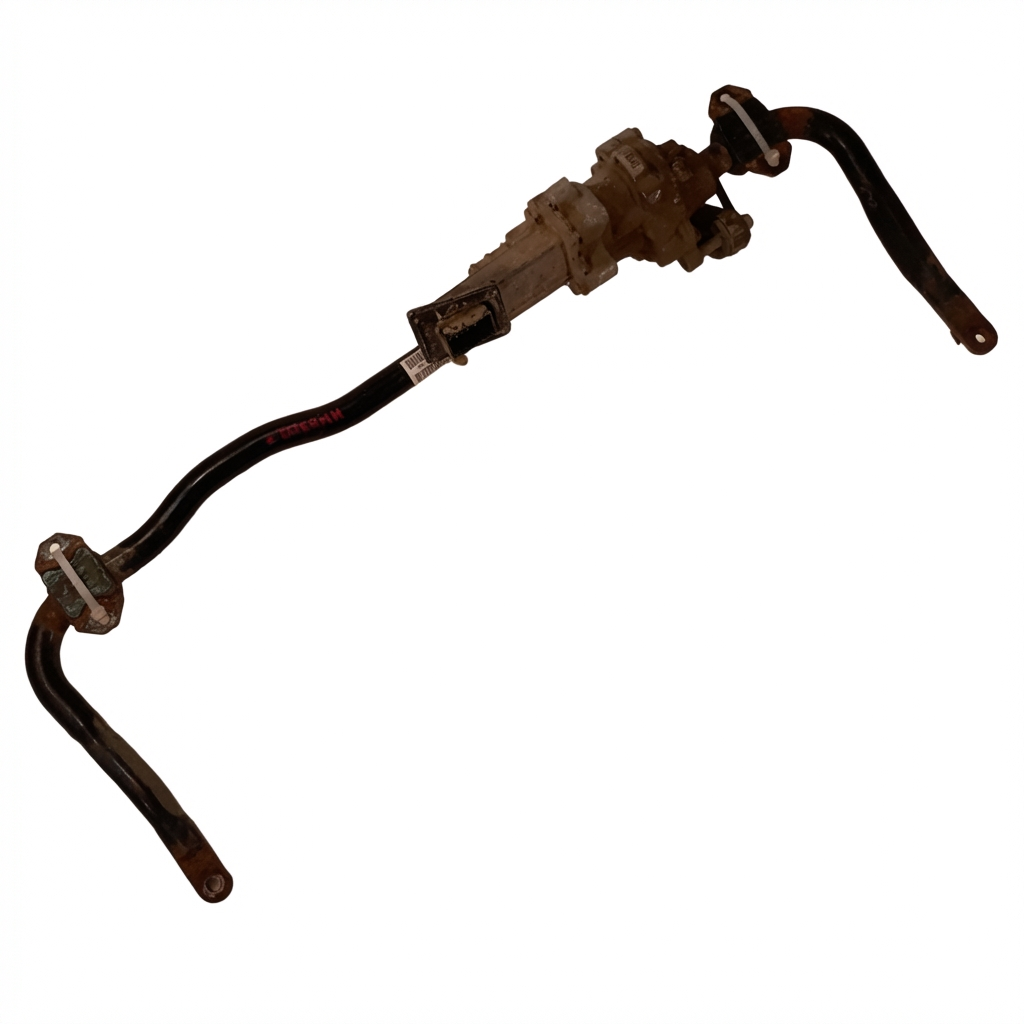
Since new OEM stabilizer bars for these models are often discontinued and standard aftermarket replacements are rare, a used OEM bar is an excellent and often necessary choice. The bar itself is not a high-wear item, making a used part a reliable and cost-effective solution.
- Verify Compatibility: This is the most critical step. Confirm the donor vehicle's year, make, model, and especially body style (Wagon vs. Sedan/Hatchback) to ensure the bar will fit, particularly for rear applications.
- Inspect for Damage: Look down the entire length of the bar to ensure it is straight and not bent. A bent bar will not function correctly and can cause handling problems.
- Check for Corrosion: Surface rust is normal for a used suspension part and is not a concern. However, avoid any bar with deep, flaking rust or severe pitting, as this can weaken the metal over time.
- Ignore Old Hardware: Do not worry about the condition of the bushings or end links that may still be attached to the used bar. These are inexpensive and should always be replaced with new parts during installation. You are buying the bar, not the accessories.
Pro Tip: A used OEM stabilizer bar is often superior to a cheap, no-name aftermarket bar. The original GM/Daewoo/Suzuki parts were made from high-quality spring steel designed specifically for the vehicle's weight and handling characteristics.
Replacement Overview and Torque Specs
Replacing the stabilizer bar links and bushings is a DIY-friendly job for someone with basic tools and jack stands. The entire bar is more involved but still manageable.
- Difficulty: 2/5 (Links & Bushings), 3/5 (Entire Bar)
- Estimated Time: 1-2 hours for links and bushings on one axle.
- Common Tools: Socket set (12mm, 14mm, 17mm are common), wrenches, torque wrench, jack and jack stands. An Allen key or Torx bit may be needed to hold the end link stud while loosening the nut.
Key Procedures:
- Safely raise and support the vehicle on jack stands.
- Remove the wheels for better access.
- Unbolt the old end links from the stabilizer bar and the strut/control arm.
- Unbolt the two brackets holding the stabilizer bar bushings to the subframe.
- Remove the old bar (if replacing) and bushings.
- Install the new bushings onto the new/old bar. A small amount of silicone grease can help.
- Loosely install the bar with its new bushings and brackets.
- Install the new end links.
- Important: Before final tightening of the bushing bracket bolts, the vehicle's full weight should be on the suspension. This can be done by lowering the car onto ramps or placing the jack under the control arm to compress the suspension to its normal ride height. This prevents pre-loading and premature wear of the new rubber bushings.
Torque Specifications
Specific torque values for the Optra and Reno are not widely published. However, based on the hardware size and similar applications, general torque ranges are as follows. Always consult a vehicle-specific service manual if possible.
Caution: These are general estimates. Over-tightening can damage the new parts, especially the end links. Under-tightening can cause noise.
- Stabilizer End Link Nuts: 30-45 lb-ft. Many mechanics tighten until the rubber bushings on the link begin to swell slightly wider than the washer.
- Stabilizer Bar Bushing Bracket Bolts: 15-25 lb-ft. These are typically smaller bolts and do not require high torque.
Cost of Replacement
The cost to fix stabilizer bar issues is highly dependent on what needs replacing. The links and bushings are very affordable.
| Part | New OEM | New Aftermarket | Used OEM | Shop Labor |
|---|---|---|---|---|
| Stabilizer Bar (Front or Rear) | Discontinued / Hard to Find | Rare / Performance Only ($200+) | $50 - $120 | $100 - $200 |
| Stabilizer End Links (Pair) | $60 - $100 | $20 - $60 | Not Recommended | $80 - $150 |
| Stabilizer Bushings (Pair) | $20 - $40 | $10 - $25 | Not Recommended | $80 - $150 |
| Links & Bushings Together | N/A | $30 - $85 | Not Recommended | $110 - $250 |
Frequently Asked Questions (FAQ)
Can I drive with a broken stabilizer bar link?
Yes, but it's not recommended for long. The vehicle is safe to drive for short, careful trips to a repair shop. However, handling will be compromised, with significant body roll in turns and reduced stability during emergency maneuvers. It will also be noisy.
Do I need a wheel alignment after replacing the stabilizer bar or links?
No, a wheel alignment is generally not necessary after replacing the stabilizer bar, links, or bushings. These components do not affect the primary alignment angles (camber, caster, toe).
Should I replace links and bushings in pairs?
Yes. It is highly recommended to replace stabilizer bar links and bushings in pairs (both left and right) on the same axle. If one side has failed due to age and wear, the other side is likely not far behind. Replacing them together ensures balanced handling and prevents you from having to do the same job twice.
Why can't I find a new standard stabilizer bar for my Optra/Reno?
For many older, less common models, manufacturers and aftermarket companies cease production of larger, slow-moving parts like stabilizer bars. The demand is too low to justify keeping them in stock. This is why recycled OEM parts from a salvage yard are often the only viable option for the bar itself.
Technical Specifications
OEM Part Numbers: 96399710 96412670 96451962 96549922 J96549922 4231185Z00 46611-85Z00
Front and Rear bars have different shapes. Rear bars are specific to body style (Sedan/Hatchback vs. Wagon). End link lengths are approximately 10-11 inches.
We Have This Part in Stock

The information in this article is provided for general reference and educational purposes only. Vehicle specifications, procedures, and part compatibility can vary by production date, trim level, and region. Always consult your vehicle's factory service manual and verify part numbers before purchasing or performing repairs. Safety-critical components such as airbags, seat belts, and braking systems should be installed by a qualified professional.
- Chevrolet Optra:
- Suzuki Reno:
- 🛍️ Shop This Part
- Symptoms of a Failing Stabilizer Bar System
- 1. Clunking or Rattling Noises Over Bumps
- 2. Poor Handling and Increased Body Roll
- 3. Squeaking or Groaning Sounds
- Known Issues, Recalls, and Part Variations
- Official Recalls and TSBs
- Critical Part Variations: Sedan, Hatchback, and Wagon
- Diagnosing the Problem
- Buying a Used Stabilizer Bar: What to Look For
- Replacement Overview and Torque Specs
- Key Procedures:
- Torque Specifications
- Cost of Replacement
- Frequently Asked Questions (FAQ)
- 🎟️ Get 5% Off