

1999-2000 Subaru Forester Cluster: A Guide to Swaps, Mileage, and Repairs
Learn how to navigate the critical compatibility differences like transmission type and part numbers when replacing your Forester's instrument cluster.
- The vehicle's mileage is stored directly in the instrument cluster; swapping it will display the mileage from the donor car.
- You must match the replacement cluster to your Forester's transmission type (Automatic or Manual) for it to work correctly.
- These clusters are plug-and-play and do not require dealer programming or flashing to function, nor are they linked to an immobilizer system.
- Verifying the OEM part number on your original cluster is the most reliable way to ensure you purchase a compatible used part.
Symptoms of a Failing 1999-2000 Forester Instrument Cluster


Failures in these clusters are common due to age. The electronic components on the internal circuit board, like capacitors and solder joints, can degrade over time, leading to a variety of issues. Here are the most common signs that your cluster may be failing:
- Dead or Erratic Gauges: The speedometer, tachometer, fuel, or temperature gauge may stop working, get stuck at a certain position, or sweep back and forth unpredictably. A non-functioning speedometer is a significant safety and legal issue.
- Intermittent or Dead Backlighting: The bulbs that illuminate the gauges for night driving can burn out. In some cases, a failure on the circuit board can cause all lights to go out at once. 🎬 See how simple it is to replace instrument dash lamps in a Forester.
- Odometer Display Failure: The digital odometer display may become dim, flicker, or go completely blank.
- Warning Lights Malfunctioning: Critical warning lights like the Check Engine Light, oil pressure, or brake warning may stay on constantly or fail to illuminate during the initial key-on bulb check.
- Complete Cluster Failure: In some cases, the entire cluster may appear dead with no working gauges or lights. This can sometimes be mistaken for a blown fuse, so always check fuses first.
Known Issues, Recalls, and Technical Service Bulletins (TSBs)

For vehicles of this age, widespread electronic issues are often due to the natural lifespan of components. While no recalls or TSBs point directly to a systemic failure of the instrument cluster itself for the 1999-2000 model years, owners have reported common failure points related to aging electronics.
- Recalls: The most significant recall for the 1999 Forester involved brake master cylinder seals that could fail in cold weather. There were no recalls issued specifically for the instrument cluster.
- TSBs: Technical Service Bulletins for this era are sparse. Later model Foresters had TSBs for issues like rattling sounds from the instrument panel area or light leaks around the cluster visor, but none that address electronic failure in the 1999-2000 models.
- Common Failure Mode: The most common cause of gauge and lighting problems is the failure of electronic components on the cluster's printed circuit board (PCB). Cold or cracked solder joints are a frequent culprit, interrupting electrical circuits and causing intermittent or total failure of specific functions.
Pro Tip: Before condemning the cluster, check the Vehicle Speed Sensor (VSS) if your primary problem is a non-working speedometer. A faulty VSS is a common cause and will often trigger a Check Engine Light. 🎬 Watch this guide to diagnose why your Forester speedometer isn't working. However, if multiple gauges are failing simultaneously, the cluster itself is the more likely suspect.
Buying a Used 1999-2000 Forester Instrument Cluster: A Buyer's Guide
Purchasing a used instrument cluster can be a cost-effective solution, but it requires careful attention to detail to ensure you get a compatible, working part. These clusters are NOT universally interchangeable.
1. Match Your Transmission Type (AT vs. MT)
This is the most critical compatibility factor. Clusters are specific to either an Automatic Transmission (AT) or a Manual Transmission (MT). An AT cluster has positions for Park (P), Reverse (R), Neutral (N), Drive (D), etc., which an MT cluster lacks. The wiring and internal logic are different. Installing the wrong type will result in incorrect function and warning lights.
2. Match the OEM Part Number
The surest way to guarantee compatibility is to match the OEM part number from your original cluster to the replacement unit. You will need to remove your original cluster to find the number on a sticker, typically on the back or top of the housing. Known part numbers for this generation include:
- 85014FC100
- 85014FC110
- 85014FC120
- 85014FC130
- 85020FC290
- 85020FC300
While some of these may be interchangeable if the transmission type matches, an exact part number match is always the safest bet. For example, listings for part number 85020FC300 often specify it fits Base, L, and S trims for both 1999 and 2000.
3. The Mileage is Stored in the Cluster
Warning: The vehicle's mileage is stored on a chip inside the instrument cluster itself, not in the main engine computer (ECU). When you swap the cluster, the odometer will display the mileage from the donor vehicle, not your car's original mileage. This can create legal issues regarding odometer fraud if not handled correctly.
You have a few options to deal with this:
- Accept the new mileage: Keep detailed records of the mileage on your old cluster and the mileage on the replacement cluster at the time of the swap. Disclose this to any future buyers.
- Professional Mileage Correction: Many services can reprogram the replacement cluster to match your vehicle's original mileage. This typically costs between $120 and $190 and requires you to mail the cluster to the service provider. 🎬 Watch how to transfer your odometer mileage by cloning the EEPROM chip.
4. Check for MPH vs. KPH
Some used clusters may come from Canadian or other international market vehicles and will read in Kilometers Per Hour (KPH) as the primary scale. Ensure the cluster you are buying is for the US market with Miles Per Hour (MPH) as the dominant measurement on the speedometer face.
5. Physical Inspection
When buying a used cluster, inspect it for:
- Clear Lens: Check for deep scratches, cracks, or fogging on the clear plastic lens.
- Intact Mounting Tabs: Ensure all plastic mounting points are present and not broken.
- No Water Damage: Look for any signs of corrosion or water stains on the rear circuit board.
Programming and Installation
Does the cluster need to be programmed?
No. For the 1999-2000 Forester, a compatible replacement cluster is plug-and-play. There is no dealer programming or flashing required for the gauges to function. The only 'programming' consideration is correcting the odometer mileage, which is an optional service.
Is there an immobilizer link?
No. The 1999-2000 Subaru Forester does not have a factory immobilizer system that links the key's transponder chip to the instrument cluster. You can swap the cluster without worrying about the car failing to start, which is a common issue on many newer vehicles.
DIY Replacement Overview
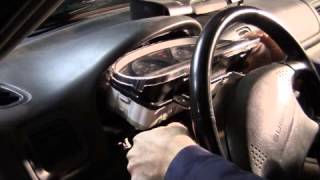
Replacing the cluster is a straightforward job for a DIYer with basic tools. The difficulty is low and it can typically be done in under an hour.
- Disconnect the negative battery terminal.
- Lower the steering wheel to its lowest position.
- Remove the two screws at the top of the instrument cluster trim surround (bezel).
- Carefully pull the trim surround straight out. It is held in by clips at the bottom.
- Remove the screws holding the instrument cluster itself in place (typically three or four).
- Gently pull the cluster forward, reach behind it, and disconnect the three electrical connectors.
- Installation is the reverse of removal.
Cost Comparison
| Part/Service | Estimated Cost |
|---|---|
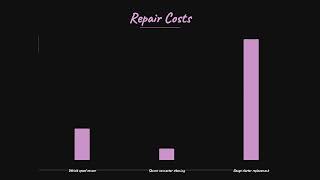
| New OEM | $400 - $600+ (Largely discontinued, very hard to find) |
| Used OEM | $50 - $150 |
| Remanufactured / Repaired | $150 - $250 |
| Shop Labor (Installation) | $95 - $150 |
| Mileage Correction Service | $120 - $190 |
Frequently Asked Questions (FAQ)
My speedometer isn't working but the odometer is. What's the problem?
If the odometer is still counting miles but the speedometer needle doesn't move, the issue is likely within the cluster itself—specifically the small stepper motor that controls the speedometer needle. The vehicle speed sensor is likely working correctly since it's providing a signal for the odometer to count. In this case, repairing or replacing the cluster is the correct solution.
Can I use a cluster from a Subaru Impreza or Legacy of the same era?
This is not recommended. While they may look similar and even use some of the same internal components, the mounting points, wiring pinouts, and gauge calibrations are often different. It is best to stick with a cluster from a 1999-2000 Forester to avoid compatibility headaches.
How do I fix the mileage after installing a used cluster?
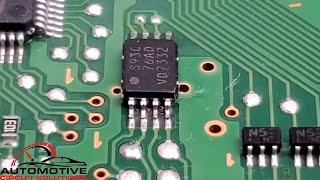
You cannot change the mileage yourself. You must use a professional instrument cluster repair or mileage correction service. These services have the specialized equipment to read and write data to the EEPROM chip on the circuit board where the mileage is stored. You will need to mail your replacement cluster to them for this service.
Are all the bulbs in the cluster the same?
No. There are typically larger bulbs for the main backlighting and smaller bulbs for the individual warning lights. When replacing bulbs, it's important to get the correct size and wattage for each location. Using the wrong bulb can cause dim lighting or even melt the plastic housing.
Helpful Videos
Technical Specifications
OEM Part Numbers: 85014FC100 85014FC110 85014FC120 85014FC130 85020FC290 85020FC300
N/A
We Have This Part in Stock


The information in this article is provided for general reference and educational purposes only. Vehicle specifications, procedures, and part compatibility can vary by production date, trim level, and region. Always consult your vehicle's factory service manual and verify part numbers before purchasing or performing repairs. Safety-critical components such as airbags, seat belts, and braking systems should be installed by a qualified professional.
- Subaru Forester:
- 🎬 Helpful Videos
- 🛍️ Shop This Part
- Symptoms of a Failing 1999-2000 Forester Instrument Cluster
- Known Issues, Recalls, and Technical Service Bulletins (TSBs)
- Buying a Used 1999-2000 Forester Instrument Cluster: A Buyer's Guide
- 1. Match Your Transmission Type (AT vs. MT)
- 2. Match the OEM Part Number
- 3. The Mileage is Stored in the Cluster
- 4. Check for MPH vs. KPH
- 5. Physical Inspection
- Programming and Installation
- Does the cluster need to be programmed?
- Is there an immobilizer link?
- DIY Replacement Overview
- Cost Comparison
- Frequently Asked Questions (FAQ)
- 🎟️ Get 5% Off