

1987 Dodge Dakota Instrument Cluster: Gauges vs. Lights and Why It's a Unique Year
This guide covers the critical differences between the 1987 Dodge Dakota's two main instrument cluster types and how to choose the correct used replacement.
- The 1987 Dodge Dakota uses a one-year-only instrument cluster; parts from 1988 and newer models are not directly compatible.
- Two main versions exist: one for trucks with a full set of gauges and one for trucks with warning lights. They are not interchangeable without major wiring modifications.
- The flexible printed circuit board on the back is the most common failure point. Inspect it carefully for damage on any used part. Part number 4375804 is for gauge models, and 4375805 is for warning light models.
- No programming is required for replacement, but you must legally document the odometer mileage change with a door jamb sticker.
The 1987 Dakota: A One-Year-Only Electronic Design

The 1987 Dodge Dakota holds a unique place in the model's history, particularly concerning its electronics. The instrument cluster for this year is a one-year-only design, meaning clusters from 1988 or later models are not directly compatible without significant modifications. This makes finding a correct replacement for your 1987 Dakota especially important.
Symptoms of a Failing Instrument Cluster

Failures in these clusters often stem from age-related issues with the flexible printed circuit board on the back, cracks in solder joints, or problems with the internal voltage regulator. Here are the most common symptoms:
- Dead or Erratic Gauges: One or more gauges (speedometer, fuel, temp, etc.) may stop working entirely, get stuck, or provide inaccurate readings.
- Bouncing Speedometer Needle: While this can be caused by a faulty Vehicle Speed Sensor (VSS) or a bad speedometer cable, a failure within the speedometer head itself is also a common cause.
- Intermittent or Dead Backlighting: The bulbs that illuminate the cluster for night driving can burn out, or the circuit that powers them can fail.
- Warning Lights Stay On or Don't Light Up: Problems with the printed circuit can cause warning lights to remain illuminated constantly or fail to light up during the initial key-on bulb check.
- Complete Cluster Failure: In some cases, the entire cluster may appear dead with no working gauges or lights. This can point to a bad ground connection, a blown fuse, or a total failure of the cluster's main circuit board.
Pro Tip: Before condemning the cluster, always check the simple things first. Ensure the fuse for the instrument panel is not blown and is seated securely in the fuse box. Also, check the main electrical ground points under the dash, as a loose or corroded ground can cause a host of strange electrical issues.
Known Issues, TSBs, and Recalls
For a vehicle of this age, most official documentation is scarce. No specific recalls or Technical Service Bulletins (TSBs) directly targeting the 1987 Dakota's instrument cluster were found in public databases. However, owner forums frequently discuss failures of the flexible printed circuit board and issues with the speedometer cable and drive gears in the transmission. One recall for slightly later models noted that chafing of the dash wiring harness from clutch pedal use could cause abnormal operation of lights and signals, a reminder to check wiring integrity during diagnosis.
Buying a Used 1987 Dakota Instrument Cluster: A Buyer's Guide

This is the most critical section for anyone needing a replacement. Due to the one-year-only design and multiple variations, careful selection is key. New OEM clusters are no longer available, making a quality used part the only viable option.
Step 1: Identify Your Cluster Type - Full Gauges or Warning Lights
There are two primary versions of the 1987 Dakota cluster, and they are not interchangeable without extensive wiring changes and different sensors.
- Cluster with Full Gauges: This premium version features a full set of individual gauges for speed, RPM (tachometer), fuel, temperature, oil pressure, and battery voltage.
- Cluster with Warning Lights: This base model version has a large speedometer and fuel gauge but uses simple warning lights (often called 'idiot lights') for oil pressure, engine temperature, and the charging system instead of dedicated gauges.
Step 2: Verify Compatibility with Part Numbers
The most reliable way to ensure you get the right part is to match the part number on the flexible printed circuit board on the back of your original cluster.
- The circuit board for clusters with full gauges is typically part number 04375804.
- The circuit board for clusters without full gauges (warning lights only) is typically part number 04375805.
Additionally, there are variations within these types based on whether the speedometer has a trip odometer. Speedometers with a trip odometer carry part number 4375824, while those without are part number 4375826. This can affect the physical fitment of the lens and internal components.
Warning: Do not attempt to install a full-gauge cluster in a truck originally equipped with warning lights (or vice-versa) expecting it to work. The vehicle's wiring harness and engine sensors are different for each type.
Step 3: Physical Inspection of the Used Cluster
- Inspect the Circuit Board: This is the most common failure point. Carefully examine the thin, flexible plastic circuit board on the back. Look for any green or brown corrosion, peeling traces, cracks, or burn marks, especially around the main connector pins. Aftermarket replacement boards made of fiberglass are available but are costly.
- Check the Lens: Ensure the clear plastic lens is not cracked, heavily scratched, or foggy.
- Examine Mounting Points: Check that all plastic mounting tabs are intact and not broken off, which is common during removal.
- Needle Condition: The gauge needles should be straight and not bent or broken.
Step 4: Understanding Odometer Mileage
A used instrument cluster will come with the mileage from the donor vehicle, which will not match your truck's actual mileage. Federal and state laws require that you disclose this mileage discrepancy when you sell the vehicle. It is illegal to represent the mileage on the replacement odometer as the vehicle's true mileage. You should attach a sticker to the driver's side door jamb noting the mileage at the time of the swap and the reading on the replacement cluster.
Programming and Installation
The 1987 Dodge Dakota instrument cluster is a purely analog and basic electronic part. No programming, flashing, or dealer visit is required for installation. It is a plug-and-play component once you have the correct compatible version.
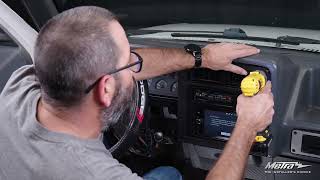
Replacement is straightforward for a DIY mechanic and typically involves removing the dashboard bezel and trim pieces to access the screws holding the cluster in place. 🎬 Watch this video guide on removing Dakota dash trim components Be extremely careful with the plastic dashboard components, as they can become brittle with age.
Cost of Replacement
| Part Type | Estimated Cost |
|---|---|
| New OEM | Not Available |
| New Aftermarket | $250+ (for replacement circuit board only) |
| Used OEM | $35 - $150 |
| Shop Labor | $100 - $200 |
Frequently Asked Questions (FAQ)
Does a 1987 Dodge Dakota instrument cluster need to be programmed?
No. This is a pre-OBDII vehicle with simple electronics. As long as you have a compatible cluster, it is a direct plug-and-play replacement with no programming required.
My speedometer bounces or doesn't work. Is the cluster bad?
It could be, but it's not the only cause. For the 1987 model, the speedometer is mechanically driven by a cable. The issue could be a faulty speedometer head, a broken or binding speedometer cable, or a stripped plastic drive gear in the transmission. You should inspect the cable and gear first before replacing the entire cluster.
Can I upgrade my warning light cluster to one with full gauges?
This is not a simple swap. A truck built for a warning light cluster lacks the necessary wiring and sending units for oil pressure and temperature gauges. To make a full-gauge cluster work, you would need to source the correct engine sensors and run new wiring from the engine bay to the instrument cluster connector, which is a complex job.
What do I do about the mileage difference on my used cluster?
You are legally required to document the mileage discrepancy. When installing the replacement, record the mileage on your old cluster and the mileage on the new one. Fill out and attach an odometer disclosure sticker to the driver's side door jamb. This protects you and informs future owners of the vehicle's true mileage.
Helpful Videos
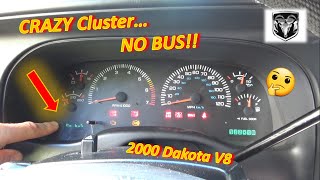
Technical Specifications
OEM Part Numbers: 04375802 04375804 04375805 04375816 04375818 04375824 04375826 04375849 04375850 04375861 04375862
Vehicle uses a mechanically driven speedometer cable. Two primary circuit boards exist: 04375804 (with gauges) and 04375805 (without gauges).

The information in this article is provided for general reference and educational purposes only. Vehicle specifications, procedures, and part compatibility can vary by production date, trim level, and region. Always consult your vehicle's factory service manual and verify part numbers before purchasing or performing repairs. Safety-critical components such as airbags, seat belts, and braking systems should be installed by a qualified professional.
- Dodge Dakota:
- 🎬 Helpful Videos
- The 1987 Dakota: A One-Year-Only Electronic Design
- Symptoms of a Failing Instrument Cluster
- Known Issues, TSBs, and Recalls
- Buying a Used 1987 Dakota Instrument Cluster: A Buyer's Guide
- Step 1: Identify Your Cluster Type - Full Gauges or Warning Lights
- Step 2: Verify Compatibility with Part Numbers
- Step 3: Physical Inspection of the Used Cluster
- Step 4: Understanding Odometer Mileage
- Programming and Installation
- Cost of Replacement
- Frequently Asked Questions (FAQ)
- 🎟️ Get 5% Off