

1997-1999 BMW M3 Instrument Cluster: Decoding Failures, Pixels, and the Tamper Dot
This guide covers common pixel display failures, gauge problems, and the critical VIN and mileage coding required when replacing your E36 M3 cluster.
- The most common failure is missing pixels in the odometer display, which is repairable.
- Replacing the cluster with a used unit requires professional coding to match your car's VIN and mileage to prevent a "tamper dot".
- A used cluster will display the donor car's mileage until it is professionally reprogrammed.
- Physical replacement is an easy DIY job, but the electronic coding requires specialized tools and expertise not found at all shops.
Symptoms of a Failing E36 M3 Instrument Cluster

Failures in the E36 M3 cluster can range from minor annoyances to critical information loss. Understanding these symptoms can help you diagnose the problem correctly.
1. Fading or Dead Pixels in the Odometer Display
This is the most common failure for E36-generation BMWs. The digital screen that shows the odometer, trip meter, and service indicator information loses pixels, making it difficult or impossible to read. This typically starts as a few missing lines and gets progressively worse, especially in hot weather. The root cause is often the delamination of the ribbon cable that connects the LCD screen to the main circuit board.
2. Erratic or Non-Functioning Gauges
One or more of the main analog gauges (speedometer, tachometer, fuel, or temperature) may behave erratically, get stuck, or stop working entirely. This can be caused by several internal issues, including failing stepper motors that drive the needles, bad solder joints on the circuit board, or faulty capacitors. In some cases, an intermittent failure of the entire cluster can be triggered by using other electronics in the car, like the brakes or wipers, pointing to a power or ground issue on the circuit board.
3. Complete Cluster Blackout or Intermittent Power
The entire cluster may fail to light up or may power on and off randomly. This often points to a more severe internal electronic failure, such as a problem with the main power supply to the cluster or cracked solder joints on the main processor or crystal oscillator. Before condemning the cluster, it's wise to check the vehicle's fuses and ensure the connectors on the back of the cluster are secure.
4. The "Tamper Dot" Appears
A small red dot appearing next to the mileage reading is known as the "tamper dot." This light illuminates when the VIN stored in the instrument cluster does not match the VIN stored in the car's other primary modules, like the engine computer (DME) or immobilizer (EWS). This is a clear sign that the cluster is not original to the car or has been replaced without proper coding.
Buying a Used 1997-1999 M3 Instrument Cluster: What to Look For

Purchasing a used cluster can be a cost-effective solution, but it requires careful attention to detail to ensure compatibility and avoid headaches.
Warning: A used cluster is NOT a plug-and-play part. It will require professional electronic coding to function correctly and display the proper mileage without a tamper dot.
Key Inspection Points:
- Verify the Part Number: Ensure the cluster is for a US-spec M3 (MPH display). The part numbers 62112497710 and 62112497711 are common for this application. Euro-spec clusters have a KPH speedometer and may have an oil temperature gauge instead of the fuel economy gauge, which will not work correctly on a US car.
- Check for Physical Damage: Inspect the front lens for deep scratches and the rear housing for cracks, especially around the mounting tabs which can be fragile.
- Ask About Pixel Condition: If buying online, ask the seller for a clear photo of the cluster powered on to verify the condition of the odometer's LCD pixels. Many used clusters will have the same pixel issue you're trying to fix.
- Understand Mileage and the Tamper Dot: When you install a used cluster, it will display the mileage from the donor car. Furthermore, the tamper dot will immediately appear because the VINs do not match. You must factor in the additional cost of having the cluster's EEPROM (a small memory chip) "virginized" and then coded to your car's VIN and correct mileage by a specialist.
Programming, Coding, and the Tamper Dot

This is the most critical aspect of replacing an E36 M3 instrument cluster. The cluster is a security-relevant part that shares data with other modules in the car.
- Why is Coding Necessary? Coding syncs the replacement cluster to your car. It writes your car's VIN into the cluster's memory, which prevents the tamper dot from appearing. It also configures the cluster for your car's specific features (e.g., manual vs. automatic transmission).
- Who Can Program a Used Cluster? Most BMW dealerships will refuse to program a used electronic part; they will only program brand new parts they supply. You will need to find an independent BMW specialist or a mail-in cluster repair service that has the specific tools and expertise to work with the EEPROM chip directly.
- What Tools Are Used? Professionals and advanced DIYers use software like NCS Expert, INPA, or specialized EEPROM programmers to read and write data to the cluster. This is not something that can be done with a standard OBD-II code reader.
- Mileage Correction: After the VIN is coded, the mileage must be corrected to match your vehicle's true mileage. Reputable repair services will require proof of mileage (e.g., from your old cluster or vehicle records) to perform this service legally.
Replacement Procedure Overview
The physical removal and installation of the cluster is straightforward and can be done by a DIY mechanic with basic tools. The steering wheel does not need to be removed.
- Disconnect the vehicle's battery.
- Lower and extend the steering wheel as far as possible to create clearance.
- Remove the two Torx T20 screws located at the top of the cluster bezel.
- Carefully pry the top of the cluster forward and pull it out of the dashboard.
- Reach behind the cluster and disconnect the three color-coded electrical connectors. These have locking levers that must be lifted to release the plug.
- Maneuver the cluster out from behind the steering wheel.
- Installation is the reverse of removal. Ensure all three connectors are fully seated and locked before powering the vehicle back on.
Known Issues, Recalls, and Service Bulletins
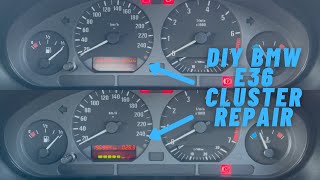
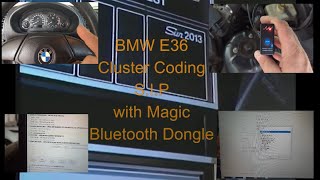
- Common Issues: Beyond the pixel and gauge failures mentioned, the E36 platform is known for general electrical issues that can sometimes be traced back to the cluster. Internal components like capacitors can fail with age, requiring board-level repair. 🎬 Watch this guide on repairing an E36 instrument cluster
- Recalls: There are no specific recalls for the instrument cluster on 1997-1999 BMW M3 models. There was a major recall (NHTSA 19V-853) for the driver's side Takata airbag that affects some 1999 M3 models, but this is unrelated to the cluster itself.
- Technical Service Bulletins (TSBs): While a specific TSB for this exact cluster is not prominent, BMW has issued bulletins for newer models regarding cluster software and programming procedures for intermittent operation, highlighting the electronic complexity of these components.
Pro Tip: You can access a hidden self-test menu in the cluster. With the key in position 1, press and hold the trip reset button. The display will show "tESt 01". You can then cycle through various tests, including a gauge sweep (Test 02) that moves all needles through their full range of motion, which can help diagnose if the gauges are mechanically stuck.
Cost Comparison
| Part Type | Estimated Cost | Notes |
|---|---|---|
| New OEM | $1,500 - $2,200 + Core | Very expensive and may be special order. Requires dealer programming. |
| New Aftermarket | Not Available | No direct aftermarket replacements are manufactured for this specific cluster. |
| Used OEM | $300 - $550 | Widely available from salvage yards and online marketplaces. Requires coding and mileage correction. |
| Remanufactured / Repair Service | $120 - $350 | Cost-effective option to fix your original cluster, avoiding all coding issues. Pixel and board repair are common services. |
| Shop Labor (Replacement Only) | $115 - $170 | For physical swap only. Does not include coding, which is a separate, specialized service. |
Frequently Asked Questions (FAQ)
What is the red "tamper dot" on my BMW cluster?
The tamper dot is a warning light indicating that the VIN stored in the cluster does not match the VIN stored in other vehicle modules. It means the cluster is from a different car and has not been properly programmed, or that mileage tampering has been attempted.
Can I install a used M3 cluster myself?
Yes, the physical installation is simple and requires only basic tools. However, after installation, the cluster will show the wrong mileage and a tamper dot until it is professionally coded to your car.
Will the mileage be correct if I swap my instrument cluster?
No. The mileage is stored inside the cluster itself. A used cluster will display the mileage of the vehicle it came from. To correct this, the cluster's memory must be reprogrammed by a specialist, which is a separate step from just coding the VIN.
Why are the pixels on my odometer and trip computer display missing?
This is the most common failure on these clusters, caused by a faulty ribbon cable that connects the LCD screen to the main circuit board. The adhesive fails over time, leading to a poor connection and lost pixels. This is repairable by specialists who can install a new, more durable ribbon cable.
Helpful Videos

Technical Specifications
OEM Part Numbers: 62112497711 62112491183 62112492987 62112497710 62112497719
US-market clusters feature a 160 MPH speedometer, red indicator needles, and an ///M logo. They connect via three multi-pin connectors on the rear (blue, white, and black).

The information in this article is provided for general reference and educational purposes only. Vehicle specifications, procedures, and part compatibility can vary by production date, trim level, and region. Always consult your vehicle's factory service manual and verify part numbers before purchasing or performing repairs. Safety-critical components such as airbags, seat belts, and braking systems should be installed by a qualified professional.
- BMW M3:
- 🎬 Helpful Videos
- Symptoms of a Failing E36 M3 Instrument Cluster
- 1. Fading or Dead Pixels in the Odometer Display
- 2. Erratic or Non-Functioning Gauges
- 3. Complete Cluster Blackout or Intermittent Power
- 4. The "Tamper Dot" Appears
- Buying a Used 1997-1999 M3 Instrument Cluster: What to Look For
- Key Inspection Points:
- Programming, Coding, and the Tamper Dot
- Replacement Procedure Overview
- Known Issues, Recalls, and Service Bulletins
- Cost Comparison
- Frequently Asked Questions (FAQ)
- 🎟️ Get 5% Off