

Jaguar & Land Rover Speaker Guide (2009-2024): Fixing Rattles, Distortion & Meridian Audio Problems
This guide covers the common speaker failures and audio system issues in many modern Jaguar and Land Rover vehicles, focusing on how to diagnose problems and find the correct used replacement part.
- Compatibility is critical: You MUST match the replacement speaker to your vehicle's specific audio system (Base, Meridian, Meridian Surround, etc.). Speakers are not interchangeable.
- Common symptoms include rattling, buzzing, distortion, or a complete lack of sound from one speaker.
- Rattles are not always a bad speaker; they are often caused by vibrations in the door panel, which can be fixed with sound-deadening material.
- Replacing a door speaker is a feasible DIY job, typically requiring only basic trim removal tools and Torx drivers.
Isolating a Failing Speaker


Before you replace any parts, you must find the source of the problem. A single faulty speaker can make the entire system sound poor. Use your vehicle's infotainment screen to access the audio settings for Balance and Fader.
- Test Each Corner: Move the sound to each of the four corners of the vehicle (front-left, front-right, rear-left, rear-right). Listen carefully at a moderate volume.
- Listen for Problems: As you isolate each speaker, listen for common failure symptoms like rattling, buzzing, distortion, or a complete lack of sound.
- Confirm the Source: If a specific speaker sounds bad, you've likely found the culprit. If all speakers sound distorted, or if an entire side of the vehicle is silent, the problem may be with the amplifier or the head unit itself.
Symptoms of a Failing Speaker
Speaker failure is common across all audio systems. The symptoms can range from a minor annoyance to a complete loss of sound.
- Distortion or Fuzziness: The speaker sounds muffled, fuzzy, or crackles, even at low volumes. This often points to a damaged speaker cone or a failing voice coil.
- Rattling or Buzzing: A physical rattling or buzzing sound, especially with bass-heavy music, often means the speaker cone has torn or the surround has separated from the basket. In many of these Jaguar and Land Rover models, this can also be caused by the door panel itself vibrating, a common complaint even with functional speakers.
- No Sound: Complete silence from one speaker is a clear sign of failure. It could be a dead speaker, but it can also be caused by a broken wire or a failed channel on the amplifier.
- Weak or "Tinny" Sound: If a speaker is producing sound but lacks bass or fullness, its internal components may be damaged, preventing it from reproducing a full range of frequencies.
- Persistent Static: Some owners have reported constant static from a single speaker, even when the audio system is turned down. This was noted in a 2017 Land Rover Discovery and can sometimes point to a faulty amplifier rather than the speaker itself.
Compatibility Warning: The single most important factor when replacing a speaker in these vehicles is the audio system installed from the factory. Jaguar and Land Rover offered several tiers, most commonly the Base system, the Meridian Sound System (e.g., 380W), the Meridian Surround System (e.g., 825W), and the Meridian Signature System (e.g., 1700W+). Speakers are NOT interchangeable between these systems. They use different impedance values (ohms) and are tuned for different amplifiers. Installing the wrong speaker will result in poor sound quality and can damage the amplifier. Always match the part number from your old speaker.
How to Identify Your Vehicle's Audio System
Look for branding on the speaker grilles in your doors or on the dashboard. They will often say "Meridian". You can also explore the audio settings in your infotainment system; higher-tier systems like Meridian Surround often have options for "Trifield" mode, which the base systems lack. When in doubt, a dealer can check your vehicle's original specifications using the VIN.
Buying a Used Speaker

A used OEM speaker is often the best value, providing the exact fit and sound signature as the original without the high cost of a new part from the dealer. Here's what to look for:
- Match the Part Number: This is not optional. The part number is printed on a sticker on the magnet or basket of the speaker. Match it exactly to ensure compatibility with your amplifier.
- Physical Inspection: Check the cone (the paper or composite material that moves) for any tears, punctures, or water damage. Gently press around the edge of the cone to check the foam or rubber surround for brittleness or cracking.
- Check the Terminals: The electrical connection points should be clean and free of corrosion.
- Verify the Source Vehicle: If possible, confirm the audio system of the vehicle the used speaker came from. A speaker from a Range Rover with the 825W Meridian Surround system is what you need if your vehicle has the same.
Known Issues, Recalls, and Technical Service Bulletins (TSBs)
While individual speaker failures are the most common issue, there have been some specific documented problems related to the audio systems in these vehicles.
- 2009 Jaguar XF Instrument Cluster Speaker Recall (NHTSA Recall J011): The speaker responsible for audible warnings (seat belt chime, turn signal clicks) could fail due to fractured wires. The cause was an overly aggressive sound signal. The fix was a software update to change the sound waveform.
- 2022 Range Rover Velar & Jaguar F-Pace Amplifier Recall (NHTSA Recall 22V-581 / 22V-580): A small number of vehicles were delivered without the audio amplifier module due to a supply chain issue. This resulted in a complete loss of sound, including safety warnings. The remedy was for dealers to install the missing amplifier.
- Land Rover TSB LTB00596NAS3: On some 2015 Range Rovers, a clogged or improperly routed A/C drain hose could leak water onto the floor, damaging the audio amplifier located in the passenger footwell area. Symptoms included no audio, speaker interference, or a freezing touch screen.
- Jaguar TSB SSM74763: A technical service bulletin was issued acknowledging a "popping sound or crackling noise from the audio system while in use" on some models, indicating a known issue beyond simple speaker failure.
Replacement Overview

Replacing a door speaker is a manageable DIY job for most people with basic tools.
- Disconnect the Battery: This is a good safety practice before working on any vehicle electronics.
- Remove the Door Panel: This is the most involved step. You will need to use plastic trim removal tools to gently pry off trim pieces. Look for hidden screws behind small covers, in the door handle area, and in the door pull cup. Once the screws are out, the panel is typically held on by plastic clips that pop free with firm, careful pulling.
- Disconnect Connectors: Carefully disconnect the electrical connectors for the window switch, door lock, and any lights before fully removing the panel.
- Unbolt the Speaker: The speaker is held to the door frame with a few screws, often T20 or T30 Torx. Remove the screws and disconnect the speaker's wiring harness.
- Install the New Speaker: Installation is the reverse of removal. Connect the new speaker, screw it into place, reconnect all door panel electronics, and carefully clip the panel back onto the door before reinstalling the screws.
Pro Tip: While the door panel is off is the perfect time to add sound-deadening material to the inside of the door skin and the door panel itself. This can dramatically reduce the rattles and vibrations that are common in these vehicles, improving bass response and overall sound quality.
Cost Comparison
| Part Type | Estimated Cost |
|---|---|
| New OEM Speaker (Dealer) | $100 - $400+ per speaker |
| New Aftermarket Speaker | $80 - $300+ per pair |
| Used OEM Speaker | $30 - $100 per speaker |
| Shop Labor (per door) | $100 - $200 |
Frequently Asked Questions
Can I upgrade my base audio speakers with Meridian speakers?
No, not directly. Meridian speakers have a different impedance and are designed to work with a specific Meridian amplifier. Simply swapping the speakers will result in poor sound and could damage your base amplifier. A full upgrade requires replacing the speakers, amplifier, and potentially updating the vehicle's software configuration (CCF).
Is a rattling sound always a blown speaker?
Not always. In these vehicles, it's very common for the door panels, window switches, or other trim pieces to vibrate and rattle in response to the speaker's bass frequencies. Before replacing the speaker, try pressing firmly on different parts of the door panel while music is playing to see if you can stop the rattle. If you can, the issue is a vibration that can be fixed with sound-deadening material or foam tape.
Why do my speakers sound bad when using Bluetooth?
Many owners have noticed that the Meridian systems sound significantly better when using a wired connection (USB) compared to Bluetooth. Bluetooth audio is compressed, which can reduce its quality. The high-fidelity Meridian systems are very sensitive and will reveal the imperfections in a lower-quality source. For the best sound, use a high-quality music file played through a wired connection.
Do I need to replace speakers in pairs?
It is not required, but it can be a good idea. If one speaker has failed due to age, its counterpart on the other side of the vehicle has been subjected to the same amount of use and may fail soon. However, if a speaker failed due to a defect or physical damage, replacing only the single failed unit is perfectly acceptable.
Technical Specifications
OEM Part Numbers: C2Z22814 BJ32-18808-BB LR025876 BJ32-18808-AC CK52-04454-A CK5245530A CK5245531A CPLA-111A30-EB CPLA-18808-EA CPLA18808FB GK52-18808-AB GK52-18808-BB GK5218808 GK5218808BB LR033287 LR086411 CPLA18808DB
Impedance varies by audio system. Base and some Premium systems use 2-ohm speakers, while 'Super Premium' systems may use 4-ohm speakers. Speakers come in various sizes for different locations (e.g., 3.5" dash, 6.5" door, 8" woofer).
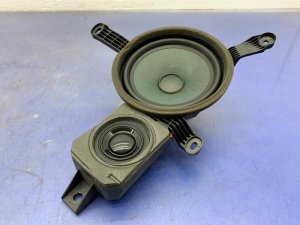
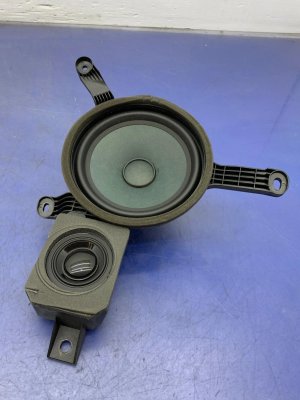
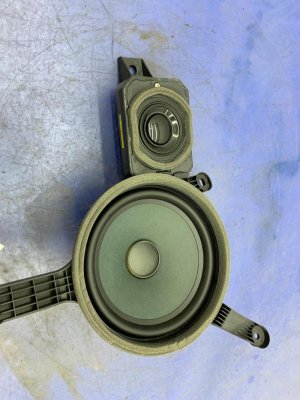
We Have This Part in Stock




The information in this article is provided for general reference and educational purposes only. Vehicle specifications, procedures, and part compatibility can vary by production date, trim level, and region. Always consult your vehicle's factory service manual and verify part numbers before purchasing or performing repairs. Safety-critical components such as airbags, seat belts, and braking systems should be installed by a qualified professional.
- Land Rover Range Rover:
- Land Rover Range Rover Sport:
- Land Rover Discovery:
- Land Rover Range Rover Evoque:
- Land Rover Range Rover Velar:
- Jaguar F-Type:
- Jaguar XF: