

2018-2026 Jeep Wrangler & Gladiator Speaker Guide: Fixing Rattles, Distortion, and Failures
A complete guide to diagnosing, replacing, and upgrading the factory speakers in your 2018-2026 Jeep Wrangler (JL) and 2020-2026 Jeep Gladiator (JT).
- Crucial Compatibility: Jeeps have two audio systems (Base and Alpine) with different speaker impedances. You MUST match the replacement speaker to your original system to avoid issues.
- Easy First Fix: The upper dash speakers are the easiest to replace (1/5 difficulty) and can be done in under 30 minutes, offering a quick sound quality improvement.
- Check for Rattles: Before replacing a soundbar speaker for rattling, check if its mounting screws have come loose—a very common and easy fix.
- Water is the Enemy: Due to the open-air nature of Jeeps, water damage is a primary cause of speaker failure, especially in the overhead soundbar.
Symptoms of Speaker Failure

A failing speaker in your Wrangler or Gladiator can present in several ways. Some symptoms point directly to the speaker, while others could indicate issues with wiring or the radio head unit.
1. Distortion, Crackling, or Popping Sounds
This is the most common sign of a failing speaker. You may hear a fuzzy, static-like, or crackling sound that gets worse as you increase the volume. This is often caused by a tear in the speaker cone or a damaged voice coil, which is the wire that moves the cone to create sound.
2. No Sound from One or More Speakers
If a speaker is completely silent, it could be 'blown,' meaning the internal components have failed completely. Before replacing the speaker, it's wise to use the stereo's balance and fader controls to confirm that only one speaker is out. This could also be caused by a loose connection at the speaker or behind the radio.
3. Rattling or Buzzing from the Soundbar
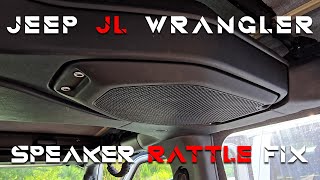
A very common issue on the Jeep Wrangler (JL) and Gladiator (JT) is a rattling or buzzing noise coming from the overhead soundbar, especially with bass-heavy music. While this can sound like a blown speaker, it is often caused by the speaker mounting screws simply coming loose from vibration. Before buying a new speaker, remove the soundbar grille and check that all Torx screws holding the speakers in place are tight. There is a Technical Service Bulletin (TSB), Case #S1608000150, that addresses speaker rattles and distortion.
🎬 Watch: This quick video shows how to fix soundbar rattles.4. Intermittent Audio Cut-Outs
If your audio cuts in and out, affecting multiple speakers at once, the issue is more likely with the head unit or amplifier wiring than the speakers themselves. Some owners have reported these issues being resolved with a software update to the Uconnect system.
Known Issues, TSBs, and Recalls

While there are no direct safety recalls for the speakers themselves, you should be aware of related issues.
- TSB for Speaker Rattle: Jeep has acknowledged issues with speaker rattles and buzzing. Case #S1608000150 addresses "Speaker Rattles, Buzzes, Sound Appears Distorted," and another bulletin notes "Buzz Squeak Rattle (BSR) From Speaker Sound Bar At High Volume Level." The most common fix is tightening the speaker mounting screws.
- Water Damage: Due to the removable roof and doors, water intrusion is a major cause of speaker failure, particularly in the overhead soundbar. Water can corrode the speaker terminals and damage the paper or cloth cones.
- Radio Software Recalls: Recalls like NHTSA 20V-191 (FCA W35) were issued for the radio's software, primarily concerning the backup camera display. These do not involve speaker hardware failure but show that the audio system can have software-related bugs.
Compatibility Warning: The most critical factor when replacing a speaker is matching it to your vehicle's original audio system. The base audio and the premium Alpine systems use speakers with different impedance ratings (ohms). The Alpine system uses 2-ohm woofers and 4-ohm mid-range/tweeters. Installing a speaker with the wrong impedance can lead to low volume, poor sound quality, and potentially damage the factory amplifier.
Buying a Used Speaker

A used OEM speaker is an excellent, cost-effective option, especially if you're replacing a single failed unit. Here’s what to look for:
- Verify the Audio System: First, confirm if your Jeep has the base or Alpine premium audio. The Alpine system usually has logos on the speakers or a subwoofer in the cargo area. A used speaker must come from a vehicle with the same audio system.
- Physical Inspection:
- Cone: The speaker cone (the large, circular part) should be free of tears, punctures, or holes.
- Surround: Check the flexible ring around the cone (the surround). It should be intact, without cracks or crumbling.
- Terminals: Look at the electrical connection points. They should be clean and free of rust or corrosion, which are signs of water damage.
- Magnet: Ensure the magnet on the back is secure and not cracked.
- Simple Bench Test: You can quickly test a speaker with a 9-volt battery. Briefly touch the battery leads to the speaker's terminals. A good speaker will make a 'pop' sound and the cone will visibly move in or out. No movement or sound indicates a dead speaker.
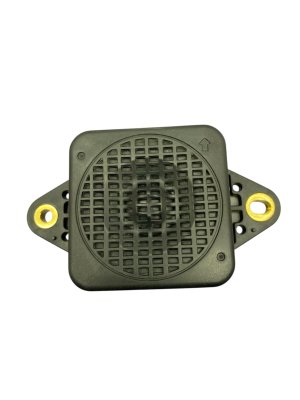
- Part Numbers: Match the part number on the back of the speaker if possible. The OEM part numbers for the front dash speakers are 68283474AB (Right/Passenger) and 68283475AC (Left/Driver).
Replacement Difficulty & Procedures
Replacement difficulty varies greatly depending on the speaker's location.
Upper Dash Speakers (3.5-inch)
- Difficulty: 1/5 (Very Easy)
- Time: 15-30 minutes
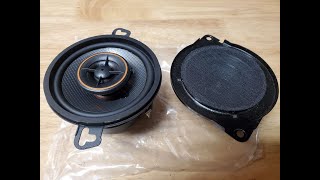
- Procedure: This is the easiest speaker to replace. Use a plastic pry tool to gently lift the speaker grille on the top of the dashboard. Remove the two Phillips head screws holding the speaker in place, disconnect the wiring harness, and swap in the new unit. 🎬 See this easy walkthrough for replacing your upper dash speakers.
Overhead Soundbar Speakers (3.5-inch and 4-inch)
- Difficulty: 2/5 (Easy)
- Time: 30-45 minutes
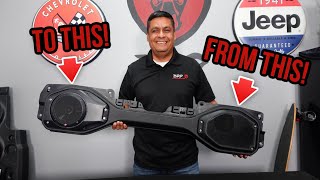
- Procedure: Remove the speaker grilles from the soundbar. On some models, these are held by Allen bolts. Unbolt the speakers using a T20 Torx driver, disconnect the harness, and install the new ones. While you're there, make sure all other speaker screws are snug to prevent rattles.
Lower Dash / Knee Panel Speakers (4-inch)
- Difficulty: 4/5 (Hard)
- Time: 2-4 hours
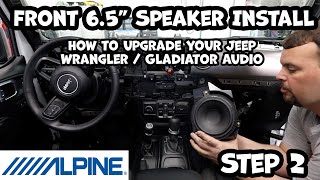
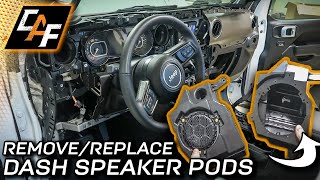
- Procedure: This is a much more involved job. It requires removing multiple lower dash panels, the glove box (on the passenger side), and other trim pieces to access the speaker pods. Due to the difficulty, many owners use this opportunity to install adapter pods and upgrade to larger 6.5-inch speakers for improved mid-bass response. This is not recommended for beginners. 🎬 Watch: A detailed guide on disassembling the dash for speaker access.
Cost Comparison
| Part/Service | Cost Estimate |
|---|---|
| New OEM Speaker (Mopar) | $80 - $110 per speaker |
| New Aftermarket Speaker | $50 - $150 per pair (e.g., Kicker, Rockford Fosgate) |
| Used OEM Speaker | $25 - $60 per speaker |
| Shop Labor (Dash/Soundbar) | $75 - $150 |
| Shop Labor (Lower Dash) | $250 - $450 |
(Prices are estimates and may vary based on location, vehicle condition, and supplier.)
Frequently Asked Questions (FAQ)
What's that rattling noise from my overhead speakers?
Before assuming your speaker is blown, check the mounting screws. The most common cause of rattling in the Jeep's soundbar is the T20 Torx screws holding the speaker backing out from vibration. Simply removing the grille and tightening them often solves the problem.
Can I install speakers from a premium Alpine system into my base model Jeep?
It is not recommended as a direct swap. The Alpine speakers have a different impedance (ohm rating) than the base model speakers. Using them with the base head unit will result in significantly lower volume and may not sound right. A proper upgrade requires matching amplifiers and speakers.
Is it hard to replace the dash speakers myself?
The upper dash speakers are extremely easy to replace. It typically takes less than 30 minutes and only requires a pry tool and a screwdriver. This is a great first audio project for any DIYer. The lower dash speakers, however, are very difficult and require extensive disassembly.
Why does my audio sound distorted or weak with the top off?
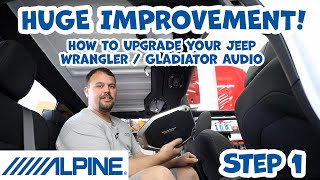
The factory audio systems, especially the base version, are often criticized for being underpowered and lacking clarity, a problem that becomes very obvious when driving with the top and doors off. The small factory speakers struggle to overcome road and wind noise. Upgrading the speakers, particularly the dash and soundbar units, can make a significant improvement.
Helpful Videos

Technical Specifications
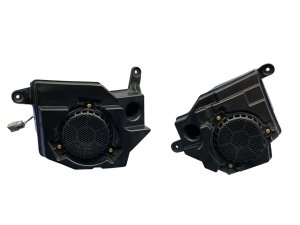
OEM Part Numbers: 68283474AB 68283475AC 68283475AB 68283471AC 68283471AB 68283472AB
Varies by system. Premium Alpine system uses 2-ohm woofers and 4-ohm mid-range/tweeters. Base system impedance differs. Part numbers 68283474AB and 68283475AC refer to the 3.5-inch front dash speakers.
We Have This Part in Stock



The information in this article is provided for general reference and educational purposes only. Vehicle specifications, procedures, and part compatibility can vary by production date, trim level, and region. Always consult your vehicle's factory service manual and verify part numbers before purchasing or performing repairs. Safety-critical components such as airbags, seat belts, and braking systems should be installed by a qualified professional.
- Jeep Gladiator:
- Jeep Wrangler:
- 🎬 Helpful Videos
- 🛍️ Shop This Part
- Symptoms of Speaker Failure
- 1. Distortion, Crackling, or Popping Sounds
- 2. No Sound from One or More Speakers
- 3. Rattling or Buzzing from the Soundbar
- 4. Intermittent Audio Cut-Outs
- Known Issues, TSBs, and Recalls
- Buying a Used Speaker
- Replacement Difficulty & Procedures
- Upper Dash Speakers (3.5-inch)
- Overhead Soundbar Speakers (3.5-inch and 4-inch)
- Lower Dash / Knee Panel Speakers (4-inch)
- Cost Comparison
- Frequently Asked Questions (FAQ)
- 🎟️ Get 5% Off