

2004-2014 F-150, Mark LT & Lobo Spare Tire Carrier: Why They Seize and How to Replace Them
This guide covers the common failure points of the spare tire winch on the 2004-2014 Ford F-150, 2006-2014 Lincoln Mark LT, and 2009-2014 Ford Lobo, focusing on diagnosis, inspection of used parts, and replacement.
- The most common failure is the winch mechanism seizing from rust and disuse, making it impossible to lower the spare tire.
- The steel cable can rust and fray, creating a critical safety hazard where the spare tire could fall off while driving. Inspect it regularly.
- There are no major recalls for this part on these models; it's considered a maintenance item. Proactive inspection and lubrication are key.
- Replacement is very easy and can be done in under an hour with basic tools, making it a great DIY repair.
The Core Problem: Rust and Seizure
The primary issue affecting the spare tire carrier on the 2004-2014 Ford F-150, 2006-2014 Lincoln Mark LT, and 2009-2014 Ford Lobo is exposure to the elements. Mounted under the truck, the winch assembly is constantly bombarded with water, road salt, and dirt. Over time, this leads to corrosion that can cause two major failures:
- Seized Winch Mechanism: Rust and debris can penetrate the internal gears of the winch, causing them to bind. This makes it impossible to turn the crank and lower the tire. Many owners only discover this failure when they have a flat tire and are stranded on the side of the road.
- Cable Corrosion and Failure: The steel cable that holds the tire is also susceptible to rust. As it corrodes, individual steel strands can fray and break, severely weakening the cable. In a worst-case scenario, a rusted cable can snap while driving, allowing the spare tire to fall onto the roadway and create a serious hazard for other drivers.
Symptoms of a Failing Spare Tire Carrier
Diagnosing a bad spare tire carrier is usually straightforward. Look for these common signs:
- Crank Won't Turn: If you insert the tool and cannot turn it, the winch mechanism is likely seized internally with rust or debris.
- Crank Spins Freely: If the tool turns with no resistance but the tire doesn't move, the internal gears of the winch are likely stripped or broken.
- Spare Tire Hangs Low: A tire that is not held tightly against the underbody frame indicates a problem. This could be a stretched cable or a winch that has partially failed.
- Visible Cable Damage: A visual inspection may reveal a frayed, kinked, or heavily rusted cable. Any visible damage to the cable means the carrier should be replaced immediately for safety.
Pro Tip: Periodically lower your spare tire at least once or twice a year. This ensures the mechanism is working and prevents it from seizing from lack of use. While it's down, inspect the cable and apply a lubricant like white lithium grease to the moving parts to help prevent corrosion.
Known Issues, TSBs, and Recalls
While the issue of seized and corroded spare tire carriers is a well-documented problem among owners, extensive searches of the National Highway Traffic Safety Administration (NHTSA) database and technical service bulletin (TSB) libraries did not reveal any major safety recalls or specific TSBs for this part on the 2004-2014 Ford F-150, Lincoln Mark LT, or Ford Lobo. The problem is generally considered a maintenance or wear-and-tear item by the manufacturer.
Buying a Used Spare Tire Carrier: What to Check
A used OEM spare tire carrier from a vehicle in a dry, salt-free climate can be an excellent value. However, a thorough inspection is critical before purchasing.
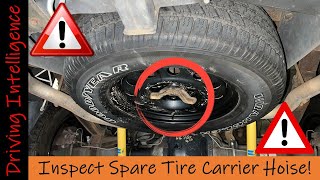
- Inspect the Cable Thoroughly: This is the most important safety check. Extend the cable completely and run your hand along its entire length (wear gloves). Feel for any broken strands, kinks, or stiff, rusty sections. If you find any fraying, reject the part. The cable should be smooth and flexible. 🎬 See how to properly inspect your hoist and cable for damage.
- Test the Winch Mechanism: Use a wrench or the appropriate tool to operate the winch in both directions. It should raise and lower the cable smoothly without grinding, clicking, or binding. If it feels gritty or excessively difficult to turn, the internal gears may be damaged.
- Check the Housing: Look for any cracks in the plastic or metal housing. Check for signs of extreme corrosion that could compromise its structural integrity. Light surface rust on the mounting bracket is common and usually not a concern.
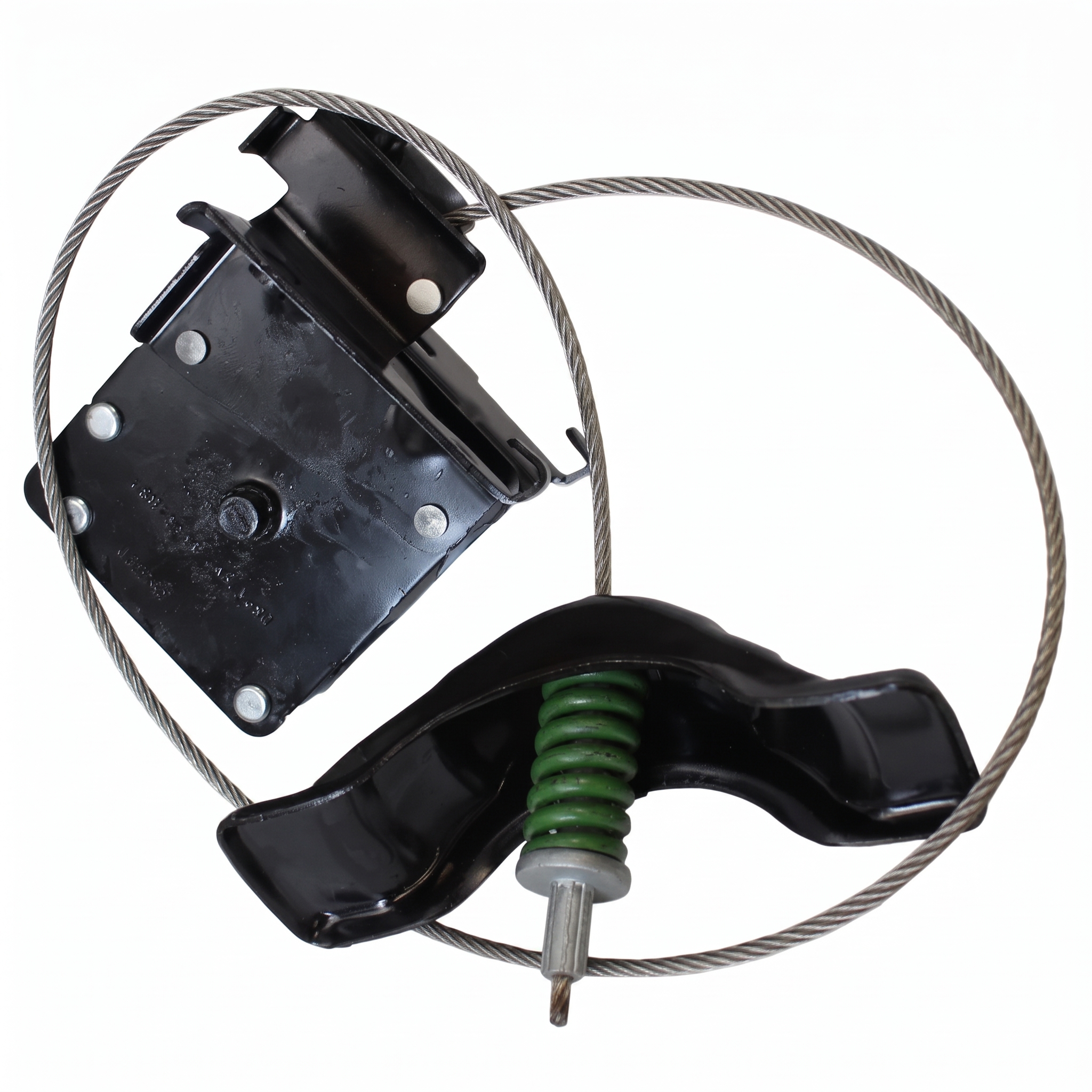
- Verify the Retaining Bracket: Ensure the T-shaped bracket at the end of the cable, which holds the wheel, is present and in good condition.
Cost of a Replacement Spare Tire Carrier
Pricing can vary by supplier, but this provides a general estimate for the part and labor.
| Part Type | Estimated Cost |
|---|---|
| New OEM | $115 - $175 |
| New Aftermarket | $75 - $120 |
| Used OEM | $50 - $90 |
| Shop Labor | $75 - $150 |
Replacement Guide (DIY Difficulty: 1/5)
Replacing the spare tire carrier is a simple job that can be done with basic hand tools in under an hour. The installation difficulty is very low.
Estimated Time: 30-45 minutes
Tools Needed: Ratchet and socket set (typically 13mm or 1/2")
Steps:
- Lower the Spare Tire: If possible, use the vehicle's tool kit to lower the spare tire completely to the ground. If the winch is seized, you may need to carefully cut the cable to remove the tire. Use extreme caution as the tire is heavy.
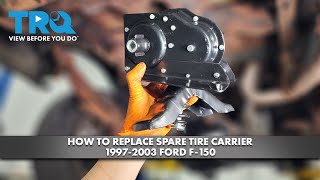
- Remove the Old Carrier: The carrier is held to a frame crossmember by two bolts. Use a 13mm or 1/2" socket to remove these bolts. The assembly will then come free. 🎬 Watch this step-by-step walkthrough of the carrier replacement process.
- Install the New Carrier: Position the new carrier onto the crossmember, aligning the mounting tabs and bolt holes.
- Tighten the Bolts: Install and tighten the two mounting bolts securely.
- Raise the Spare Tire: Route the cable through the center of the spare wheel and attach the retaining bracket. Use the crank tool to raise the tire until it is held firmly against the underside of the truck.
Compatibility Warning: This part fits the 2004 Ford F-150 with the "New Body Style" only. It will not fit the 2004 F-150 "Heritage" model, which uses the previous generation's parts. The part is compatible with all cab and bed configurations for the 2004 (New) - 2014 F-150, 2006-2014 Mark LT, and 2009-2014 Lobo.
Frequently Asked Questions
My spare tire is stuck and won't come down. What can I do?
If the crank won't turn, the winch is seized. You can try spraying a generous amount of penetrating oil (like PB Blaster) into the winch mechanism and letting it soak. Sometimes this can free it up enough to get the tire down. If that fails, the only remaining option is to safely secure the tire and cut the cable with bolt cutters or an angle grinder. Be very careful, as the tire will drop suddenly.
Can I just replace the cable on my existing carrier?
The winch assemblies are sold as sealed units and are not designed to be disassembled to replace only the cable. If the cable is frayed or broken, the entire carrier assembly must be replaced for safety.
Is a cheap aftermarket carrier as good as OEM?
While many aftermarket carriers work well, some may use lower-quality materials that are more prone to corrosion. An OEM part, whether new or a well-inspected used unit, is often built to a higher standard. Given the critical safety function of this part, opting for a quality component is recommended.
How do I prevent my new spare tire carrier from seizing up?
The best prevention is periodic use and lubrication. At every oil change, or at least twice a year, lower the spare tire to the ground and raise it back up. This keeps the internal gears moving freely. Applying a water-resistant grease to the cable and any visible moving parts can also significantly extend its life.
Helpful Videos
Technical Specifications
OEM Part Numbers: 9L3Z-1A131-A 6L3Z-1A131-AA 6L3Z1A131AA 4L3Z-1A131-AA 4L3Z-1A131-AB 4L3Z1A131AA 4L3Z1A131AB
Winch-style hoist operated by a steel cable.
We Have This Part in Stock





The information in this article is provided for general reference and educational purposes only. Vehicle specifications, procedures, and part compatibility can vary by production date, trim level, and region. Always consult your vehicle's factory service manual and verify part numbers before purchasing or performing repairs. Safety-critical components such as airbags, seat belts, and braking systems should be installed by a qualified professional.
- Ford F-150:
- Lincoln Mark LT:
- Ford Lobo:
- 🎬 Helpful Videos
- 🛍️ Shop This Part
- The Core Problem: Rust and Seizure
- Symptoms of a Failing Spare Tire Carrier
- Known Issues, TSBs, and Recalls
- Buying a Used Spare Tire Carrier: What to Check
- Cost of a Replacement Spare Tire Carrier
- Replacement Guide (DIY Difficulty: 1/5)
- Steps:
- Frequently Asked Questions
- 🎟️ Get 5% Off