

2002 Nissan Altima Front Seat: Solving Failures and Compatibility
A detailed guide to diagnosing common 2002 Altima front seat problems and choosing the correct used replacement.
- Compatibility is critical: Verify power vs. manual, side airbag presence, heated seats, and material before buying.
- Always match the electrical connectors under the seat exactly to your original part.
- An illuminated airbag (SRS) light after installation is a major safety issue indicating the system is disabled; do not ignore it.
- Common failures include broken frames causing rocking, failed power seat motors/switches, and inoperative heating elements.
Key Variants for the 2002 Nissan Altima Seat

Before purchasing a replacement front seat for a 2002 Nissan Altima, you must identify the exact configuration in your vehicle. Mismatched features will result in components not working or, more critically, can compromise the airbag safety system. The main variations to check are:
- Power vs. Manual Adjustments: Base models typically have manual seats adjusted with levers, while higher trims (like SE and SL) often feature power-adjustable seats controlled by switches.
- Side Airbags (SAB): Check for a tag or label on the outboard side of the seatback that says "SRS Airbag" or "Side Airbag." The presence of this feature is a critical safety distinction.
- Heated Seats: This feature was generally available on higher SL and SE trim levels. The switch for heated seats is usually located on the center console or dashboard.
- Material: Seats came in either cloth or leather upholstery.
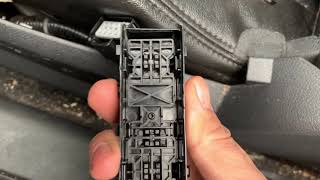
- Electrical Connectors: The number and shape of the electrical plugs under the seat vary significantly based on the options above. Always compare the connectors from the replacement seat to your original.
Warning: A Technical Service Bulletin (TSB #NTB00042D) from Nissan warns that modifications to the front seat assembly or materials can interfere with the proper operation of the side-impact airbags and the passenger occupant classification sensor. Using an incorrect seat can disable these safety features.
Common Symptoms of a Failing Front Seat

Failures in the 2002 Altima's front seat can be mechanical, electrical, or related to wear and tear.
- Power Seat Won't Move: If one or all power adjustments stop working, the cause could be a blown fuse, a bad switch in the control panel, a faulty motor, or damaged wiring under the seat. If only one direction fails, the switch or that specific motor is the likely culprit.
- Seat Rocks or Feels Loose: This often points to a broken seat frame or track. Owners have reported popping or clicking noises, which can be caused by cracks in the metal frame where it's welded. 🎬 Watch this video on common Nissan Altima driver seat problems
- Heated Seat Inoperative: If the seat heater doesn't warm up, it could be a bad heating element within the seat cushion, a faulty switch, a blown fuse, or a bad thermostat control under the seat. If the indicator light on the switch doesn't turn on, the problem is likely electrical.
- Airbag Warning Light is On: An illuminated SRS (Supplemental Restraint System) light on the dashboard is a serious issue. It can be triggered by a faulty sensor in the seat, a bad connection in the wiring harness under the seat, or installing an incompatible seat (e.g., one without an airbag in a car that requires one). This indicates the airbag system may not deploy in a crash.
- Visible Wear and Tear: This includes torn upholstery, collapsed or flattened foam cushions, and broken plastic trim panels.
Pro Tip: If a power seat is completely stuck and you can't move it to access the mounting bolts, try lightly tapping the seat slide motor with a hammer. This can sometimes temporarily restore function, allowing you to move the seat forward or backward.
🎬 See how to fix a stuck power seat that won't moveBuying a Used 2002 Altima Front Seat: What to Check

Purchasing a used OEM seat is often the most cost-effective solution, but careful inspection is crucial to ensure you get a good, compatible part.
- Verify All Features: Before you buy, confirm that the used seat has the exact same features as your original: power or manual, side airbag, heated or not, and cloth or leather. The most reliable way to do this is by visually inspecting your current seat and its electrical connectors.
- Inspect the Frame and Tracks: Place the seat on the ground and try to rock it. It should feel solid. Carefully inspect all weld points on the metal frame, especially where the seatback connects to the base and along the tracks, for any signs of cracks or rust.
- Check the Electrical Connectors: This is non-negotiable. The plugs on the used seat's wiring harness must be identical in shape, size, and pin configuration to your original seat's plugs. Bring a photo of your connectors for comparison.
- Test Mechanical and Electrical Functions: If possible, connect the seat to a 12V power source to test all power adjustment motors. Manually operate all levers and recline mechanisms to ensure they work smoothly.
- Examine Upholstery and Foam: Press down on the seat cushion and backrest. The foam should feel firm and not be permanently collapsed. Check the fabric or leather for rips, burns, or heavy stains.
- Check for the Side Airbag Tag: If your car has side airbags, ensure the replacement seat has the SRS tag. Never install a non-airbag seat in a vehicle equipped with side airbags from the factory.
Known Issues, Recalls, and Technical Service Bulletins (TSBs)

- TSB NTB05-105a: While this TSB officially covers 2004-2006 Altimas, the issue is relevant. It addresses power seats that won't move forward or backward or become crooked on the tracks due to a faulty slide motor or gear. The solution is to replace the motor kit, not the entire seat adjuster assembly.
- TSB NTB00042D: Warns service technicians that any changes to front seat materials can affect the operation of the side-impact airbag and occupant classification systems.
- Recall 03V-061: Nissan issued a recall for some 2002 Altima models concerning the supplemental air bags. It's crucial to check if a specific vehicle's VIN is affected by this or any other recall.
- Takata Airbag Recall: While not specific to the seat assembly itself, a massive recall for Takata airbag inflators affected millions of vehicles, including some Nissan models from this era. NHTSA has issued "Do Not Drive" warnings for some unrepaired vehicles. Verify the status of this recall for any vehicle.
Replacement Guide
Replacing the front seat is a straightforward job for a DIYer with basic tools.
- Difficulty: 2 out of 5
- Estimated Time: 1 hour
- Tools Needed: Ratchet with socket set, T50 Torx bit, trim removal tool.
Step-by-Step Overview:
- Disconnect the Battery: This is the most important step. Disconnect the negative battery terminal and wait at least 3-5 minutes before working on the seat. This deactivates the SRS (airbag) system and prevents accidental deployment.
- Remove Bolt Covers: Use a trim tool to pop off the plastic covers at the front and rear of the seat tracks.
- Unbolt the Seat: Move the seat forward to access the two rear mounting bolts (T50 Torx). Then, move the seat backward to access the two front mounting bolts.
- Disconnect Wiring: Carefully tilt the seat backward to access the electrical connectors underneath. Press the release tabs and disconnect all wiring harnesses.
- Remove the Seat: Lift the seat assembly out of the vehicle. Be careful not to scratch the door sills or interior trim.
- Installation: Installation is the reverse of removal. Place the new seat in the car, reconnect all electrical harnesses, and hand-tighten all four mounting bolts before torquing them to spec (35 ft-lbs or 45 N-m). Reconnect the battery.
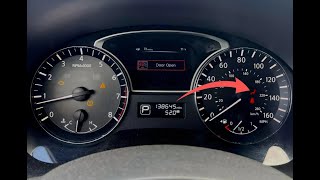
Warning: If the airbag light is on after installation, it means the SRS system has detected a fault. This could be due to an incompatible part or a bad connection. Sometimes, the light needs to be reset using a specific procedure or a diagnostic scan tool. 🎬 Watch how to quickly reset your Nissan Altima airbag light An illuminated airbag light means the system is disabled.
Cost Comparison
| Part Type | Estimated Cost |
|---|---|
| New OEM | $1000 - $2000+ (for cushion/frame components, full assemblies often discontinued) |
| New Aftermarket | $400 - $600 (Typically racing or universal seats requiring custom brackets, not direct-fit OEM style) |
| Used OEM | $100 - $350 (Varies widely based on condition and features) |
| Shop Labor | $90 - $140 |
Frequently Asked Questions (FAQ)
Can I install a power seat in my Altima if it originally had a manual seat?
This is not a simple plug-and-play swap. The vehicle's wiring harness for a manual seat will not have the necessary power and ground circuits to operate a power seat. It would require extensive custom wiring and potentially adding new fused circuits, which is not recommended for most DIYers.
What happens if I install a seat without a side airbag in a car that needs one?
The airbag (SRS) warning light on your dashboard will illuminate, and the entire airbag system, including the passenger and driver front airbags, may be disabled. This is a major safety risk, and the vehicle will not pass a safety inspection in many states.
Will a front seat from a 2003 or 2004 Altima fit my 2002 model?
While the 2002-2006 Altima (L31 generation) shares a similar frame architecture, the wiring and connectors can be different between years. It is critical to match the electrical plugs exactly. A seat from a newer model may physically bolt in but fail to function correctly due to harness differences.
My power seat switch is broken. Do I have to replace the whole seat?
No. The power seat switch module is available as a separate part. If only the switch is faulty, you can replace just that component without removing the entire seat, though you will need to remove the side trim panel of the seat cushion to access it.
Helpful Videos


Technical Specifications
OEM Part Numbers: 87000-3Z600 87050-3Z600 87300-3Z141 87300-3Z600 87300-8J112 87335-8J170 87335-8J171 87350-3Z600 87350-3Z610 87350-3Z962 87350-8J000 87350-8J001 87350-8J011 87350-8J012 87450-3Z020 87351-0Z910
Mounting Bolt Torque: 35 ft-lbs (45 N-m)

The information in this article is provided for general reference and educational purposes only. Vehicle specifications, procedures, and part compatibility can vary by production date, trim level, and region. Always consult your vehicle's factory service manual and verify part numbers before purchasing or performing repairs. Safety-critical components such as airbags, seat belts, and braking systems should be installed by a qualified professional.
- Nissan Altima: