

2006-2008 Forenza & Reno Seat Belt Assembly: SRS Light & Recall Guide
Diagnose a faulty seat belt retractor or pretensioner, understand the critical SRS recall, and learn how to safely source a replacement for your Suzuki Forenza or Reno.
- A critical safety recall (NHTSA #07V315000) was issued for 2006-2007 Forenza and Reno models for faulty front seat belt buckles that may not latch properly.
- Professional installation is mandatory. The assembly contains an explosive pretensioner, and the vehicle's SRS computer requires a specialized reset after replacement.
- An illuminated SRS light is the most common symptom of failure and indicates the vehicle's entire safety system is compromised and may not deploy in a crash.
- When buying a used assembly, you must verify it came from a non-wrecked vehicle and that the pretensioner has not been deployed.
Known Issues for 2006-2008 Suzuki Forenza & Reno
IMPORTANT Safety Recall: Front Seat Belt Buckle Failure (NHTSA #07V315000)
A major safety recall was issued for certain 2006-2007 Suzuki Forenza and Suzuki Reno models concerning improperly manufactured front seat belt buckles. According to the National Highway Traffic Safety Administration (NHTSA), plastic pieces inside the buckle can break off, which can prevent the belt from latching, or cause it to release unexpectedly even after it seems to be latched. This failure significantly increases the risk of injury in a crash. The recall involved replacing the driver and front passenger seat belt buckles free of charge. Before purchasing any parts, check with a Suzuki service provider or use the NHTSA recall lookup tool with your VIN to see if your vehicle was affected and if the recall work was completed.
Warning: An active SRS warning light on your dashboard means the safety systems, including airbags and seat belt pretensioners, are compromised and may not function in an accident. Do not drive a vehicle with an active SRS light.
Symptoms of a Failing Seat Belt Assembly
A failing seat belt assembly can present several warning signs. Pay close attention to these symptoms, as they indicate a serious safety issue.
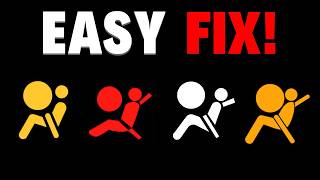
- SRS Warning Light: This is the most common and serious symptom. An illuminated SRS light on your dashboard indicates a fault somewhere in the safety system. A diagnostic scan is required to read the specific trouble codes, but a common cause is a faulty seat belt pretensioner or a bad electrical connection.
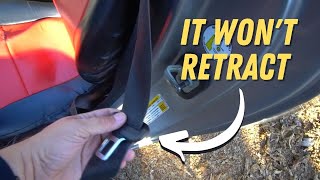
- Slow or Failed Retraction: The seat belt webbing retracts slowly, gets stuck, or does not retract at all. This can be caused by dirt and grime buildup over time or a worn-out internal spring mechanism in the retractor.
- Failure to Latch or Unlatch: The metal tongue does not click securely into the buckle, or the release button is stuck. This was the primary issue in the 2007 recall.
- Visible Damage to Webbing: The fabric belt is frayed, cut, torn, or has burn marks. This compromises its strength and ability to restrain an occupant in a crash.
- Deployed Pretensioner: After an accident, the pretensioner will be visibly compressed or "squished" in appearance. The seat belt will be locked and will not extend. A deployed pretensioner must be replaced; it cannot be reused.
Diagnosing the SRS Light
If the SRS light is on, the first step is to check for loose connections. A common point of failure on many vehicles, including the Forenza and Reno, is the yellow electrical connector under the front seats. Items stored under the seat or movement of the seat can cause this connector to become loose, triggering a fault code. Ensure the connector is securely clipped together. If the connection is secure, the system must be scanned with an OBD tool capable of reading SRS codes to pinpoint the exact fault.
Pro Tip: Before assuming the entire assembly is bad, carefully inspect the yellow connector under the driver and passenger seats. Disconnecting and reconnecting it (with the vehicle's battery disconnected) can sometimes resolve an intermittent SRS light caused by a poor connection.
Buying a Used Seat Belt Assembly
Purchasing a used seat belt assembly can be a cost-effective solution, but it requires extreme caution. Because this is a critical safety component, you must verify its condition and history.
- ABSOLUTELY NO DEPLOYED PARTS: Never purchase a seat belt assembly that has been deployed in an accident. Inspect the pretensioner—it should not look compressed, burnt, or deformed. A deployed belt will be locked solid.
- Verify Vehicle History: Only buy from a reputable automotive recycler that can guarantee the part came from a vehicle that was not in a collision. Ask for the VIN of the donor vehicle if possible to check its history.
- Inspect the Webbing: Carefully examine the entire length of the belt fabric for any cuts, fraying, chemical stains, or sun damage (discoloration). Pull the belt out fully and let it retract; it should move smoothly and retract completely.
- Check the Buckle: Test the buckle mechanism. The tongue should latch with a solid, audible click and release smoothly when the button is pressed.
- Match Part Numbers: Ensure the part number (8490185Z10 for Suzuki) and all electrical connectors match your original part exactly. Different trim levels or production dates can have minor variations.
Professional Installation: A Requirement, Not a Suggestion
Warning: Seat belt assemblies contain an explosive pyrotechnic device (the pretensioner). Improper handling can cause it to deploy, leading to serious injury. Installation must be performed by a qualified professional technician.
Replacing a seat belt assembly is not a DIY job for the average mechanic. Here's why:
- Explosive Hazard: The pretensioner is an explosive charge. Technicians follow specific procedures, including disconnecting the vehicle's battery for at least 90 seconds to several minutes to allow the system's capacitors to discharge before working on any SRS component.
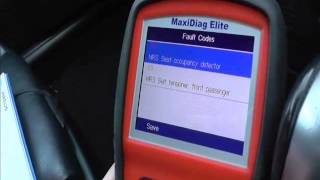
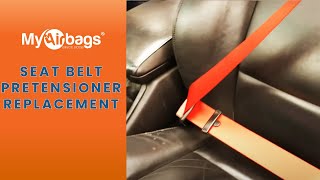
- SRS Module Reset: After a pretensioner is replaced, the SRS control module must be reset. A standard OBD-II code reader cannot clear "hard codes" stored in the SRS module after a fault is detected. This requires specialized diagnostic equipment to tell the system that a new, functional component has been installed. Failure to reset the module will result in the SRS light staying on and the system remaining inoperative. 🎬 Watch: How to resolve SRS light issues after installing a pretensioner
- Legal Liability: Installing safety restraint systems carries significant legal liability. A professional shop ensures the part is installed correctly, the system is reset properly, and everything functions as designed, protecting you both physically and legally.
Cost Comparison for Seat Belt Assembly Replacement
Prices can vary based on location and which specific belt is being replaced (driver, passenger, front, rear). Labor costs typically involve removing interior trim panels to access the mounting points and retractor.
| Part Type | Estimated Cost (Part Only) |
|---|---|
| New OEM (Dealer) | $250 - $400+ |
| New Aftermarket | $85 - $150 (Often do not include pretensioners) |
| Used OEM | $50 - $125 |
| Shop Labor | $100 - $200 |
Frequently Asked Questions (FAQ)
Can I just clean a seat belt that retracts slowly?
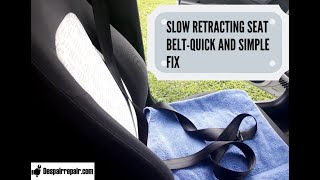
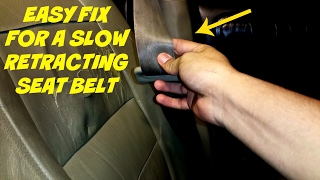
Sometimes, yes. If the issue is not a mechanical failure of the retractor spring, a slow belt can often be fixed by pulling the webbing out completely and cleaning it with a mild soap and water solution to remove years of accumulated grime. 🎬 See this guide on fixing a slow or tangled seat belt However, if cleaning does not solve the problem, the retractor mechanism is likely worn and the assembly should be replaced.
Why is my SRS light still on after replacing the seat belt?
The SRS control module stores fault codes, often called "hard codes," that do not clear automatically. Even after the faulty part is replaced, the module must be reset using a specialized diagnostic scan tool to clear the code and re-enable the system. Disconnecting the battery will not clear these specific codes.
Is it legal to install a used seat belt?
Laws can vary, but it is universally illegal and unsafe to install a seat belt that has been deployed in an accident. While installing a non-deployed used OEM seat belt is not explicitly illegal for an individual, many repair shops refuse to do so due to liability concerns. Vehicle manufacturers strongly recommend using only new parts for SRS repairs. If you use a recycled part, it is critical that it comes from a vehicle with no crash history.
What's the difference between a seat belt retractor and a pretensioner?
The retractor is the mechanical part that winds up the belt webbing and locks it during a sudden stop. The pretensioner is a separate, pyrotechnic (explosive) device that is triggered by the SRS computer during a crash to forcefully tighten the belt against the occupant. Both are typically housed in the same assembly.
Helpful Videos
Technical Specifications
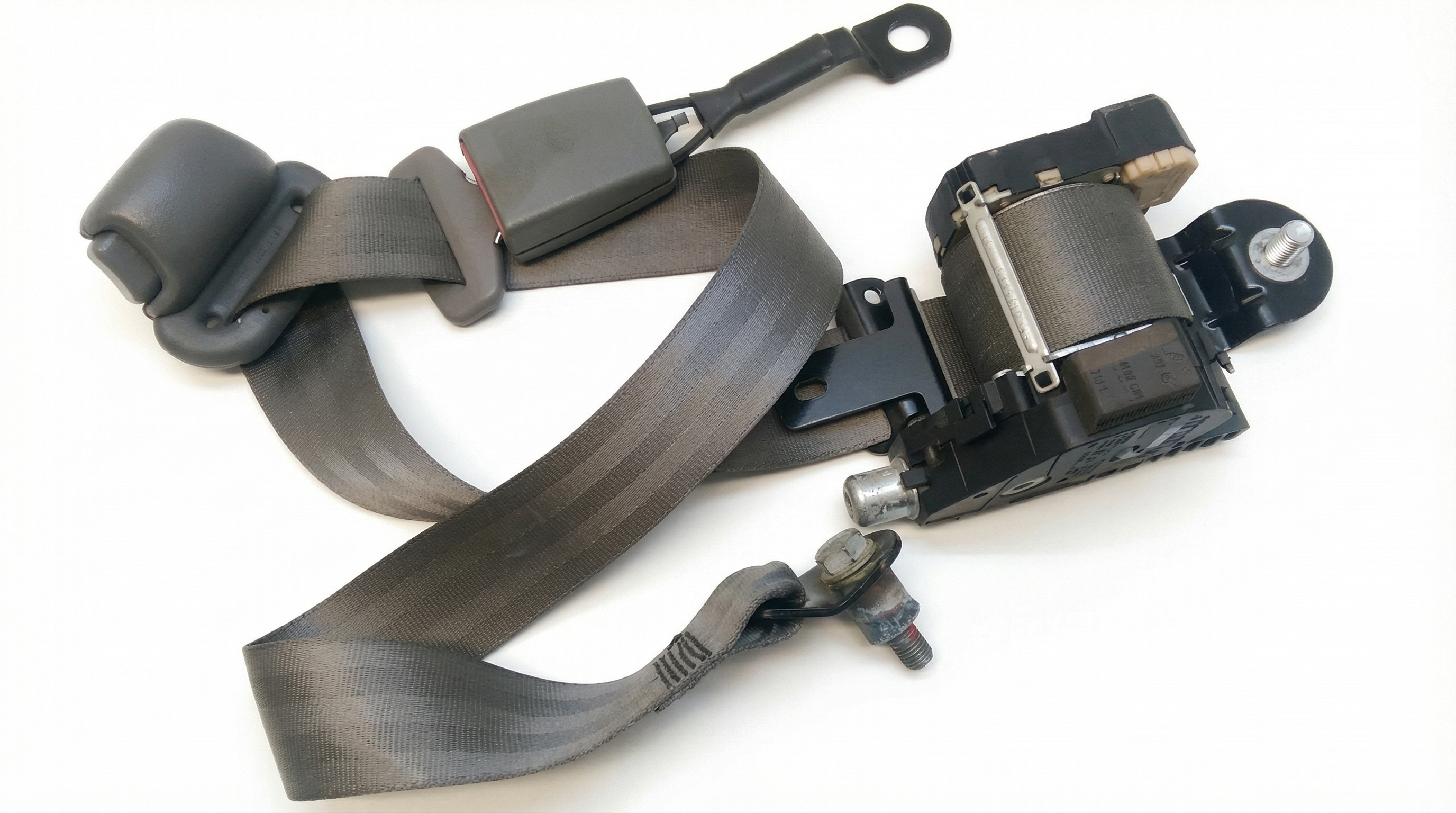
OEM Part Numbers: 8490185Z10
Contains a pyrotechnic seat belt pretensioner integrated with the SRS system.
We Have This Part in Stock

The information in this article is provided for general reference and educational purposes only. Vehicle specifications, procedures, and part compatibility can vary by production date, trim level, and region. Always consult your vehicle's factory service manual and verify part numbers before purchasing or performing repairs. Safety-critical components such as airbags, seat belts, and braking systems should be installed by a qualified professional.
- Suzuki Forenza:
- Suzuki Reno:
- 🎬 Helpful Videos
- 🛍️ Shop This Part
- Known Issues for 2006-2008 Suzuki Forenza & Reno
- IMPORTANT Safety Recall: Front Seat Belt Buckle Failure (NHTSA #07V315000)
- Symptoms of a Failing Seat Belt Assembly
- Diagnosing the SRS Light
- Buying a Used Seat Belt Assembly
- Professional Installation: A Requirement, Not a Suggestion
- Cost Comparison for Seat Belt Assembly Replacement
- Frequently Asked Questions (FAQ)
- 🎟️ Get 5% Off