

2000-2006 Audi TT Seat Guide: Heater Failures, Airbag Faults, and Recalls
Your definitive guide to diagnosing common seat problems, choosing the right used replacement, and understanding critical differences between Coupe and Roadster models.
- Two major safety recalls exist: one for the seat heater potentially overheating (fire risk) and another for the backrest adjuster failing.
- Coupe and Roadster (Convertible) seats are NOT interchangeable; verify the donor vehicle's body style before buying a used part.
- An airbag warning light is a critical safety issue and is commonly caused by a faulty electrical connection under the seat.
- Always disconnect the battery for at least 30 minutes before unplugging any seat wiring to prevent accidental airbag deployment and fault codes.
Known Issues, Recalls, and Technical Service Bulletins (TSBs)
The first-generation Audi TT was subject to several important recalls and has known issues related to its front seats. Before purchasing a used seat or diagnosing a problem, check these items first.
Official NHTSA Recalls: Two significant recalls affect the front seats. Verify with an Audi dealer if these have been performed on your vehicle or the donor vehicle for a used part.
- Recall 04V048000 (Seat Heater): The electric seat heater elements could overheat. This poses a risk of fire or injury. The official remedy was for dealers to replace the front seat heater elements.
- Recall 00V084000 (Backrest Adjustment): The front seat backrest adjuster mechanism on some early models could fail, potentially causing the seatback to collapse. The remedy involved dealers replacing the faulty components.
- Recall 20V158000 (Airbag Inflator): Affecting 2000-2001 models, the driver's side airbag inflator (NADI type) could absorb moisture and deploy improperly in a crash. This is a critical safety repair.
Common Real-World Problems
Beyond official recalls, owners frequently report a few common issues:
- Airbag Warning Light: This is often caused by a poor connection in the yellow electrical plug under the seat. Over time, movement of the seat can strain the wiring, leading to an intermittent or constant fault. Cleaning the connectors or repairing the wiring often solves this without needing to replace the entire seat or airbag.
- Seat Heater Failure: The heating element grid inside the seat cushion is prone to breaking from repeated use and passenger weight. This results in one or more heat settings becoming inoperative. The issue is usually the mat itself, not the dashboard switch.
- Worn Outer Bolster: The leather on the driver's side outer bolster, near the door, commonly cracks and wears out from sliding in and out of the vehicle.
- Sticking Seat Rails: Over years, the seat slide mechanism can get clogged with dirt, hair, and debris, making it very difficult to adjust the seat forward and backward.
Symptoms of a Failing Audi TT Seat
1. Seat Heater Does Not Work
The most common failure is a complete loss of heat on one or both seats. Often, the indicator light on the dash switch will still illuminate, but no heat is produced. This is almost always due to a broken wire within the heating element mat inside the seat cushion. Less commonly, the switch itself can fail.
2. Airbag Warning Light is On
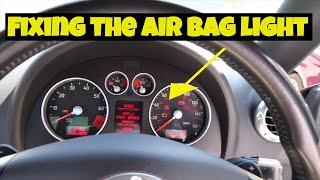
An illuminated airbag light on your instrument cluster is a serious safety concern, as it indicates the airbag system is disabled. For the TT, a common cause is a fault in the wiring connector under the seat. The system will store a fault code, such as 'resistance too high', which points to a connection issue. Any time the seat is unplugged with the battery connected, it will trigger this light, which must be cleared with a diagnostic tool (like VCDS/VAG-COM) after the repair.
🎬 Watch: How to fix the airbag light connection3. Physical Damage and Wear
Visible signs of failure include cracked or torn leather, especially on the driver's side bolster. Plastic trim pieces around the base and adjustment levers can become brittle and break. A rocking or clicking feeling from the seat during acceleration or braking can indicate loose mounting bolts.
4. Mechanical Adjustment Failure
The levers for sliding the seat forward/backward or adjusting the height can fail. The height adjustment is controlled by a small gas strut that can lose its charge, preventing the seat from raising or lowering. The slide mechanism can also become jammed with debris, requiring removal and cleaning of the rails.
Buying a Used 2000-2006 Audi TT Seat
Buying a used OEM seat is often the most cost-effective solution, as new replacements are extremely expensive or no longer available. However, careful inspection is critical.
Coupe vs. Roadster: A Critical Difference
Seats from a Coupe and a Roadster (Convertible) are NOT interchangeable. While they look similar, the mounting points, seatbelt configuration, and overall dimensions are different. Roadster models have less room behind the seats, which affects how far the seat can recline. Always confirm the body style of the donor vehicle.
The Pre-Purchase Inspection Checklist
- Verify Body Style: Confirm the seat came from a Coupe or a Roadster to match your car.
- Inspect the Leather: Check all surfaces for rips, tears, and deep cracks. Pay special attention to the driver's outer bolster, as this is the highest wear area.
- Check the Wiring: Look at the wiring harness and connectors under the seat. Ensure the yellow airbag connector is intact and not damaged. Avoid seats with cut or spliced wires.
- Test Mechanical Functions: If possible, operate all levers. Ensure the seat slides, reclines, and adjusts for height smoothly.
- Ask About the Airbag Light: Ask the seller if the airbag light was on in the donor car. While the light can be triggered by simple disconnection, it could also indicate a more serious fault within the seat's airbag.
- Test the Heater (If Possible): A multimeter can be used to check for continuity on the heater element's electrical pins. An open circuit (infinite resistance) means the heating element is broken.
Replacement Overview
Replacing the front seat is a straightforward DIY job for someone with basic tools. The main challenges are the weight of the seat and the need for caution when handling the airbag wiring.
Warning: The seat contains an airbag. To prevent accidental deployment and injury, you MUST disconnect the vehicle's negative battery terminal and wait at least 30 minutes before unplugging any connectors under the seat.
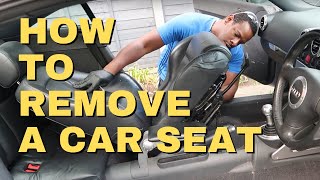
🎬 See this step-by-step seat removal walkthrough- Disconnect the Battery: Use a 10mm wrench to disconnect the negative battery terminal.
- Access Mounting Bolts: Slide the seat fully forward to access the two rear mounting bolts. Then, slide it fully backward to access the two front bolts under plastic covers.
- Remove Bolts: The bolts are typically an 8mm hex (Allen) or a Triple Square type. Remove all four bolts holding the seat rails to the floor.
- Disconnect Wiring: Carefully tilt the seat backward to access the electrical connectors. There is typically a yellow plug for the airbag and a green one for the heater/power. The yellow plug has a special locking tab that must be released.
- Remove the Seat: Carefully lift the seat out of the car, being mindful of the interior trim and door panels.
- Installation: Installation is the reverse of removal. Torque the seat bolts to 23 Nm (17 ft-lbs). After reconnecting the battery, you may need a diagnostic tool to clear any stored airbag fault codes.
Pro Tip: While the seat is out, it's the perfect time to thoroughly vacuum the carpet and clean the seat rails. Apply a small amount of white lithium grease to the rails to ensure smooth operation.
Cost Comparison
| Part Type | Estimated Cost |
|---|---|
| New OEM | $2,000+ (if available) |
| New Aftermarket (Covers Only) | $550 - $700 |
| Used OEM | $250 - $700 |
| Remanufactured | Not Typically Available |
| Shop Labor (Replacement) | $150 - $250 |
Frequently Asked Questions (FAQ)
Can I install a Roadster seat in my Coupe?
No, the seats are not interchangeable between Coupe and Roadster models due to differences in mounting, seatbelt guides, and overall fit.
My airbag light is on after replacing the seat. How do I turn it off?
If the airbag system was disconnected while the battery was still connected, it will store a fault code and keep the light on. After ensuring all connections are secure, you must use an Audi-compatible diagnostic tool (like VCDS) to clear the fault code from the SRS (airbag) control module.
Is it better to repair my torn leather or buy a used seat?
For minor wear, a professional upholstery shop can often repair or redye the leather. For large rips or disintegrating foam, replacing the entire seat with a good-condition used unit is usually more cost-effective. Aftermarket replacement leather covers are also available but require professional installation.
What tools do I need to replace the seat?
You will need a socket set with a 10mm socket (for the battery), an 8mm hex (Allen) socket or key, a ratchet, and possibly a small flathead screwdriver to help release electrical connector clips. A torque wrench is required for proper installation.
Helpful Videos

Technical Specifications
OEM Part Numbers: 8N0881019J 8N0881045 8N0881405L
Torque Spec for Seat Rail Bolts: 23 Nm (17 ft-lbs)
We Have This Part in Stock


The information in this article is provided for general reference and educational purposes only. Vehicle specifications, procedures, and part compatibility can vary by production date, trim level, and region. Always consult your vehicle's factory service manual and verify part numbers before purchasing or performing repairs. Safety-critical components such as airbags, seat belts, and braking systems should be installed by a qualified professional.
- Audi TT:
- 🎬 Helpful Videos
- 🛍️ Shop This Part
- Known Issues, Recalls, and Technical Service Bulletins (TSBs)
- Common Real-World Problems
- Symptoms of a Failing Audi TT Seat
- 1. Seat Heater Does Not Work
- 2. Airbag Warning Light is On
- 3. Physical Damage and Wear
- 4. Mechanical Adjustment Failure
- Buying a Used 2000-2006 Audi TT Seat
- Coupe vs. Roadster: A Critical Difference
- The Pre-Purchase Inspection Checklist
- Replacement Overview
- Cost Comparison
- Frequently Asked Questions (FAQ)
- 🎟️ Get 5% Off