

2007-2009 Hyundai Santa Fe Radiator: Decoding Tow Package vs. Non-Tow Models
This guide clarifies the critical differences between Santa Fe radiators to ensure you buy the correct part and avoid cooling system and transmission damage.
- The single most important factor when buying a radiator is verifying if your Santa Fe has the factory tow package.
- Use OEM part number 25310-0W201 for models WITH the tow package, and 25310-0W100 for models WITHOUT.
- A major internal failure can mix coolant with transmission fluid, causing a 'strawberry milkshake' that will destroy the transmission.
- When replacing the radiator, it is best practice to also replace the thermostat and radiator hoses at the same time.
Radiator Variants for 2007-2009 Hyundai Santa Fe

Choosing the correct radiator for a 2007-2009 Hyundai Santa Fe is not as simple as just matching the year. The primary difference depends on whether your vehicle is equipped with the factory towing package. Installing the wrong radiator can lead to inadequate cooling, improper fitment, or transmission damage. All models listed below are for vehicles with an automatic transmission, which covers the vast majority of Santa Fes from this generation.
| Vehicle Configuration | Required Radiator Type | Common OEM Part Numbers |
|---|---|---|
| With Factory Tow Package (Applies to both 2.7L & 3.3L V6) |
Heavy-Duty Radiator, likely with a higher capacity transmission cooler. | 25310-0W201 (replaces 25310-0W200) |
| Without Factory Tow Package (Applies to both 2.7L & 3.3L V6) |
Standard Duty Radiator. | 25310-0W100 |
Warning: The most critical step before purchasing is to verify if your Santa Fe has the factory tow package. Using a non-tow package radiator on a vehicle that tows can overtax the cooling system and transmission cooler, leading to premature failure.
Symptoms of a Failing Radiator

A failing radiator can cause catastrophic engine damage if ignored. Watch for these clear warning signs:
- Engine Overheating: The most obvious sign is the temperature gauge on your dashboard climbing into the red zone. This indicates the cooling system can no longer dissipate enough heat.
- Visible Coolant Leaks: You may find puddles of brightly colored fluid (typically green, pink, or yellow) under the front of your vehicle. Leaks often occur where the plastic end tanks are crimped to the aluminum core, or from cracks in the plastic itself.
- Sweet Smell: If you smell something like maple syrup or burnt sugar coming from your engine bay, it's likely coolant leaking onto hot engine components and burning off.
- Low Coolant Level: Frequently needing to top off your coolant reservoir is a sure sign of a leak somewhere in the system.
- Contaminated Coolant: Healthy coolant is a bright, translucent color. If the coolant in your reservoir looks rusty, brown, or sludgy, it indicates internal corrosion in the radiator or engine.
- Transmission Problems: In a worst-case scenario, the internal transmission fluid cooler can crack, allowing coolant and transmission fluid to mix. This creates a pink, milky substance often called the "strawberry milkshake." This will quickly destroy your transmission, leading to shifting problems and a very expensive repair.
Known Issues, Recalls, and Service Bulletins
As of mid-2024, there are no specific NHTSA recalls or widespread Technical Service Bulletins (TSBs) for radiator failure on the 2007-2009 Hyundai Santa Fe. However, these vehicles were subject to other recalls, including for a faulty stop lamp switch and an occupant classification system sensor for the airbags. The lack of a specific radiator recall means that any failure is considered a normal wear-and-tear item.
Buying a Used Radiator: What to Look For

A used OEM radiator can be a smart, cost-effective choice compared to a new aftermarket part, which may suffer from poor fitment and lower-quality materials. Here’s how to inspect a used unit:
- Verify the Part Number: This is the most important step. Match the part number from your original radiator or confirm the donor vehicle's options (with or without tow package) to ensure compatibility. The main OEM numbers are 25310-0W201 (Tow) and 25310-0W100 (Non-Tow).
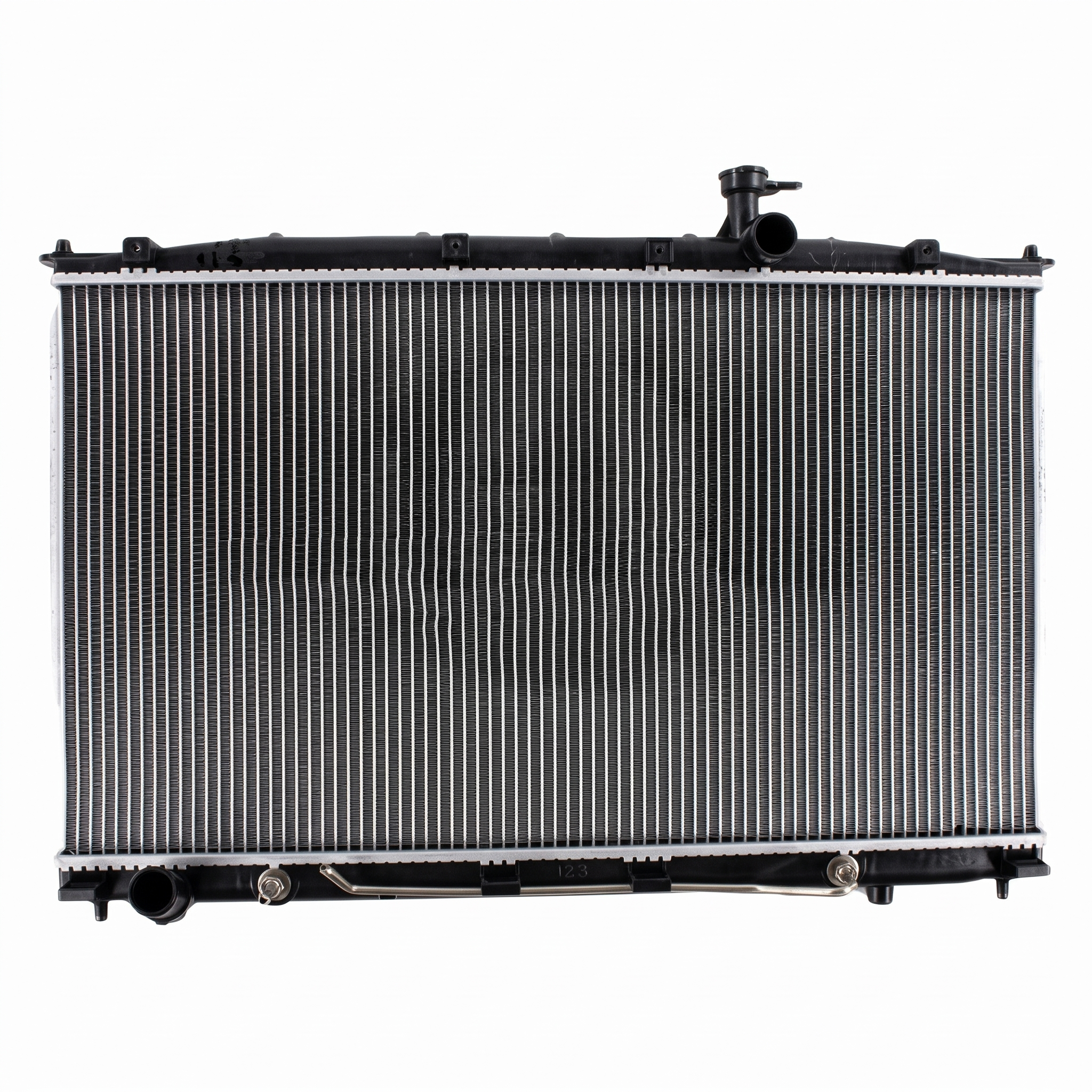
- Inspect the Plastic End Tanks: Carefully check the black plastic tanks on the top/bottom or sides of the radiator. Look for any hairline cracks, especially around the hose connections and mounting points. These are the most common failure points.
- Check for Old Leaks: Look for white, chalky, or colored crusty residue on the radiator's surface. This is evidence of a past leak that may have been temporarily sealed.
- Examine the Cooling Fins: A few bent fins from handling are normal and won't significantly affect performance. However, avoid radiators with large areas of crushed or damaged fins, as this will restrict airflow and reduce cooling efficiency.
- Check the Fittings: Ensure the threads on the transmission cooler line fittings are clean and not cross-threaded or damaged.
- Consider Mileage: Radiators are wear items. A part from a low-mileage donor vehicle is always preferable. While there's no exact failure mileage, problems are more common on vehicles over 100,000 miles.
Cost Comparison for a 2007-2009 Santa Fe Radiator
Prices can vary based on supplier and location. The following table provides an estimated cost breakdown:
| Part Type | Estimated Cost |
|---|---|
| New OEM | $370 - $500 |
| New Aftermarket | $180 - $450 |
| Used OEM | $75 - $150 |
| Shop Labor | $270 - $510 |
Replacement Overview

Replacing the radiator is a manageable job for a DIY mechanic with moderate experience. The process generally takes 2-4 hours.
Pro Tip: While you are replacing the radiator, it is highly recommended to also replace the upper and lower radiator hoses, the thermostat, and the radiator cap. These are inexpensive parts that wear out over time and are easy to access during the radiator job.
Basic Steps:
- Ensure the engine is completely cool and disconnect the battery.
- Place a large drain pan under the radiator and open the drain plug (petcock) on the bottom to drain the coolant.
- Disconnect the upper and lower radiator hoses, as well as the small overflow hose to the reservoir.
- Disconnect the transmission cooler lines from the radiator. A 19mm wrench is typically needed. Be prepared for a small amount of transmission fluid to leak out.
- Unplug the electrical connectors for the cooling fans.
- Remove the bolts holding the fan shroud assembly to the radiator and lift the shroud out.
- Unbolt the radiator mounting brackets and carefully lift the old radiator out of the vehicle.
- Install the new radiator, ensuring the bottom pegs sit correctly in their rubber mounts. Reassemble everything in the reverse order.
Special Procedure: Bleeding the Cooling System
After installation, you must remove all air from the cooling system to prevent overheating.
- Fill the radiator and reservoir with the correct coolant.
- Leave the radiator cap off and start the engine. Turn the heater on to the highest temperature and fan setting.
- Let the engine idle. As it warms up and the thermostat opens, you will see the coolant level drop. Continue to add coolant to the radiator to keep it full.
- You will see air bubbles coming up through the radiator filler neck. Keep adding coolant until the bubbles stop and the fluid level is stable.
- Squeeze the upper radiator hose periodically to help push any trapped air out.
- Once the engine is at operating temperature and no more bubbles are appearing, top off the radiator and install the cap. Top off the overflow reservoir to the 'FULL' line.
Frequently Asked Questions
What type of coolant should I use in my 2007-2009 Santa Fe?
You should use a phosphate-based Asian vehicle coolant (P-HOAT), which is typically green or blue. Using the correct coolant type is important for preventing corrosion and deposits within the cooling system.
Can I use a radiator for a tow package model on my non-tow package Santa Fe?
Yes, this is generally acceptable. The tow package radiator is a higher-capacity unit and will provide more than adequate cooling. However, you cannot go the other way; installing a non-tow radiator on a tow-package vehicle is not recommended as it may provide insufficient cooling under load.
Is it normal for a used radiator to have some bent fins?
Yes, a small number of bent cooling fins is cosmetic and will not noticeably impact the radiator's performance. You can often carefully straighten them with a small screwdriver. Only reject a radiator if a large, significant area of the fins is crushed flat.
My engine overheated. Is the radiator definitely the problem?
Not necessarily. While a bad radiator is a common cause, overheating can also be caused by a failed thermostat, a bad water pump, a faulty cooling fan, a clogged hose, or simply low coolant from a leak elsewhere. A proper diagnosis is needed to confirm the cause.
Technical Specifications
OEM Part Numbers: 25310-0W000 25310-0W100 25310-0W200 25310-0W201 25310-2B000 25310-2B100 25310-2B701
Core Material: Aluminum; Tank Material: Plastic. All versions for automatic transmission models include an internal transmission fluid cooler.
We Have This Part in Stock


The information in this article is provided for general reference and educational purposes only. Vehicle specifications, procedures, and part compatibility can vary by production date, trim level, and region. Always consult your vehicle's factory service manual and verify part numbers before purchasing or performing repairs. Safety-critical components such as airbags, seat belts, and braking systems should be installed by a qualified professional.
- Hyundai Santa Fe:
- 🛍️ Shop This Part
- Radiator Variants for 2007-2009 Hyundai Santa Fe
- Symptoms of a Failing Radiator
- Known Issues, Recalls, and Service Bulletins
- Buying a Used Radiator: What to Look For
- Cost Comparison for a 2007-2009 Santa Fe Radiator
- Replacement Overview
- Basic Steps:
- Special Procedure: Bleeding the Cooling System
- Frequently Asked Questions
- 🎟️ Get 5% Off