

2015-2025 Toyota Camry Radiator Support: A Guide to Three Different Generations
The radiator support for the 2015-2025 Toyota Camry is not a one-size-fits-all part; this guide clarifies the critical differences between the three distinct generations to ensure you get the right component.
- The 2015-2025 Camry spans three generations (15-17, 18-24, 25) with non-interchangeable radiator supports.
- Damage is almost always caused by a front-end collision and can lead to panel misalignment and overheating.
- Replacement is a complex, professional-level job requiring complete disassembly of the car's front end.
- A used OEM support is often a better choice than a new aftermarket one due to superior fitment and structural integrity.
Critical: Three Generations, Three Different Parts

The most important thing to understand when purchasing a radiator support for a 2015-2025 Toyota Camry is that this period covers three distinct vehicle generations. The parts are not interchangeable. Using the wrong support will result in misaligned components, an insecure radiator, and improper bumper and headlight fitment.
2015-2017 Toyota Camry (XV50 Facelift)
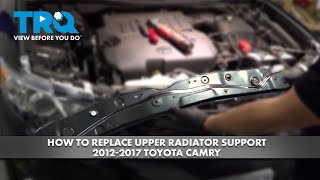
This generation uses a specific radiator support design. When purchasing, it's crucial to verify the part number corresponds to these model years. Key OEM part numbers for this generation include 53210-06150 and 53208-06150. 🎬 Watch this step-by-step upper radiator support replacement guide. Aftermarket options are also available for this range.
2018-2024 Toyota Camry (XV70)
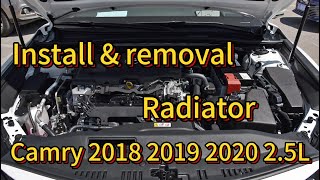
The 2018 model year marked a complete redesign for the Camry, and with it came a new radiator support structure. These parts fit all models within this year range, including gasoline and hybrid versions. Common part numbers for this generation include 53205-06901 and 53202-06230. 🎬 See how to remove the radiator on 2018-2020 models. One parts seller lists part number 53205-06901 as fitting up to 2025 models, but this appears to be an error, as the 2025 model is a new generation.
2025 Toyota Camry (XV80)
The 2025 Camry is an all-new generation, available only as a hybrid. It requires a unique radiator support that is not backward-compatible with any earlier models. Early part numbers seen for the 2025 model include 52142-06210 and 53202-06280. It is essential to source a part specifically listed for the 2025 model year.
Warning: Always verify compatibility by matching the OEM part number from your vehicle or by confirming the exact year and model with the seller. Do not rely on visual similarity, as the mounting points and dimensions differ between generations.
Symptoms of a Damaged Radiator Support

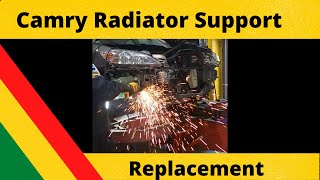
Radiator support damage almost always results from a front-end collision. 🎬 Watch a professional technician perform a front-end collision repair. Even a minor impact can cause cracks or bends. Here are the common signs of failure:
- Poor Hood or Fender Alignment: If the hood is difficult to open or close, or if the gaps between the fenders, hood, and bumper are uneven, the support may be bent.
- Misaligned Headlights: Headlights that point too high, too low, or to the side can be a sign that their mounting points on the support are broken or warped.
- Engine Overheating: A bent support can push the radiator into the cooling fan or block airflow, leading to poor cooling performance and potential overheating.
- Visible Cracks or Bends: A visual inspection after removing the upper plastic covers may reveal obvious cracks in the plastic or bends in the metal components.
- Rattling or Clunking Noises: Unusual noises from the front of the car, especially over bumps, can indicate that the radiator or other components are loose due to a broken support.
Buying a Used Radiator Support: What to Check

A recycled OEM radiator support is an excellent alternative to a new part, offering the same fit and quality at a lower cost. However, a thorough inspection is crucial before buying.
- Verify the Generation: First and foremost, confirm the part is from the correct year range for your Camry (2015-2017, 2018-2024, or 2025).
- Inspect for Hidden Cracks: Look closely at all mounting points, corners, and headlight buckets. On plastic supports, look for fine white stress lines that indicate the material has been bent.
- Check for Warping: Lay the support on a flat surface to check for any twisting or warping. A bent support will make proper panel alignment impossible.
- Ensure All Tabs are Intact: Many small components, like wiring harnesses and hoses, clip onto the support. Ensure none of these small plastic tabs are broken off.
- Look for Repair Signs: Avoid supports with signs of previous repairs, such as plastic welding marks or evidence of body filler. These repairs may compromise the part's structural integrity.
- Why Used OEM is Better than New Aftermarket: For a structural part like this, OEM fitment is critical. New aftermarket supports are often cheaper but can have misaligned holes or use lower-quality materials, making installation difficult and potentially compromising safety. A used OEM part guarantees the precise fitment engineered by Toyota.
Replacement Overview and Difficulty
Replacing a radiator support is a complex and labor-intensive job that requires significant disassembly of the vehicle's front end.
- Difficulty Rating: 5 out of 5 (Professional level)
- DIY Feasibility: Not recommended for beginners. This job is best left to experienced technicians or body shops.
- General Steps: The process involves removing the front bumper cover, headlights, and hood latch. The cooling system must be drained, and the radiator, condenser, and cooling fans must be removed. The old support is then unbolted from the vehicle's frame rails. Reassembly requires careful alignment to ensure all body panels fit correctly.
Pro Tip: Before unbolting the old support, take measurements of panel gaps and diagonal measurements across the engine bay. This will help ensure the new support is installed in the correct position.
Cost Comparison
Prices can vary based on location and supplier, but this provides a general estimate of what to expect.
| Part Type | Estimated Cost |
|---|---|
| New OEM | $300 - $500 |
| New Aftermarket | $40 - $150 |
| Used OEM | $150 - $350 |
| Shop Labor | $500 - $1000+ |
Frequently Asked Questions (FAQ)
Can I drive with a broken radiator support?
It is not recommended. A damaged radiator support compromises the structural integrity of the front of your vehicle. It can allow the radiator and cooling fan to move, potentially causing further damage and engine overheating. It also affects headlight aim and the vehicle's ability to protect you in a subsequent collision.
Does a damaged radiator support mean the car has frame damage?
Not necessarily, but it's a strong possibility. The radiator support bolts directly to the front frame rails (or unibody structure). An impact severe enough to damage the support could have also bent the frame rails it attaches to. A professional frame inspection is highly recommended after replacing a damaged radiator support.
Why is the aftermarket radiator support so much cheaper?
Aftermarket parts are often cheaper due to the use of lower-cost materials and less stringent manufacturing tolerances. While this saves money upfront, it can lead to significant fitment issues during installation, requiring extra labor to modify the part or align bolt holes. For a structural component, the guaranteed fit of an OEM part is usually worth the extra cost.
Do I need to have my A/C system recharged after replacing the radiator support?
Yes. The A/C condenser is mounted to the radiator support. To replace the support, the condenser must be removed, which requires evacuating the refrigerant from the A/C system. After the new support is installed, the system must be recharged by a qualified technician.
Helpful Videos
Technical Specifications
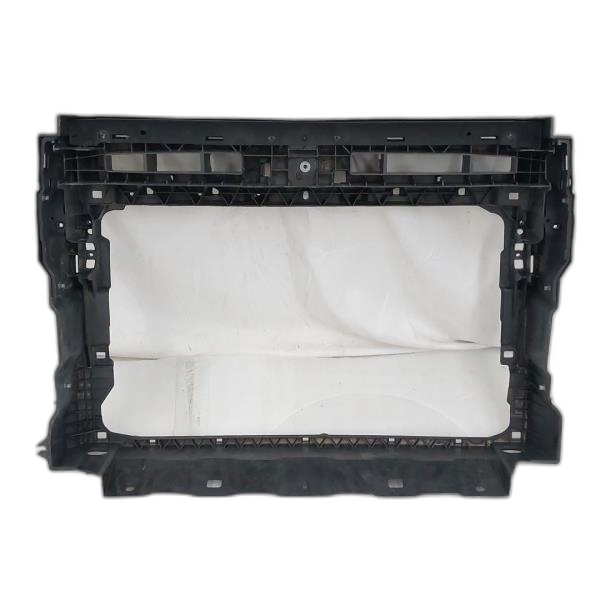
OEM Part Numbers: 53210-06150 (2015-2017) 53208-06150 (2015-2017) 53205-06901 (2018-2024) 53202-06230 (2018-2024) 53203-06270 (2018-2024) 52142-06210 (2025) 53202-06280 (2025)
Material composition is typically a mix of steel and high-strength plastic.
We Have This Part in Stock


The information in this article is provided for general reference and educational purposes only. Vehicle specifications, procedures, and part compatibility can vary by production date, trim level, and region. Always consult your vehicle's factory service manual and verify part numbers before purchasing or performing repairs. Safety-critical components such as airbags, seat belts, and braking systems should be installed by a qualified professional.
- Toyota Camry:
- 🎬 Helpful Videos
- 🛍️ Shop This Part
- Critical: Three Generations, Three Different Parts
- 2015-2017 Toyota Camry (XV50 Facelift)
- 2018-2024 Toyota Camry (XV70)
- 2025 Toyota Camry (XV80)
- Symptoms of a Damaged Radiator Support
- Buying a Used Radiator Support: What to Check
- Replacement Overview and Difficulty
- Cost Comparison
- Frequently Asked Questions (FAQ)
- 🎟️ Get 5% Off