

2007-2017 Toyota Camry Radiator Support: Decoding VINs and Generations
This guide clarifies the critical year-by-year and VIN-specific differences for the 2007-2017 Toyota Camry radiator support to ensure you get the right part.
- For 2009-2011 Camrys, fitment is determined by the 5th digit of the VIN; check before buying.
- Damage is almost always from a collision; inspect used parts carefully for cracks or previous repairs.
- Replacement is a complex, professional-level job requiring disassembly of the entire front end.
- Driving with a broken radiator support is unsafe as it compromises frontal crash protection.
Fitment Guide: Critical Differences by Year (2007-2017)

The radiator support for the Toyota Camry is not a one-size-fits-all part across the 2007-2017 model years. There are three distinct generations, and one of them has complex, VIN-specific requirements. Ordering the wrong part will result in misaligned panels, an insecure radiator, and significant installation headaches.
2007-2008 Toyota Camry
For these model years, the radiator support assembly is straightforward. It fits all 2007 and 2008 Camry models, regardless of the engine (4-cylinder or V6) or where the vehicle was manufactured (USA or Japan).
Warning: The 2009-2011 models are complex. For these years, fitment depends on your vehicle's 5th VIN digit. This is the most common mistake buyers make. Please verify your VIN to ensure compatibility.
2009-2011 Toyota Camry
This is the most complicated generation for this part. There are different radiator supports depending on the build location, which is identified by the 5th digit of your Vehicle Identification Number (VIN).
- Fits 2007-2008 models (All)
- Fits 2009 models with VIN digit 'E'
- Fits 2009-2011 models with VIN digit 'K'
- Fits 2010-2011 models with VIN digit 'F'
You must check your VIN before ordering a part for a 2009, 2010, or 2011 Camry. Using a part from the wrong VIN group will lead to incorrect mounting points.
2012-2014 Toyota Camry
Similar to the 2007-2008 models, the fitment for this generation is simple. The same radiator support fits all 2012, 2013, and 2014 Toyota Camry models, including those with 2.5L, 3.5L, and Hybrid engines.
2015-2017 Toyota Camry
The radiator support for the final facelift of this Camry generation fits all models from 2015, 2016, and 2017. This includes vehicles with the 2.5L 4-cylinder, 3.5L V6, and Hybrid powertrains. Some aftermarket part listings incorrectly state it excludes Hybrid models, but OEM part data confirms one part is used for all versions.
Symptoms of a Damaged Radiator Support

Since the radiator support is a structural component, failure is almost always caused by a front-end collision. The symptoms are often visible and affect the alignment of surrounding parts.
- Poor Hood Alignment: The hood may be difficult to open or close, or it may not sit flush with the fenders when closed. This is often due to a shifted hood latch mount.
- Uneven Panel Gaps: You may notice inconsistent or wide gaps between the headlights, grille, bumper, and fenders.
- Visible Damage: The most obvious sign is a bent, cracked, or crumpled radiator support, which can be seen by looking down past the plastic cover under the hood.
- Engine Overheating: A bent support can push the radiator out of its optimal position, restricting airflow. In severe cases, it can puncture the radiator, causing a coolant leak and leading to overheating.
- Rattling or Creaking Noises: A broken or loose support can cause rattling sounds from the front of the vehicle, especially when driving over bumps. 🎬 See this guide on identifying critical radiator failure symptoms.
Buying a Used Radiator Support: What to Check

A used OEM radiator support is often a better choice than a new aftermarket part because it guarantees the precise fitment engineered by Toyota. However, since these parts are typically salvaged from wrecked vehicles, a thorough inspection is critical.
- Verify Compatibility First: Before anything else, confirm the part is from the correct year range and, for 2009-2011 models, matches your car's VIN requirements.
- Inspect for Cracks and Bends: Carefully examine the entire part, especially around the headlight mounting areas, corners, and weld points. Look for any bends or distortions. Even a slight bend can throw off the alignment of the entire front end.
- Check for Signs of Repair: Avoid supports that show evidence of previous repairs, like plastic welding marks, excessive body filler (Bondo), or non-factory welds. These repairs can compromise the part's structural integrity and crash performance.
- Examine All Mounting Points: Ensure all the small plastic tabs, bolt holes, and clip locations are intact and not broken off. These are essential for securing other components like wiring harnesses and trim pieces.
Pro Tip: When inspecting a used part, compare it directly to photos of your own damaged support if possible. Pay close attention to the locations of all mounting holes and brackets to ensure you have an exact match.
Known Issues, Recalls, and Technical Service Bulletins (TSBs)
As of early 2026, there are no specific recalls or TSBs issued by Toyota or the NHTSA for the radiator support itself on any 2007-2017 Camry models. Issues with this part are almost exclusively the result of collision damage rather than a manufacturing defect.
Replacement Overview and Difficulty
- Difficulty Rating: 4.5 out of 5 (Professional Level)
- Estimated Time: 4-6 hours
Replacing a radiator support is a complex and labor-intensive job that is not recommended for beginners. The process involves the complete disassembly of the car's front end.
A general overview of the steps includes:
- Removing the front bumper cover, headlights, and grille.
- Disconnecting the hood latch and horns.
- Draining the engine coolant and disconnecting the radiator hoses.
- Safely recovering the A/C refrigerant and disconnecting the condenser lines (requires specialized equipment).
- Unbolting the radiator, condenser, and fan assembly from the support.
- Unbolting the support from the vehicle's frame rails.
In some cases, the support is attached with spot welds that must be drilled out, requiring specialized tools and body shop experience. Due to the complexity and the need for A/C system recovery, this job is best left to a professional technician or an experienced DIY mechanic.
Cost Comparison: New vs. Used Radiator Support
The cost can vary significantly based on the source and type of part. Labor is a major expense due to the time required for replacement.
| Part Type | Estimated Cost |
|---|---|
| New OEM | $330 - $470 |
| New Aftermarket | $60 - $275 |
| Used OEM | $150 - $350 |
| Shop Labor | $500 - $1,000 |
Frequently Asked Questions (FAQ)
Can I drive with a broken radiator support?
No, it is not recommended. Driving with a damaged radiator support compromises the structural integrity of the front end, which is a major safety risk in another collision. It can also allow the radiator and other components to shift, potentially leading to cooling system failure and engine damage.
What is the difference between the upper tie bar and the full radiator support?
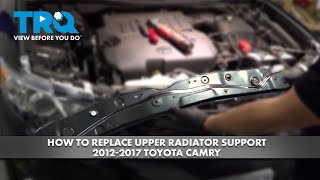
The radiator support is a large assembly. The "upper tie bar" or "upper support" is the top-most beam that often holds the hood latch and connects the tops of the headlights. This piece can sometimes be replaced separately if the lower and side structures are undamaged. 🎬 Watch: How to replace the upper radiator support (2012-2017). The full support is the entire frame, including upper, lower, and side sections.
Does the radiator support come painted?
No. New OEM and aftermarket radiator supports typically come in a black e-coat (electrophoretic coating) primer. This is a base layer designed to prevent corrosion, but it is not a final paint finish. While many are installed as-is, for a factory appearance or maximum corrosion resistance, it should be painted to match the vehicle.
How do I find my Camry's 5th VIN digit?
Your vehicle's 17-digit VIN can be found on the driver's side of the dashboard (visible through the windshield), on the sticker inside the driver's door jamb, and on your vehicle's registration and insurance documents. The 5th character in this sequence is the one you need to check for 2009-2011 models.
Helpful Videos
Technical Specifications
OEM Part Numbers: 5320133160 5320133161 5320133162 5321006030 5321006031 5321006032 5321006150 5320806150 5321006281
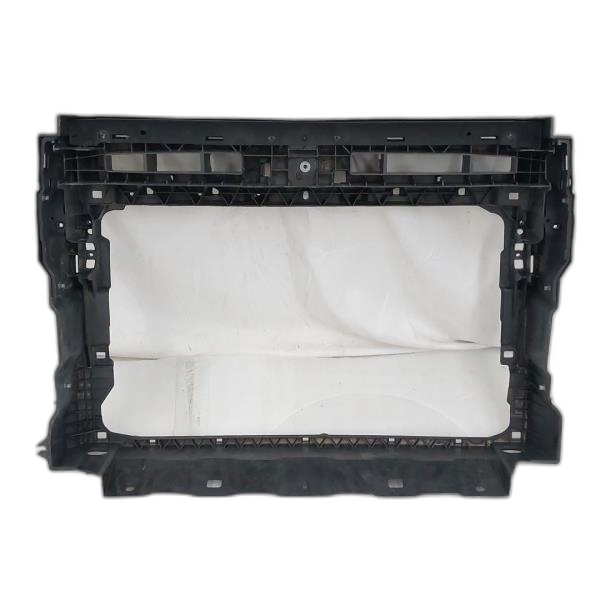
Material is typically a combination of steel and/or plastic composites. Dimensions and mounting points vary by generation and VIN for 2009-2011 models.
We Have This Part in Stock


The information in this article is provided for general reference and educational purposes only. Vehicle specifications, procedures, and part compatibility can vary by production date, trim level, and region. Always consult your vehicle's factory service manual and verify part numbers before purchasing or performing repairs. Safety-critical components such as airbags, seat belts, and braking systems should be installed by a qualified professional.
- Toyota Camry:
- 🎬 Helpful Videos
- 🛍️ Shop This Part
- Fitment Guide: Critical Differences by Year (2007-2017)
- 2007-2008 Toyota Camry
- 2009-2011 Toyota Camry
- 2012-2014 Toyota Camry
- 2015-2017 Toyota Camry
- Symptoms of a Damaged Radiator Support
- Buying a Used Radiator Support: What to Check
- Known Issues, Recalls, and Technical Service Bulletins (TSBs)
- Replacement Overview and Difficulty
- Cost Comparison: New vs. Used Radiator Support
- Frequently Asked Questions (FAQ)
- 🎟️ Get 5% Off