

Jaguar F-Type Radiator Support: 2021+ Facelift Compatibility and Collision Repair Guide
This guide explains the critical differences in radiator supports before and after the 2021 F-Type redesign and what to inspect on a used part.
- The most critical factor is the 2021 model year facelift; radiator supports are NOT interchangeable between 2014-2020 and 2021-2024 models.
- Damage is almost always from a collision; this is not a part that fails from normal wear and tear.
- When buying used, meticulously inspect for hairline cracks, straightness, and any signs of prior repair.
- Replacement is a complex job for a professional body shop, not a typical DIY task.
Key Compatibility Warning: The 2021 Facelift

Warning: For the 2021 model year, Jaguar significantly redesigned the F-Type's front end. This facelift included a new hood, larger grille, and slimmer LED headlights. As a result, all forward structural components, including the radiator support and its associated brackets, are different. Parts from a 2014-2020 model will NOT fit a 2021-2024 model, and vice-versa. This is the single most important factor to verify before purchasing a used radiator support.
Symptoms of a Damaged Radiator Support

Unlike mechanical parts, a radiator support doesn't wear out over time. Damage is almost always the result of a front-end collision or a significant impact from road debris. Symptoms are typically visual and structural.
- Poor Panel Gaps: The gaps between the hood, fenders, and front bumper cover may become uneven or excessively wide. This indicates the underlying structure has shifted.
- Difficulty Latching Hood: If the hood latch is mounted to the support, damage can misalign the latch and striker, making the hood difficult to close or open.
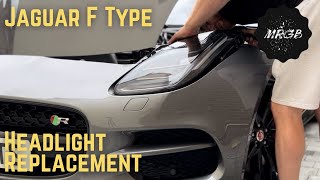
- Misaligned Headlights: Headlights that point too high, too low, or to the side can be a sign that their mounting points on the radiator support 🎬 Watch: How to safely remove and align F-Type headlights. are bent or broken.
- Visible Cracks or Bends: In a severe impact, the support itself may have visible cracks, tears, or bends. This is most common on plastic or composite upper tie bars.
- Overheating: If the support is bent, it can push the radiator or condenser into the cooling fan, or change the position of the radiator, reducing its cooling efficiency.
Buying a Used Radiator Support: What to Check

A used OEM radiator support can be a great value, but a thorough inspection is critical. A damaged or incorrect part will cause significant problems during installation.
- Confirm the Exact Model Year: Due to the 2021 facelift, this is non-negotiable. Get the VIN from the donor vehicle if possible and confirm its model year. Do not trust a part listed for the full 2014-2024 range without verification.
- Inspect All Mounting Points: Carefully check every hole, tab, and bracket where the support bolts to the frame and where components (radiator, headlights) bolt to the support. Look for stress cracks, elongation of holes, or any signs of tearing.
- Check for Straightness: Lay the support on a flat surface. Look for any twisting, warping, or bowing. Even a slight bend can throw off the alignment of the entire front end.
- Look for Hairline Cracks: On any plastic or composite sections, especially the upper tie bar, inspect closely under bright light for hairline cracks, particularly around bolt holes. These can be hard to see but represent a major weak point.
- Avoid Repaired Parts: Do not buy a support that shows signs of previous repairs like plastic welding, epoxy, or extra brackets. These repairs are often cosmetic and will not hold up in another impact.
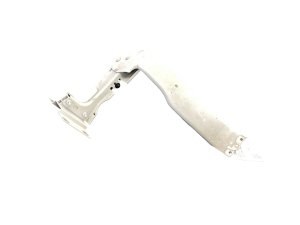
- Match Part Numbers: The F-Type uses a complex array of brackets and supports. The initial list of part numbers (e.g., EX53-16794-AA, T2R12759) represents different individual components of the overall core support system. Match the specific bracket you need to the part number from the used component.
Known Issues, TSBs, and Recalls
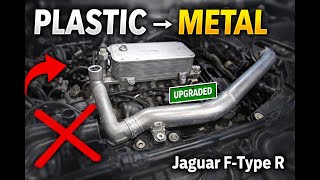
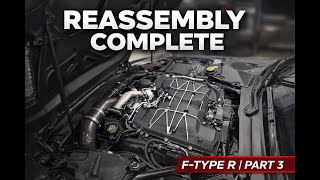
Searches for recalls and Technical Service Bulletins (TSBs) related to the radiator support structure itself on the 2014-2024 Jaguar F-Type did not yield any specific results. Recalls for the F-Type in this period primarily concern issues like seat belts, airbag systems, and incorrect tire placards. While there are many TSBs for the F-Type, they address topics like engine vibrations, brake corrosion, and electronic modules, not the structural integrity of the core support. The cooling system itself has known issues, particularly with plastic coolant pipes on V6 and V8 models 🎬 See how to upgrade these brittle plastic coolant pipes. which can become brittle and fail, but this is separate from the support structure.
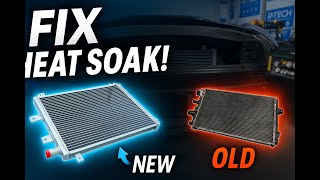
Pro Tip: The Jaguar F-Type cooling system is complex, with some models having up to four separate radiators for engine coolant, the supercharger intercooler, and the A/C system. When replacing a radiator support after a collision, it is critical to inspect all of these heat exchangers for hidden damage, as even a small leak can lead to major engine problems.
Cost and Replacement Information
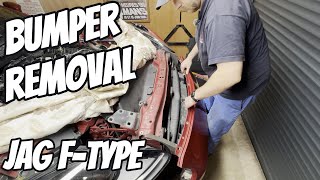
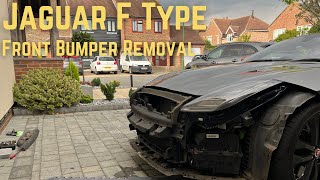
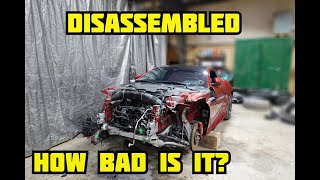
Replacing a radiator support is a labor-intensive job that requires removal of the front bumper, 🎬 Watch: Step-by-step guide to removing the F-Type front bumper. headlights, and the entire cooling pack. It is considered an advanced repair.
| Item | Details |
|---|---|
| Installation Difficulty | 4/5 (Professional recommended) |
| DIY Feasible? | No. Proper installation is critical for panel alignment and crash safety structure. It often requires specialized tools. |
| Estimated Shop Labor | $800 - $1500+ (Varies widely based on extent of damage and labor rates) |
Part Cost Comparison
Prices can vary significantly based on which piece of the support assembly you need. A small bracket will be much cheaper than a main structural component.
| Part Type | Estimated Cost |
|---|---|
| New OEM | $250 - $700+ (for individual major components) |
| New Aftermarket | Generally not available for these structural components. |
| Used OEM | $100 - $400 (depending on the specific component and condition) |
Frequently Asked Questions (FAQ)
Will a radiator support from a V6 F-Type fit a V8 model?
Potentially, but it must be from the same year range (2014-2020 or 2021-2024). While the main structural mounting points to the chassis are likely the same, there may be differences in brackets for the different radiator and intercooler sizes between engine types. Always verify part numbers or visual layouts before purchasing.
Is the radiator support made of metal or plastic?
It's a combination. The core support assembly on modern vehicles like the F-Type typically uses a mix of materials. There are often high-strength steel or aluminum main structures, with upper and side brackets made from a composite plastic material to save weight and allow for precise shapes.
Can I drive my car with a broken radiator support?
It is strongly discouraged. If the damage is minor (a small crack in a non-structural plastic piece), it may be drivable for a short time. However, if the support is significantly bent or broken, it can no longer securely hold the radiator, fans, and other components. This can lead to overheating, further damage, and compromised safety in a collision. The vehicle should be inspected by a professional.
Why can't I find a cheap aftermarket radiator support for an F-Type?
The F-Type is a relatively low-volume, high-performance vehicle. The demand isn't high enough for most aftermarket companies to invest in the expensive tooling required to produce complex structural parts. Furthermore, for safety-critical components, OEM parts are often the only option that guarantees correct material strength and fitment.
Helpful Videos

Technical Specifications
OEM Part Numbers: EX53-16794-AA EX53-16D154-A EX53-16D155 MX5316795 t2p1026 T2P1220 T2P1328 T2R12759 T2R13699 T2R16327
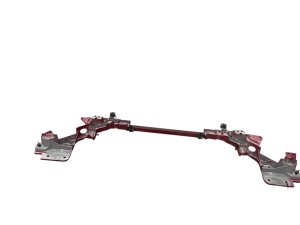
The radiator support is a multi-piece assembly made of aluminum, high-strength steel, and composite plastics. Specific components vary based on model year and engine.
We Have This Part in Stock

The information in this article is provided for general reference and educational purposes only. Vehicle specifications, procedures, and part compatibility can vary by production date, trim level, and region. Always consult your vehicle's factory service manual and verify part numbers before purchasing or performing repairs. Safety-critical components such as airbags, seat belts, and braking systems should be installed by a qualified professional.
- Jaguar F-Type: