

2003-2008 Hyundai Tiburon Radiator Support: Decoding Facelift Fitment and Rust Repair
This guide covers how to identify collision or rust damage and choose the correct radiator support for your 2003-2008 Tiburon, including the critical differences between model years.
- The radiator support is different for 2003-2006 and 2007-2008 models due to a facelift; they are not interchangeable.
- This is a structural, weld-in part, not a simple bolt-on. Replacement requires drilling spot welds and welding the new part on.
- The part is the same for both 4-cylinder and V6 engines; the model year is the only critical compatibility factor.
- When buying used, prioritize a perfectly straight part with no rust-through, as even minor bends will ruin panel alignment.
Key Differences: 2003-2006 vs. 2007-2008 Models
Compatibility Warning: The most important factor when choosing a radiator support for a 2003-2008 Tiburon is the model year. Hyundai gave the Tiburon a major facelift for the 2007 model year, which included different headlights and a new front bumper design. As a result, the upper radiator support assemblies are not interchangeable between the two generations.
- 2003-2006 Tiburon: Requires an upper support specific to these years (e.g., OEM part numbers 64140-2C000, 64140-2C010).
- 2007-2008 Tiburon: Requires an upper support specific to these years (e.g., OEM part numbers 64140-2C700, 64140-2C710).
The lower tie bar (e.g., OEM part number 64160-2C001) appears to be the same for all 2003-2008 models. However, always verify fitment for your specific year before purchasing.
Engine Compatibility: 4-Cylinder vs. V6
Contrary to some information, the radiator support is the same for both the 2.0L 4-cylinder and 2.7L V6 engines within their respective year groups. For example, a support from a 2007 V6 model will fit a 2008 4-cylinder model. The critical factor is the model year (pre- or post-facelift), not the engine.
Symptoms of a Damaged Radiator Support
Since this is a structural part, failure is almost always caused by a front-end collision or pervasive rust. The symptoms are usually visible if you know where to look.
- Poor Body Panel Alignment: This is the most common sign. Look for uneven gaps between the hood, fenders, and front bumper. A bent support can make the hood difficult to latch or cause it to sit crooked when closed.
- Misaligned Headlights: If one headlight seems pushed back, tilted, or doesn't line up with the body panels, the support's mounting points are likely bent.
- Visible Rust and Corrosion: Check the lower tie bar and the areas where the support is welded to the frame rails. These spots collect moisture and road salt, making them prone to rust, which can severely weaken the structure.
- Rattling or Clunking Noises: A broken or loose support can allow the radiator, condenser, or fan assembly to vibrate and make noise, especially at idle or on bumpy roads.
- Engine Overheating: In severe cases, a bent support can push the radiator into the fan, damage the radiator core, or block airflow, leading to cooling system problems.
Buying a Used Radiator Support: What to Inspect
A used OEM radiator support is often a better choice than a cheap aftermarket one due to superior fit and material quality. Aftermarket supports are notorious for having misaligned mounting holes, which can turn a difficult job into an impossible one. When inspecting a used OEM part, be meticulous.
- Check for Straightness: Lay the support on a flat floor. Look for any sign that it is twisted or bent. Even a minor tweak from a past collision can prevent your headlights and bumper from ever lining up correctly. Pay close attention to the headlight buckets and all bumper mounting tabs.
- Inspect for Rust: Surface rust can be cleaned and treated, but avoid any support with deep, flaky rust or holes. The lower tie bar is the most common rust area. Poke any suspect areas with a screwdriver to check for weakness.
- Examine the Welds: Check the factory spot welds for any signs of cracking or stress, which could indicate it was pulled from a heavily damaged vehicle.
- Look for Repair Evidence: Avoid parts that show signs of previous repairs, like sloppy welds, body filler, or bent-back metal. A previously repaired support may not have the same structural integrity.
Known Issues, TSBs, and Recalls
There are no specific recalls or Technical Service Bulletins (TSBs) from Hyundai for the radiator support on the 2003-2008 Tiburon. Failures are almost always from external factors like collisions or corrosion.
However, it's worth noting that Hyundai issued a recall (NHTSA Campaign 09V125000) for front lower control arm corrosion on 2001-2003 Tiburons operated in 'Salt Belt' states. This indicates a general vulnerability of front-end steel components on these vehicles to severe rust, making inspection of the radiator support even more critical for cars from those regions.
Replacement Overview and Difficulty
Warning: This is not a bolt-on part. The radiator support is attached to the vehicle's inner fender aprons with dozens of factory spot welds. Replacement requires drilling out these welds and welding the new support in place.
- Difficulty: 4 out of 5
- Estimated Time: 4-8 hours
- DIY Feasible?: For advanced mechanics only. This job requires welding equipment and bodywork experience.
The general process involves:
- Removing the front bumper cover, crash bar, and headlights.
- Properly evacuating the A/C system and disconnecting the condenser lines.
- Draining the cooling system and removing the radiator, fan assembly, and hoses.
- Disconnecting the hood latch cable and any other attached wiring.
- Carefully drilling out all spot welds that attach the support to the car's body.
- Test-fitting the new support, clamping it into position, and verifying panel alignment with the fenders and hood before welding.
- Welding the new support in place.
- Sealing and painting the welds to prevent future rust.
- Reassembling all components in reverse order.
Pro Tip: Before you start welding, temporarily bolt the fenders, headlights, and hood latch to the new support to ensure perfect alignment. Adjust as needed. Taking the time to get the gaps right at this stage is critical for a professional-looking repair.
Cost Comparison
Prices for a used OEM part are often competitive with new aftermarket options, offering better fitment for the money.
| Part Type | Estimated Price Range |
|---|---|
| New OEM | $195 - $275 (Upper assembly, if available) |
| New Aftermarket | $95 - $180 |
| Used OEM | $75 - $150 |
| Shop Labor for Replacement | $400 - $800+ |
Frequently Asked Questions (FAQ)
Will a radiator support from a 2006 Tiburon fit my 2008 model?
No. The main upper support assembly is different due to the 2007 facelift which changed the headlights and bumper. You must use a support from a 2007 or 2008 model for a 2007-2008 car.
Is the radiator support different for the 4-cylinder and V6 Tiburon?
No. For the 2003-2008 model years, the radiator support is the same for both the 2.0L I4 and 2.7L V6 engines. The key compatibility difference is the year range (03-06 vs. 07-08).
Can a bent or rusted radiator support be repaired?
Minor damage can sometimes be repaired by a skilled body technician using hammers, dollies, and even hydraulic pullers. Small rust holes can be cut out and patched with new metal. However, if the support is significantly bent, kinked, or has widespread rust, replacement is the only safe option to restore structural integrity.
Do I have to weld the new radiator support in?
Yes. The radiator support is a structural part of the unibody and must be welded in just like the original. Attempting to bolt it in is not a safe or proper repair method.
Technical Specifications
OEM Part Numbers: 64140-2C000 (2003-2006 Upper) 64140-2C010 (2003-2006 Upper) 64140-2C700 (2007-2008 Upper) 64140-2C710 (2007-2008 Upper) 64160-2C001 (2003-2008 Lower)
Material: Steel. Installation: Spot-welded to unibody.
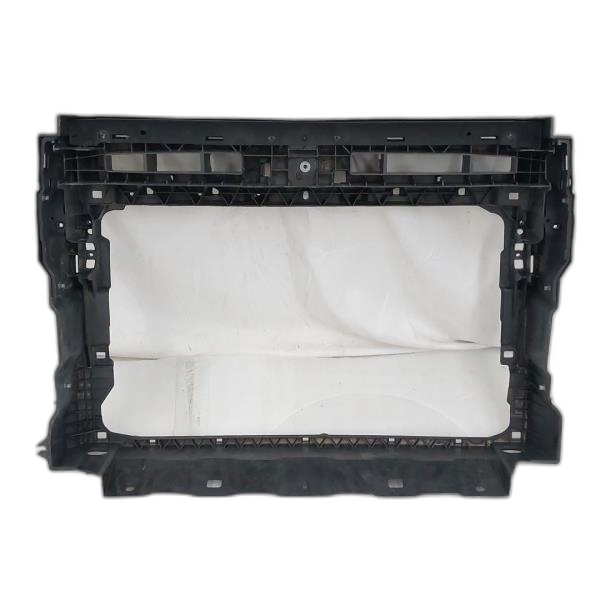
We Have This Part in Stock



The information in this article is provided for general reference and educational purposes only. Vehicle specifications, procedures, and part compatibility can vary by production date, trim level, and region. Always consult your vehicle's factory service manual and verify part numbers before purchasing or performing repairs. Safety-critical components such as airbags, seat belts, and braking systems should be installed by a qualified professional.
- Hyundai Tiburon:
- 🛍️ Shop This Part
- Key Differences: 2003-2006 vs. 2007-2008 Models
- Engine Compatibility: 4-Cylinder vs. V6
- Symptoms of a Damaged Radiator Support
- Buying a Used Radiator Support: What to Inspect
- Known Issues, TSBs, and Recalls
- Replacement Overview and Difficulty
- Cost Comparison
- Frequently Asked Questions (FAQ)
- 🎟️ Get 5% Off